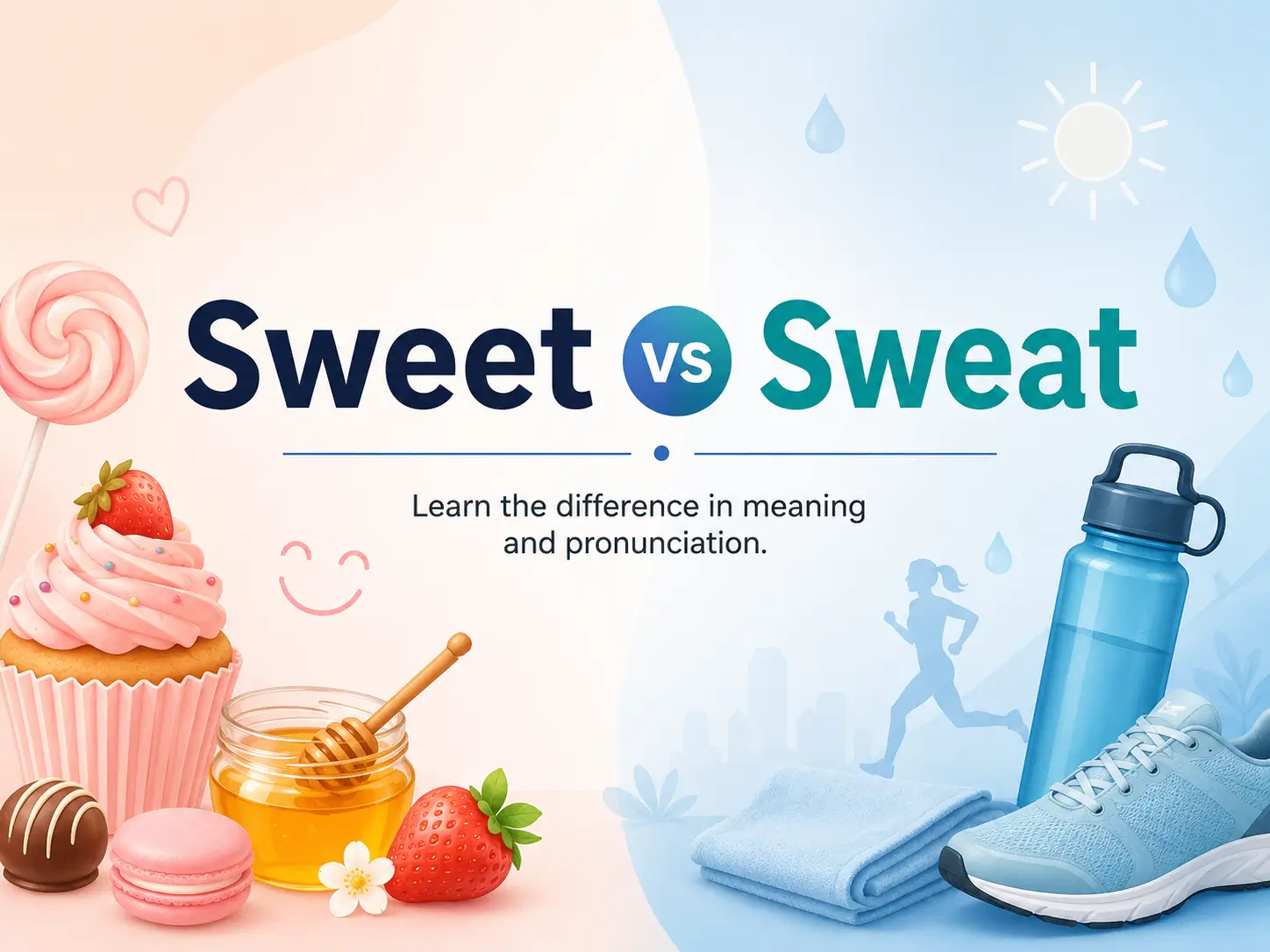
Sweet vs Sweat Differences

Sweet vs Sweat difference in meaning and pronunciation

Sweet vs sweat becomes easy to understand when you check the meaning first: sweet describes taste or kindness, while sweat means body moisture. These common English words look alike because of their spelling, yet their pronunciation, grammar role, and everyday use are completely different. Many learners mix them up in writing and speaking. A spell-check … Read more
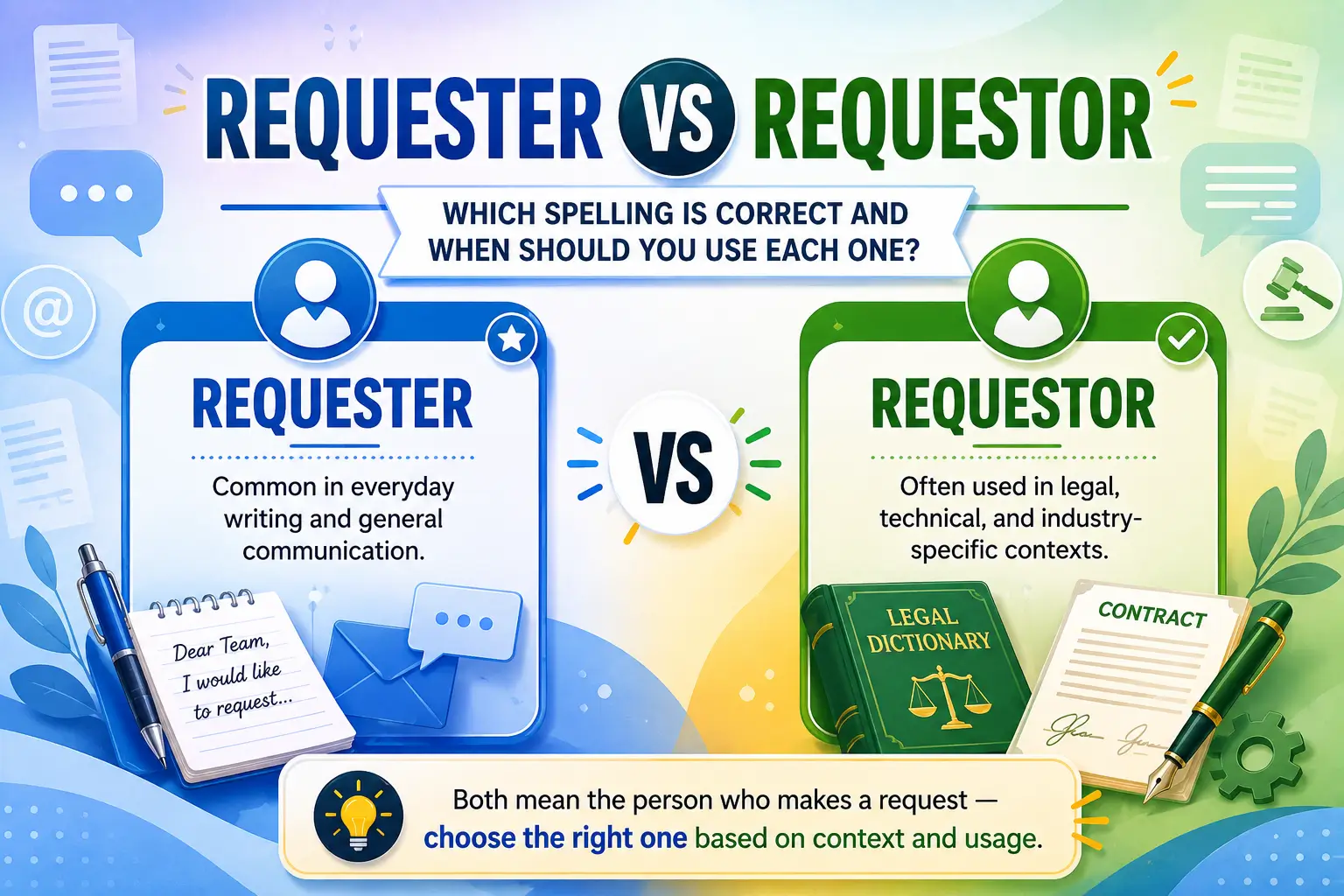
Requester vs Requestor: Which Spelling Is Correct and When Should You Use Each One?

Requester vs Requestor spelling difference explained with correct English usage examples

The difference between Requester and Requestor is mainly based on context, language usage, and industry standards rather than meaning. Both words describe a person who makes a request, but requester is more widely used in everyday communication, business writing, and general professional communication. In contrast, requestor appears more often in specialized environments such as IT, … Read more

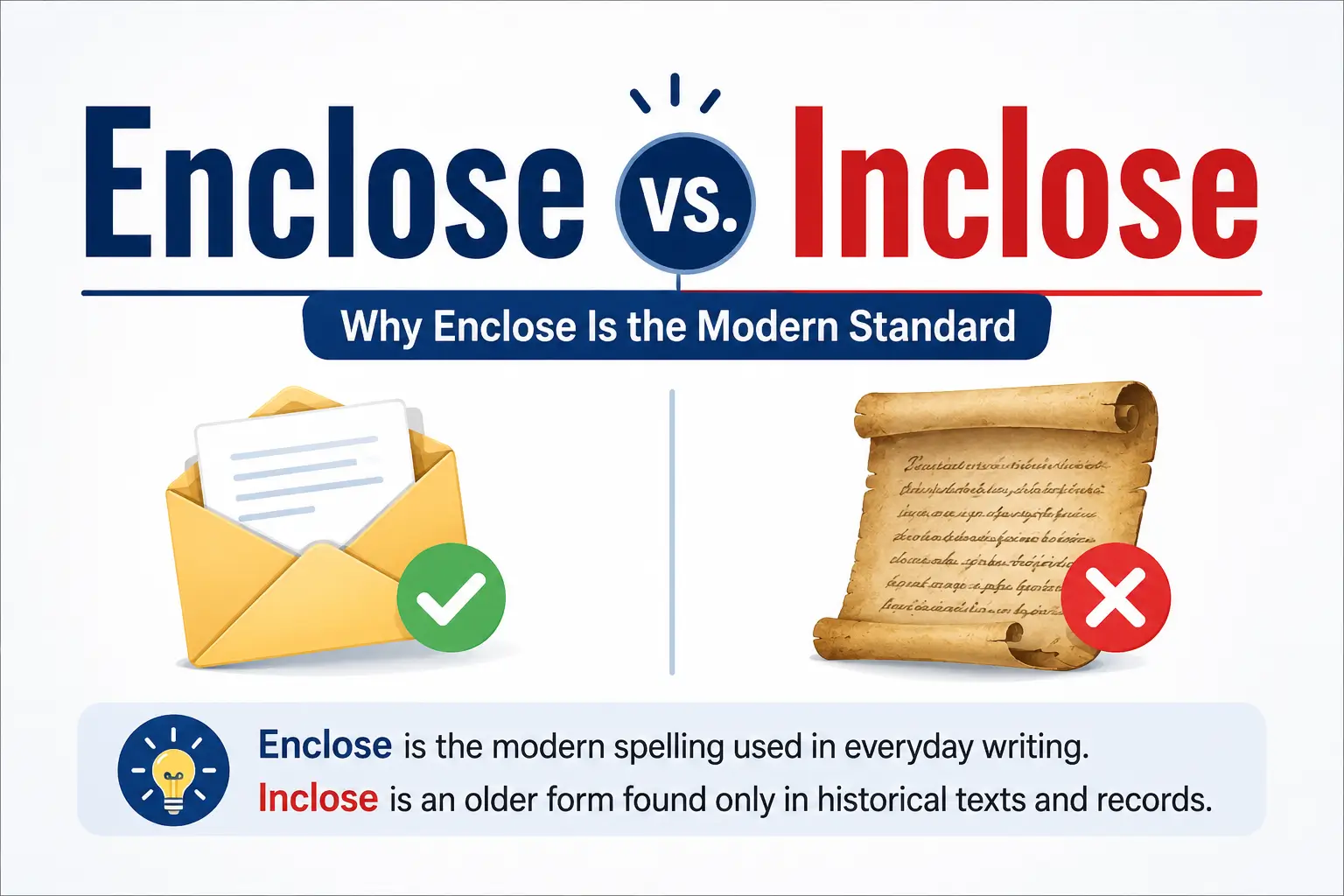
Enclose vs. Inclose: Why Enclose Is the Modern Standard

Enclose vs Inclose explained with the correct spelling, grammar rules, historical usage, and simple examples.

The enclose vs. inclose choice is simple: enclose is the modern spelling, while inclose survives mainly in older historical records and texts. Both words once meant to surround, shut in, or place something inside a container, boundary, or envelope. Today, enclose is the accepted verb in modern English. Its related forms are enclosed, enclosing, and … Read more

What Is the Difference Between Climactic vs Climatic?

Climactic vs Climatic Climactic vs Climatic – Difference, Meaning, Examples

The key difference in climactic vs climatic is simple: climactic refers to a climax, while climatic clearly describes climate and climate patterns. Each is an adjective, and dictionaries may mark it as adj. These two adjectives sound similar and are easy to confuse, yet their meaning is completely different. Use climactic for a final, decisive, … Read more

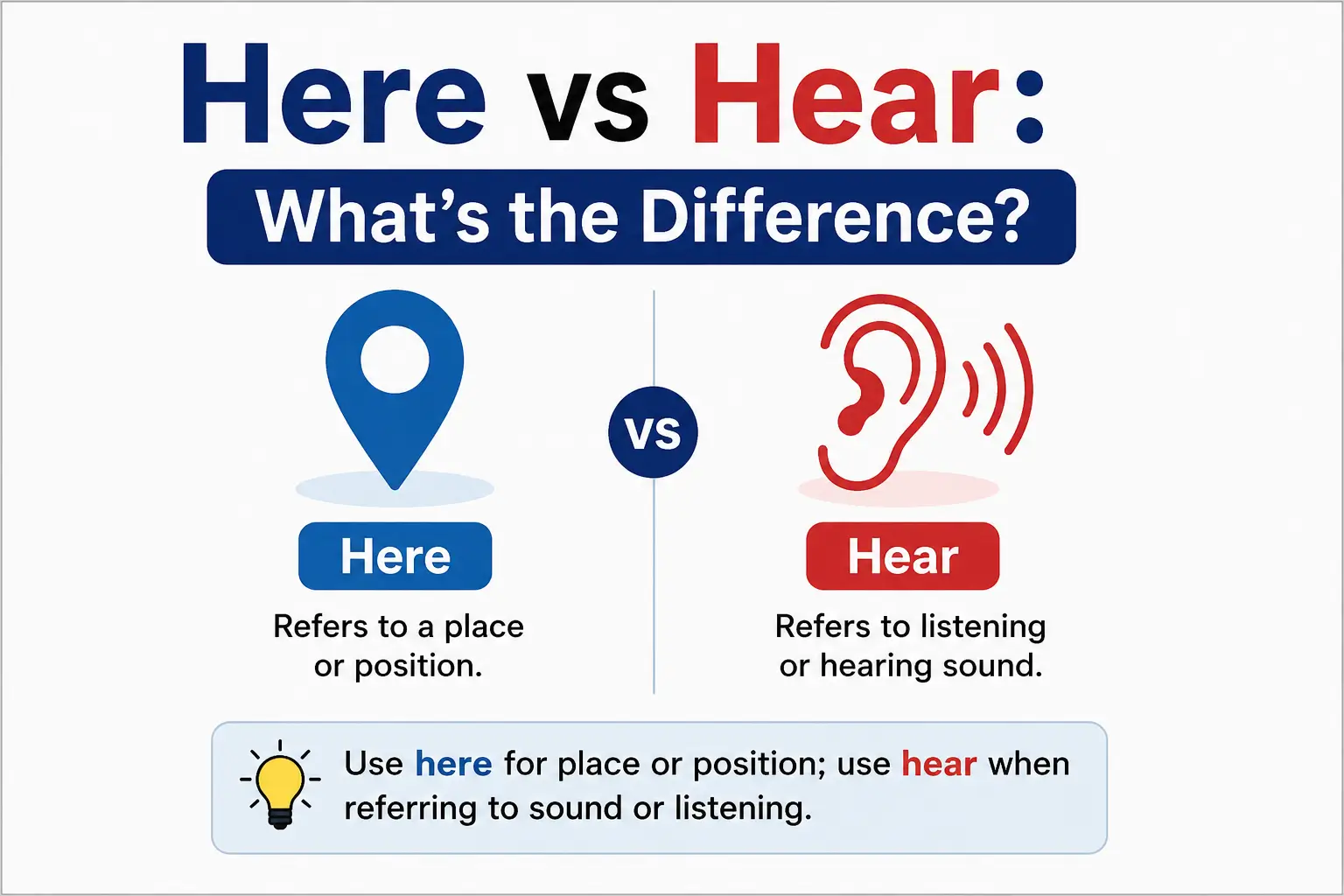
Difference Between Here and Hear

Here vs Hear explained with meanings, differences, grammar rules, memory trick, and easy examples.

Here and Hear are common homophones with the same pronunciation, but their spelling, meaning, and sentence role are completely different. The English language has many confusing elements and quirks, yet this homophone pair becomes easy when you check the context. They sound the same, but their different spellings and different meanings change word usage. Hear … Read more

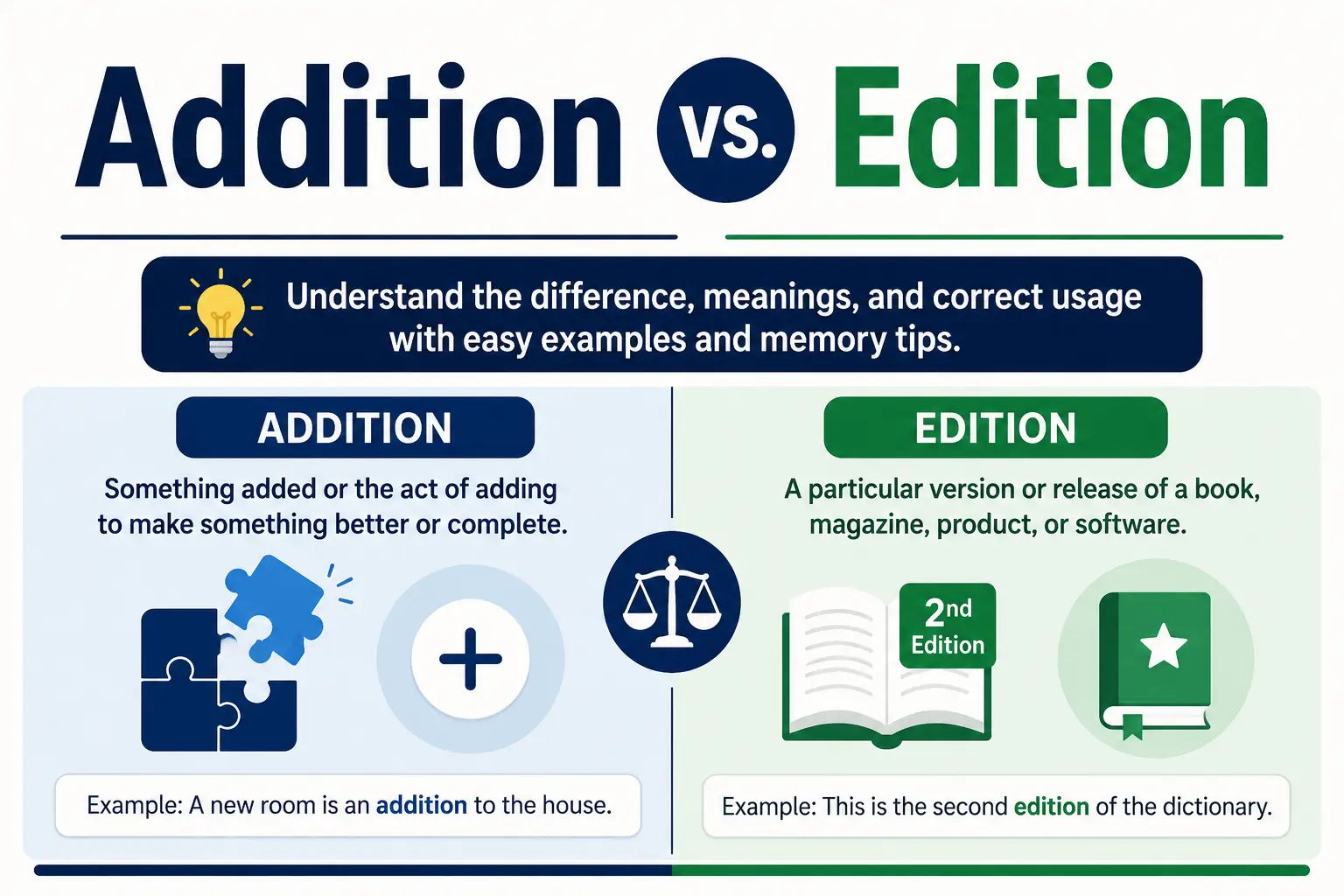
Addition vs. Edition The Difference Between Edition and Addition

Addition vs. Edition: Differences, Meanings & Examples

Addition vs. Edition becomes simple when you remember that an addition is something added, while an edition is a published version of a work. A publisher may release a revised edition of a specific book after correcting, updating, or reorganizing its content. The new publication may also use a different layout, design, or format. Use … Read more

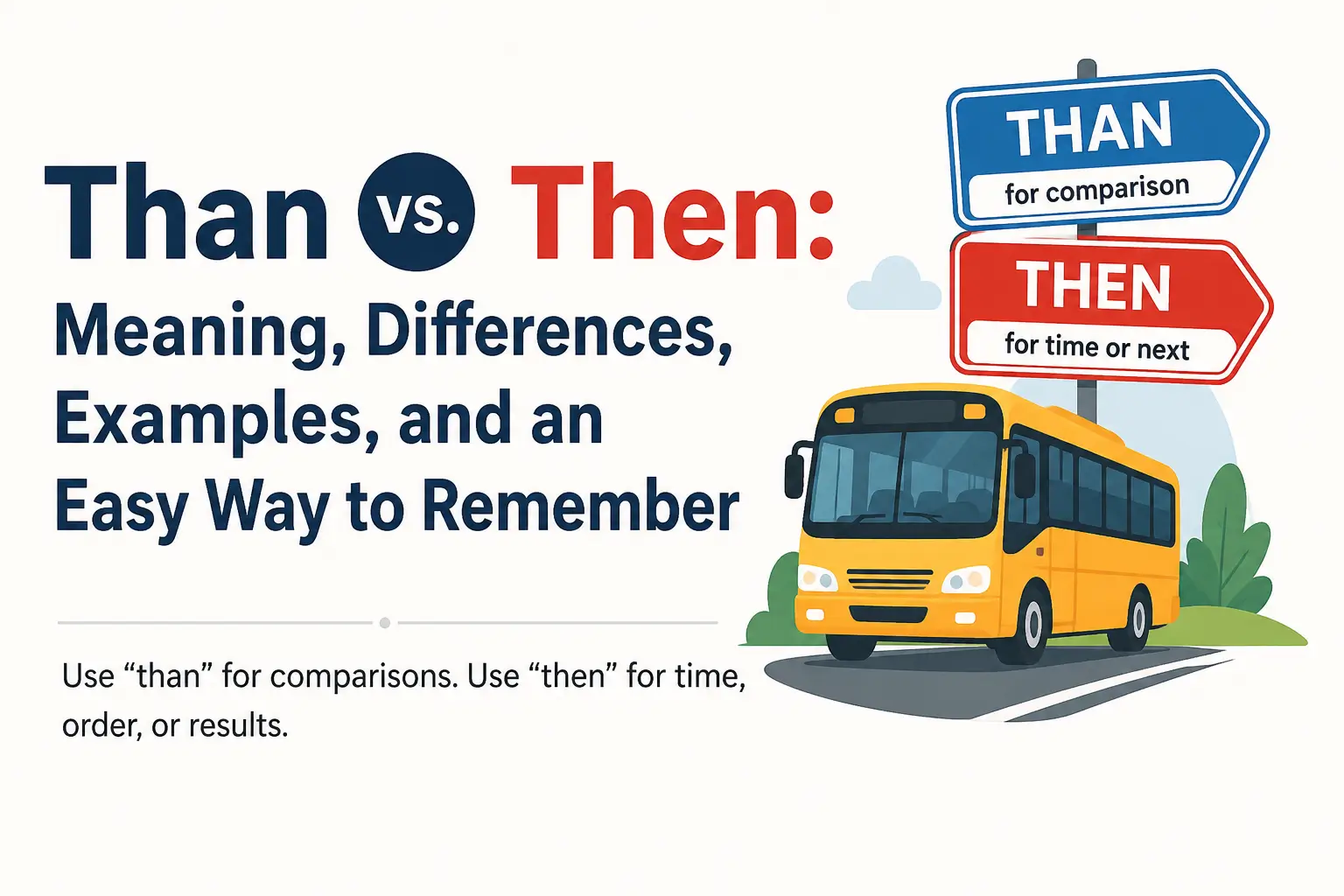
Than vs. Then: Meaning, Differences, Examples, and an Easy Way to Remember

Than vs. Then grammar comparison showing when to use "than" for comparisons and "then" for time, sequence, and results with simple examples.

Than vs then is a common grammar problem, but the difference is simple. Use than when making a comparison, and use then when discussing time, sequence, or a result. For example, “This book is better than that one” compares two books. “Finish the book, then write the review” shows what happens next. These commonly confused … Read more

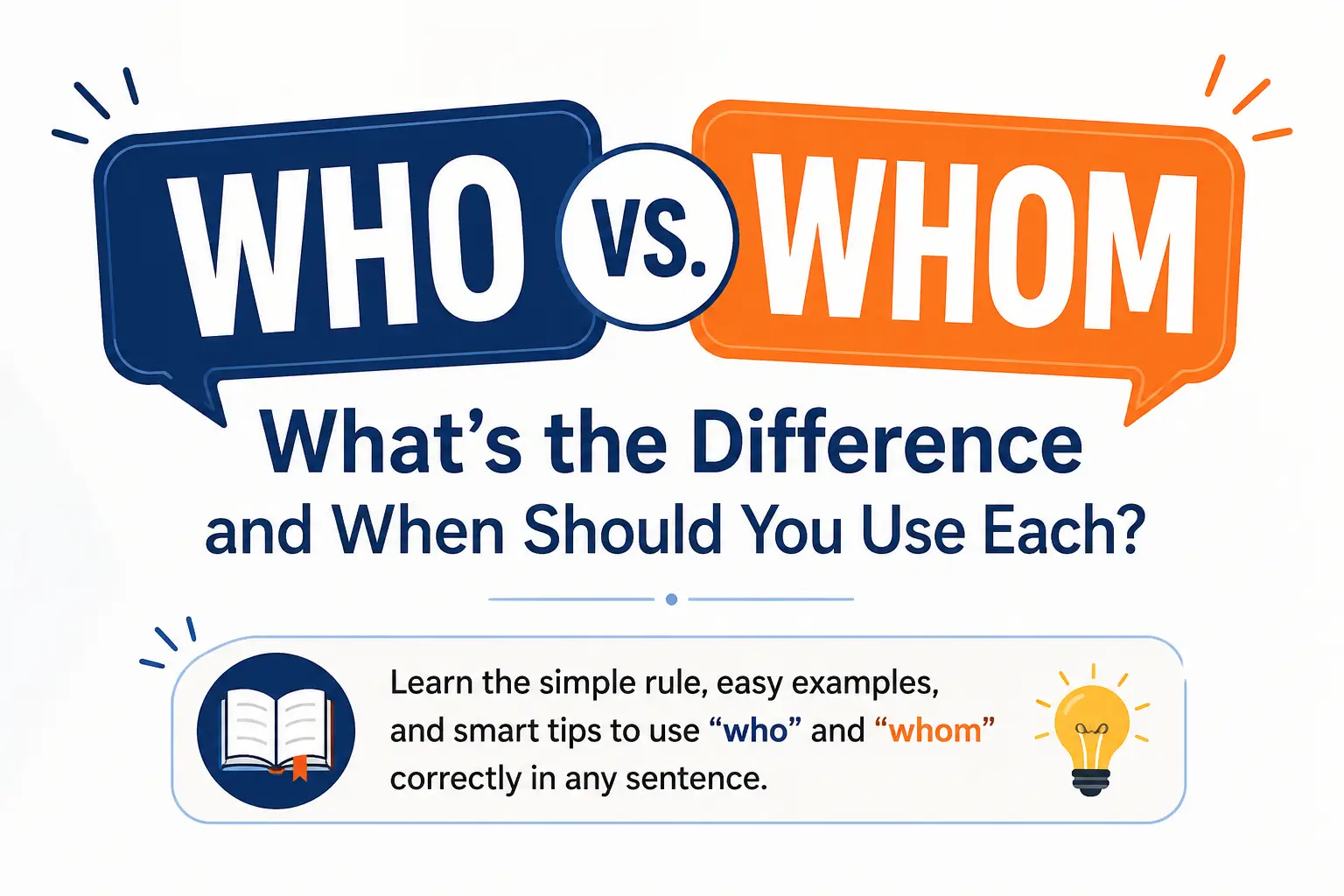
Who vs. Whom: What’s the Difference and When Should You Use Each?

Who vs whom explained with simple grammar rules, examples, and the easy he vs him memory trick.

Who vs. whom is one of the most confusing topics in English grammar, but it doesn’t have to be difficult. The simple rule is this: who is used as the subject of a sentence, while whom is used as the object of a verb or preposition. If you’ve ever stopped while writing an email, essay, … Read more

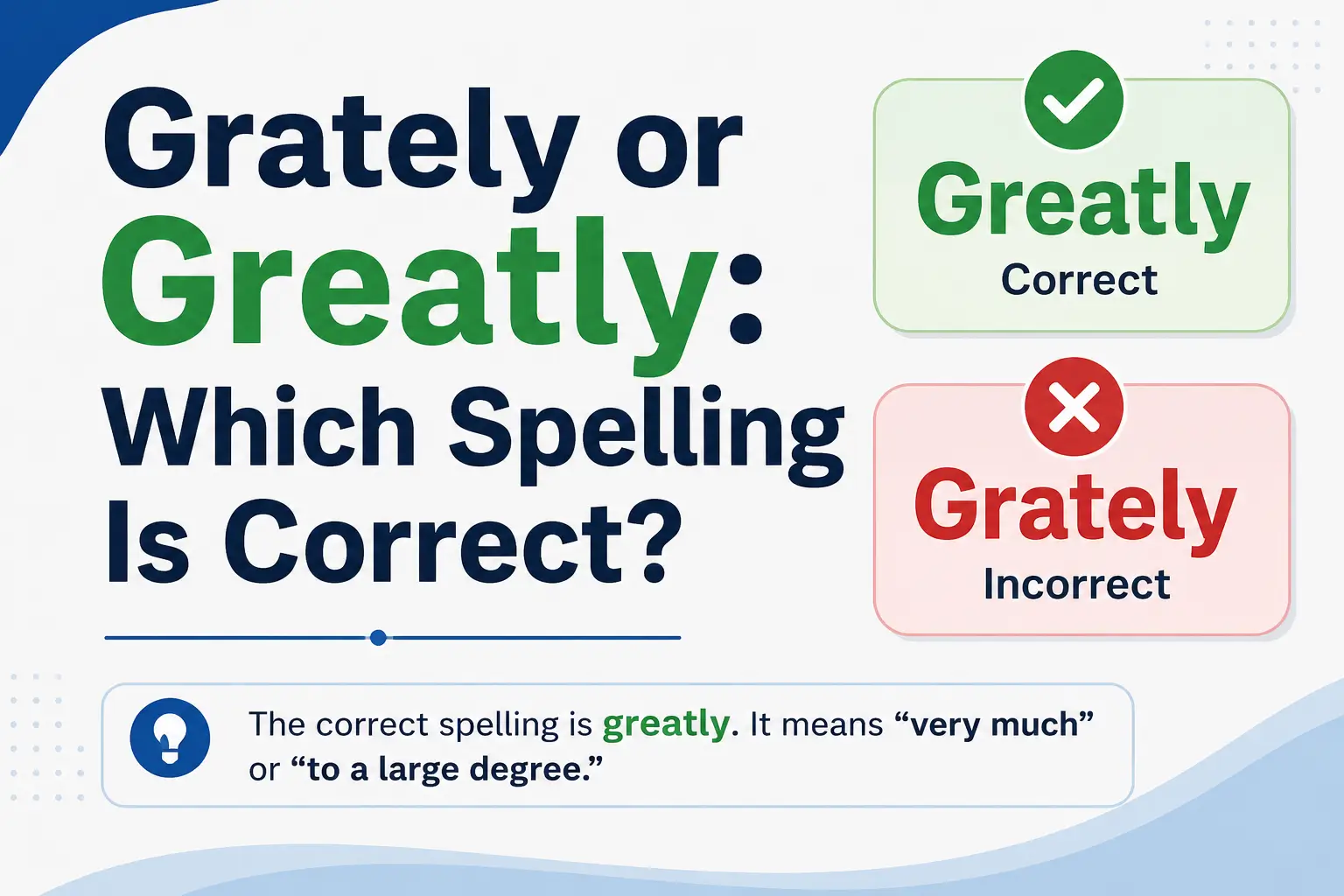
Grately or Greatly: Which Spelling Is Correct?

Grately or Greatly? Learn the correct spelling with a simple explanation and examples.

Grately or Greatly is a common spelling question, but only greatly is correct in standard English. The word grately is usually a misspelling and should not be used in formal, academic, professional, or everyday writing. Greatly is an adverb that means “very much” or “to a large degree.” For example, the correct phrase is “Your … Read more