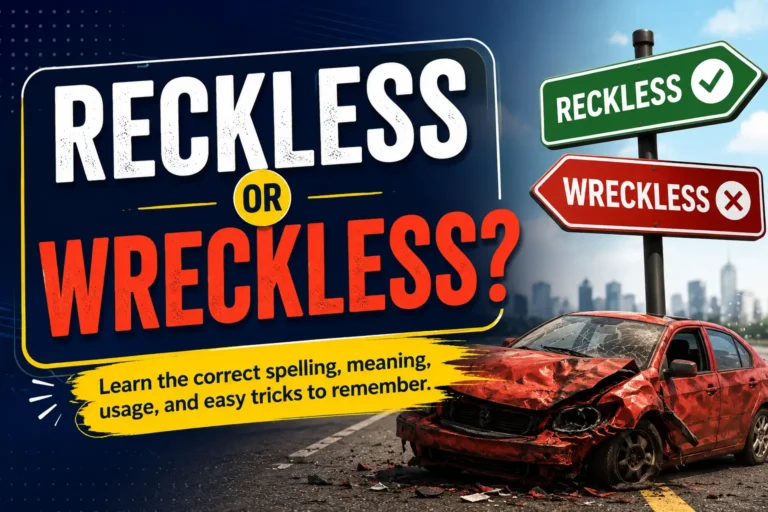
Reckless or Wreckless: Which Spelling Is Correct?

Reckless or Wreckless spelling comparison showing the correct word

Reckless or wreckless is a common spelling question, but the answer is simple: reckless is the correct spelling in standard English. It describes careless, dangerous, or irresponsible behavior that ignores possible consequences. Wreckless is generally a misspelling, although you may see it used creatively online. The confusion often comes from the familiar word wreck, which … Read more

Sleave or Sleeve: Which Spelling Is Correct?

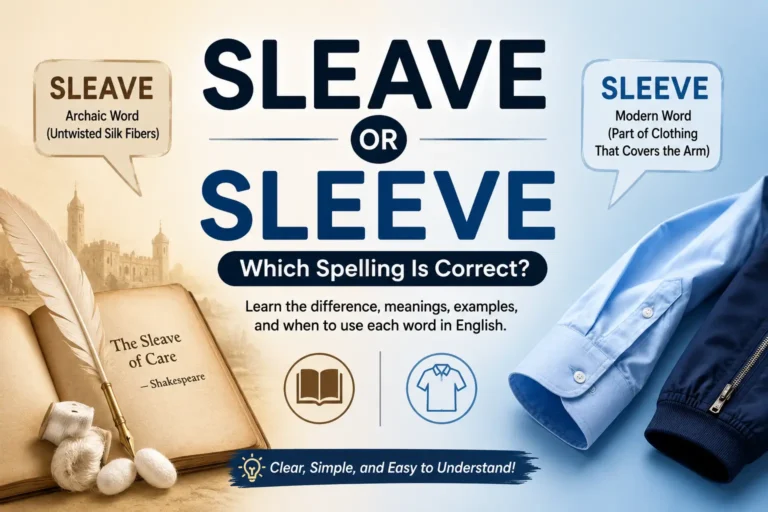
Sleave or sleeve spelling comparison showing the correct word for clothing and the historical meaning of sleave

Sleave or sleeve can be confusing because both are real English words, but they don’t have the same meaning. If you’re talking about the part of a shirt, jacket, or dress that covers the arm, the correct spelling is sleeve. Sleave is a rare historical textile term linked to silk fibers and older English. For … Read more

Invision vs Envision: Which Word Is Correct? Meaning, Differences, and Usage Guide

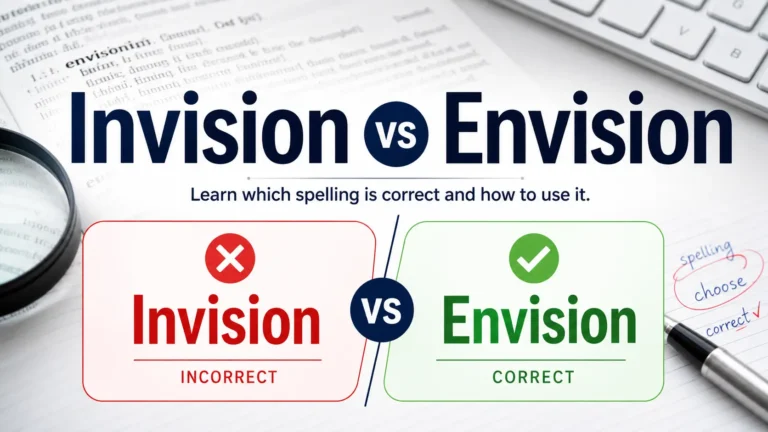
Invision vs Envision correct spelling and usage explained

When people compare invision vs envision, the confusion usually comes from the similar spelling, sound, and connection to the word vision. The correct English word is envision, which means to imagine, picture, or create a mental image of a future possibility. Many writers, editors, and students accidentally use invision because it looks logical, but standard … Read more

Truly vs. Truely: Which Spelling Is Correct? (Meaning, Rule, Examples & Common Mistakes)

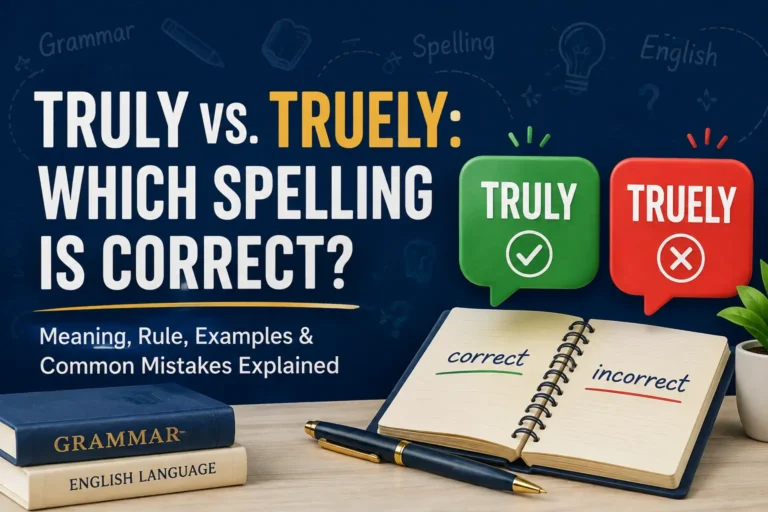
Truly vs. Truely spelling comparison showing Truly as correct and Truely as incorrect

If you’re searching for Truely vs Truly, the answer is simple: truly is the only correct spelling. In standard English, the word true drops the final e before adding -ly. I once caught myself writing truely in an important email, and proofreading helped me remember the correct spelling rule. Understanding this small grammar rule makes … Read more

Capital vs. Capitol: What’s the Difference? Meaning, Examples, and Easy Ways to Remember

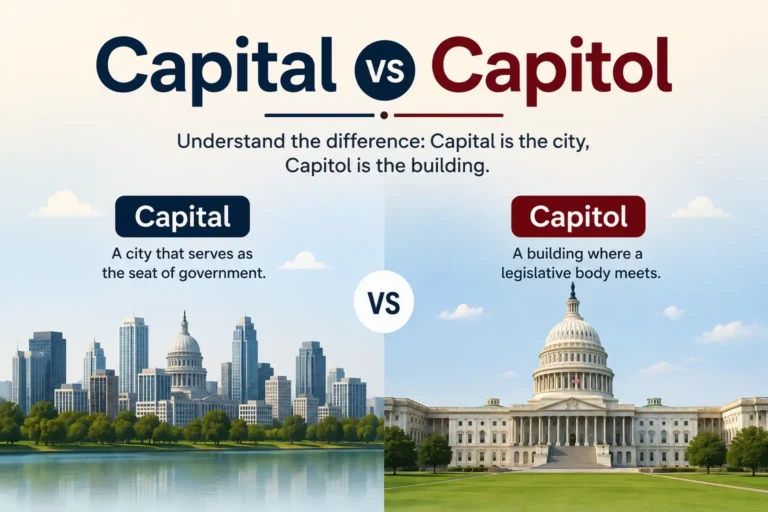
Capital vs Capitol comparison showing that capital means a government city, while capitol means a legislative building.

If you’ve ever wondered about capital vs. capitol, you’re not alone. These two words look and sound almost identical, but they have different meanings and uses. The confusion often appears when people write about government, politics, cities, or buildings. The easiest rule is this: capital can mean a city that serves as a seat of … Read more

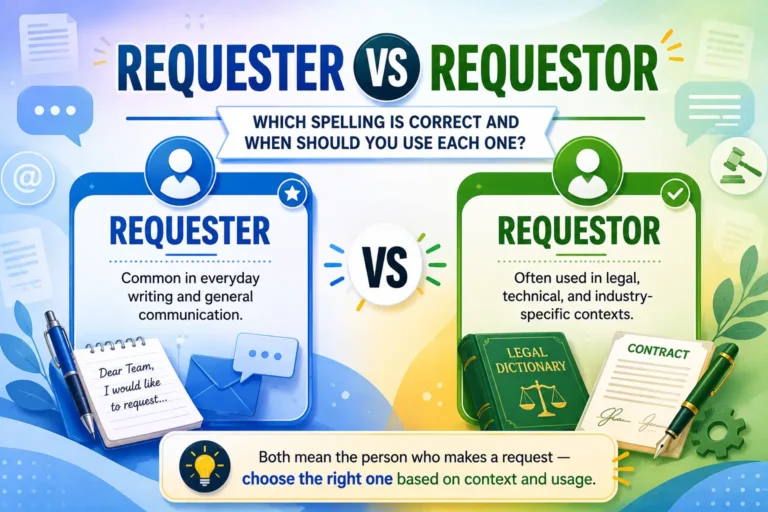
Requester vs Requestor: Which Spelling Is Correct and When Should You Use Each One?

Requester vs requestor comparison showing requester for general use and requestor for technical or legal contexts

The difference between Requester vs Requestor is mainly based on context, language usage, and industry standards rather than meaning. Both words describe a person who makes a request, but requester is more widely used in everyday communication, business writing, and general professional communication. In contrast, requestor appears more often in specialized environments such as IT, … Read more

Requester vs Requestor: Which Spelling Is Correct and When Should You Use Each One?

Requester vs Requestor spelling difference explained with correct English usage examples

The difference between Requester and Requestor is mainly based on context, language usage, and industry standards rather than meaning. Both words describe a person who makes a request, but requester is more widely used in everyday communication, business writing, and general professional communication. In contrast, requestor appears more often in specialized environments such as IT, … Read more

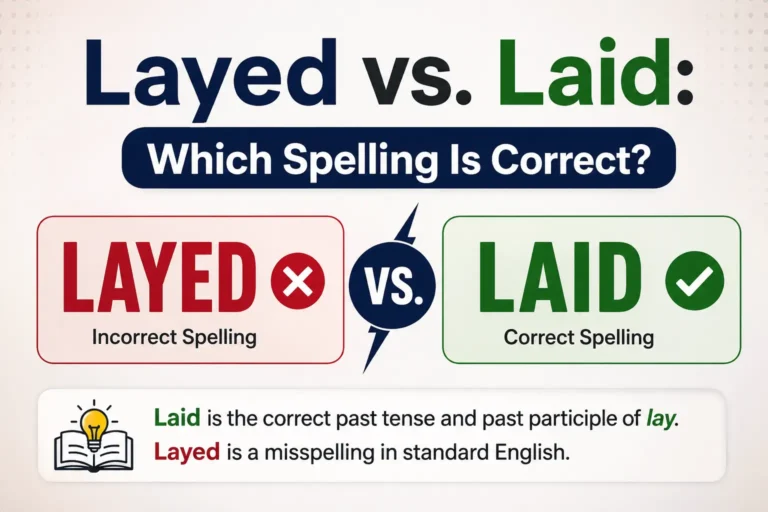
Layed vs. Laid: Which Spelling Is Correct?

Layed vs laid comparison showing laid as correct and layed as incorrect

Layed vs. Laid is a common spelling question, but the rule is simple. Laid is the correct past tense and past participle of lay, while layed is a misspelling in standard English. You should write, “She laid the book on the table,” not “She layed the book on the table.” The word lay means to … Read more

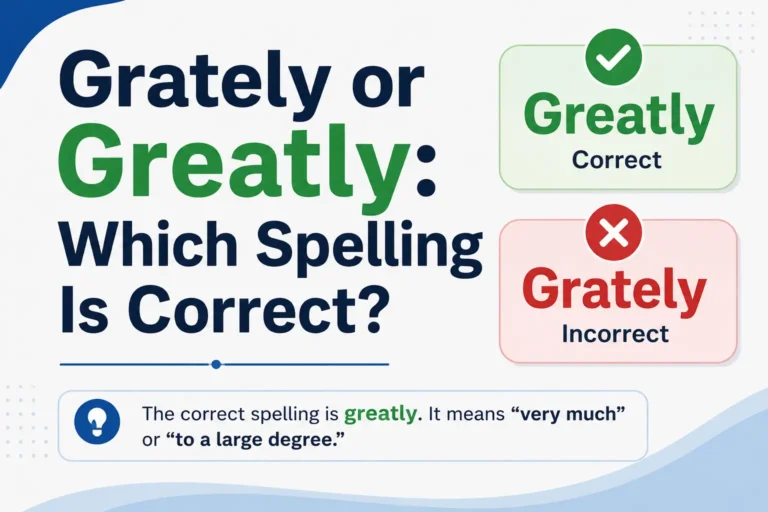
Grately or Greatly: Which Spelling Is Correct?

Grately or Greatly? Learn the correct spelling with a simple explanation and examples.

Grately or Greatly is a common spelling question, but only greatly is correct in standard English. The word grately is usually a misspelling and should not be used in formal, academic, professional, or everyday writing. Greatly is an adverb that means “very much” or “to a large degree.” For example, the correct phrase is “Your … Read more