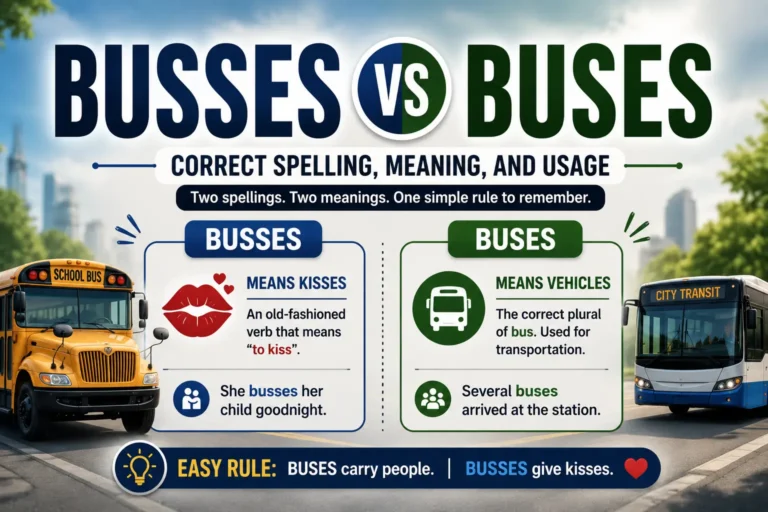
Busses vs Buses: Correct Spelling, Meaning, and Usage

Busses vs buses correct spelling and meaning explained with examples

The busses vs buses difference is simple: buses is the correct plural of bus, while busses usually means kisses in older usage. In standard English and modern English, English speakers use the standard plural form buses for multiple vehicles that transport people. Common usage contexts include public transport, private transport, public transit, school transportation, and … Read more

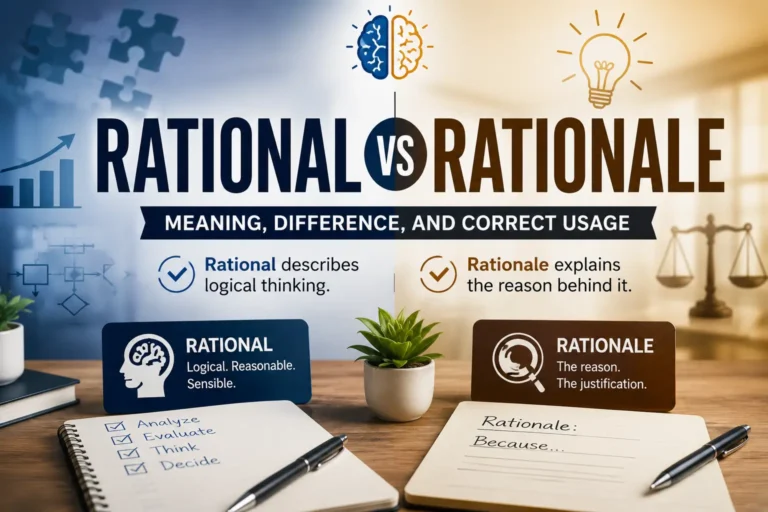
Rational vs Rationale: Meaning, Difference, and Correct Usage

Rational vs rationale meaning and difference with examples

The rational vs rationale difference becomes clear when you know that one describes logical thinking while the other names the reason behind it. Rational is an adjective for a sensible decision, clear idea, logical plan, or reasoned behavior. Rationale is a noun for the underlying reason, reasoning, or justification behind an action, belief, or choice. … Read more

Your vs. You’re: What’s the Difference and How to Use Them Correctly?

Your vs You’re difference explained with ownership examples and you are contraction examples

Your vs. you’re is one of the most searched English grammar questions because these two words sound alike but have different meanings and uses. If you’ve ever wondered whether to write your or you’re, you’re not alone. Understanding this difference helps you write more clearly in emails, text messages, social media posts, school assignments, and … Read more

Stationary vs Stationery: What’s the Difference and When Should You Use Each?

Stationary vs Stationery difference explained with a stationary car and writing stationery supplies

Stationary vs stationery is one of the most commonly confused word pairs in English grammar. Although both words sound the same, they have different meanings, spellings, and uses. Knowing the difference helps you avoid common writing mistakes in emails, school assignments, business documents, and everyday communication. If you’re unsure whether to write stationary or stationery, … Read more

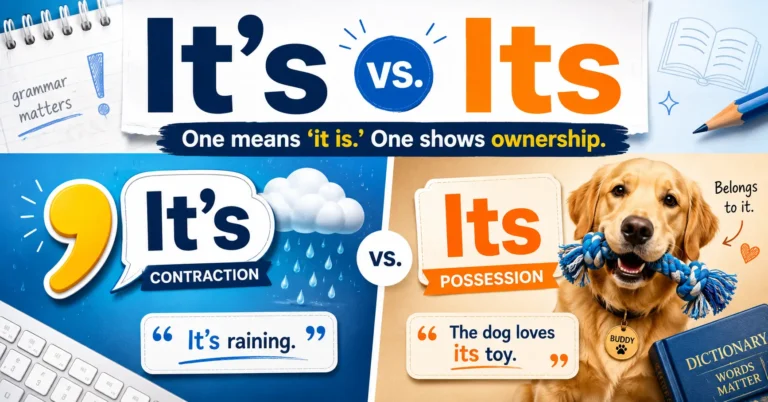
It’s vs. Its: Difference, Rules, Examples, and Easy Ways to Use Them Correctly

It’s vs Its difference explained with contraction, possession, and easy grammar examples

It’s vs its is a common English grammar confusion that affects many students, writers, and professionals. The purpose of understanding it’s vs its is to learn when to use it’s as a contraction of it is or it has, and when to use its as a possessive word that shows ownership. The easiest way to … Read more

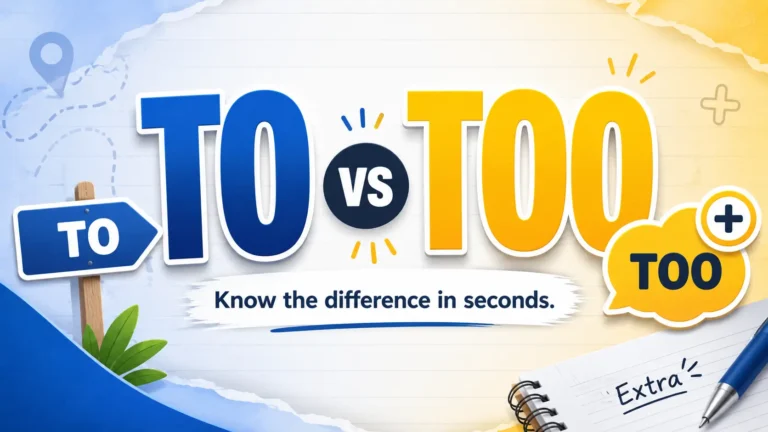
To vs. Too: What’s the Difference? (Complete Grammar Guide with Examples)

To vs Too difference explained with simple grammar rules and examples

To vs Too is one of the most searched and commonly confused topics in English grammar because these words sound the same but have different meanings and uses. If you’ve ever wondered whether to write to, too, or even two, you’re not alone. The good news is that the difference is simple once you understand … Read more

Should vs. Must: Meaning, Differences, Rules, and Examples

Should vs. must meaning, key differences, grammar rules, and simple English examples

Should vs. Must shows the difference between helpful advice and a firm rule, so choosing the right modal verb keeps every sentence clear and precise. Should expresses a recommendation or expectation. Must expresses necessity, a requirement, or strong obligation. For example, “You should arrive early” suggests a useful action, but the choice remains yours. “You … Read more

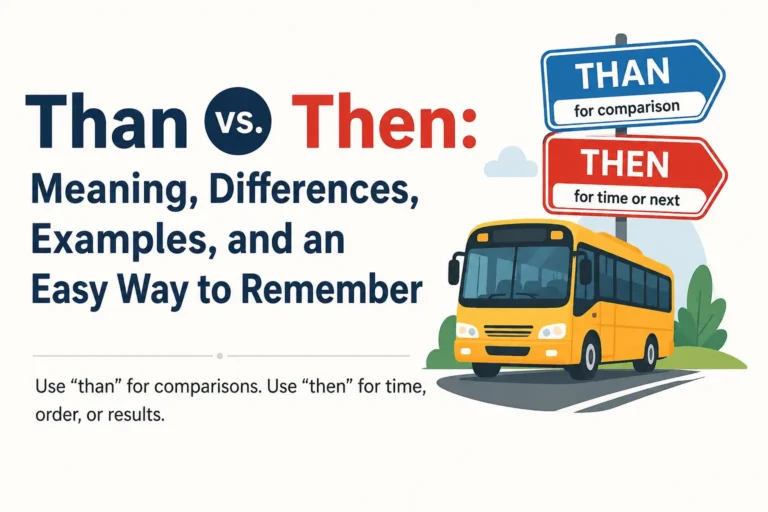
Than vs. Then: Meaning, Differences, Examples, and an Easy Way to Remember

Than vs. Then grammar comparison showing when to use "than" for comparisons and "then" for time, sequence, and results with simple examples.

Than vs then is a common grammar problem, but the difference is simple. Use than when making a comparison, and use then when discussing time, sequence, or a result. For example, “This book is better than that one” compares two books. “Finish the book, then write the review” shows what happens next. These commonly confused … Read more