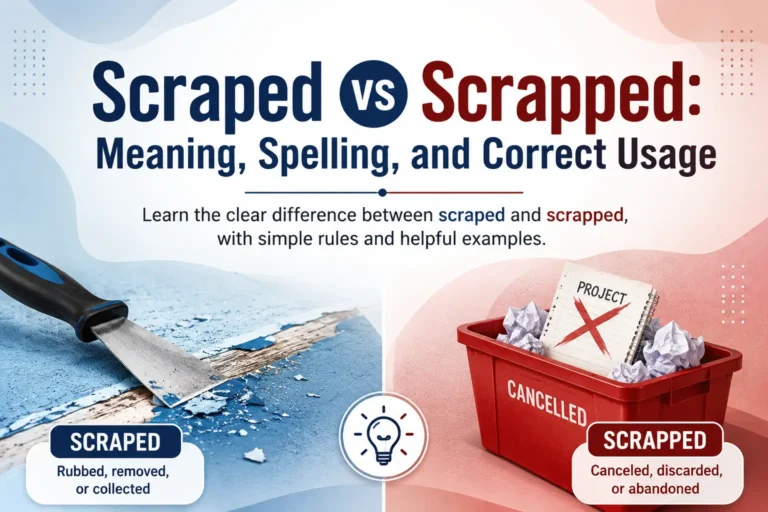
Scraped vs Scrapped: Meaning, Spelling, and Correct Usage

Scraped vs Scrapped: meaning, spelling, and correct usage

The scraped vs scrapped difference is simple: scraped means rubbed, removed, or collected, while scrapped means canceled or discarded. Use scraped for a physical action, removal, collection, or data collection. You may scrape paint, ice, or online information. Use scrapped for a project, plan, canceled project, or canceled plan involving cancellation, abandonment, or rejection. For … Read more

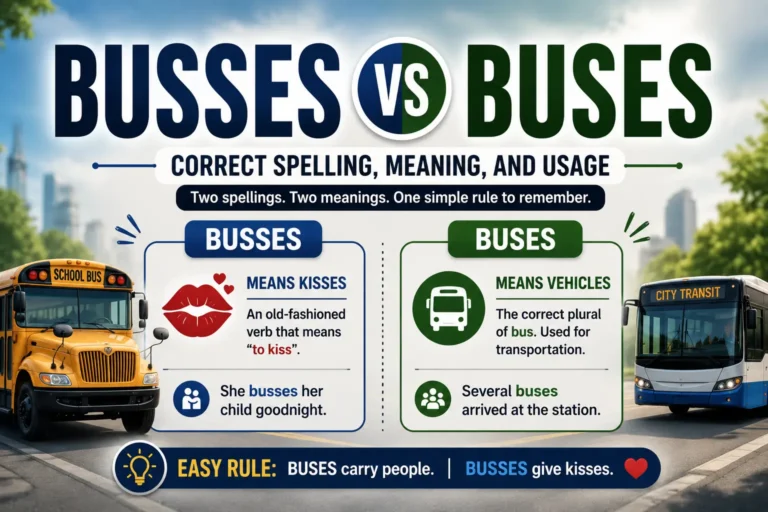
Busses vs Buses: Correct Spelling, Meaning, and Usage

Busses vs buses correct spelling and meaning explained with examples

The busses vs buses difference is simple: buses is the correct plural of bus, while busses usually means kisses in older usage. In standard English and modern English, English speakers use the standard plural form buses for multiple vehicles that transport people. Common usage contexts include public transport, private transport, public transit, school transportation, and … Read more

Whichever vs Whatever: Meaning, Differences, and Correct Usage

Whichever vs whatever meaning and difference with examples

The whichever vs whatever difference depends on whether your choice comes from a known group or from an open range without clear limits. The meaning of whichever points to one item from specific options, known options, or other limited options. Both words express choice, but they describe a different kind of choice. For example, “Choose … Read more

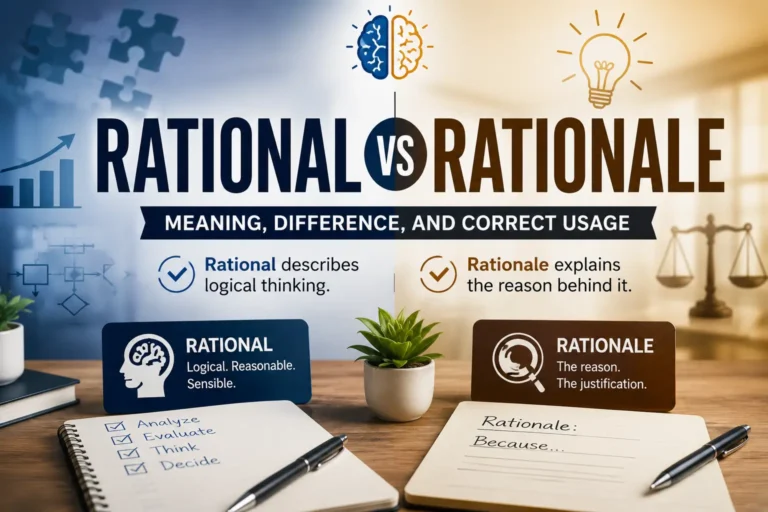
Rational vs Rationale: Meaning, Difference, and Correct Usage

Rational vs rationale meaning and difference with examples

The rational vs rationale difference becomes clear when you know that one describes logical thinking while the other names the reason behind it. Rational is an adjective for a sensible decision, clear idea, logical plan, or reasoned behavior. Rationale is a noun for the underlying reason, reasoning, or justification behind an action, belief, or choice. … Read more

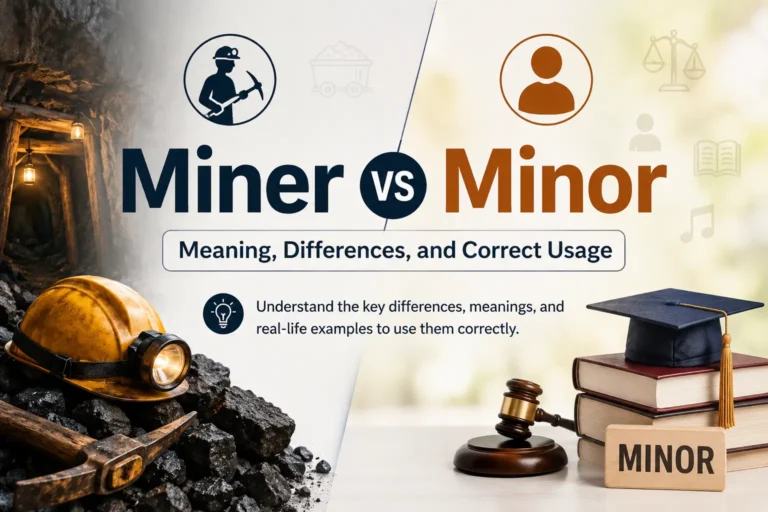
Miner vs Minor: Meaning, Differences, and Correct Usage

Miner vs Minor meaning and differences with examples

The miner vs minor difference is easy to understand: a miner works in a mine, while a minor is young or describes something less serious in context. These homophones have an almost identical sound, yet both words have entirely different definitions, usage, and implications. A miner is a person or mining worker who works in … Read more

Grate vs Great: Meaning, Differences, and Examples

Grate vs Great difference explained with meaning and examples

Many English learners and native speakers confuse grate vs great because these two words sound exactly alike. Their pronunciation is the same, but their meanings and uses are completely different. Great describes something excellent, impressive, important, or above average, while grate can be a verb or noun related to shredding, scraping, irritation, or a metal … Read more

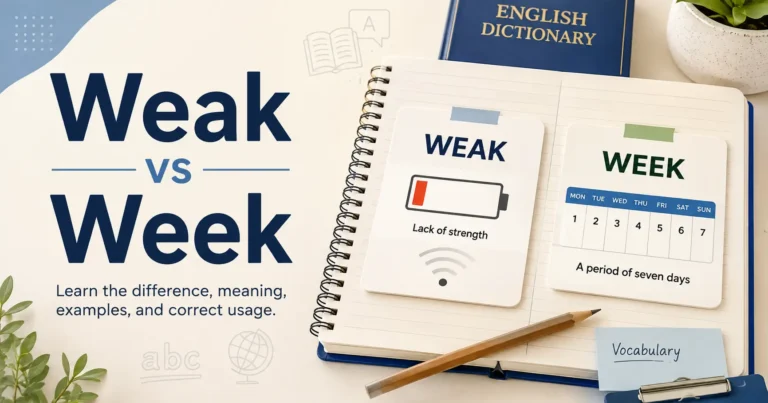
Weak vs Week: Difference, Meaning, Examples, and How to Use Them Correctly

Weak vs week comparison showing the difference between lack of strength and a seven-day period with simple English examples

Confused about weak vs week? Learn the simple difference between these words, their meanings, and how to use them correctly in daily English. Many English learners struggle with weak vs week because both words sound the same, but they have different meanings. Weak describes a lack of strength, power, or ability, while week refers to … Read more

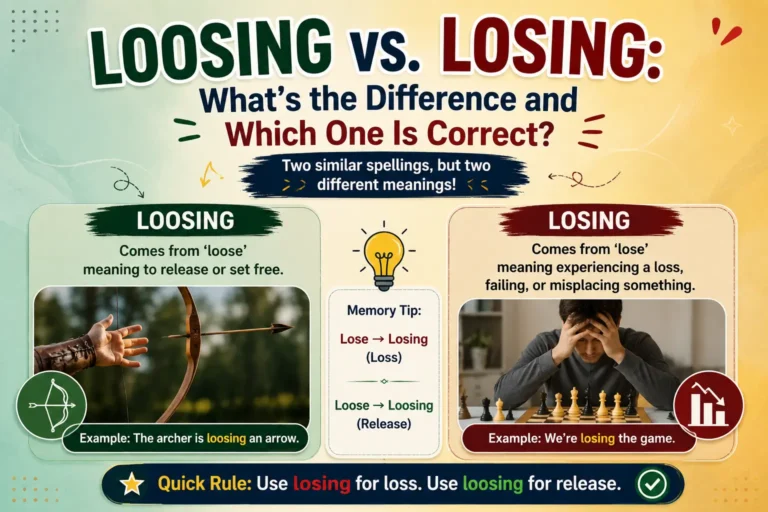
Loosing vs. Losing: What’s the Difference and Which One Is Correct?

Loosing vs. Losing explained with meanings, differences, examples, and simple grammar rules to help you choose the correct spelling.

Confused about loosing vs losing? The difference becomes clear when you look at their base words and meanings. Losing comes from lose and means failing to win, misplacing something, or no longer having it. For example, you might be losing a game, losing your keys, or losing confidence. Loosing, however, comes from the verb loose … Read more

Council vs. Counsel: What’s the Difference? Meaning, Examples, and Easy Ways to Remember

Council vs. Counsel difference showing a council group and a lawyer giving legal advice

The council vs counsel difference is easy to understand once you focus on meaning, spelling, and context. Both words have the same pronunciation, but they are different homophones. Council is a noun for a group or organized body, such as a city council or student council. In contrast, counsel can mean advice or guidance, a … Read more

Weather vs. Whether: What’s the Difference and How Do You Use Them Correctly?

Weather vs Whether difference shown with changing weather and two choices

If you’ve ever paused while writing a sentence because you weren’t sure whether to use weather vs. whether, you’re not alone. These two words are easy to confuse because they sound the same in most American English accents. However, their meanings and grammatical roles are completely different. Weather refers to conditions in the atmosphere, such … Read more