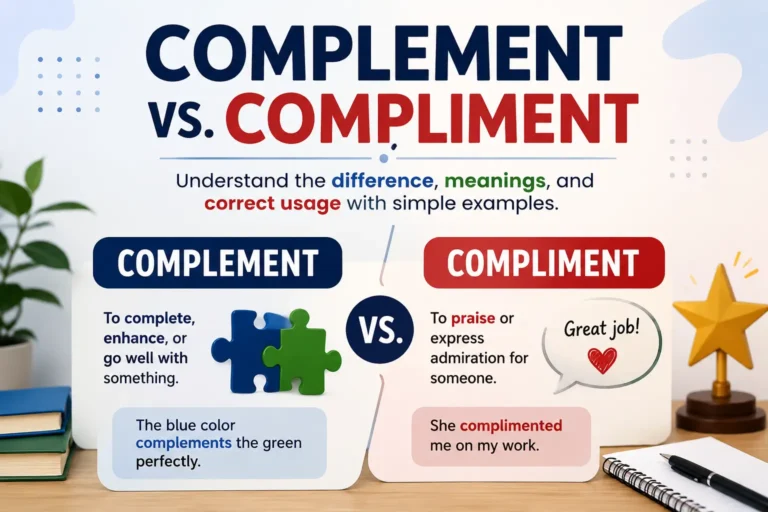
Complement vs Compliment: What’s the Difference? Meaning, Examples, and Easy Rules

Complement vs compliment meaning, difference, and examples

Complement vs compliment can be confusing because these two words sound alike but have different meanings. Complement means to complete, improve, or work well with something, while compliment means to praise someone or something. Knowing this simple difference helps you choose the correct spelling in everyday writing, emails, schoolwork, and professional communication. For example, “The … Read more

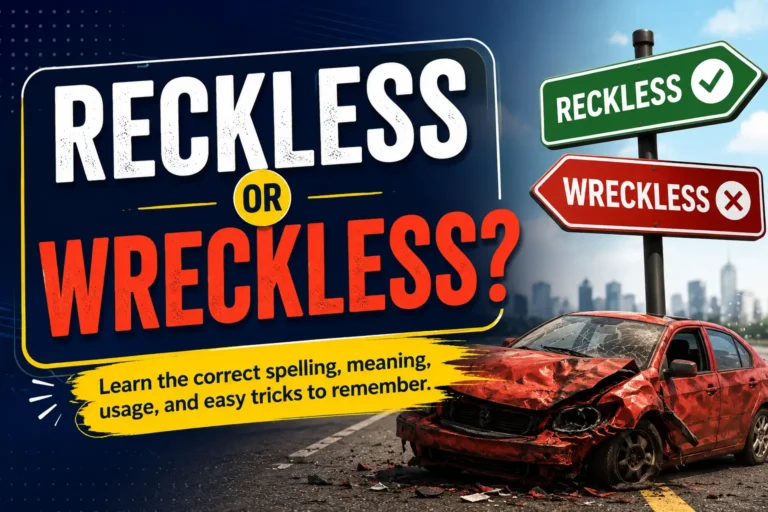
Reckless or Wreckless: Which Spelling Is Correct?

Reckless or Wreckless spelling comparison showing the correct word

Reckless or wreckless is a common spelling question, but the answer is simple: reckless is the correct spelling in standard English. It describes careless, dangerous, or irresponsible behavior that ignores possible consequences. Wreckless is generally a misspelling, although you may see it used creatively online. The confusion often comes from the familiar word wreck, which … Read more

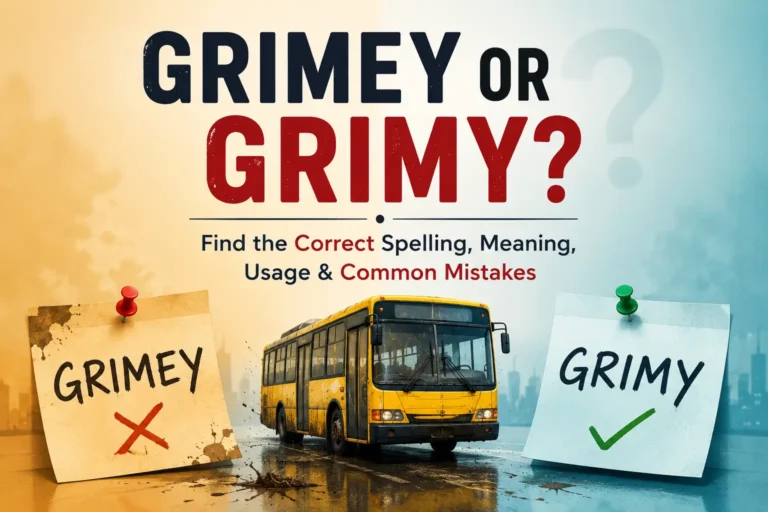
Grimey or Grimy? Which Spelling Is Correct in American English?

Grimey or grimy correct spelling in American English

Grimey or grimy is a common spelling question, but the answer is simple: grimy is the standard spelling. It describes something dirty, covered with grime, or marked by grease, soot, and accumulated dirt. If you’re writing for school, work, or any formal setting, grimy is the spelling you should use. The confusion happens because grime … Read more

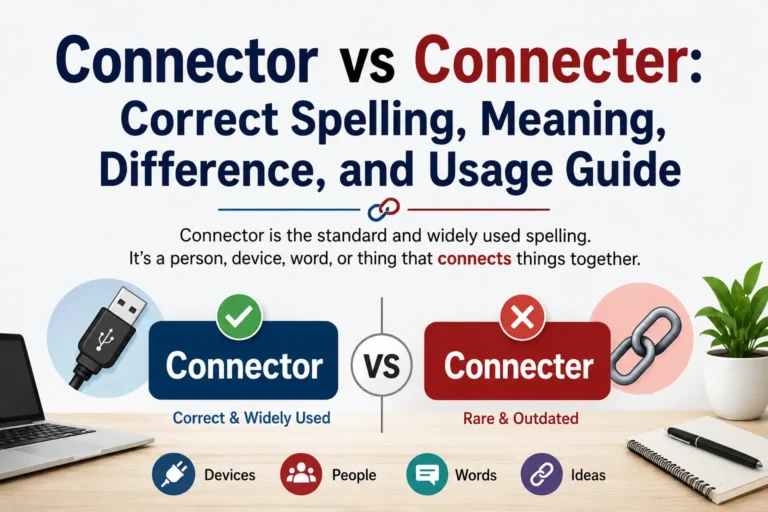
Connecter vs Connector: Correct Spelling, Meaning, Difference, and Usage Guide

Connector vs Connecter: correct spelling and difference in English

The main difference between connecter vs connector is that connector is the standard and widely accepted spelling in modern English, while connecter is a rare and outdated alternative. Both words come from the verb connect, but connector is the form most people use in professional writing, technical communication, and everyday language. A connector can be … Read more

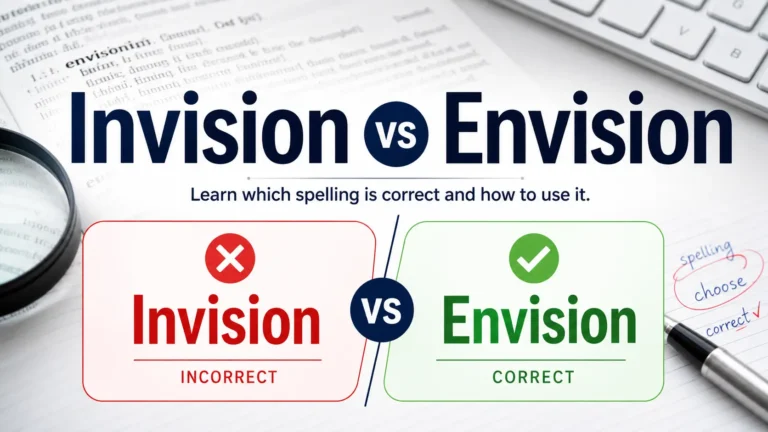
Invision vs Envision: Which Word Is Correct? Meaning, Differences, and Usage Guide

Invision vs Envision correct spelling and usage explained

When people compare invision vs envision, the confusion usually comes from the similar spelling, sound, and connection to the word vision. The correct English word is envision, which means to imagine, picture, or create a mental image of a future possibility. Many writers, editors, and students accidentally use invision because it looks logical, but standard … Read more

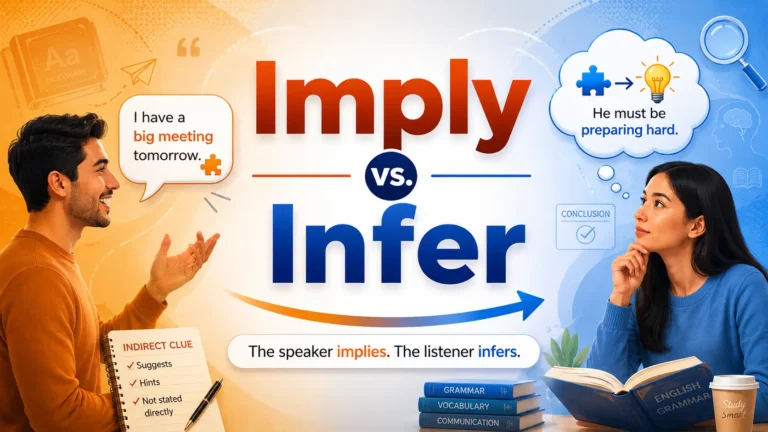
Imply vs. Infer: The Clear Difference, With Examples and Grammar Tips

Imply vs infer difference with speaker and listener example

Imply vs. Infer explains two related actions in communication. To imply means to suggest an idea without saying it directly. To infer means to reach a conclusion from clues or evidence. In simple terms, the speaker implies, while the listener infers. These words may describe the same conversation, but they show different points of view. … Read more

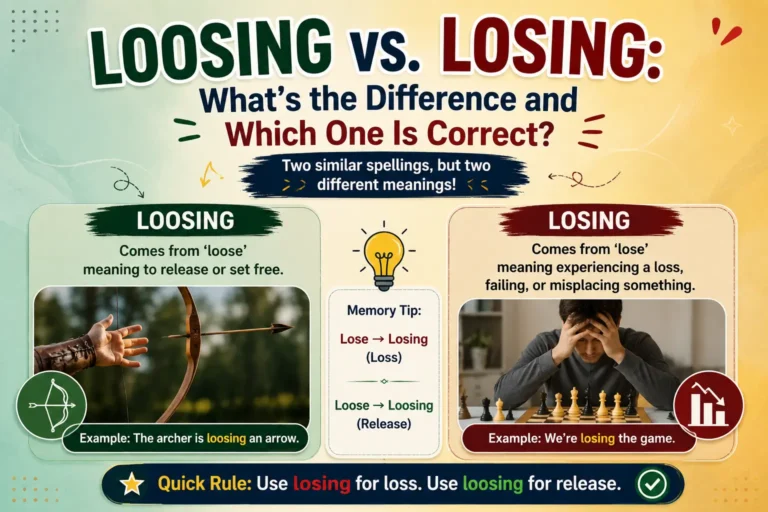
Loosing vs. Losing: What’s the Difference and Which One Is Correct?

Loosing vs. Losing explained with meanings, differences, examples, and simple grammar rules to help you choose the correct spelling.

Confused about loosing vs losing? The difference becomes clear when you look at their base words and meanings. Losing comes from lose and means failing to win, misplacing something, or no longer having it. For example, you might be losing a game, losing your keys, or losing confidence. Loosing, however, comes from the verb loose … Read more

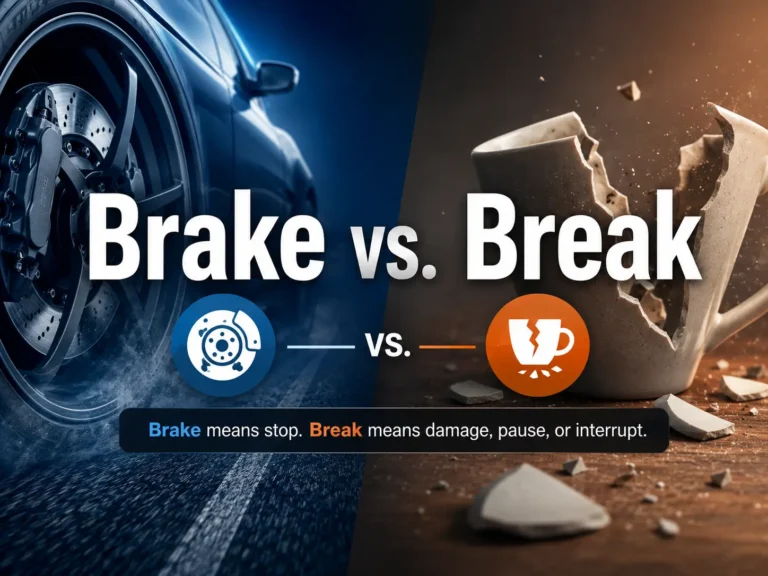
Brake vs. Break: What’s the Difference? Meaning, Usage, Examples, and Easy Tips

Brake vs. break difference with brake and broken object examples

If you’ve ever wondered about brake vs. break, you’re not alone. These two words are easy to confuse because they sound exactly the same, but they have different spellings and meanings. Brake is connected mainly to slowing down or stopping a vehicle or machine, while break has many meanings, including damaging something, interrupting something, separating … Read more

Council vs. Counsel: What’s the Difference? Meaning, Examples, and Easy Ways to Remember

Council vs. Counsel difference showing a council group and a lawyer giving legal advice

The council vs counsel difference is easy to understand once you focus on meaning, spelling, and context. Both words have the same pronunciation, but they are different homophones. Council is a noun for a group or organized body, such as a city council or student council. In contrast, counsel can mean advice or guidance, a … Read more

Weather vs. Whether: What’s the Difference and How Do You Use Them Correctly?

Weather vs Whether difference shown with changing weather and two choices

If you’ve ever paused while writing a sentence because you weren’t sure whether to use weather vs. whether, you’re not alone. These two words are easy to confuse because they sound the same in most American English accents. However, their meanings and grammatical roles are completely different. Weather refers to conditions in the atmosphere, such … Read more