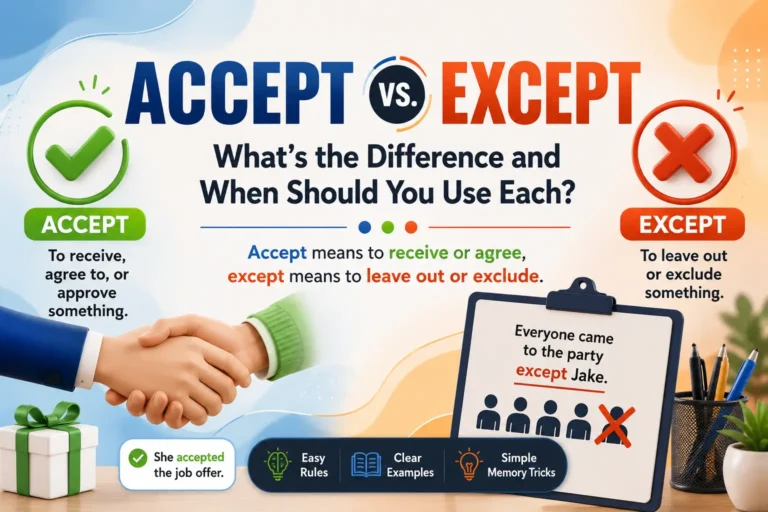
Accept vs. Except: What’s the Difference and When Should You Use Each?

Accept vs Except grammar guide explaining the difference between accept and except with simple examples and easy grammar rules.

Accept vs. except is one of the most common grammar questions because these two words sound similar but have completely different meanings. If you’ve ever wondered whether you should write accept or except, you’re in the right place. The simple answer is that accept means to receive or agree, while except means to leave out … Read more

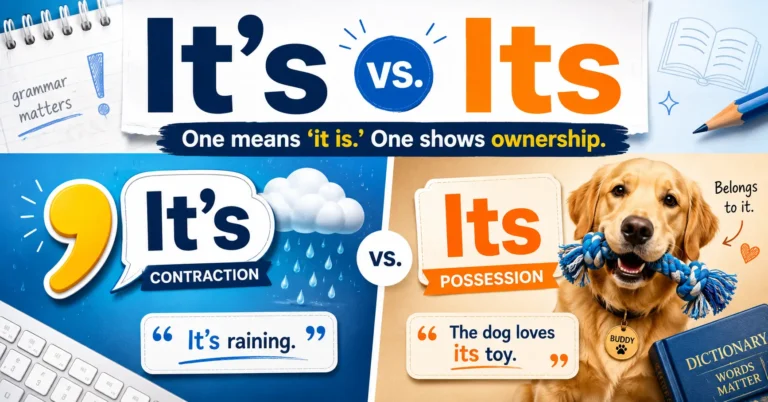
It’s vs. Its: Difference, Rules, Examples, and Easy Ways to Use Them Correctly

It’s vs Its difference explained with contraction, possession, and easy grammar examples

It’s vs its is a common English grammar confusion that affects many students, writers, and professionals. The purpose of understanding it’s vs its is to learn when to use it’s as a contraction of it is or it has, and when to use its as a possessive word that shows ownership. The easiest way to … Read more

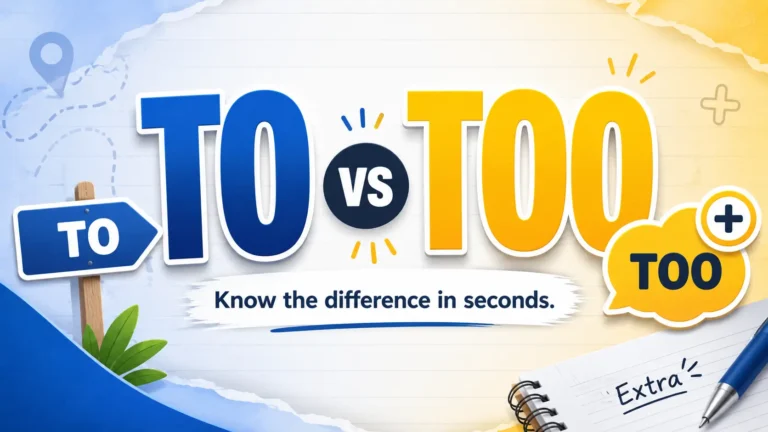
To vs. Too: What’s the Difference? (Complete Grammar Guide with Examples)

To vs Too difference explained with simple grammar rules and examples

To vs Too is one of the most searched and commonly confused topics in English grammar because these words sound the same but have different meanings and uses. If you’ve ever wondered whether to write to, too, or even two, you’re not alone. The good news is that the difference is simple once you understand … Read more

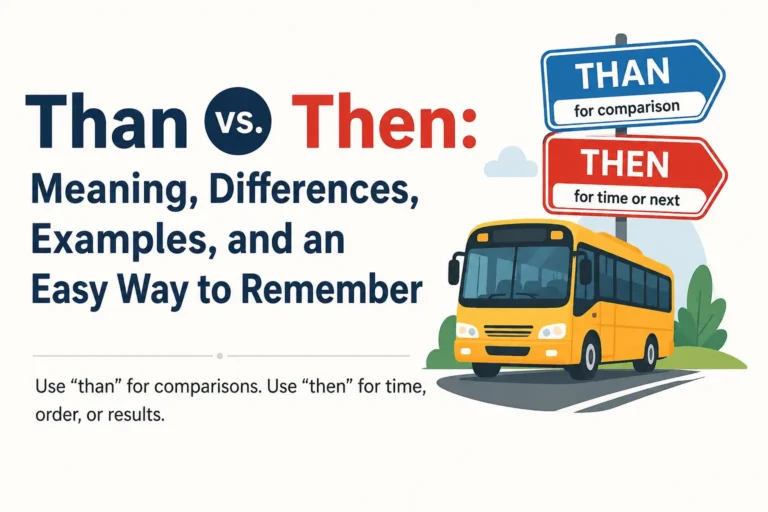
Than vs. Then: Meaning, Differences, Examples, and an Easy Way to Remember

Than vs. Then grammar comparison showing when to use "than" for comparisons and "then" for time, sequence, and results with simple examples.

Than vs then is a common grammar problem, but the difference is simple. Use than when making a comparison, and use then when discussing time, sequence, or a result. For example, “This book is better than that one” compares two books. “Finish the book, then write the review” shows what happens next. These commonly confused … Read more