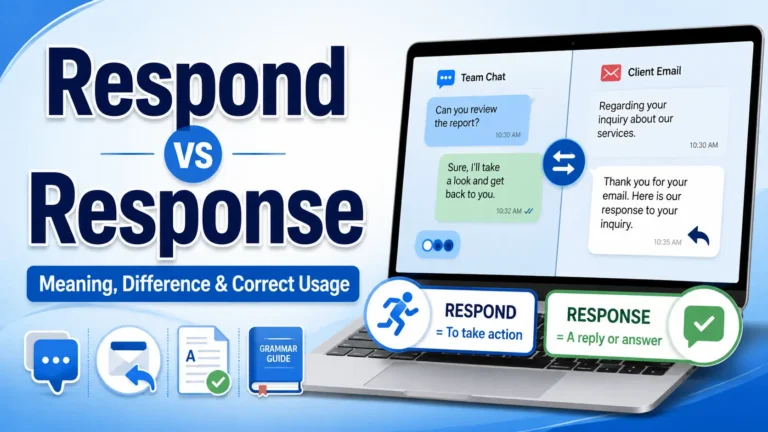
Respond vs Response: Difference, Meaning, Grammar Rules, and Correct Usage

Respond vs response meaning, difference, grammar rules, and correct usage explained

Respond vs response becomes easy to understand once you know their grammar roles. Respond is a verb that means to answer, reply, or react. Response is a noun that means an answer, reaction, or result. Although these words look similar, they work differently in English. Knowing this difference improves writing, speaking, emails, and professional communication … Read more

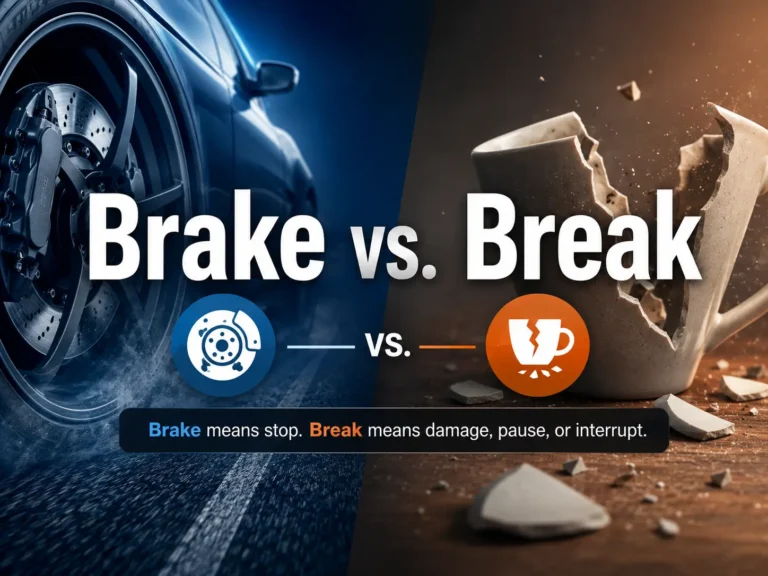
Brake vs. Break: What’s the Difference? Meaning, Usage, Examples, and Easy Tips

Brake vs. break difference with brake and broken object examples

If you’ve ever wondered about brake vs. break, you’re not alone. These two words are easy to confuse because they sound exactly the same, but they have different spellings and meanings. Brake is connected mainly to slowing down or stopping a vehicle or machine, while break has many meanings, including damaging something, interrupting something, separating … Read more

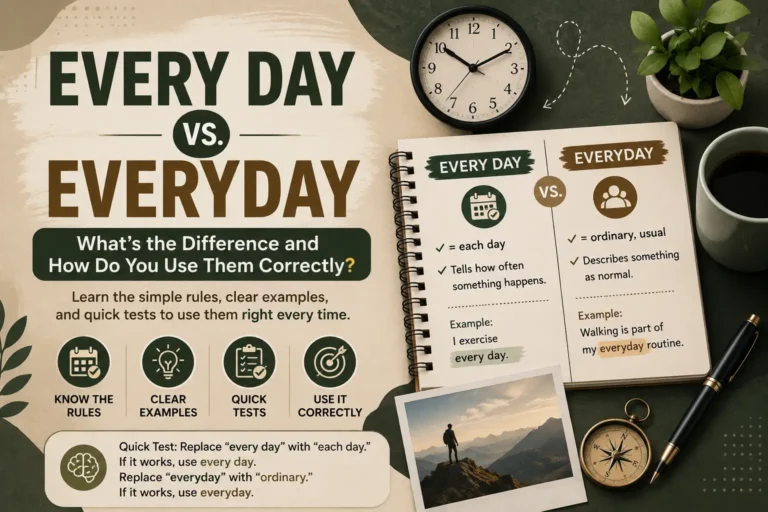
Every Day vs. Everyday: What’s the Difference and How Do You Use Them Correctly?

Every Day vs. Everyday grammar guide showing meanings, examples, and a quick test for choosing the correct form.

Every day vs everyday is a common English usage question because the two forms look and sound almost identical. However, they have different meanings and grammatical roles. Every day means each day and tells you how often something happens, as in “I practice English every day.” Everyday is an adjective that means ordinary, usual, or … Read more

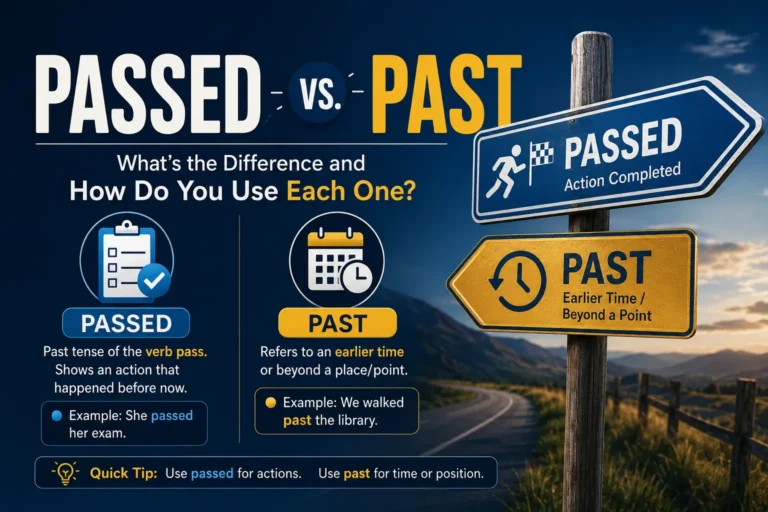
Passed vs. Past: What’s the Difference and How Do You Use Each One?

Passed vs. Past grammar guide showing that passed describes an action, while past refers to earlier time or movement beyond a point.

Confused about passed vs past? You’re not alone. These words sound alike, but they have different meanings and uses. Passed is the past tense of the verb pass, while past can describe an earlier time or something beyond a place or point. For example, you passed your test, but you walked past the school. Learning … Read more

Your vs. You’re: What’s the Difference and How to Use Them Correctly?

Your vs You’re difference explained with ownership examples and you are contraction examples

Your vs. you’re is one of the most searched English grammar questions because these two words sound alike but have different meanings and uses. If you’ve ever wondered whether to write your or you’re, you’re not alone. Understanding this difference helps you write more clearly in emails, text messages, social media posts, school assignments, and … Read more

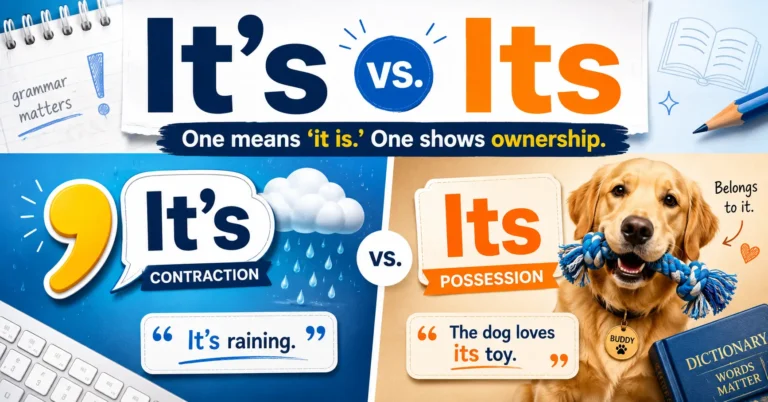
It’s vs. Its: Difference, Rules, Examples, and Easy Ways to Use Them Correctly

It’s vs Its difference explained with contraction, possession, and easy grammar examples

It’s vs its is a common English grammar confusion that affects many students, writers, and professionals. The purpose of understanding it’s vs its is to learn when to use it’s as a contraction of it is or it has, and when to use its as a possessive word that shows ownership. The easiest way to … Read more

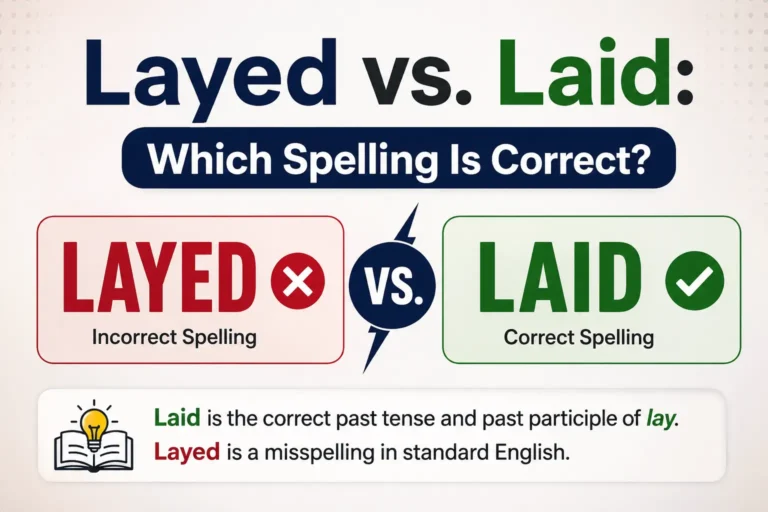
Layed vs. Laid: Which Spelling Is Correct?

Layed vs laid comparison showing laid as correct and layed as incorrect

Layed vs. Laid is a common spelling question, but the rule is simple. Laid is the correct past tense and past participle of lay, while layed is a misspelling in standard English. You should write, “She laid the book on the table,” not “She layed the book on the table.” The word lay means to … Read more

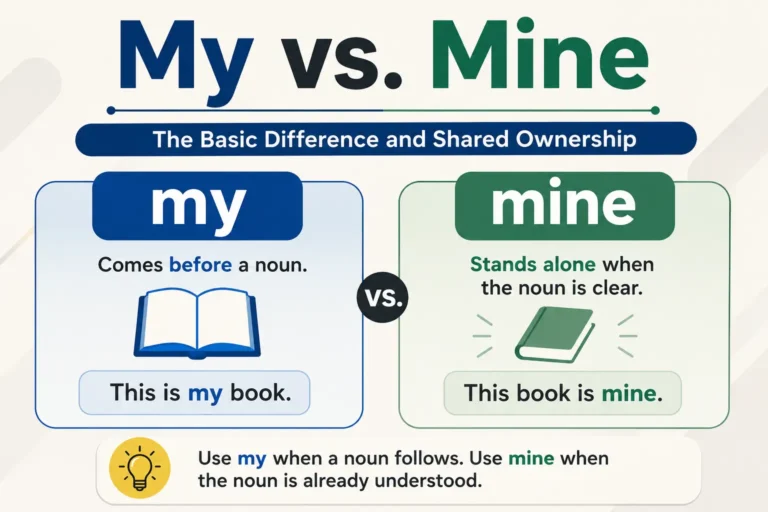
My vs. Mine: The Basic Difference and Shared Ownership

My vs. Mine difference explained with simple grammar rules and examples

My vs. Mine becomes easy once you see that my comes before a noun, while mine stands alone when the noun is already clear from the full context. My is a possessive determiner, while mine is a possessive pronoun. Use my in “This is my book” because book follows it. Use mine in “This book … Read more

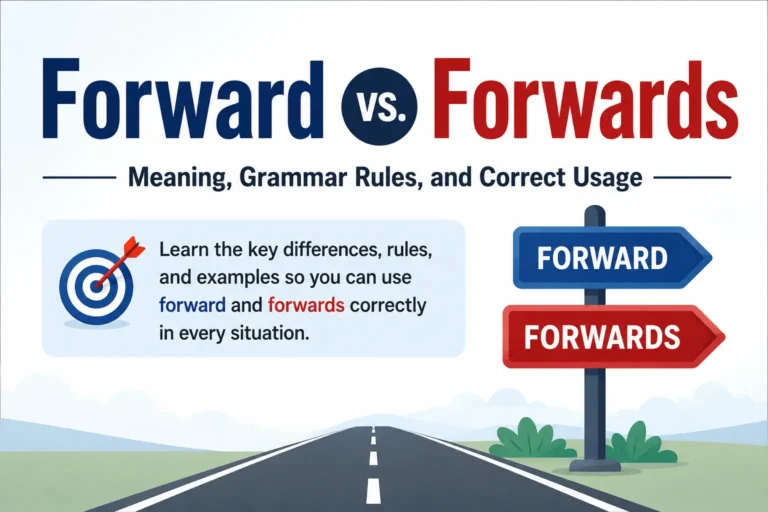
Forward vs. Forwards: Meaning, Grammar Rules, and Correct Usage

Forward vs Forwards explained with grammar rules, American vs British English differences, and simple examples.

The difference between forward vs. forwards can seem confusing because both words may describe movement toward the front. However, they are not always interchangeable. Forward has several grammatical roles, while forwards has fewer uses. In American English, writers usually prefer forward as the directional adverb. Meanwhile, British English accepts both forward and forwards, especially when … Read more

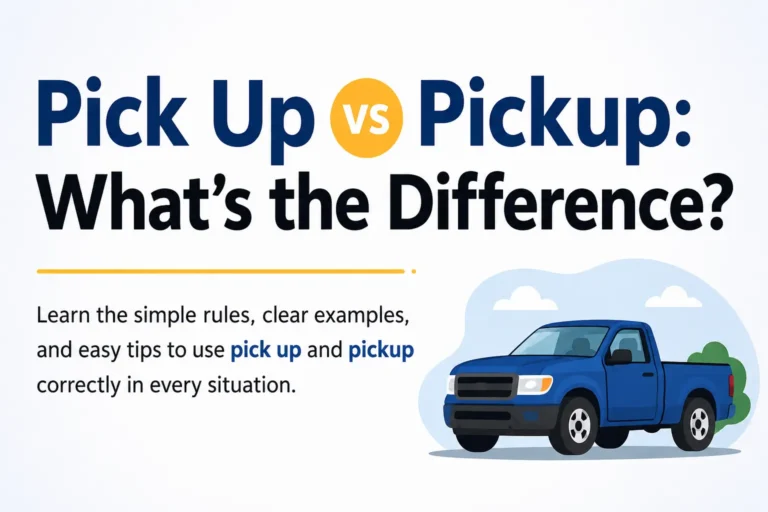
Pick Up vs Pickup Understanding the Spelling Difference

Pick Up vs Pickup grammar guide showing the difference between the phrasal verb "pick up" and the noun "pickup" with simple examples.

The pick up vs pickup choice becomes easier when you check whether the term acts as a verb, noun, or adjective before choosing its spelling. These compound words may look confusing as one combination, but their word use differs. Write pick up as two words for an action: “I picked up the order.” Write pickup … Read more