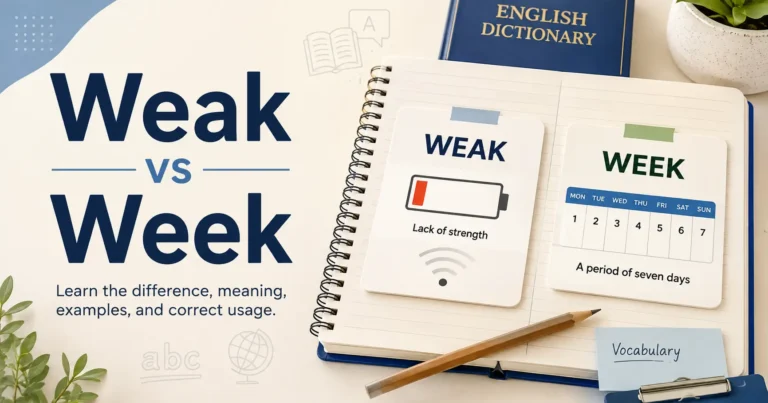
Weak vs Week: Difference, Meaning, Examples, and How to Use Them Correctly

Weak vs week comparison showing the difference between lack of strength and a seven-day period with simple English examples

Confused about weak vs week? Learn the simple difference between these words, their meanings, and how to use them correctly in daily English. Many English learners struggle with weak vs week because both words sound the same, but they have different meanings. Weak describes a lack of strength, power, or ability, while week refers to … Read more

Seal vs Seel: Difference, Meaning, and Correct Usage in English

Seal vs Seel difference showing correct meanings, spelling, usage, official seal, package, and historical falconry example.

The main seal vs seel difference comes from their meaning, usage, and context. Both words have the same pronunciation in most English accents, which creates confusion for many English learners, students, and professionals. However, seal is a common modern word used in writing, business, and everyday communication, while seel is an old, rarely used historical … Read more

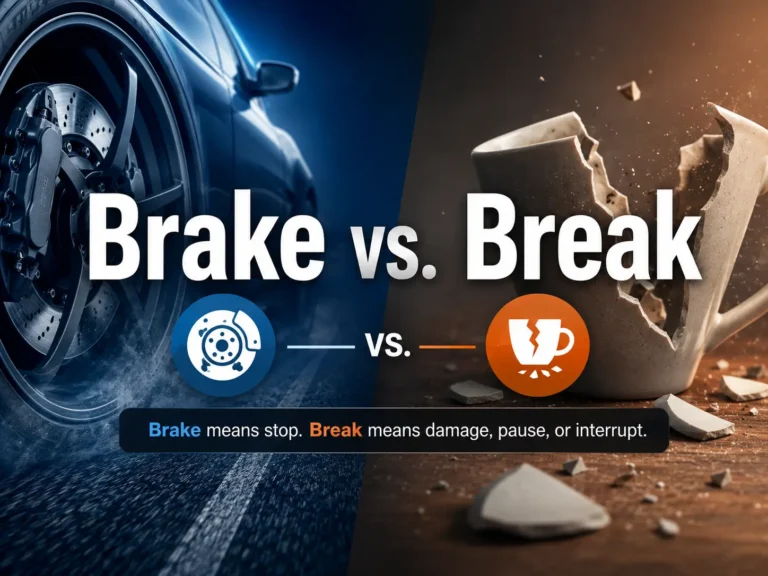
Brake vs. Break: What’s the Difference? Meaning, Usage, Examples, and Easy Tips

Brake vs. break difference with brake and broken object examples

If you’ve ever wondered about brake vs. break, you’re not alone. These two words are easy to confuse because they sound exactly the same, but they have different spellings and meanings. Brake is connected mainly to slowing down or stopping a vehicle or machine, while break has many meanings, including damaging something, interrupting something, separating … Read more

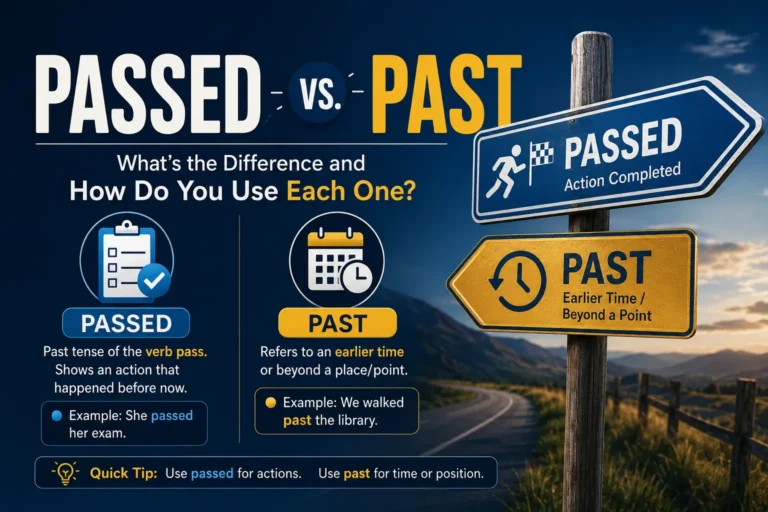
Passed vs. Past: What’s the Difference and How Do You Use Each One?

Passed vs. Past grammar guide showing that passed describes an action, while past refers to earlier time or movement beyond a point.

Confused about passed vs past? You’re not alone. These words sound alike, but they have different meanings and uses. Passed is the past tense of the verb pass, while past can describe an earlier time or something beyond a place or point. For example, you passed your test, but you walked past the school. Learning … Read more

Your vs. You’re: What’s the Difference and How to Use Them Correctly?

Your vs You’re difference explained with ownership examples and you are contraction examples

Your vs. you’re is one of the most searched English grammar questions because these two words sound alike but have different meanings and uses. If you’ve ever wondered whether to write your or you’re, you’re not alone. Understanding this difference helps you write more clearly in emails, text messages, social media posts, school assignments, and … Read more

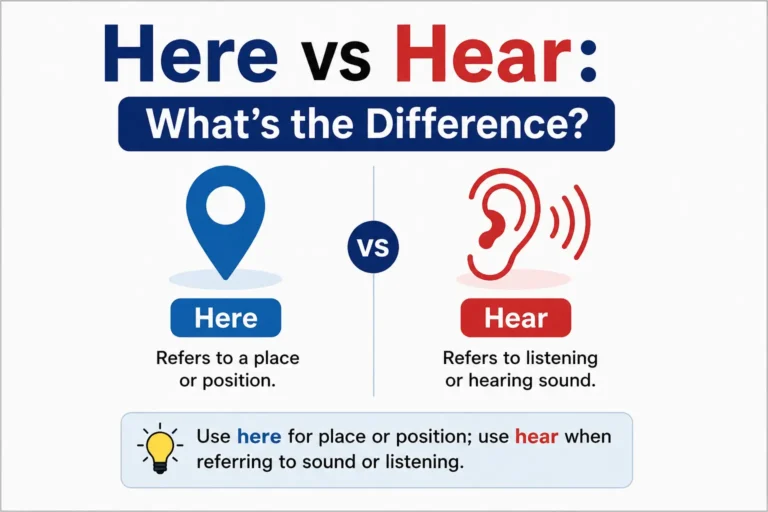
Difference Between Here and Hear

Here vs Hear explained with meanings, differences, grammar rules, memory trick, and easy examples.

Here and Hear are common homophones with the same pronunciation, but their spelling, meaning, and sentence role are completely different. The English language has many confusing elements and quirks, yet this homophone pair becomes easy when you check the context. They sound the same, but their different spellings and different meanings change word usage. Hear … Read more

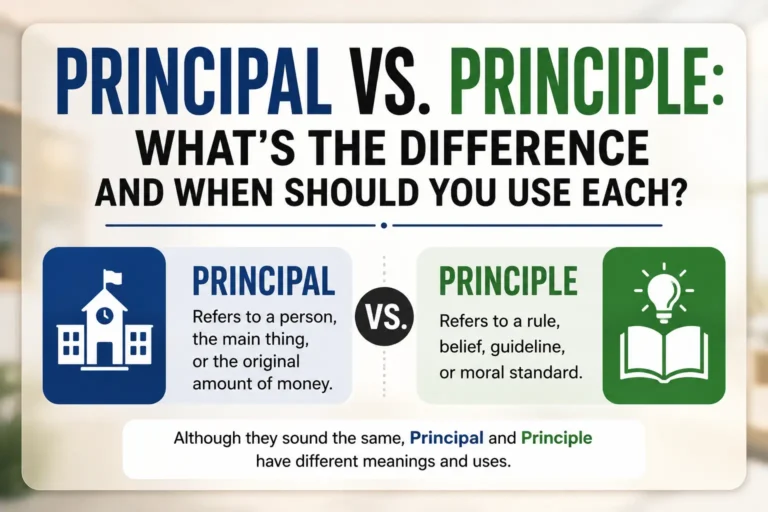
Principal vs. Principle: What’s the Difference and When Should You Use Each?

Principal vs principle comparison explaining the difference with meanings, examples, and grammar rules

Principal vs. principle is one of the most searched commonly confused words in English grammar because both words sound the same but have very different meanings. If you’ve ever wondered which spelling is correct, you’re in the right place. This guide explains the difference between principal and principle, when to use each word, and how … Read more