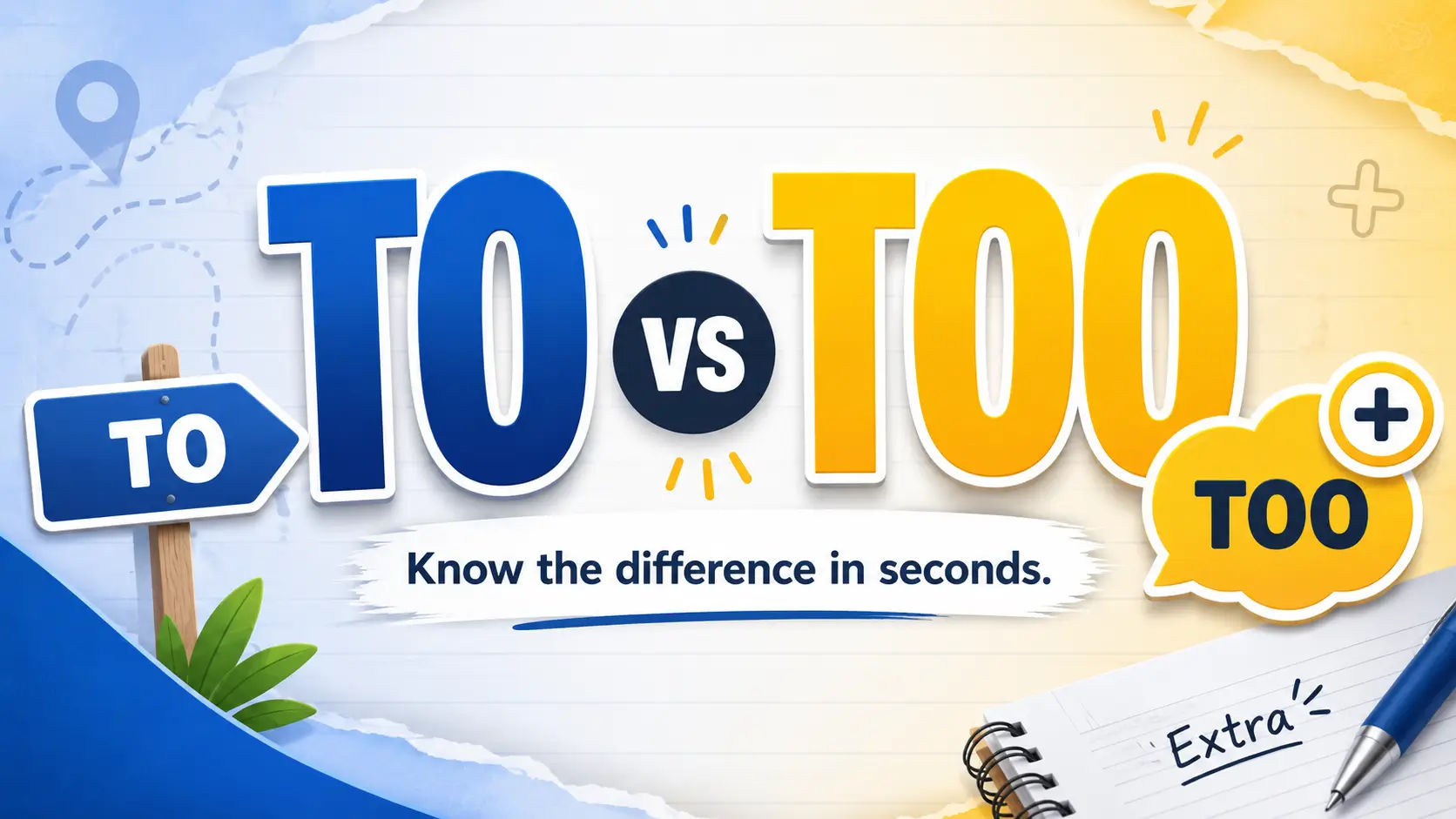
To vs. Too: What’s the Difference? (Complete Grammar Guide with Examples)

To vs Too difference explained with simple grammar rules and examples

To vs Too is one of the most searched and commonly confused topics in English grammar because these words sound the same but have different meanings and uses. If you’ve ever wondered whether to write to, too, or even two, you’re not alone. The good news is that the difference is simple once you understand … Read more

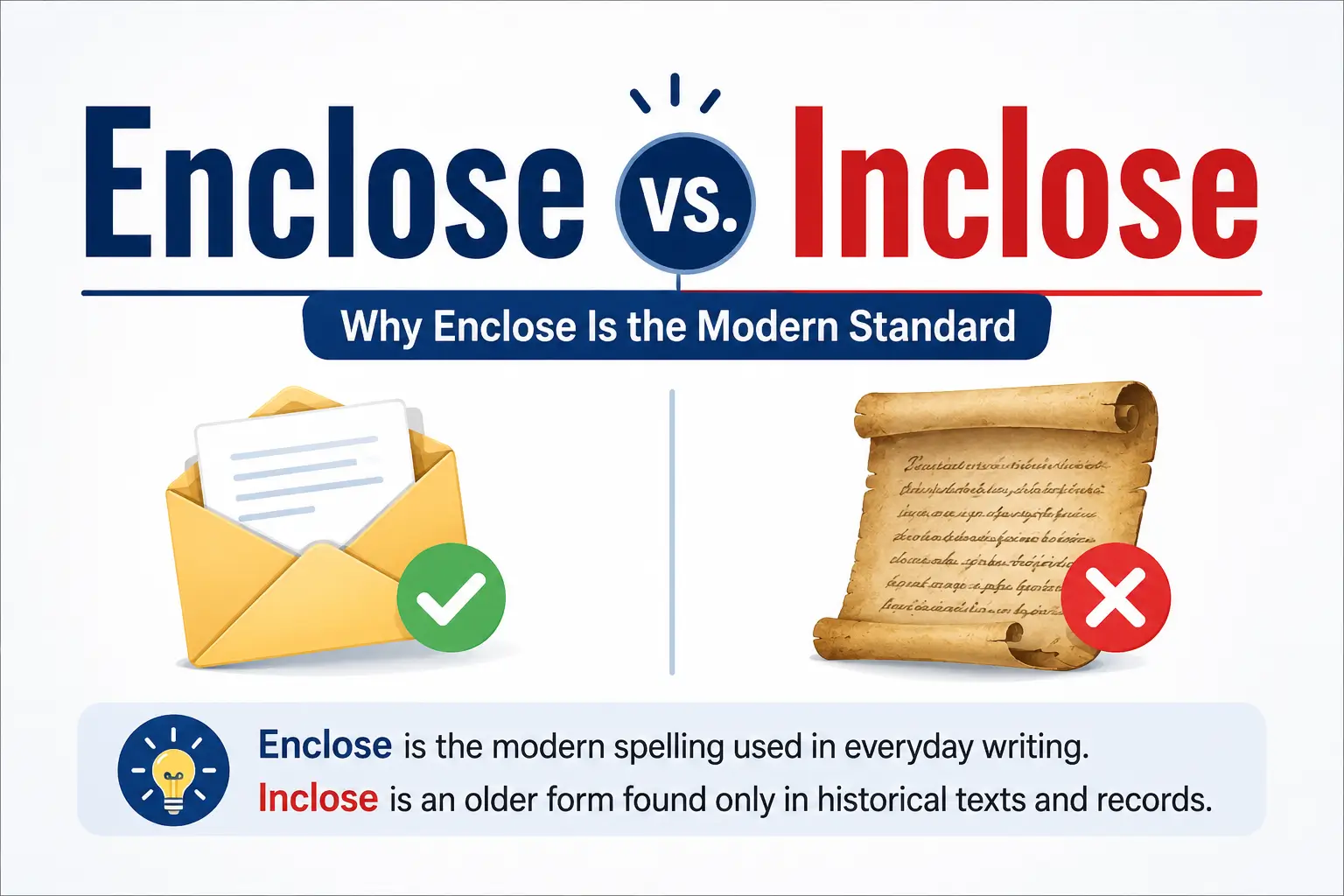
Enclose vs. Inclose: Why Enclose Is the Modern Standard

Enclose vs Inclose explained with the correct spelling, grammar rules, historical usage, and simple examples.

The enclose vs. inclose choice is simple: enclose is the modern spelling, while inclose survives mainly in older historical records and texts. Both words once meant to surround, shut in, or place something inside a container, boundary, or envelope. Today, enclose is the accepted verb in modern English. Its related forms are enclosed, enclosing, and … Read more

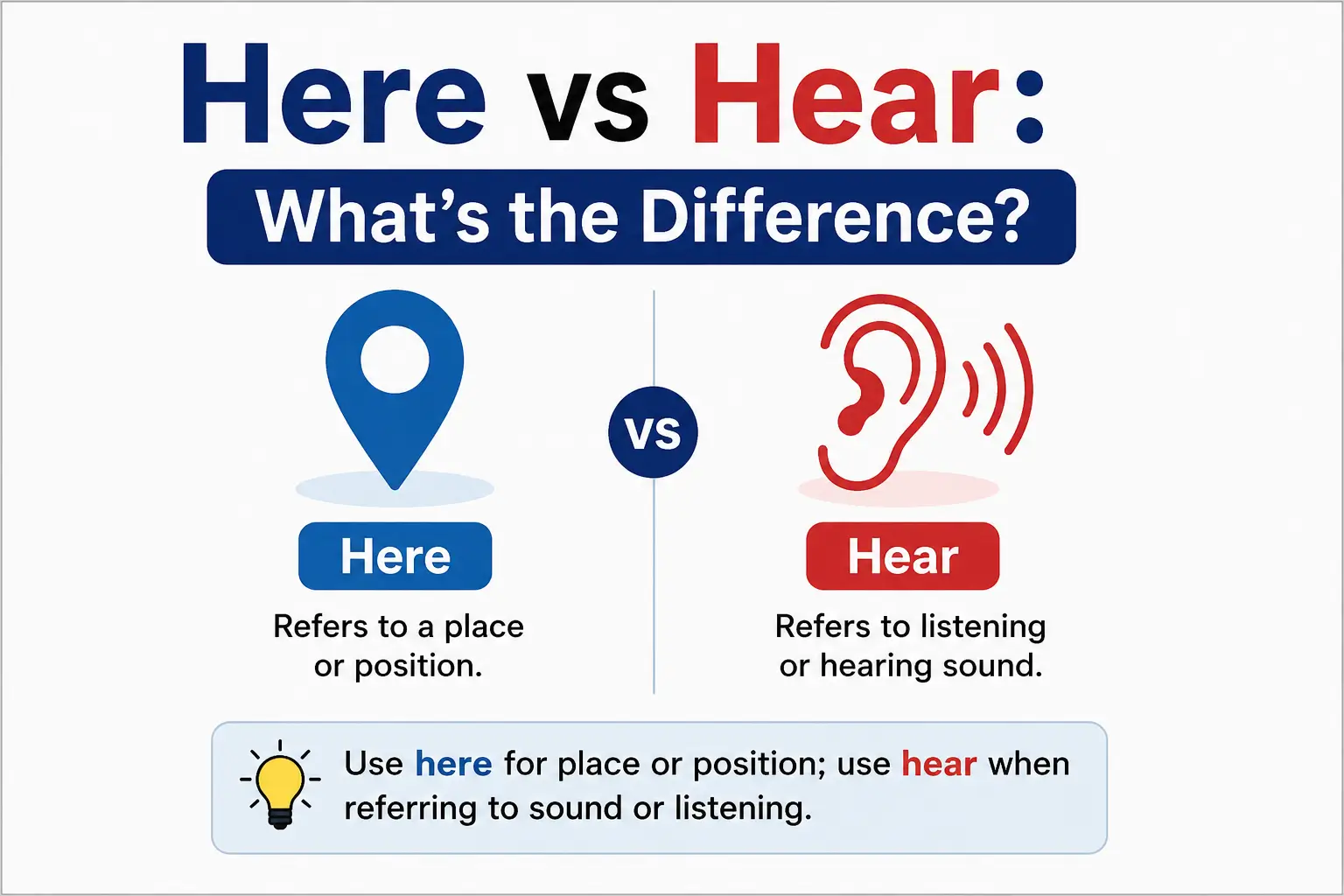
Difference Between Here and Hear

Here vs Hear explained with meanings, differences, grammar rules, memory trick, and easy examples.

Here and Hear are common homophones with the same pronunciation, but their spelling, meaning, and sentence role are completely different. The English language has many confusing elements and quirks, yet this homophone pair becomes easy when you check the context. They sound the same, but their different spellings and different meanings change word usage. Hear … Read more

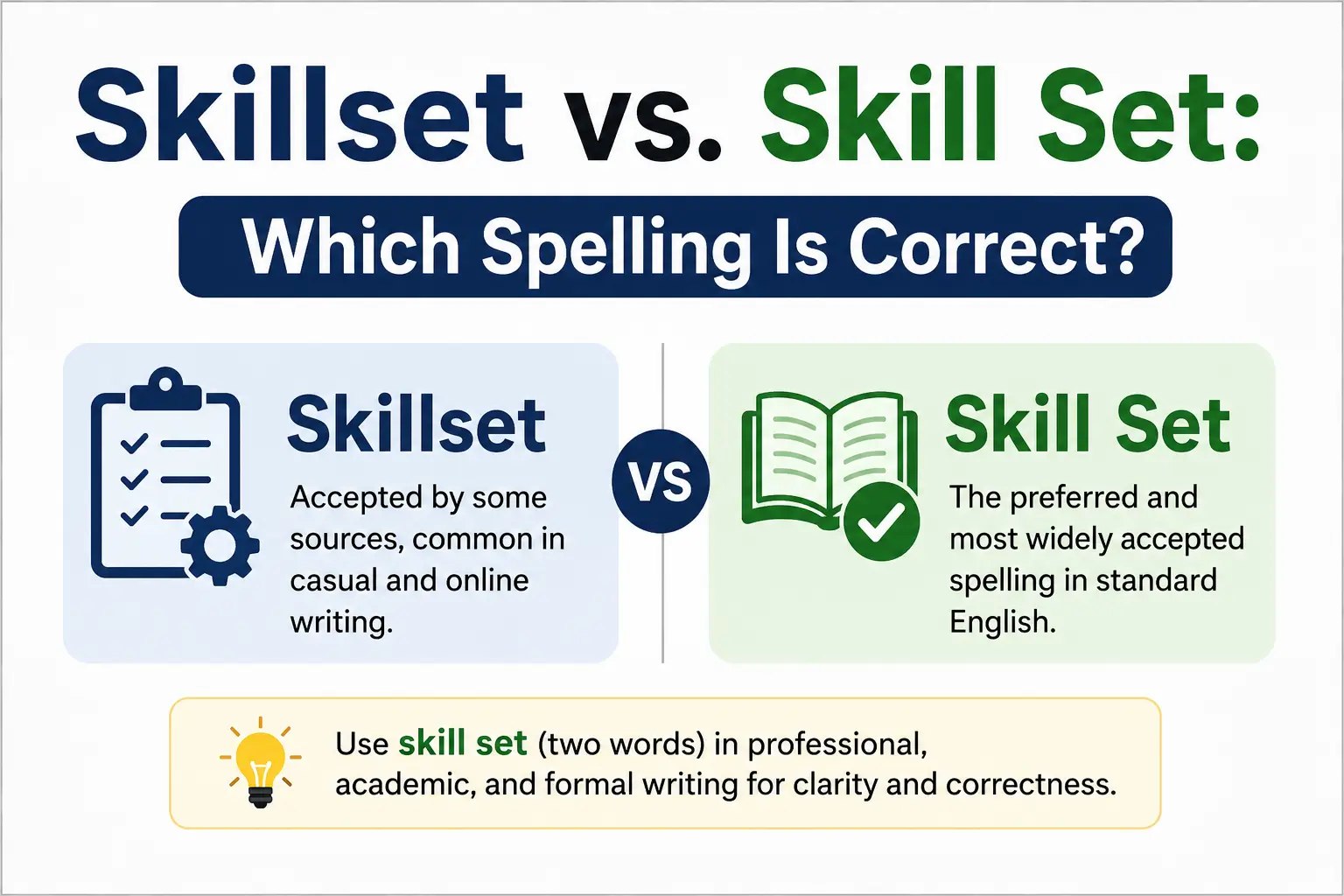
Skillset vs. Skill Set: Which Spelling Is Correct?

Skillset vs Skill Set explained with correct spelling, grammar rules, examples, and writing tips for professional English.

The key difference in skillset vs skill set is spelling: skill set is the safest and most widely accepted form in standard American English. It refers to a group of abilities that a person uses for a job, activity, or purpose. The one-word form, skillset, also appears in modern writing. Some dictionaries recognize it as … Read more

Vicious vs. Viscous Word Choice: How Viscous and Vicious Differ

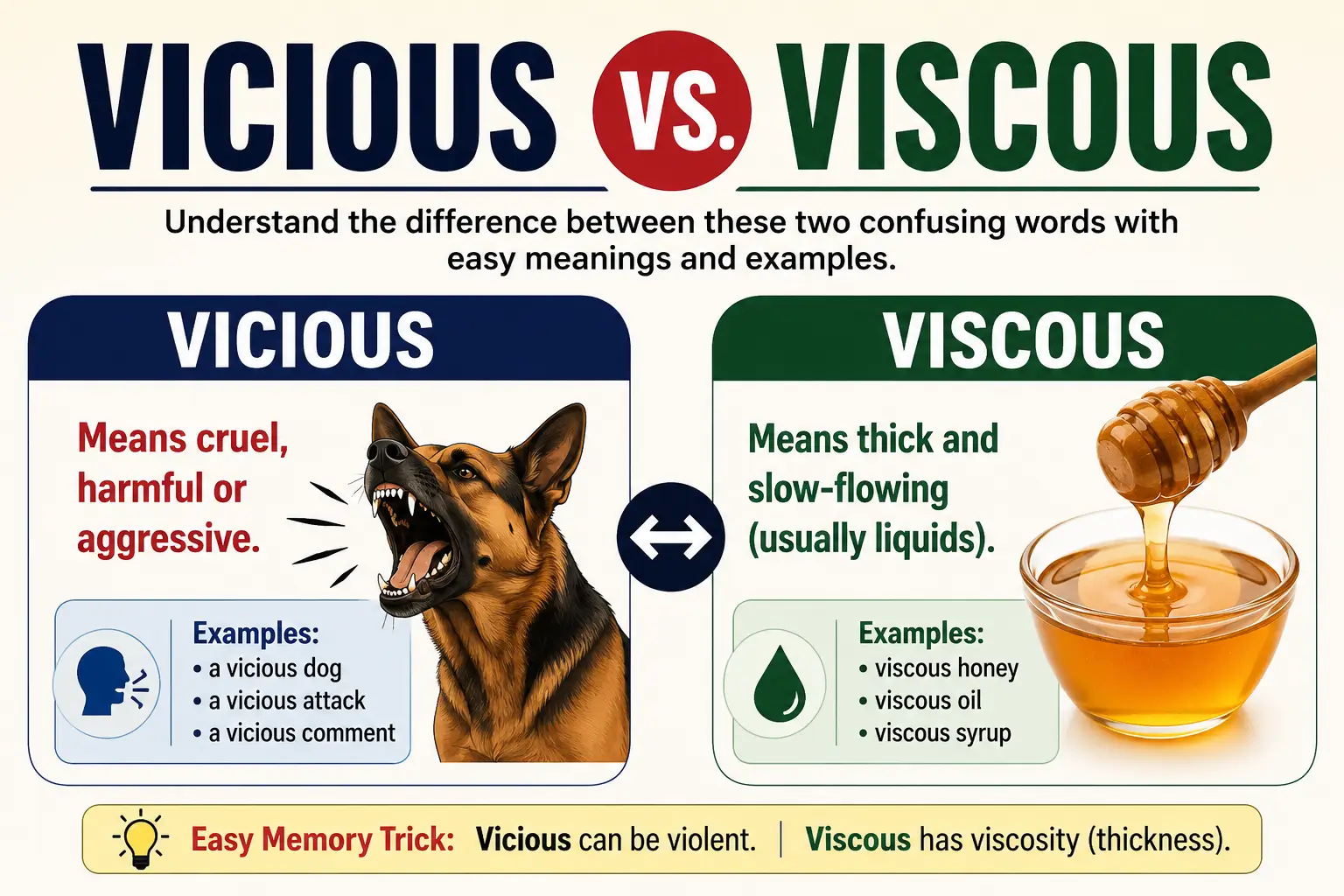
Vicious vs. Viscous infographic showing the difference between cruel behavior and thick slow-flowing liquids with simple examples.

Vicious vs. Viscous becomes clear when you remember that vicious describes cruel behavior, while viscous describes a thick liquid that flows slowly. Both words are adjectives, but their close spelling hides very different meanings. Vicious can describe an evil, malicious, aggressive, violent, or severe person, action, remark, storm, or attack. Viscous refers to thickness and … Read more