Allude vs. Elude: What’s the Difference? Meaning, Examples, and Easy Ways to Remember

Allude vs Elude difference with meanings and examples

Allude vs. elude can be confusing because these words look and sound similar, but they have different meanings. Allude means to refer to something indirectly or hint at it, while elude means to escape, avoid, or remain difficult to understand or remember. For example, a writer may allude to a historical event without explaining it … Read more
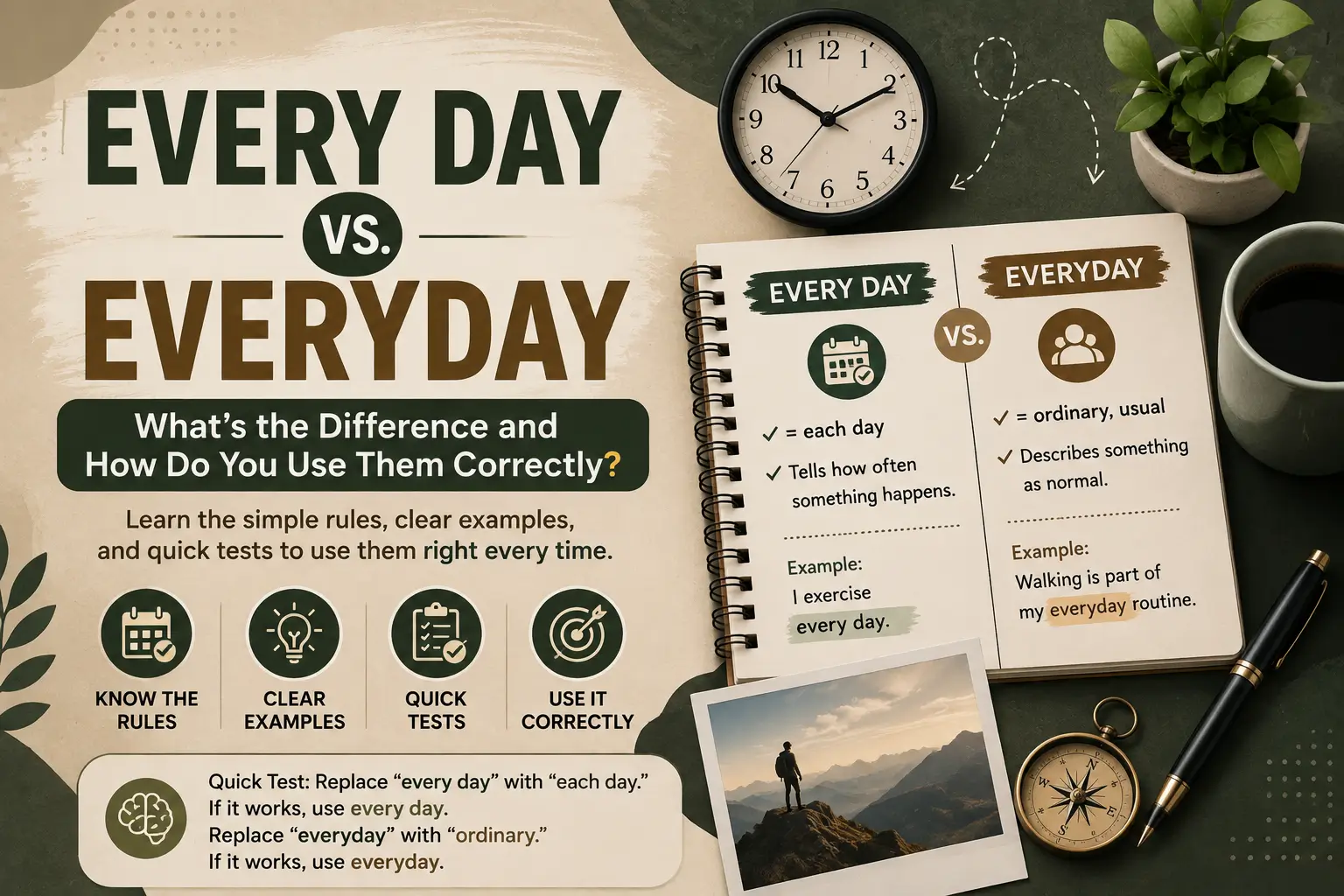
Every Day vs. Everyday: What’s the Difference and How Do You Use Them Correctly?

Every Day vs. Everyday grammar guide showing meanings, examples, and a quick test for choosing the correct form.

Every day vs everyday is a common English usage question because the two forms look and sound almost identical. However, they have different meanings and grammatical roles. Every day means each day and tells you how often something happens, as in “I practice English every day.” Everyday is an adjective that means ordinary, usual, or … Read more

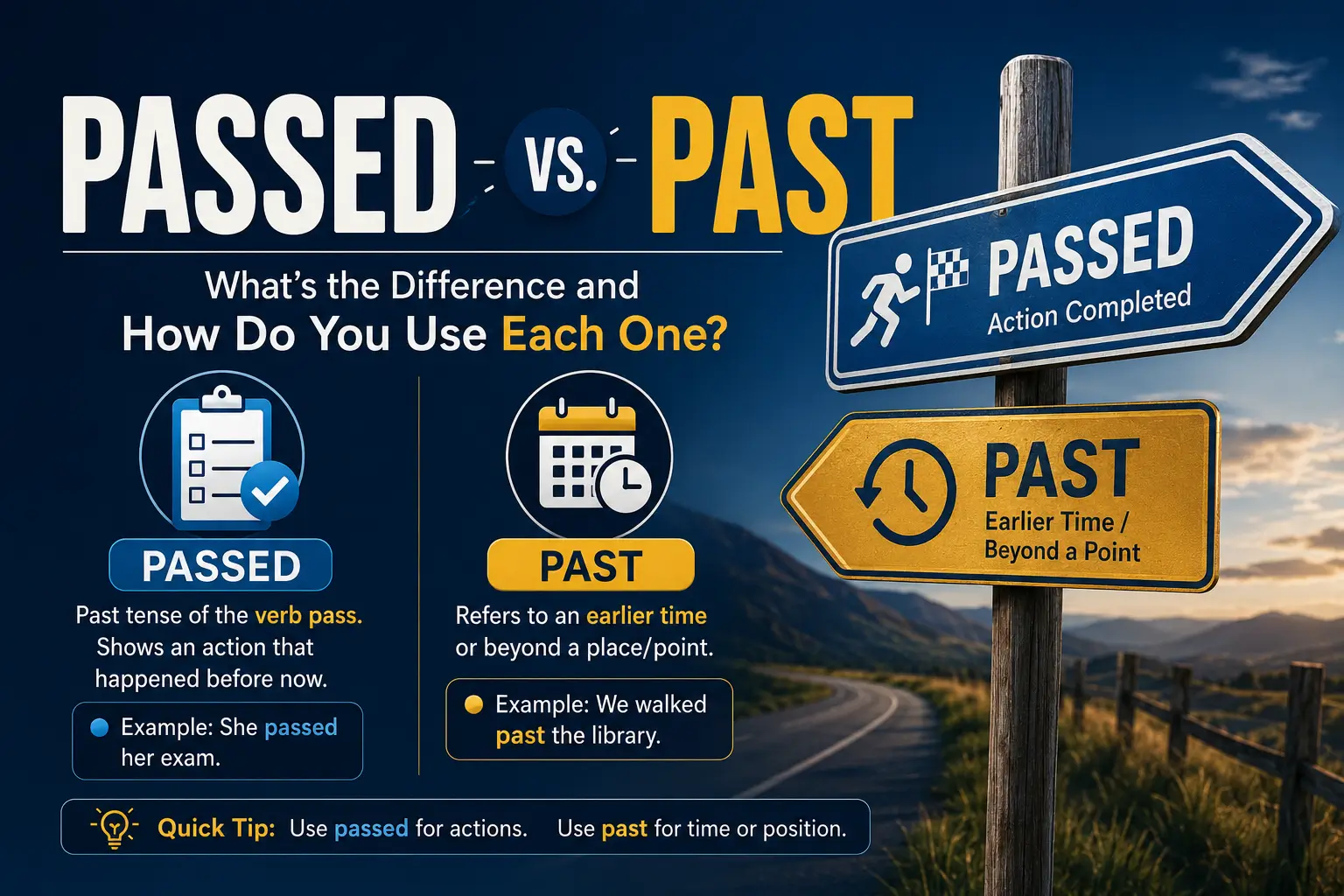
Passed vs. Past: What’s the Difference and How Do You Use Each One?

Passed vs. Past grammar guide showing that passed describes an action, while past refers to earlier time or movement beyond a point.

Confused about passed vs past? You’re not alone. These words sound alike, but they have different meanings and uses. Passed is the past tense of the verb pass, while past can describe an earlier time or something beyond a place or point. For example, you passed your test, but you walked past the school. Learning … Read more

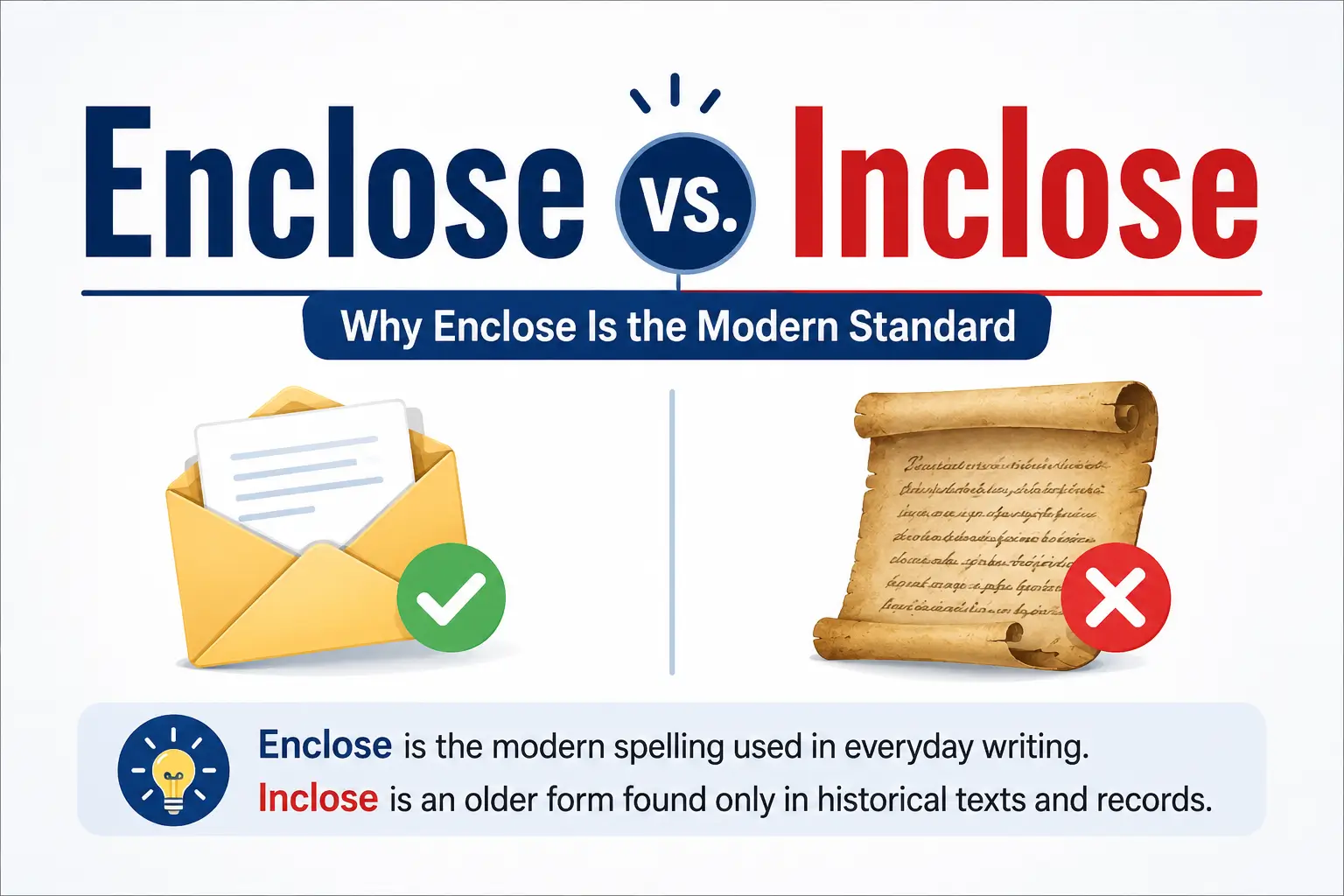
Enclose vs. Inclose: Why Enclose Is the Modern Standard

Enclose vs Inclose explained with the correct spelling, grammar rules, historical usage, and simple examples.

The enclose vs. inclose choice is simple: enclose is the modern spelling, while inclose survives mainly in older historical records and texts. Both words once meant to surround, shut in, or place something inside a container, boundary, or envelope. Today, enclose is the accepted verb in modern English. Its related forms are enclosed, enclosing, and … Read more

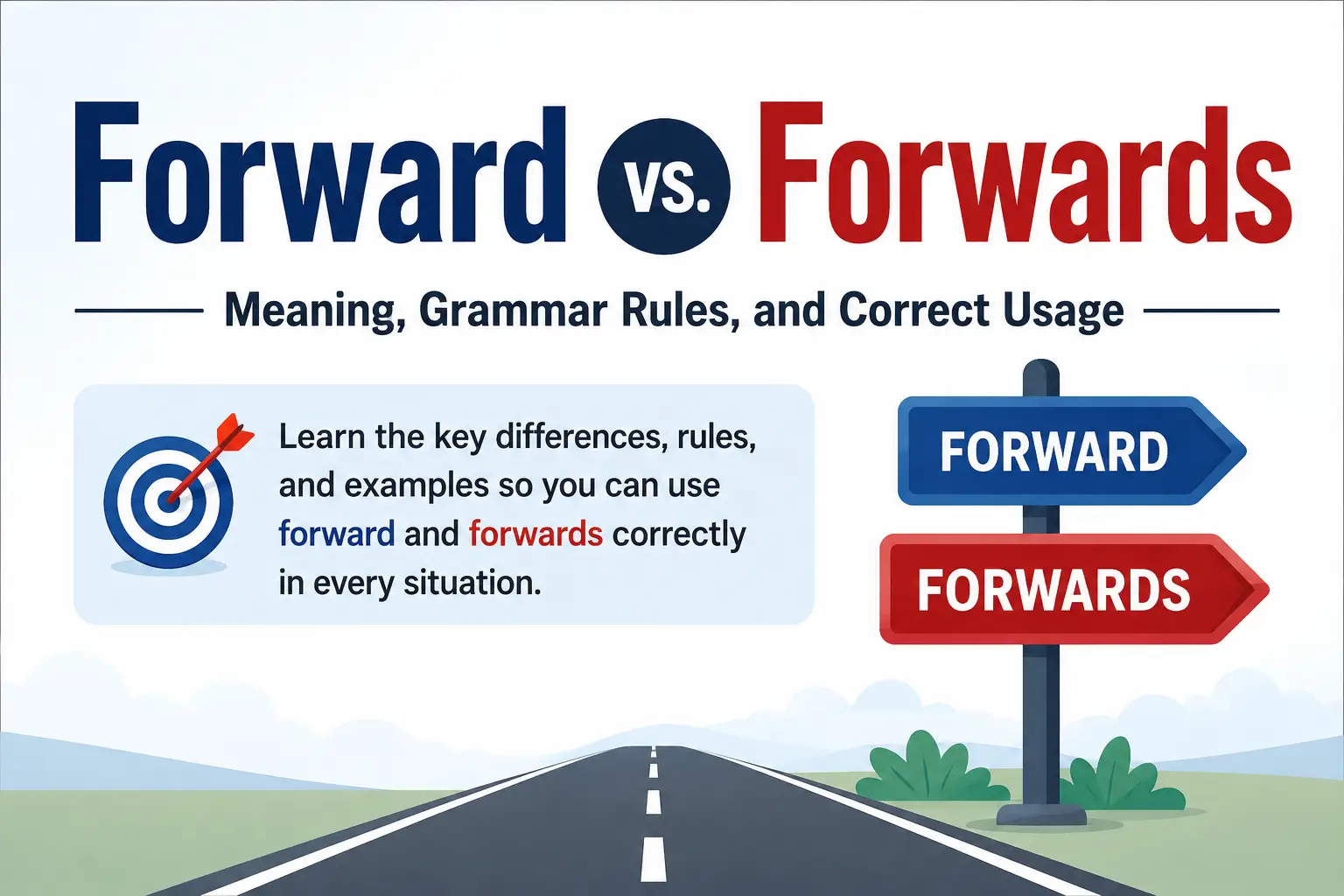
Forward vs. Forwards: Meaning, Grammar Rules, and Correct Usage

Forward vs Forwards explained with grammar rules, American vs British English differences, and simple examples.

The difference between forward vs. forwards can seem confusing because both words may describe movement toward the front. However, they are not always interchangeable. Forward has several grammatical roles, while forwards has fewer uses. In American English, writers usually prefer forward as the directional adverb. Meanwhile, British English accepts both forward and forwards, especially when … Read more

What Is the Difference Between Climactic vs Climatic?

Climactic vs Climatic Climactic vs Climatic – Difference, Meaning, Examples

The key difference in climactic vs climatic is simple: climactic refers to a climax, while climatic clearly describes climate and climate patterns. Each is an adjective, and dictionaries may mark it as adj. These two adjectives sound similar and are easy to confuse, yet their meaning is completely different. Use climactic for a final, decisive, … Read more

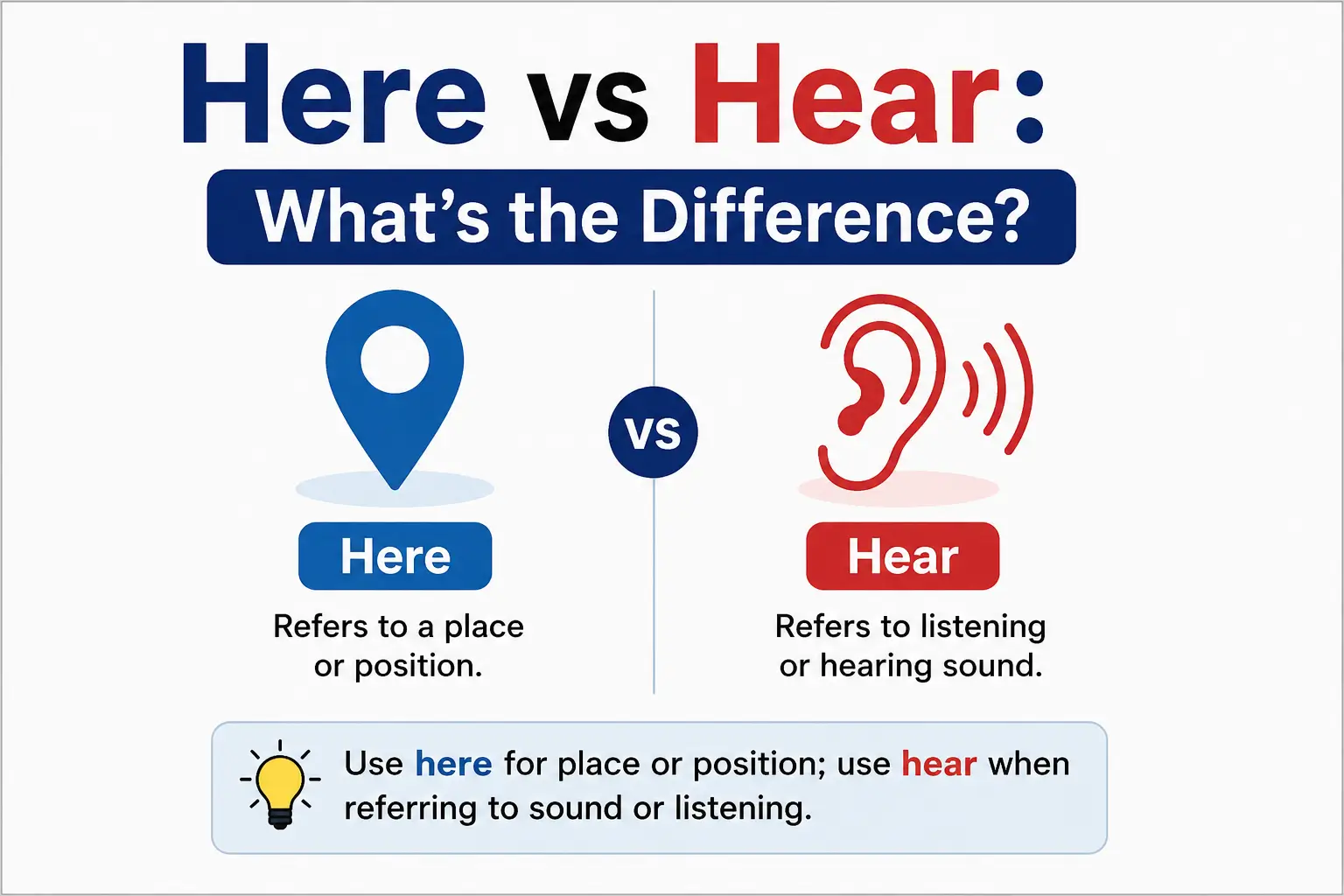
Difference Between Here and Hear

Here vs Hear explained with meanings, differences, grammar rules, memory trick, and easy examples.

Here and Hear are common homophones with the same pronunciation, but their spelling, meaning, and sentence role are completely different. The English language has many confusing elements and quirks, yet this homophone pair becomes easy when you check the context. They sound the same, but their different spellings and different meanings change word usage. Hear … Read more

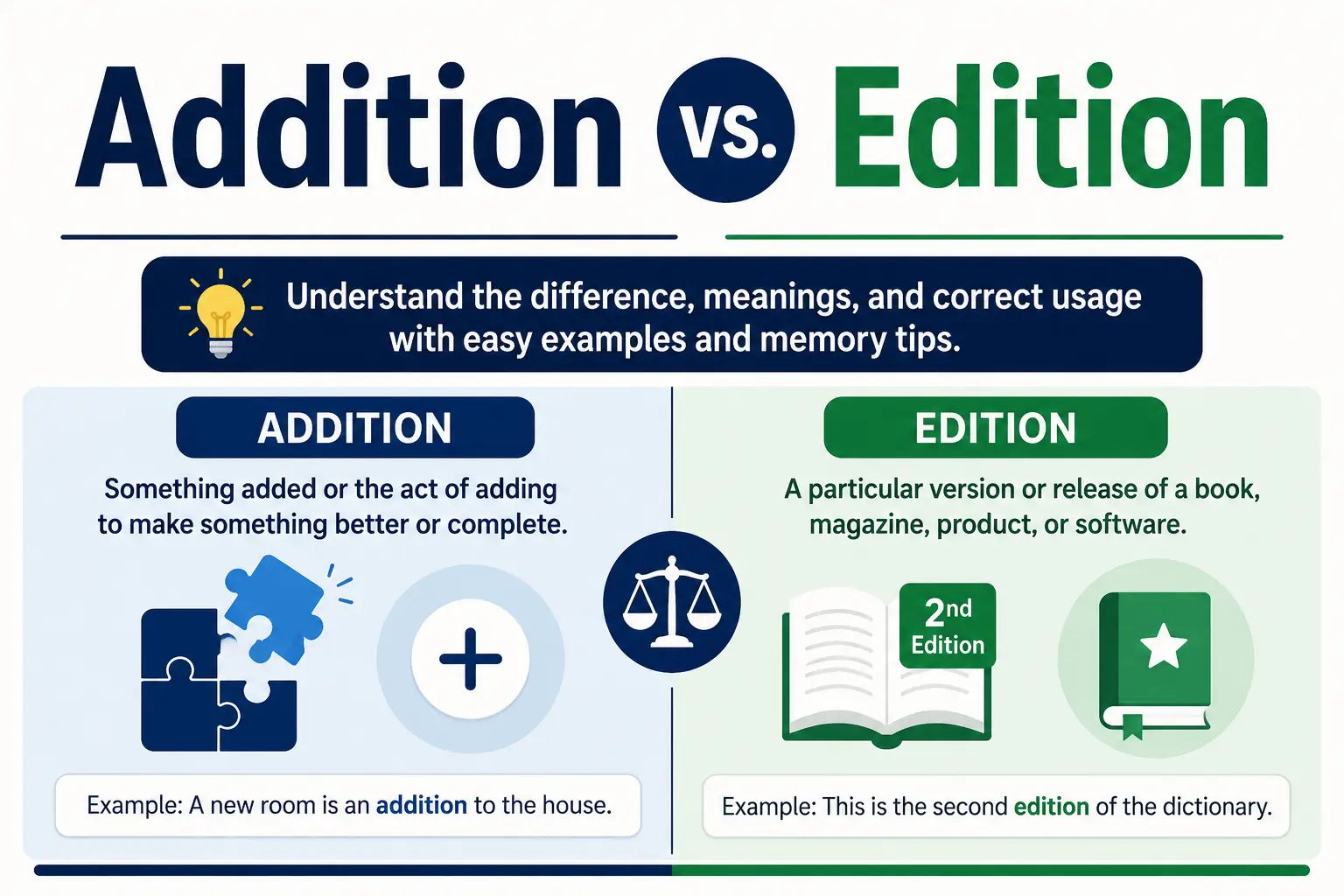
Addition vs. Edition The Difference Between Edition and Addition

Addition vs. Edition: Differences, Meanings & Examples

Addition vs. Edition becomes simple when you remember that an addition is something added, while an edition is a published version of a work. A publisher may release a revised edition of a specific book after correcting, updating, or reorganizing its content. The new publication may also use a different layout, design, or format. Use … Read more

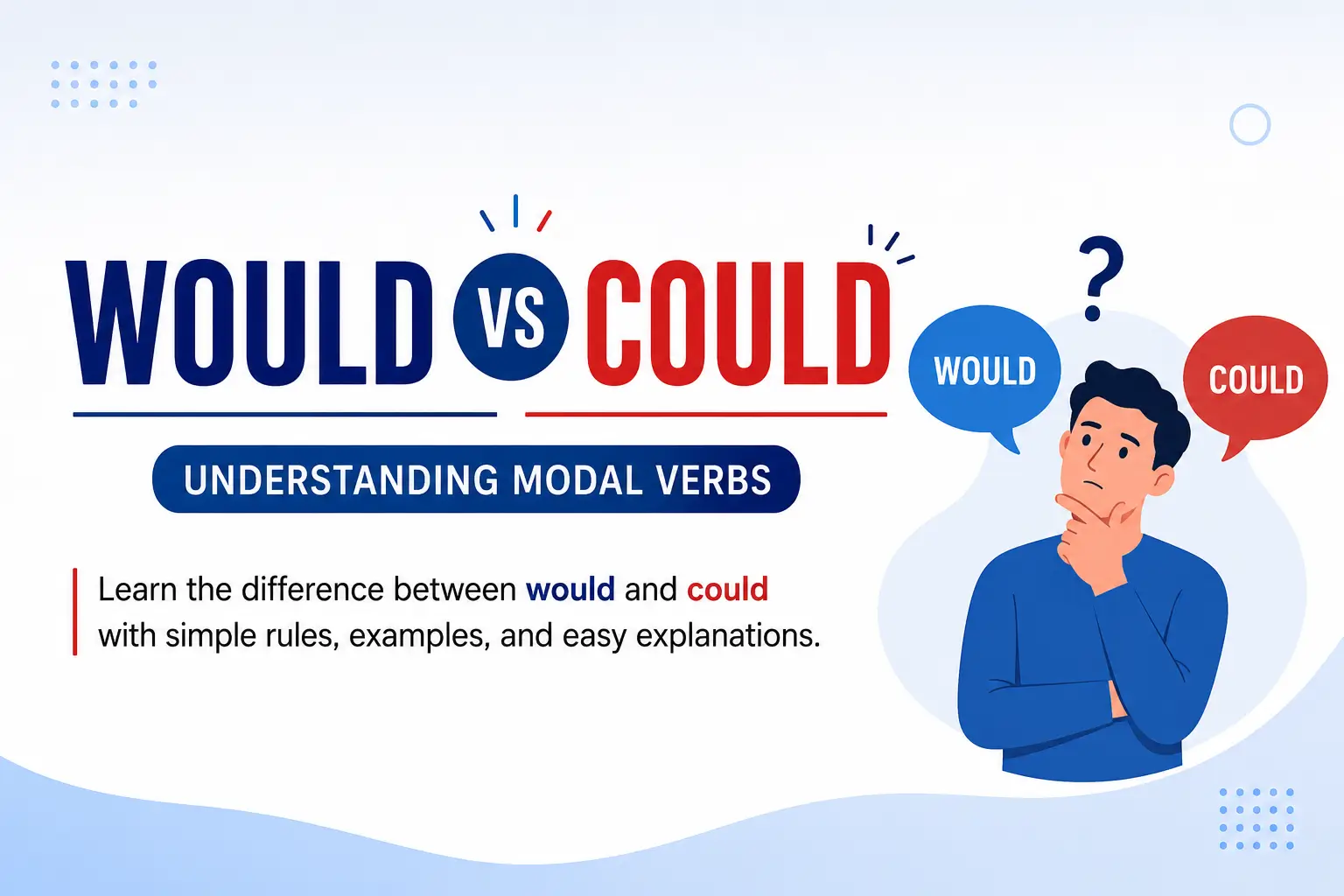
Would vs Could: Difference, Grammar Rules, Uses, and Examples

Would vs Could grammar rules, differences, and examples explained

Understanding would vs could helps English learners choose the right word when making polite requests or asking questions. These modal verbs may look similar, but their meaning changes depending on the situation. For example, “Could you bring me a cup of coffee?” asks about ability, while “Would you bring me a cup of tea?” focuses … Read more

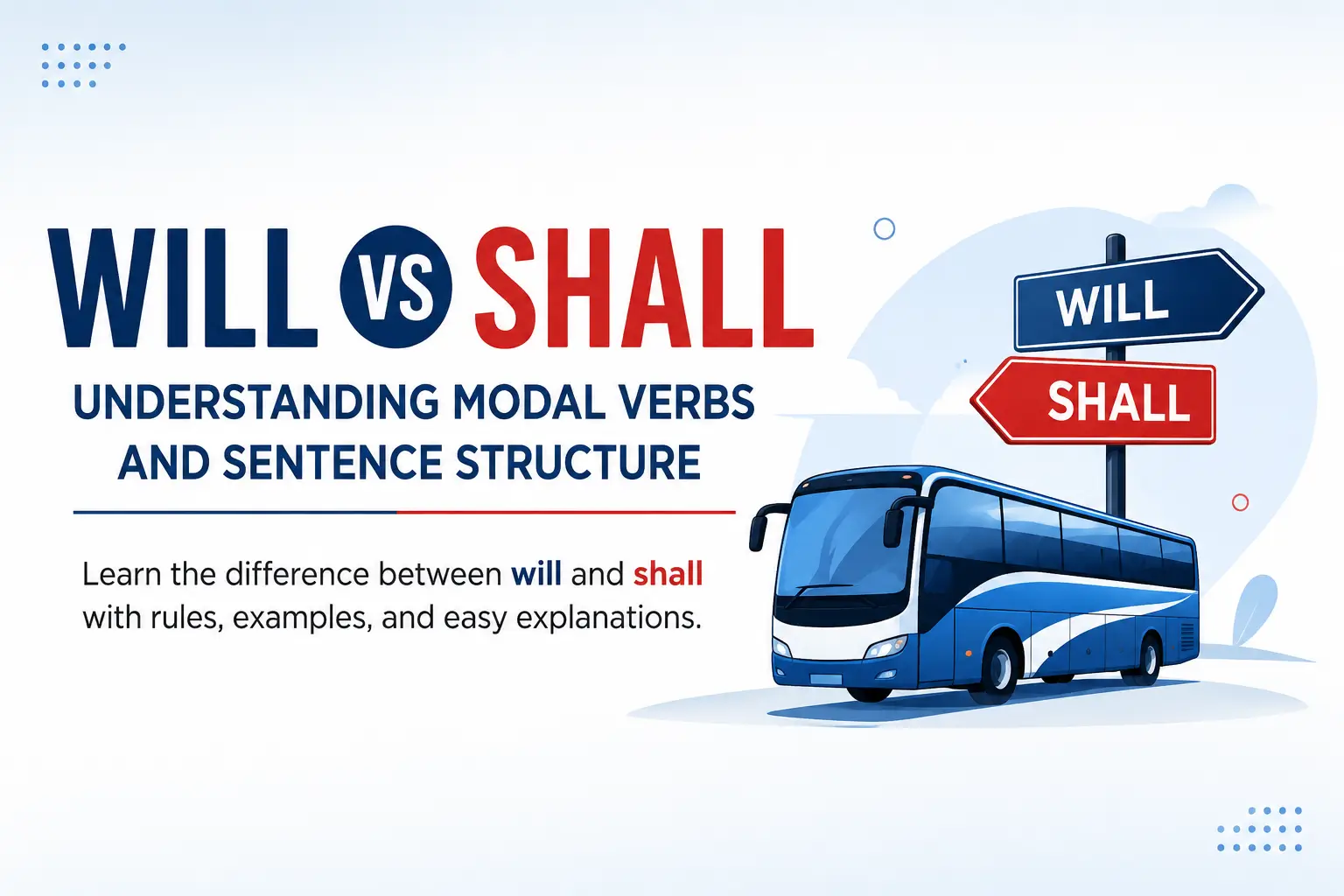
Will vs Shall: Difference, Grammar Rules, Uses, and Examples

Will vs Shall grammar rules, differences, and examples explained

Learning will vs shall becomes easier when you know how these modal verbs work in English. Both are helping verbs used to express future time, but they can also show possibility, permission, or obligation. Will is more common in daily English, while shall is often used in formal situations or special expressions. Unlike regular verbs, … Read more