Respond vs Response: Difference, Meaning, Grammar Rules, and Correct Usage
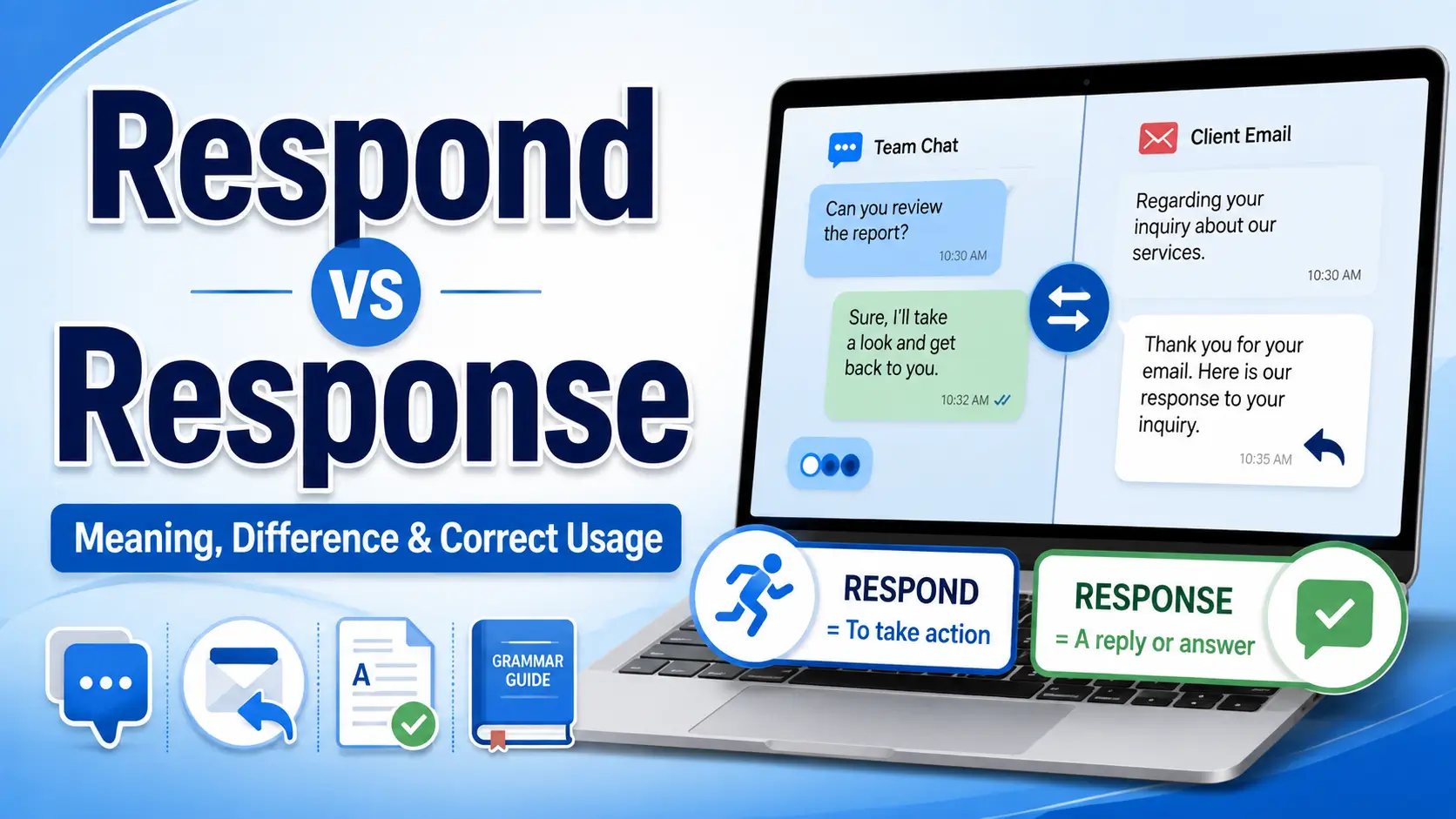
Respond vs response meaning, difference, grammar rules, and correct usage explained

Respond vs response becomes easy to understand once you know their grammar roles. Respond is a verb that means to answer, reply, or react. Response is a noun that means an answer, reaction, or result. Although these words look similar, they work differently in English. Knowing this difference improves writing, speaking, emails, and professional communication … Read more
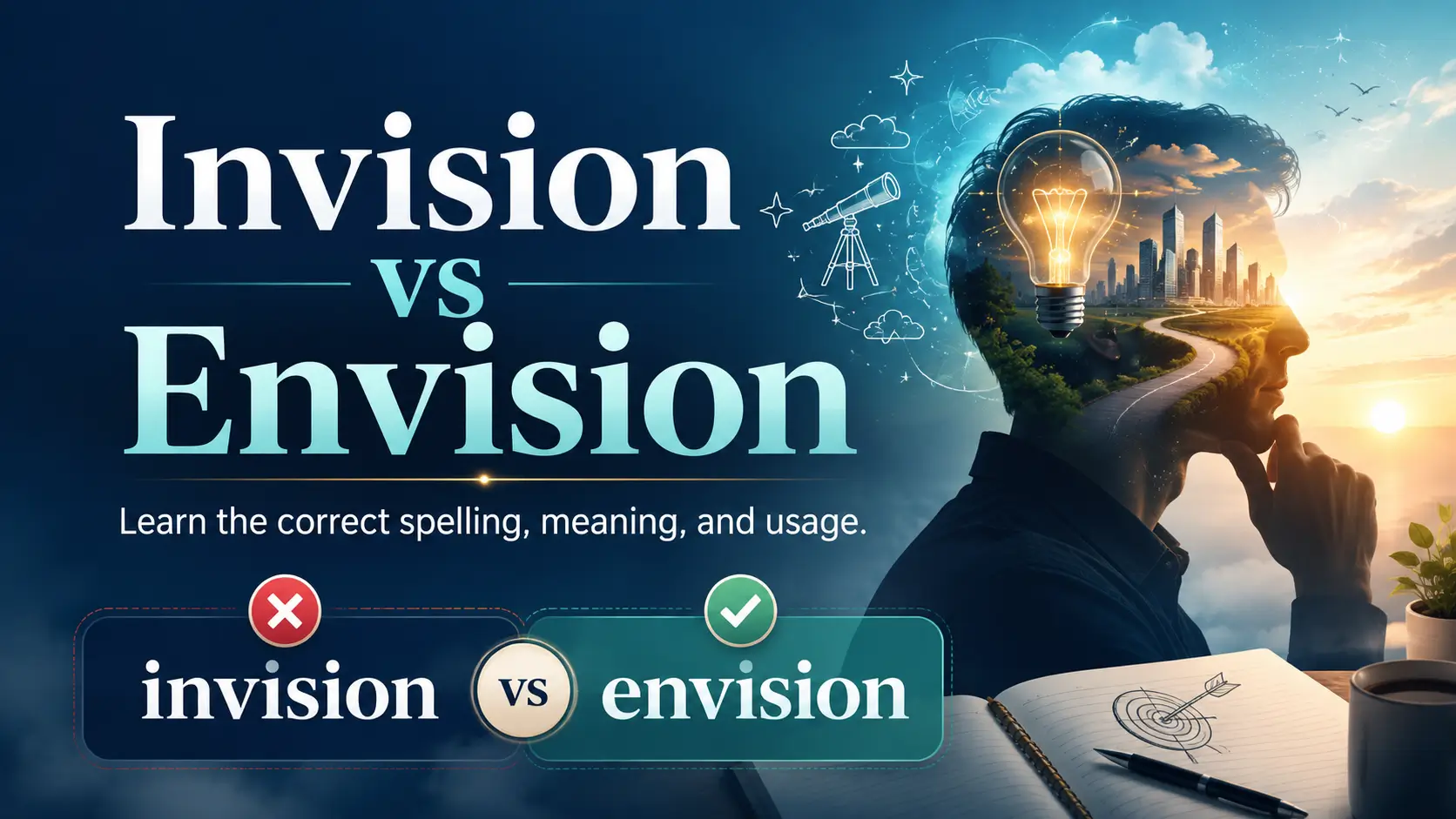
Invision vs Envision: Which Word Is Correct? Meaning, Differences, and Usage Guide

Invision vs Envision comparison showing the correct spelling, meaning, and English usage with envision marked as correct.

When people compare invision vs envision, the confusion usually comes from the similar spelling, sound, and connection to the word vision. The correct English word is envision, which means to imagine, picture, or create a mental image of a future possibility. Many writers, editors, and students accidentally use invision because it looks logical, but standard … Read more

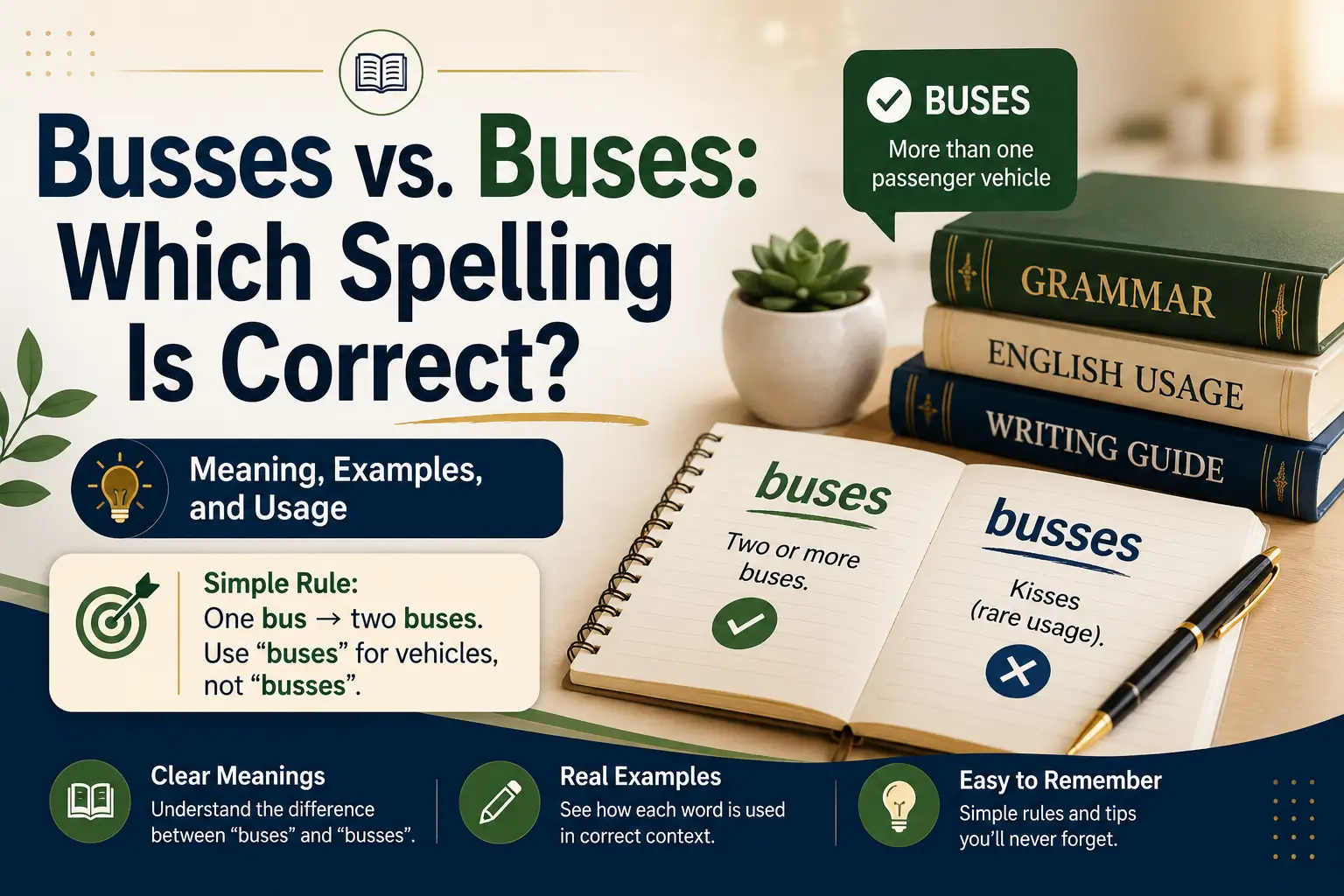
Busses vs. Buses: Which Spelling Is Correct? Meaning, Examples, and Usage

Busses vs. Buses: Which spelling is correct? Learn the difference between buses and busses with simple examples and grammar rules.

If you’ve ever hesitated between busses vs. buses, the answer is simpler than it may seem. When you mean two or more passenger vehicles, buses is the standard plural of bus in modern American English. For example, “The city added several new buses to its public transportation system.” The spelling busses can also be found … Read more

Led vs. Lead: What’s the Difference? Meaning, Pronunciation, Grammar, and Examples

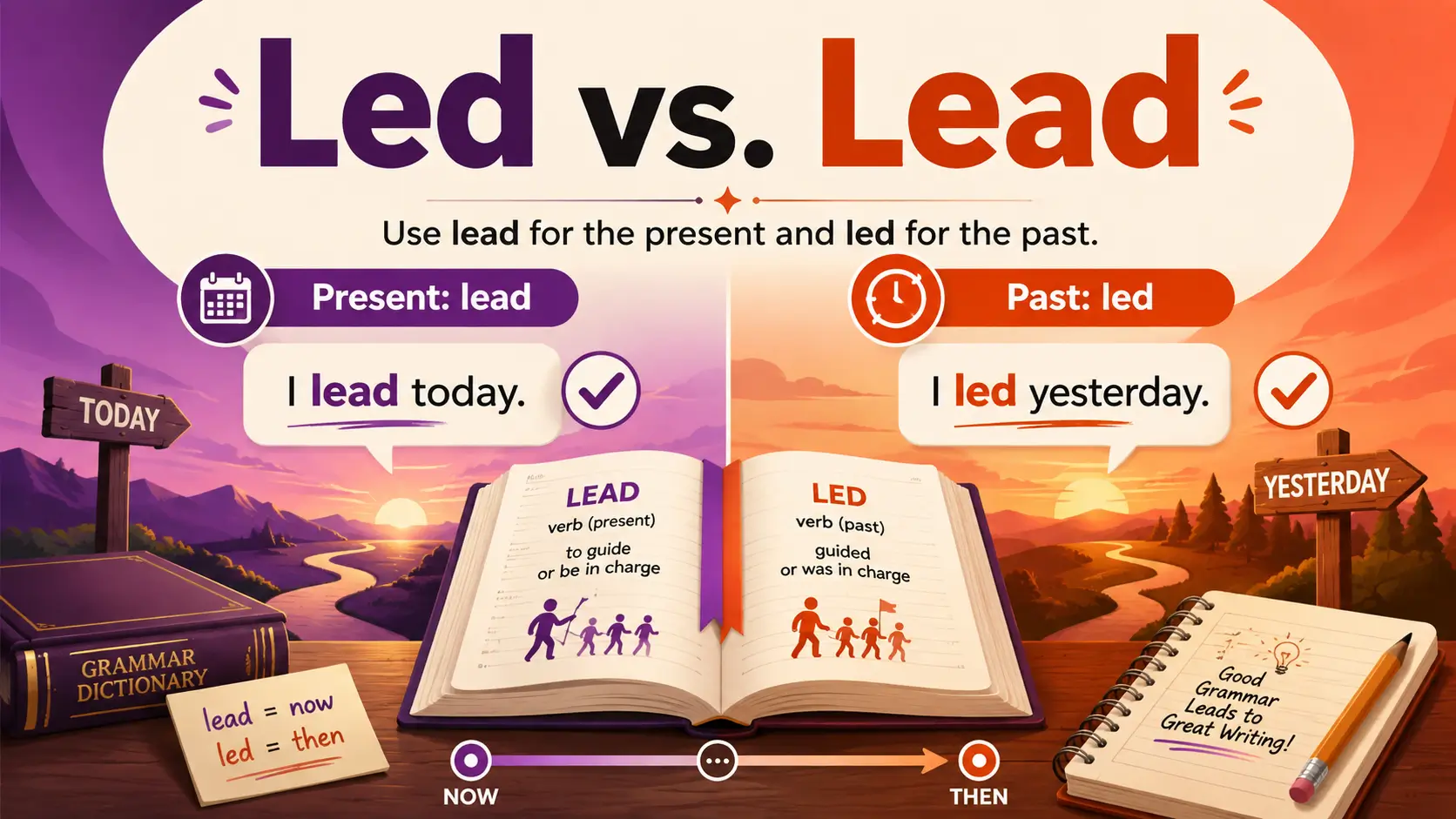
Led vs. Lead difference explained with present and past tense examples

If you’ve ever wondered whether to write led vs. lead, you’re not alone. These two words are easy to confuse because lead has two different pronunciations, while led is the past tense of the verb lead. The correct choice depends on the word’s meaning, grammatical role, and tense. Quick answer: Use lead when you mean … Read more

Eminent vs Imminent: Meaning, Differences, Examples, and Common Mistakes

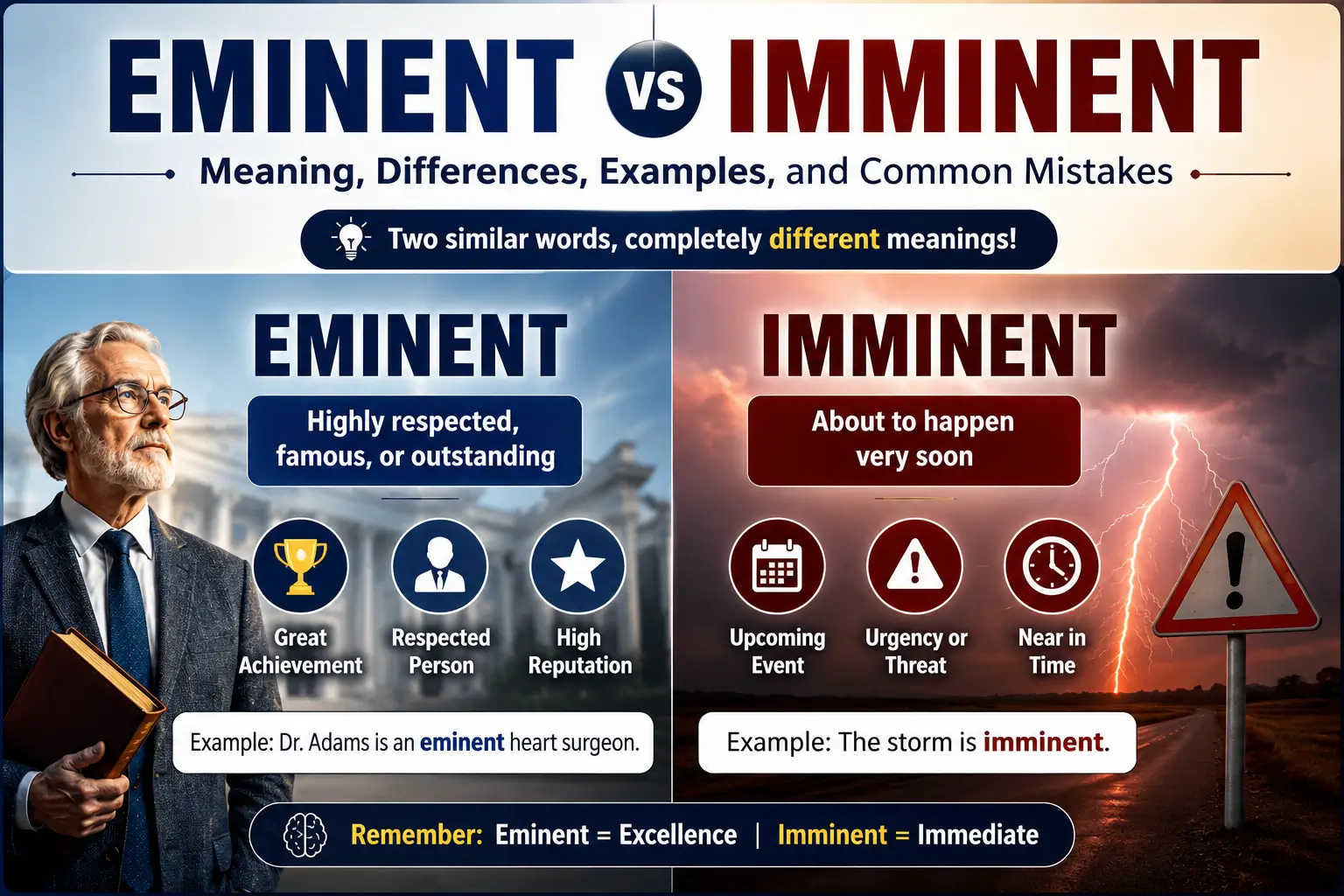
Eminent vs imminent comparison showing eminent means highly respected, while imminent means something is about to happen soon.

The difference between eminent vs imminent often creates confusion because these words have similar pronunciation, sound alike, and look similar. However, their meanings are completely different. The key difference is that eminent describes a famous, distinguished, and highly respected person or thing, while imminent describes something that is about to happen or will happen very … Read more

Whichever vs Whatever: What’s the Difference and When Should You Use Each?

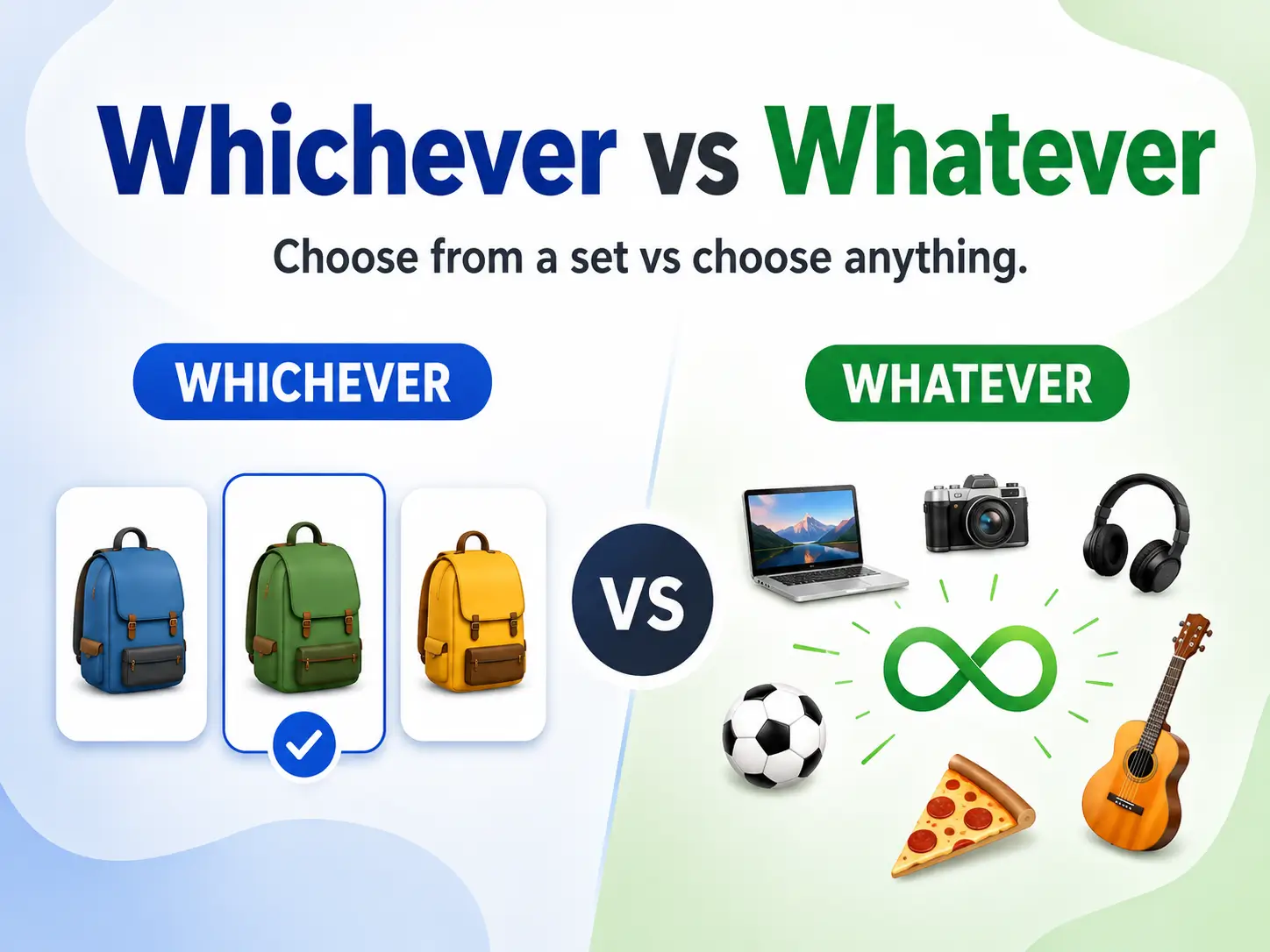
Whichever vs Whatever comparison showing limited choices versus open choices.

Confused about whichever vs whatever? You’re not alone. These two words look and sound similar, and both can express a choice or possibility. However, they aren’t interchangeable in every sentence. The key difference is whether you’re choosing from a specific or limited set of options or talking about an open and unrestricted choice. Use whichever … Read more

Capital vs. Capitol: What’s the Difference? Meaning, Examples, and Easy Ways to Remember

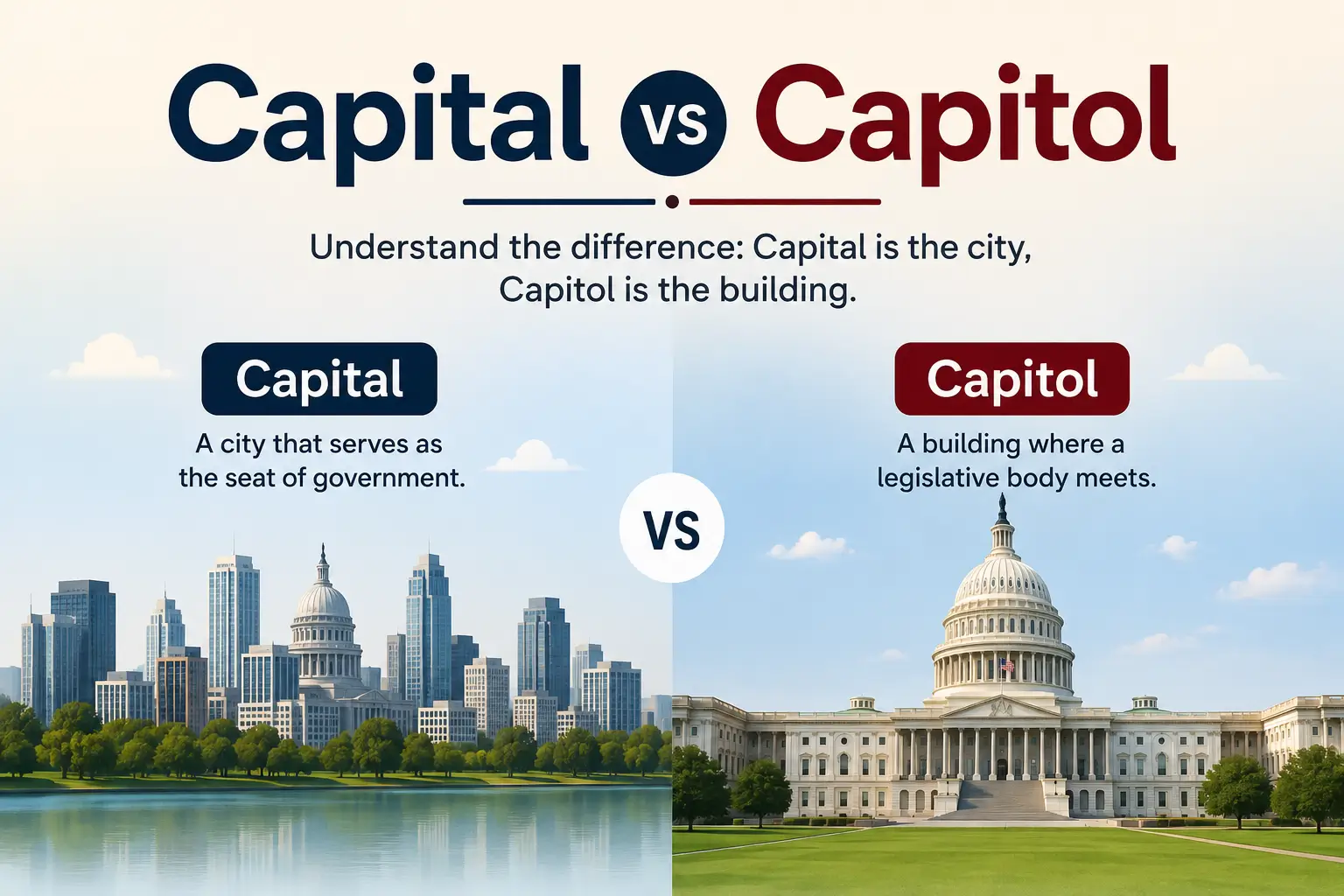
Capital vs Capitol comparison showing that capital means a government city, while capitol means a legislative building.

If you’ve ever wondered about capital vs. capitol, you’re not alone. These two words look and sound almost identical, but they have different meanings and uses. The confusion often appears when people write about government, politics, cities, or buildings. The easiest rule is this: capital can mean a city that serves as a seat of … Read more

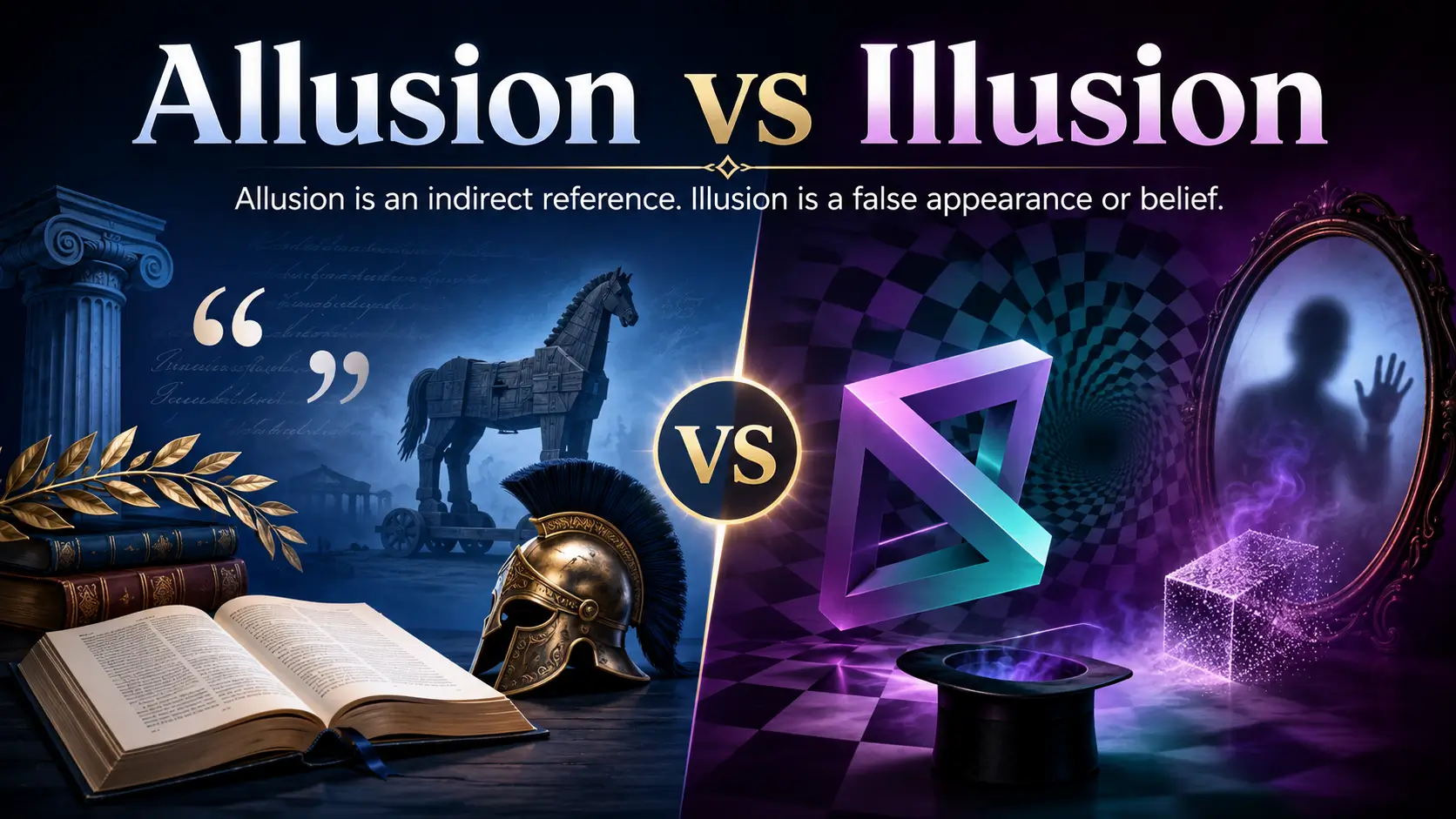
Allusion vs. Illusion: Meaning, Differences, and Examples

Allusion vs illusion comparison showing literary references and false appearances

Allusion vs. illusion explains the difference between an indirect reference and a false appearance or belief. An allusion points to a familiar person, story, event, or idea. In contrast, an illusion makes something seem real or true when it isn’t. Understanding this difference helps you choose the correct word in schoolwork, professional writing, emails, and … Read more

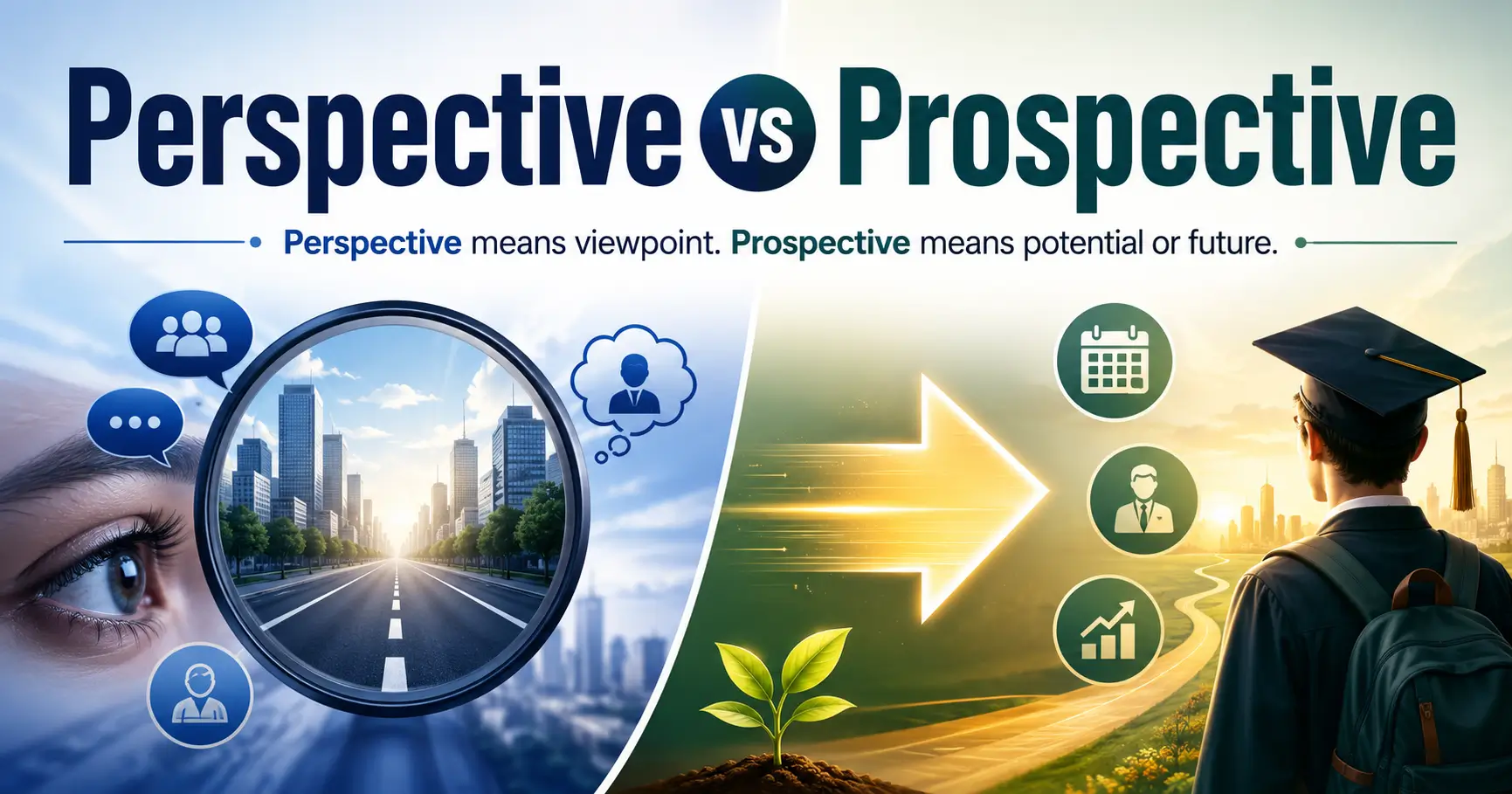
Perspective vs. Prospective: Meanings, Differences, and Correct Usage

Perspective vs prospective comparison showing viewpoint and future possibilities

Perspective vs prospective explains the difference between a viewpoint and something connected with the future. Perspective is usually a noun that means a way of seeing, understanding, or judging something. Prospective is usually an adjective that describes a person, event, or result that may exist or happen later. For example, from my perspective means “from … Read more

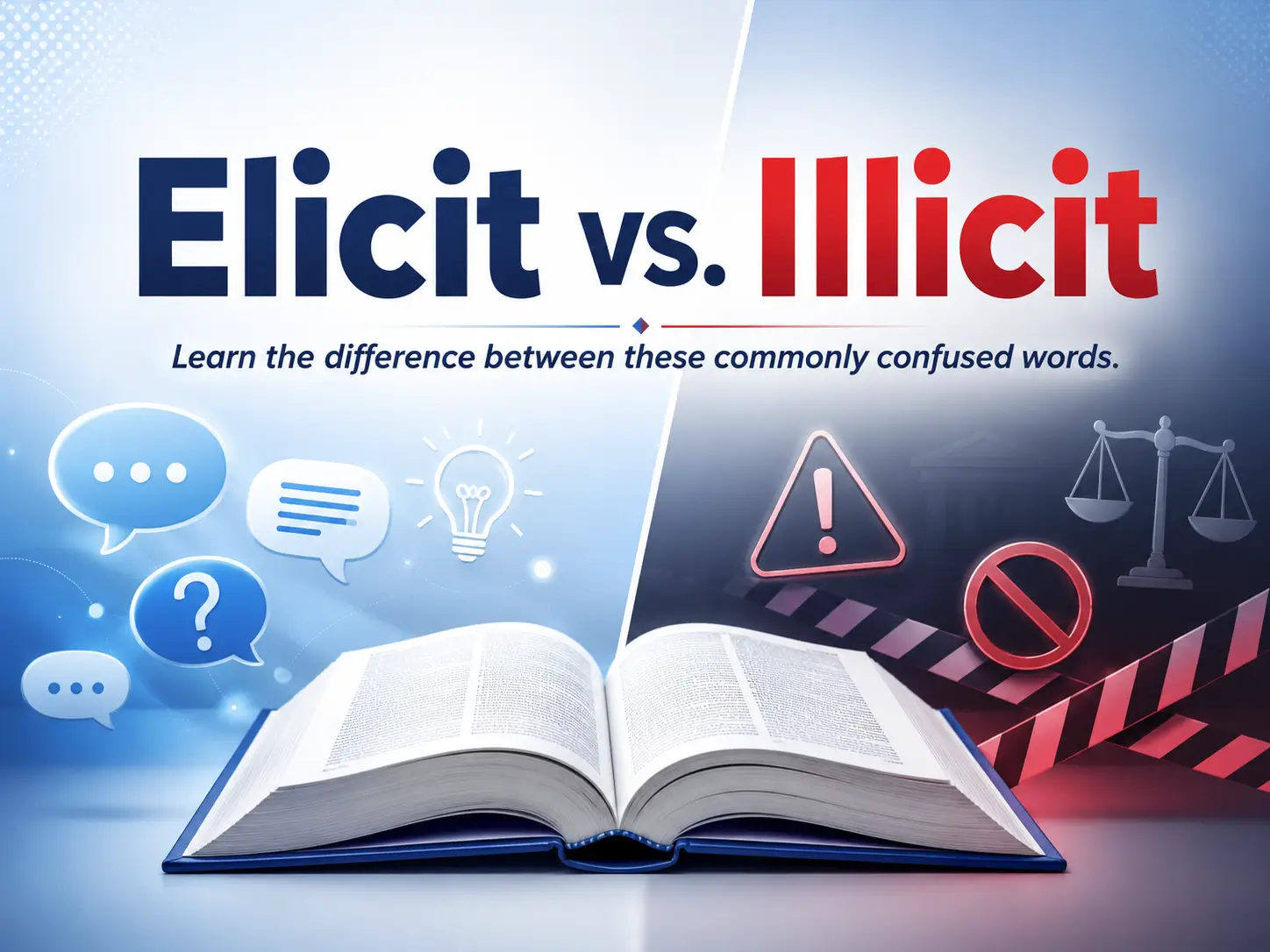
Elicit vs. Illicit: What’s the Difference?

Elicit vs illicit comparison with speech bubbles, warning symbols, and an open dictionary

Elicit vs illicit is a common confusion in English grammar because these two words look and sound almost identical but have completely different meanings. Elicit means to draw out, obtain, or bring forth a response, reaction, or information, while illicit means illegal, forbidden, or not permitted. Knowing the difference between these commonly confused words helps … Read more