Mine as Well or Mind as Well: Which Is Correct?

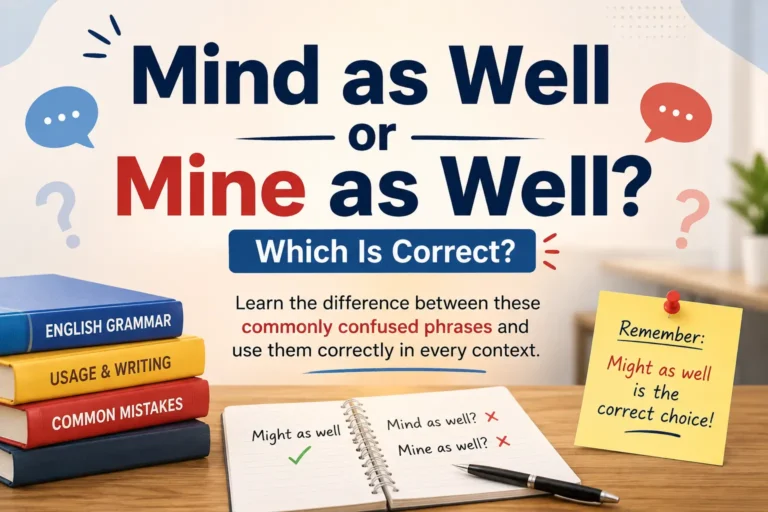
Mind as well or mine as well: learn why might as well is correct

Mind as well or mine as well are common spellings people use when they hear the phrase “might as well” in fast conversation. However, neither mind as well nor mine as well is the standard expression when you mean that something is a sensible choice because there’s little reason not to do it. The correct … Read more

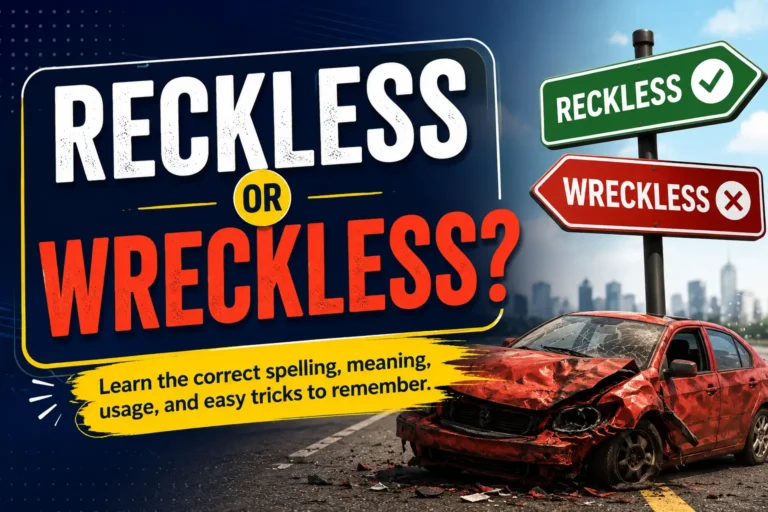
Reckless or Wreckless: Which Spelling Is Correct?

Reckless or Wreckless spelling comparison showing the correct word

Reckless or wreckless is a common spelling question, but the answer is simple: reckless is the correct spelling in standard English. It describes careless, dangerous, or irresponsible behavior that ignores possible consequences. Wreckless is generally a misspelling, although you may see it used creatively online. The confusion often comes from the familiar word wreck, which … Read more

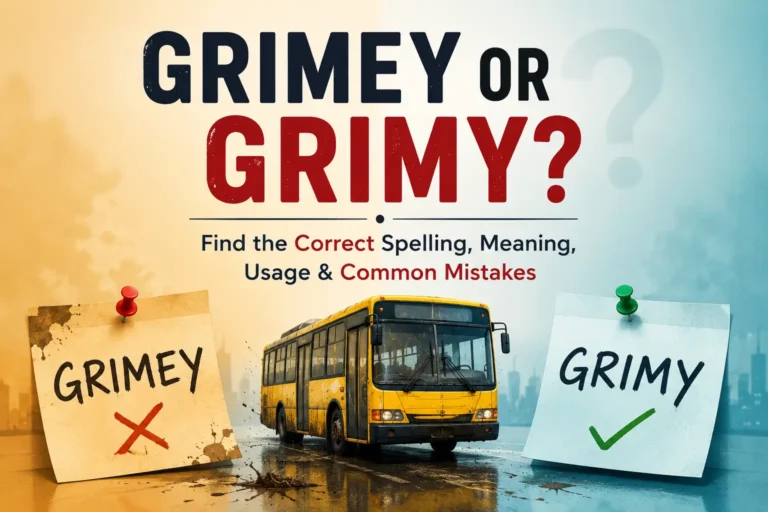
Grimey or Grimy? Which Spelling Is Correct in American English?

Grimey or grimy correct spelling in American English

Grimey or grimy is a common spelling question, but the answer is simple: grimy is the standard spelling. It describes something dirty, covered with grime, or marked by grease, soot, and accumulated dirt. If you’re writing for school, work, or any formal setting, grimy is the spelling you should use. The confusion happens because grime … Read more

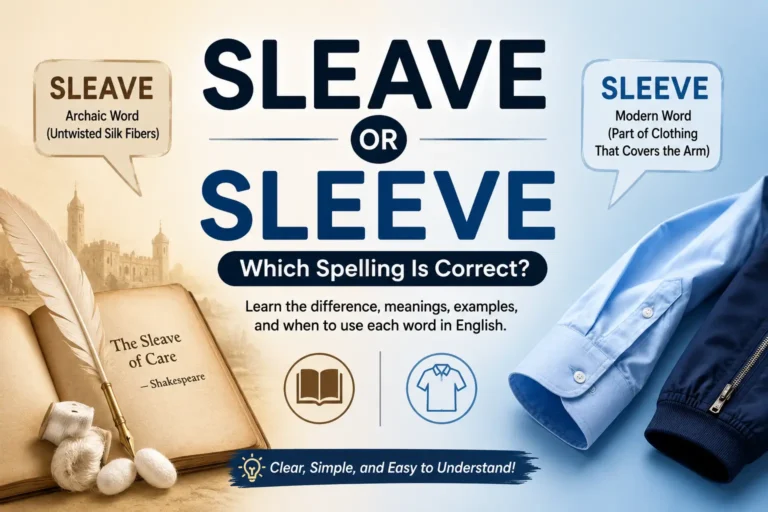
Sleave or Sleeve: Which Spelling Is Correct?

Sleave or sleeve spelling comparison showing the correct word for clothing and the historical meaning of sleave

Sleave or sleeve can be confusing because both are real English words, but they don’t have the same meaning. If you’re talking about the part of a shirt, jacket, or dress that covers the arm, the correct spelling is sleeve. Sleave is a rare historical textile term linked to silk fibers and older English. For … Read more

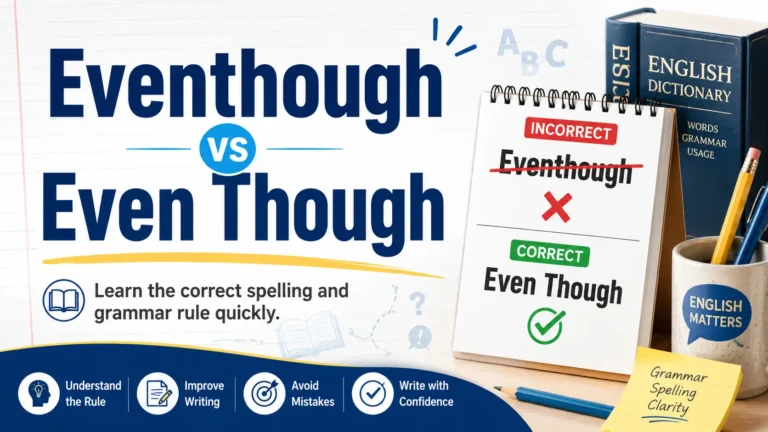
Eventhough vs Even Though: Correct Spelling, Meaning, Grammar Rules, and Examples

Eventhough vs Even Though comparison showing the incorrect and correct spelling with a simple English grammar guide.

Many English learners and native speakers confuse eventhough vs even though because both forms look similar while typing fast or writing in everyday usage. However, the correct spelling is always even though, which is a proper English phrase and a standard form in English. Eventhough is an incorrect spelling and a common spelling mistake that … Read more

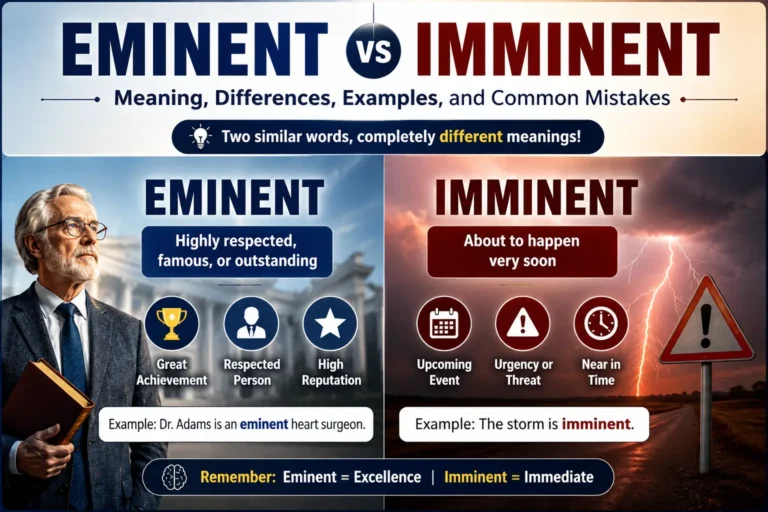
Eminent vs Imminent: Meaning, Differences, Examples, and Common Mistakes

Eminent vs imminent comparison showing eminent means highly respected, while imminent means something is about to happen soon.

The difference between eminent vs imminent often creates confusion because these words have similar pronunciation, sound alike, and look similar. However, their meanings are completely different. The key difference is that eminent describes a famous, distinguished, and highly respected person or thing, while imminent describes something that is about to happen or will happen very … Read more

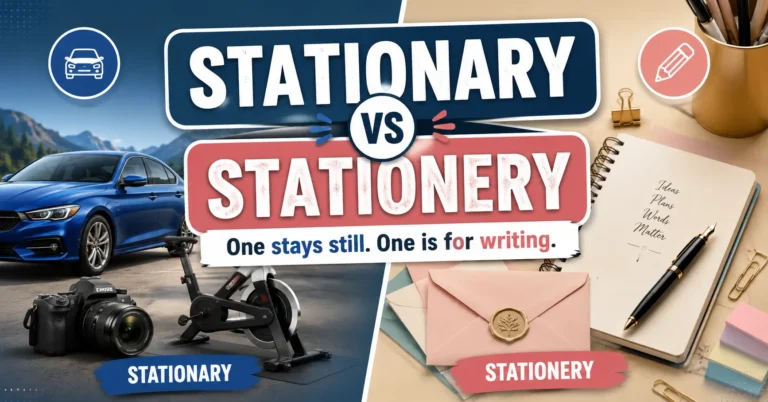
Stationary vs Stationery: What’s the Difference and When Should You Use Each?

Stationary vs Stationery difference explained with a stationary car and writing stationery supplies

Stationary vs stationery is one of the most commonly confused word pairs in English grammar. Although both words sound the same, they have different meanings, spellings, and uses. Knowing the difference helps you avoid common writing mistakes in emails, school assignments, business documents, and everyday communication. If you’re unsure whether to write stationary or stationery, … Read more

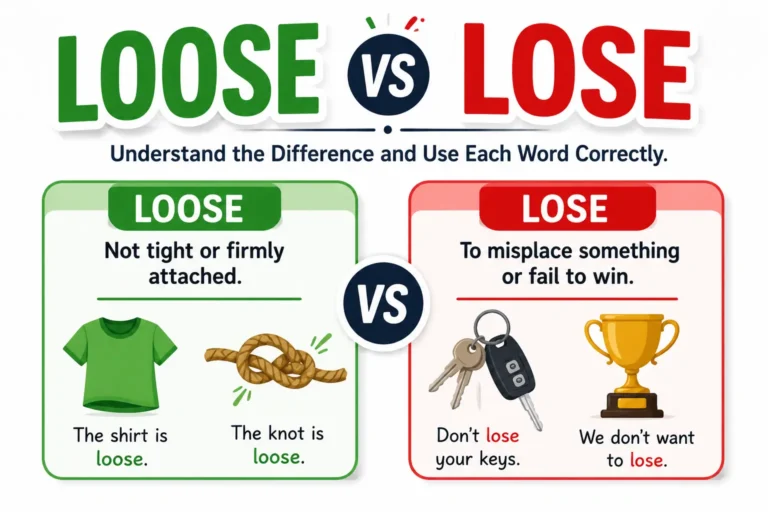
Loose vs. Lose: What’s the Difference and How Do You Use Them Correctly?

Loose vs lose difference with meanings and simple examples

Loose vs lose is one of the most searched grammar questions because these two words look almost identical but have completely different meanings. If you’ve ever wondered whether to write “lose your keys” or “loose your keys,” you’re not alone. The simple answer is this: lose is a verb that means to misplace something or … Read more

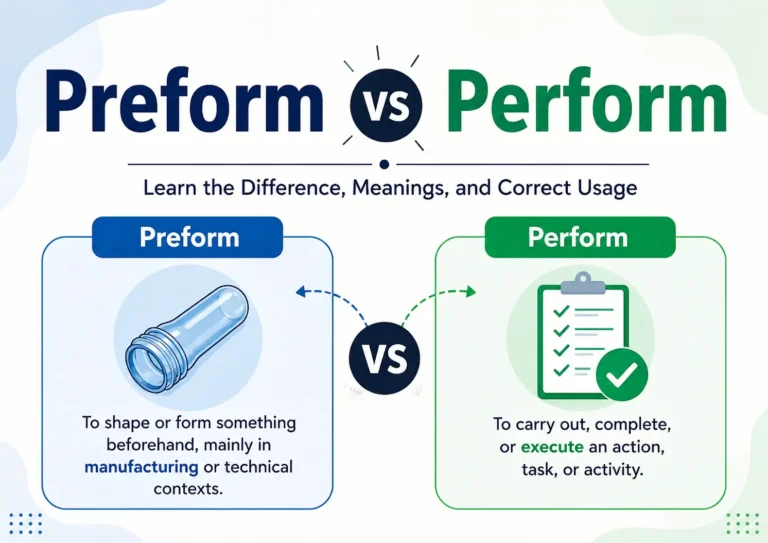
Preform vs. Perform: What’s the Difference and Which Word Is Correct?

Preform vs Perform explained with meanings, differences, and correct usage in English grammar.

Preform vs Perform is a common spelling question because these two words look almost the same but have very different meanings. However, they are not interchangeable. Perform means to do, carry out, or complete an action. In contrast, preform means to shape something before the final product is made, mainly in manufacturing and other technical … Read more

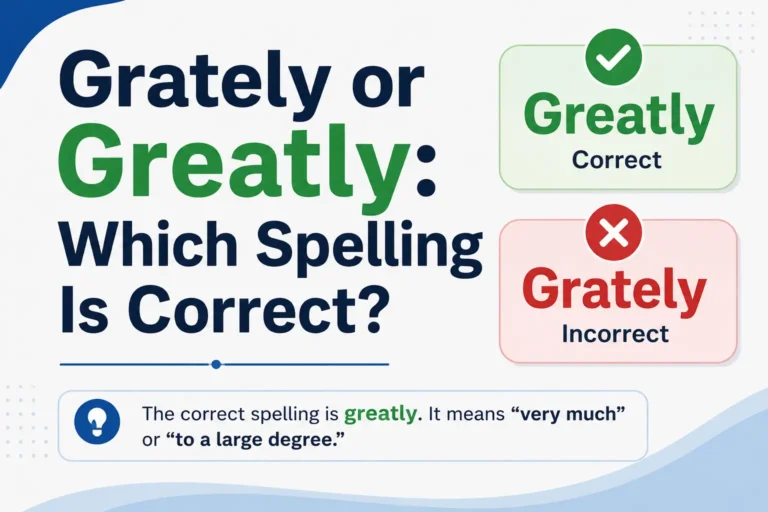
Grately or Greatly: Which Spelling Is Correct?

Grately or Greatly? Learn the correct spelling with a simple explanation and examples.

Grately or Greatly is a common spelling question, but only greatly is correct in standard English. The word grately is usually a misspelling and should not be used in formal, academic, professional, or everyday writing. Greatly is an adverb that means “very much” or “to a large degree.” For example, the correct phrase is “Your … Read more