Desert vs. Dessert: What’s the Difference? Meaning, Pronunciation, Examples, and Memory Tips
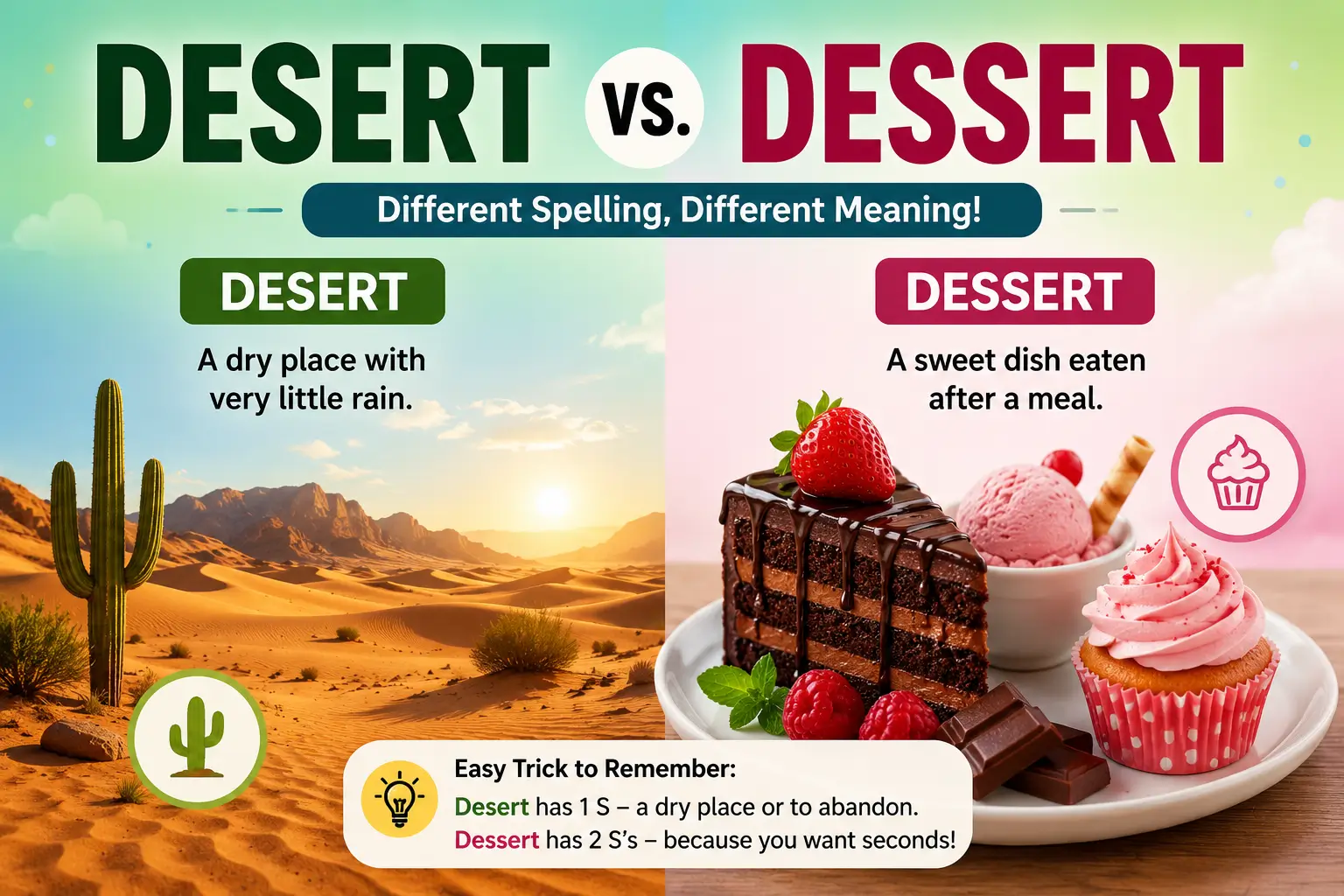
Desert vs. Dessert difference with a dry desert and sweet desserts

If you’re confused about desert vs. dessert, you’re not alone. These two words look almost identical, and in some uses, they sound exactly the same. However, their meanings are completely different. Desert can mean a dry geographical region or, as a verb, to abandon someone or something. Dessert is a sweet food served after a … Read more

Emigrate vs. Immigrate: What’s the Difference? Meaning, Examples, and Easy Ways to Remember

Emigrate vs. Immigrate difference showing leaving one country and arriving in another

The choice between emigrate vs immigrate depends on the point of view in your sentence. Emigrate focuses on leaving, while immigrate focuses on arriving. Use emigrate when you talk about the point of departure. Use immigrate when you focus on the point of arrival. Meanwhile, migrate is a broader word for the process of moving … Read more

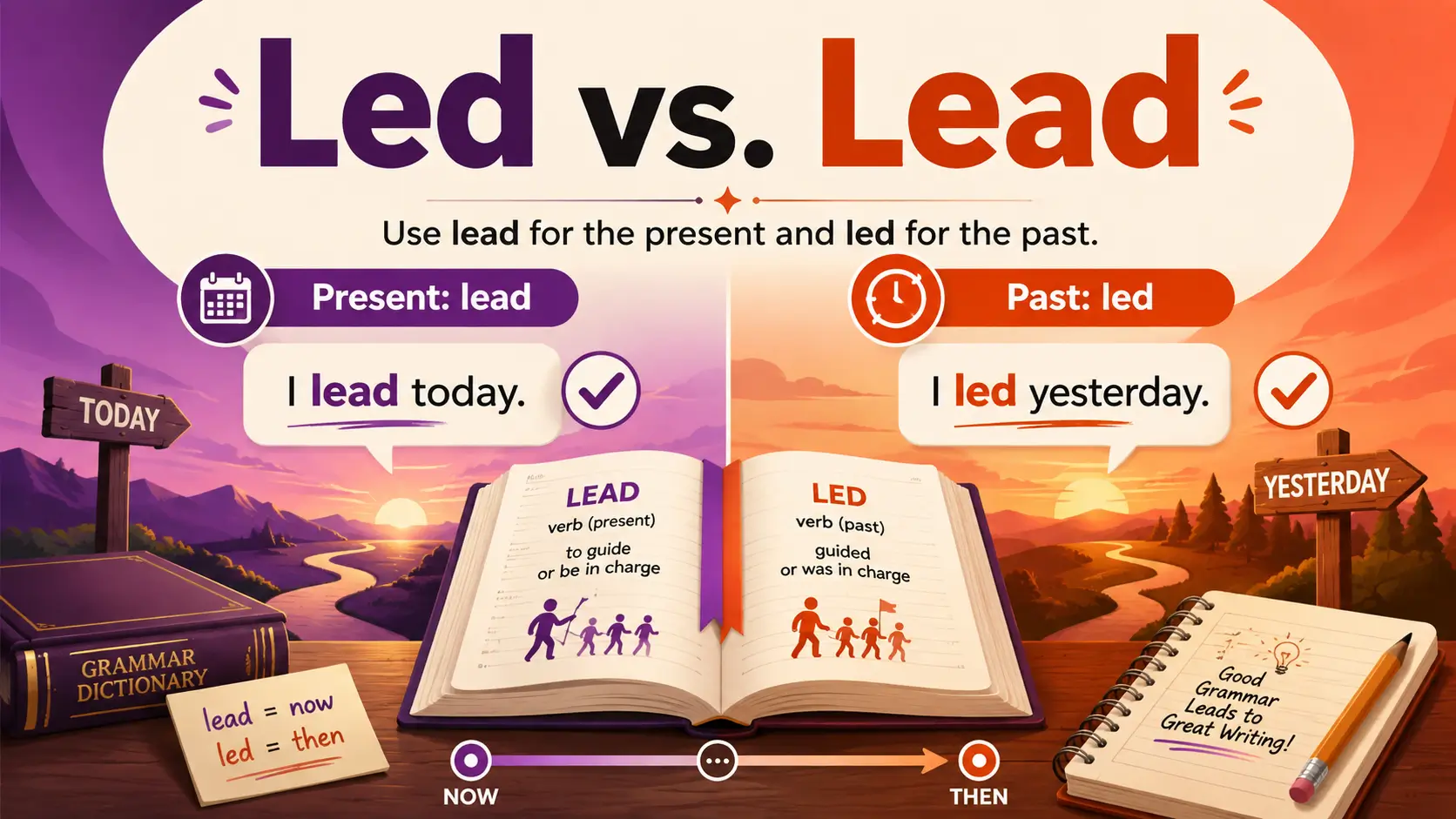
Led vs. Lead: What’s the Difference? Meaning, Pronunciation, Grammar, and Examples

Led vs. Lead difference explained with present and past tense examples

If you’ve ever wondered whether to write led vs. lead, you’re not alone. These two words are easy to confuse because lead has two different pronunciations, while led is the past tense of the verb lead. The correct choice depends on the word’s meaning, grammatical role, and tense. Quick answer: Use lead when you mean … Read more

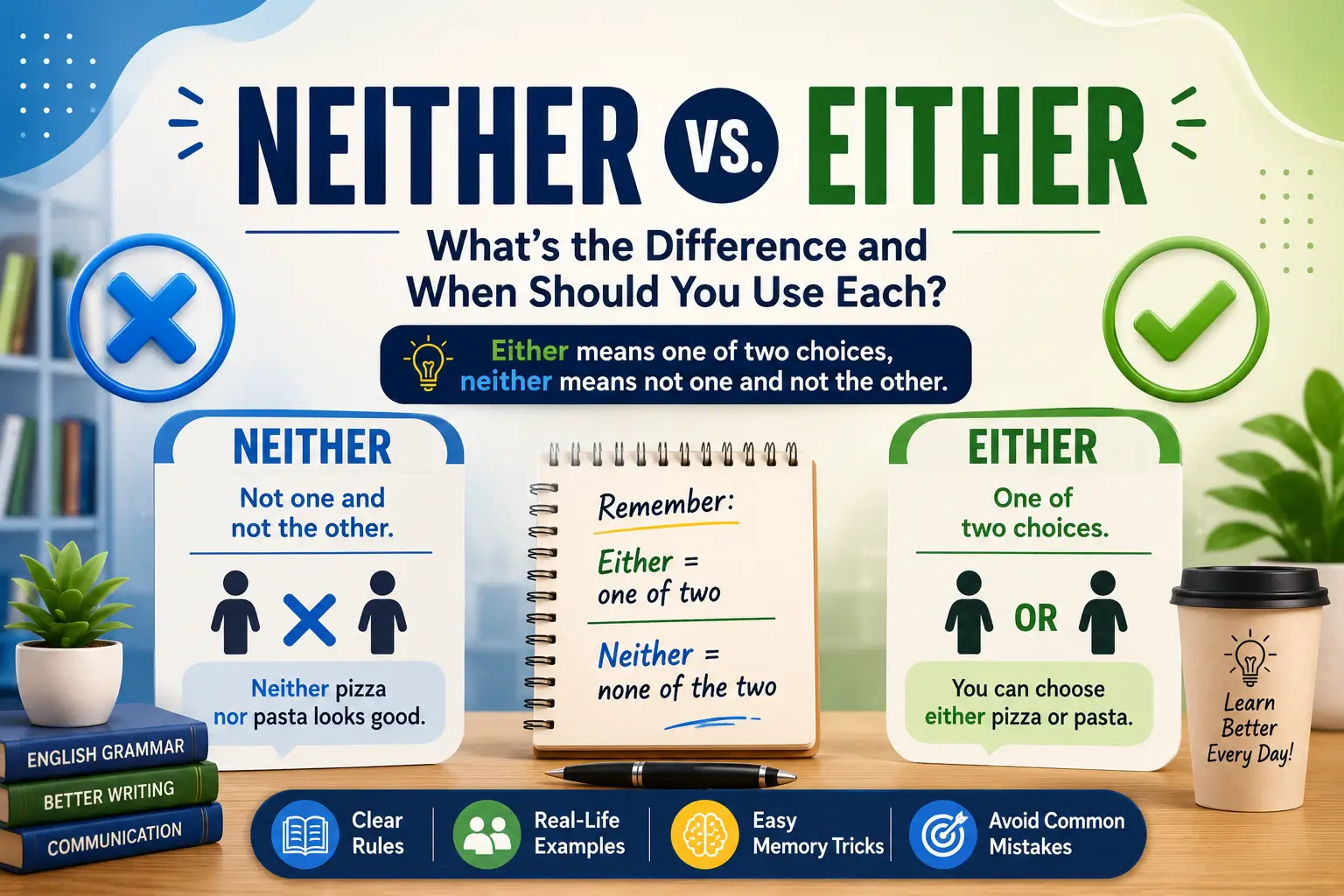
Neither vs Either: What’s the Difference and When Should You Use Each?

Neither vs Either grammar guide explaining the difference between neither and either with simple examples, grammar rules, and subject-verb agreement.

Neither vs either is one of the most searched English grammar topics because these two words look similar but have opposite meanings. Knowing when to use either, neither, either…or, and neither…nor will help you write more clearly, avoid common grammar mistakes, and speak confidently in everyday American English. If you’ve ever wondered which word is … Read more

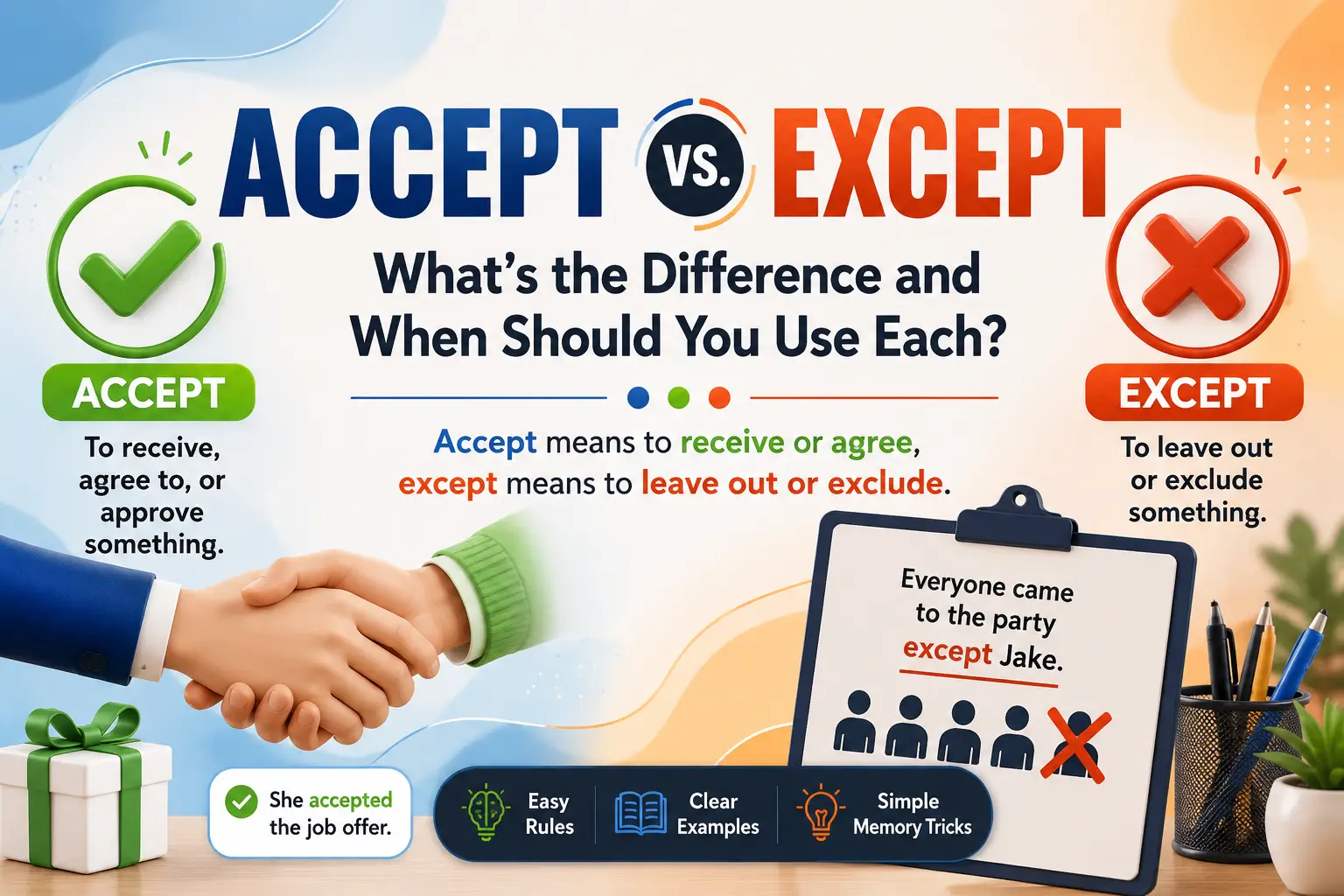
Accept vs. Except: What’s the Difference and When Should You Use Each?

Accept vs Except grammar guide explaining the difference between accept and except with simple examples and easy grammar rules.

Accept vs. except is one of the most common grammar questions because these two words sound similar but have completely different meanings. If you’ve ever wondered whether you should write accept or except, you’re in the right place. The simple answer is that accept means to receive or agree, while except means to leave out … Read more

Your vs. You’re: What’s the Difference and How to Use Them Correctly?

Your vs You’re difference explained with ownership examples and you are contraction examples

Your vs. you’re is one of the most searched English grammar questions because these two words sound alike but have different meanings and uses. If you’ve ever wondered whether to write your or you’re, you’re not alone. Understanding this difference helps you write more clearly in emails, text messages, social media posts, school assignments, and … Read more

Complement vs. Compliment: What’s the Difference? Meaning, Examples, and Easy Ways to Remember

Complement vs Compliment difference explained with examples of completing something versus giving praise

Complement vs compliment is a common grammar confusion that happens because these two English words have similar pronunciation but completely different meanings. The easiest way to remember the difference is this: complement means something that completes, matches, or improves another thing, while compliment means praise, admiration, or a positive remark. Knowing the difference between these … Read more

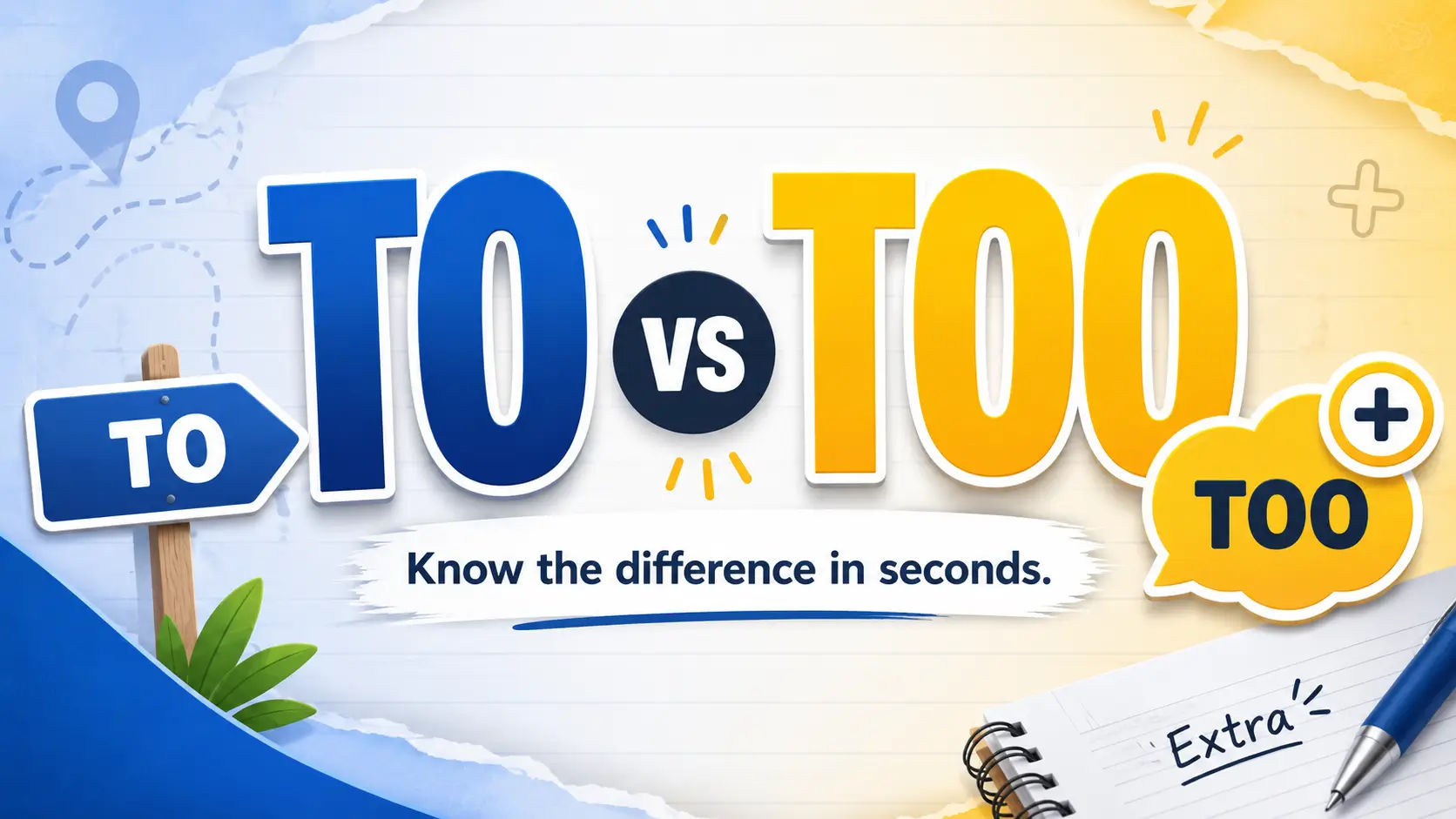
To vs. Too: What’s the Difference? (Complete Grammar Guide with Examples)

To vs Too difference explained with simple grammar rules and examples

To vs Too is one of the most searched and commonly confused topics in English grammar because these words sound the same but have different meanings and uses. If you’ve ever wondered whether to write to, too, or even two, you’re not alone. The good news is that the difference is simple once you understand … Read more

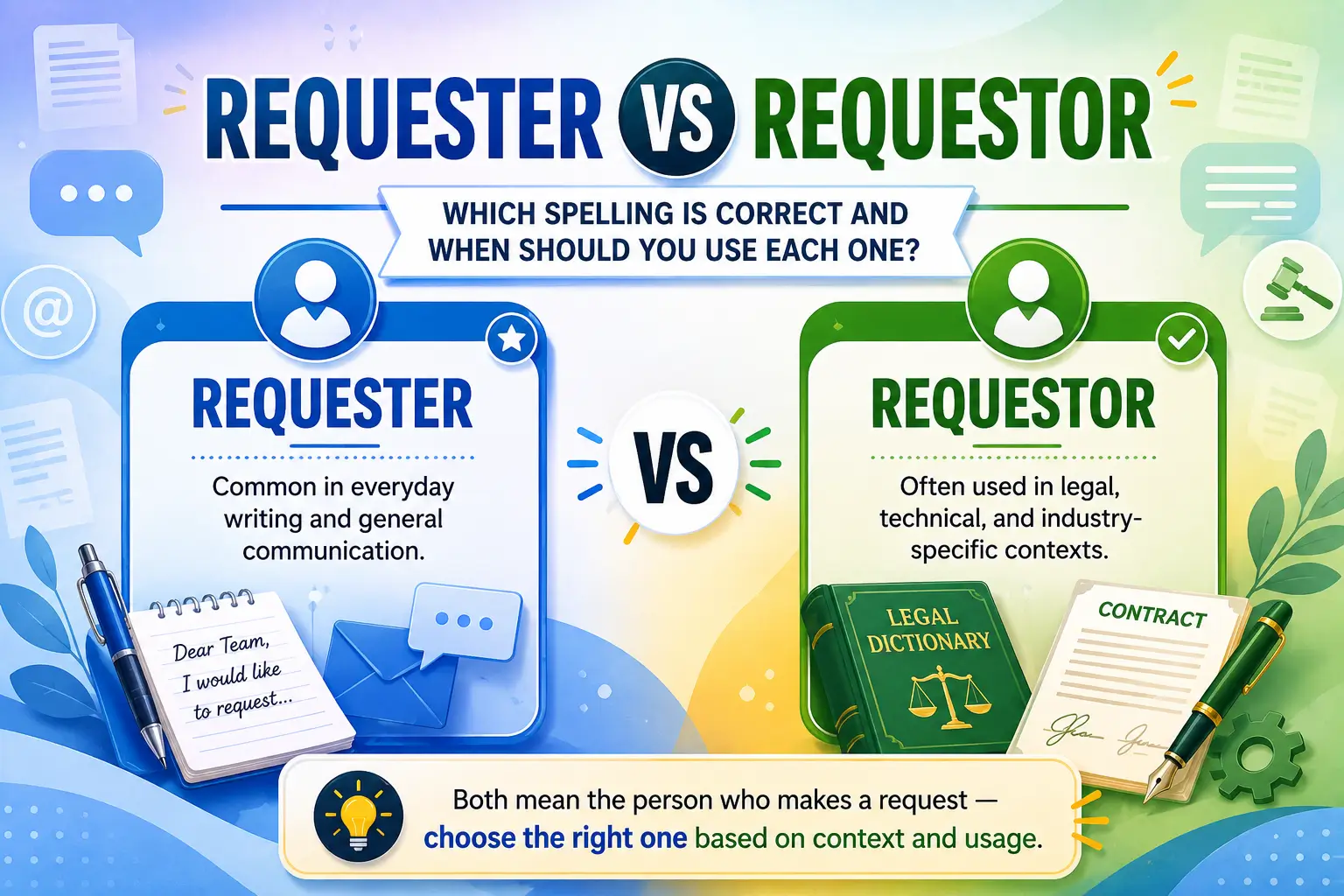
Requester vs Requestor: Which Spelling Is Correct and When Should You Use Each One?

Requester vs Requestor spelling difference explained with correct English usage examples

The difference between Requester and Requestor is mainly based on context, language usage, and industry standards rather than meaning. Both words describe a person who makes a request, but requester is more widely used in everyday communication, business writing, and general professional communication. In contrast, requestor appears more often in specialized environments such as IT, … Read more

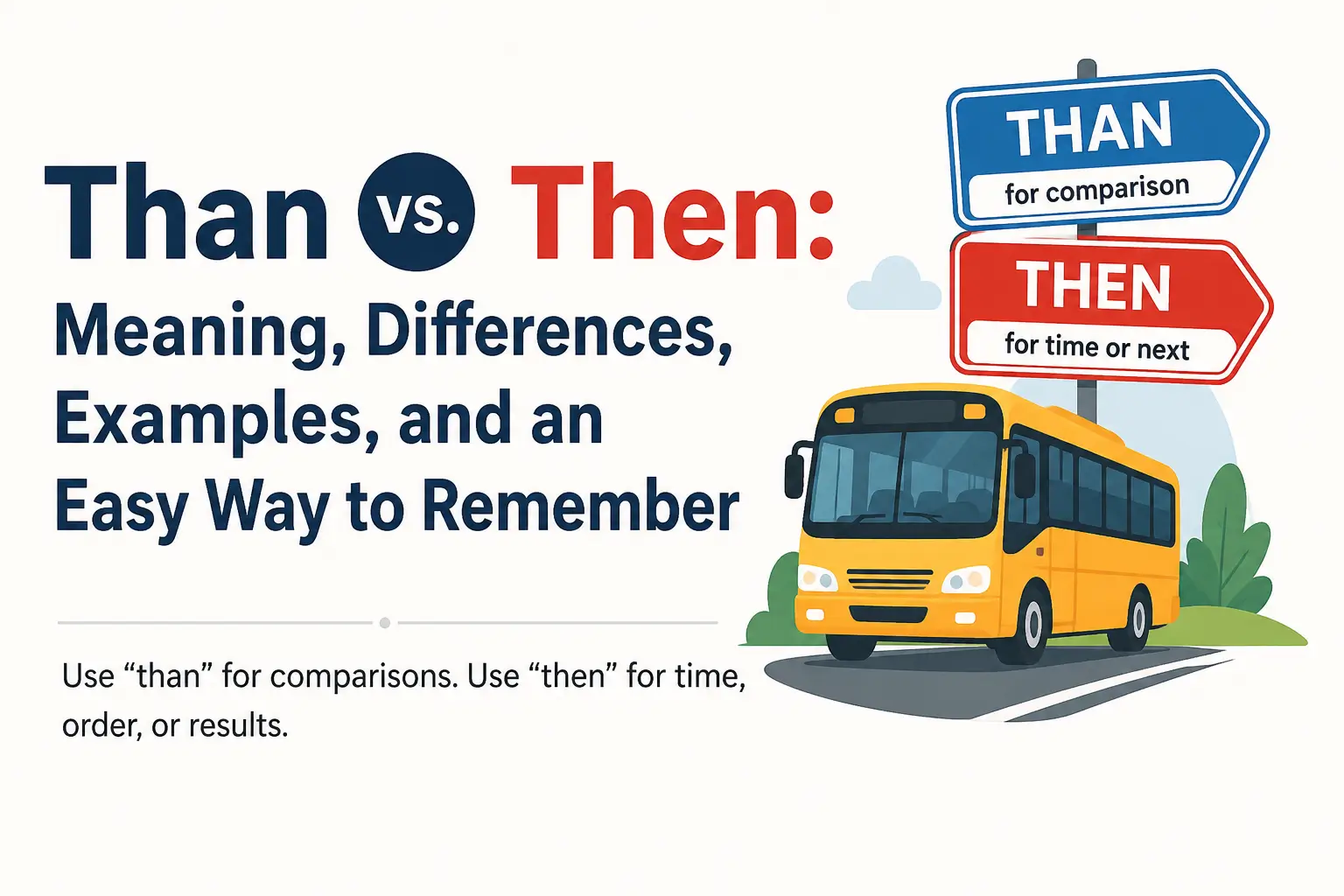
Than vs. Then: Meaning, Differences, Examples, and an Easy Way to Remember

Than vs. Then grammar comparison showing when to use "than" for comparisons and "then" for time, sequence, and results with simple examples.

Than vs then is a common grammar problem, but the difference is simple. Use than when making a comparison, and use then when discussing time, sequence, or a result. For example, “This book is better than that one” compares two books. “Finish the book, then write the review” shows what happens next. These commonly confused … Read more