Seal vs Seel: Difference, Meaning, and Correct Usage in English
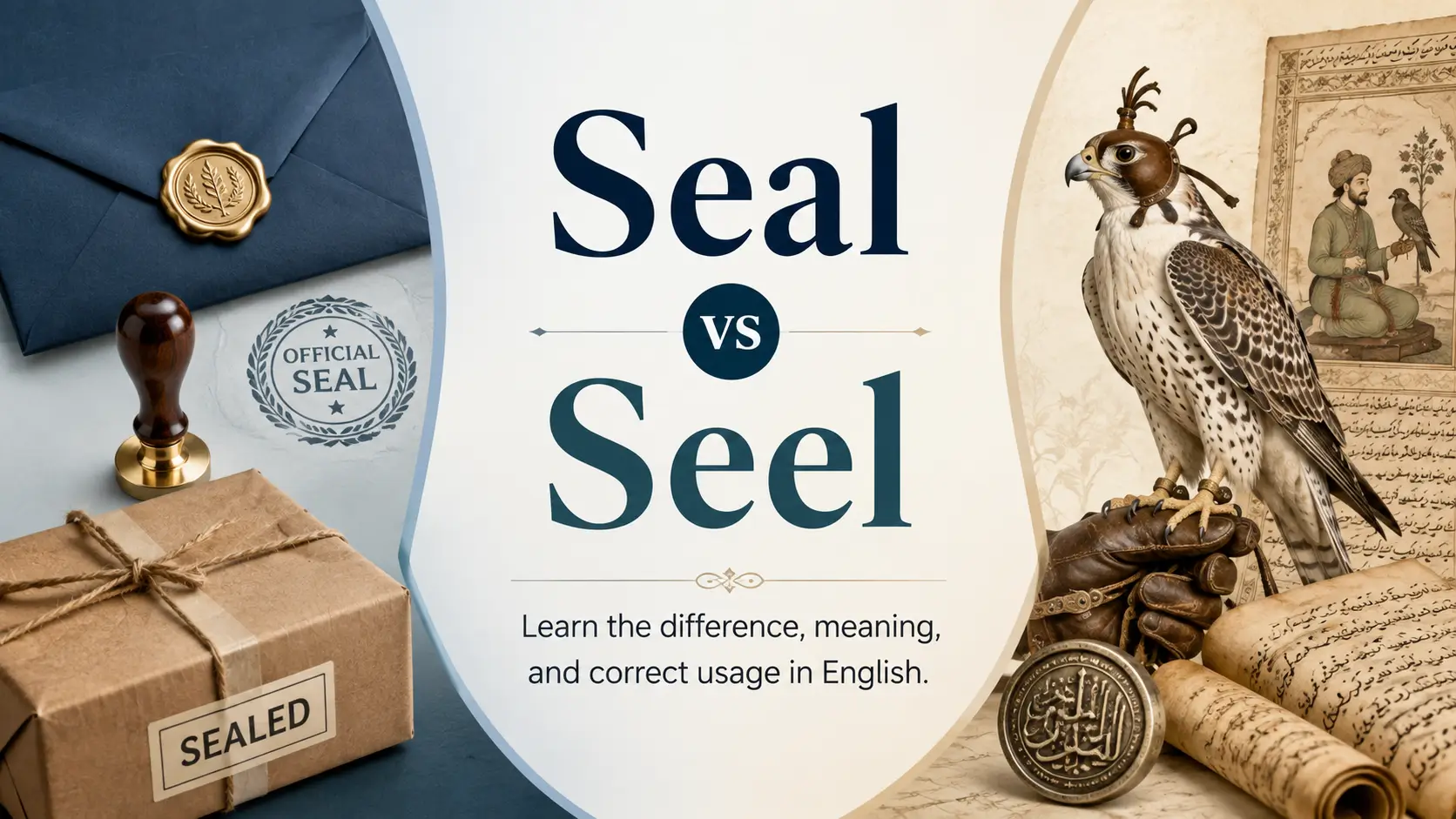
Seal vs Seel difference showing correct meanings, spelling, usage, official seal, package, and historical falconry example.

The main seal vs seel difference comes from their meaning, usage, and context. Both words have the same pronunciation in most English accents, which creates confusion for many English learners, students, and professionals. However, seal is a common modern word used in writing, business, and everyday communication, while seel is an old, rarely used historical … Read more
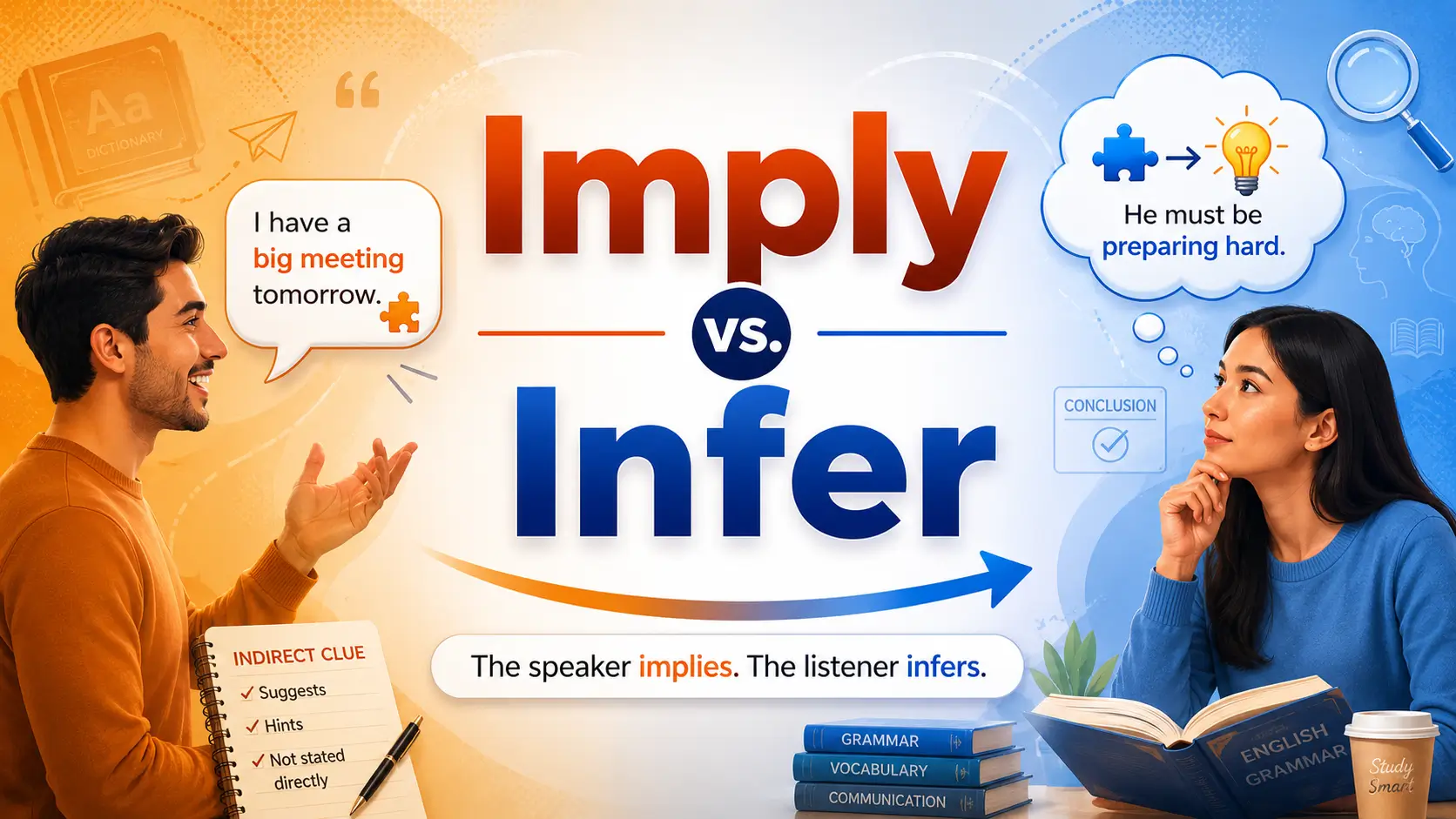

Imply vs. Infer: The Clear Difference, With Examples and Grammar Tips

Imply vs infer difference with speaker and listener example

Imply vs. Infer explains two related actions in communication. To imply means to suggest an idea without saying it directly. To infer means to reach a conclusion from clues or evidence. In simple terms, the speaker implies, while the listener infers. These words may describe the same conversation, but they show different points of view. … Read more

Allude vs. Elude: What’s the Difference? Meaning, Examples, and Easy Ways to Remember

Allude vs Elude difference with meanings and examples

Allude vs. elude can be confusing because these words look and sound similar, but they have different meanings. Allude means to refer to something indirectly or hint at it, while elude means to escape, avoid, or remain difficult to understand or remember. For example, a writer may allude to a historical event without explaining it … Read more

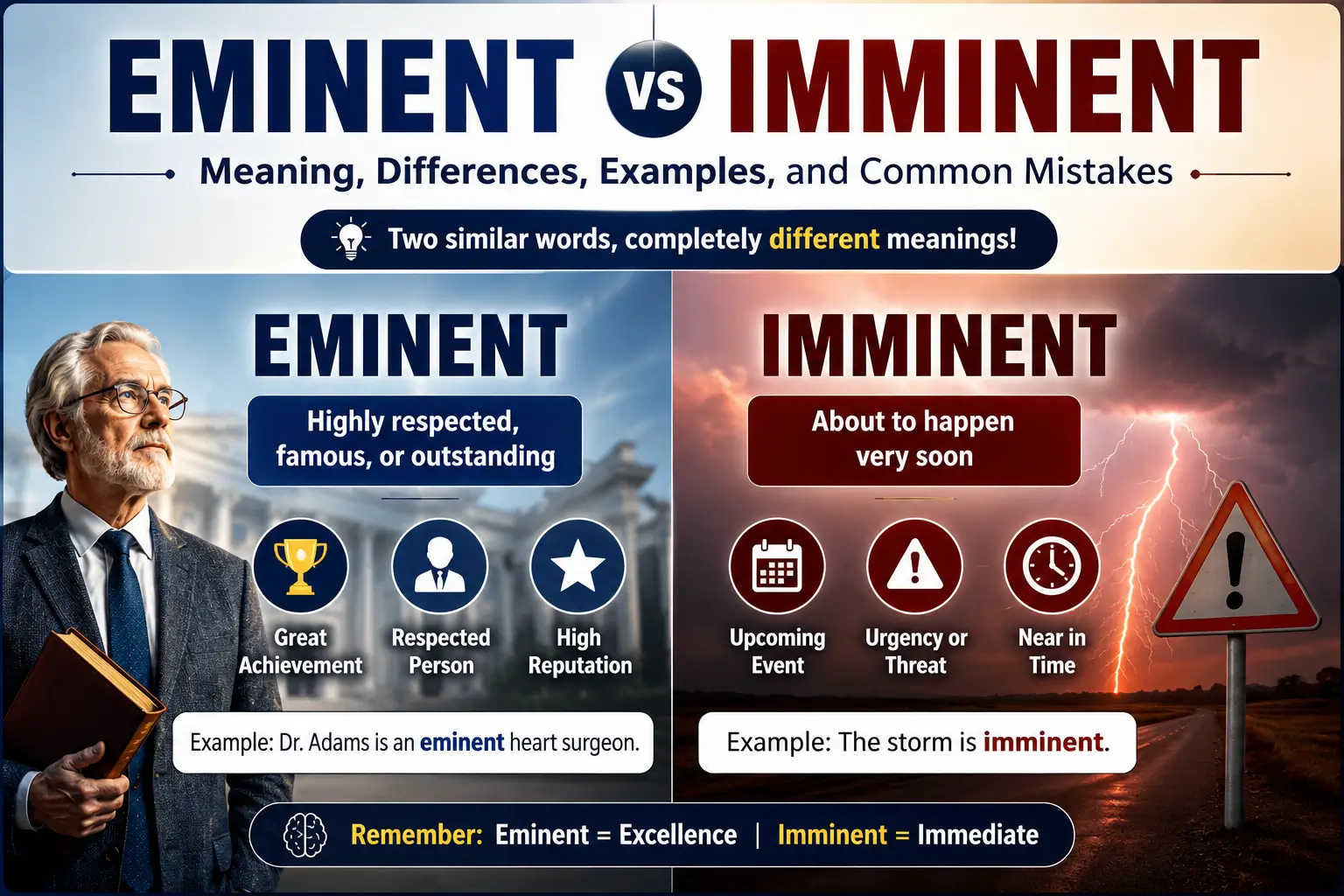
Eminent vs Imminent: Meaning, Differences, Examples, and Common Mistakes

Eminent vs imminent comparison showing eminent means highly respected, while imminent means something is about to happen soon.

The difference between eminent vs imminent often creates confusion because these words have similar pronunciation, sound alike, and look similar. However, their meanings are completely different. The key difference is that eminent describes a famous, distinguished, and highly respected person or thing, while imminent describes something that is about to happen or will happen very … Read more

Complement vs. Compliment: What’s the Difference? Meaning, Examples, and Easy Ways to Remember

Complement vs Compliment difference explained with examples of completing something versus giving praise

Complement vs compliment is a common grammar confusion that happens because these two English words have similar pronunciation but completely different meanings. The easiest way to remember the difference is this: complement means something that completes, matches, or improves another thing, while compliment means praise, admiration, or a positive remark. Knowing the difference between these … Read more