To vs. Too: What’s the Difference? (Complete Grammar Guide with Examples)
To vs Too difference explained with simple grammar rules and examples

To vs Too is one of the most searched and commonly confused topics in English grammar because these words sound the same but have different meanings and uses. If you’ve ever wondered whether to write to, too, or even two, you’re not alone. The good news is that the difference is simple once you understand … Read more
Vicious vs Viscous Word Choice: How Viscous and Vicious Differences

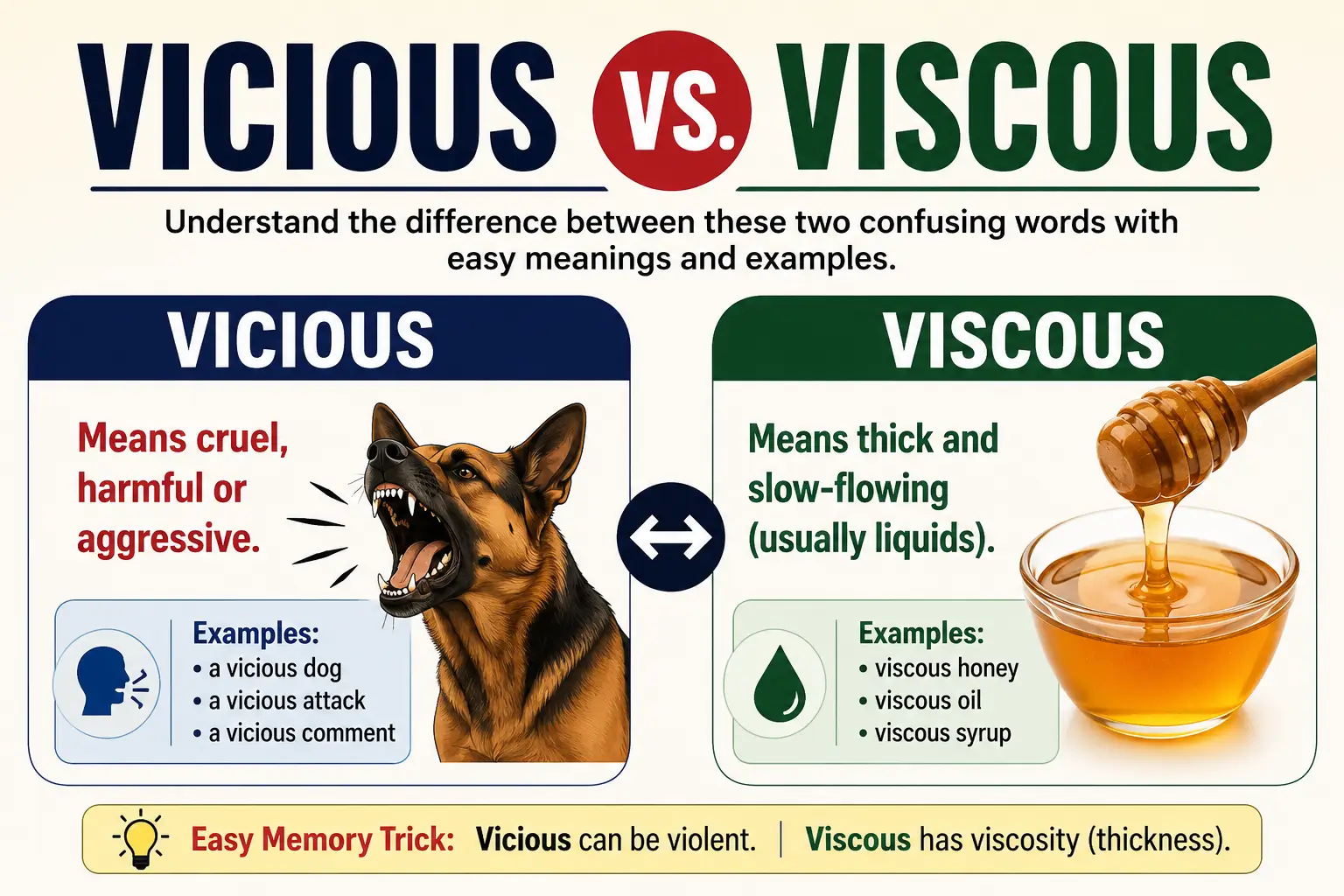
Vicious vs. Viscous infographic showing the difference between cruel behavior and thick slow-flowing liquids with simple examples.

Vicious vs. Viscous becomes clear when you remember that vicious describes cruel behavior, while viscous describes a thick liquid that flows slowly. Both words are adjectives, but their close spelling hides very different meanings. Vicious can describe an evil, malicious, aggressive, violent, or severe person, action, remark, storm, or attack. Viscous refers to thickness and … Read more

Would vs Could: Difference, Grammar Rules, Uses, and Examples

Would vs Could grammar rules, differences, and examples explained

Understanding would vs could helps English learners choose the right word when making polite requests or asking questions. These modal verbs may look similar, but their meaning changes depending on the situation. For example, “Could you bring me a cup of coffee?” asks about ability, while “Would you bring me a cup of tea?” focuses … Read more

Will vs Shall: Difference, Grammar Rules, Uses, and Examples

Will vs Shall grammar rules, differences, and examples explained

Learning will vs shall becomes easier when you know how these modal verbs work in English. Both are helping verbs used to express future time, but they can also show possibility, permission, or obligation. Will is more common in daily English, while shall is often used in formal situations or special expressions. Unlike regular verbs, … Read more