Signalling or Signaling: Which Spelling Is Correct in American and British English?
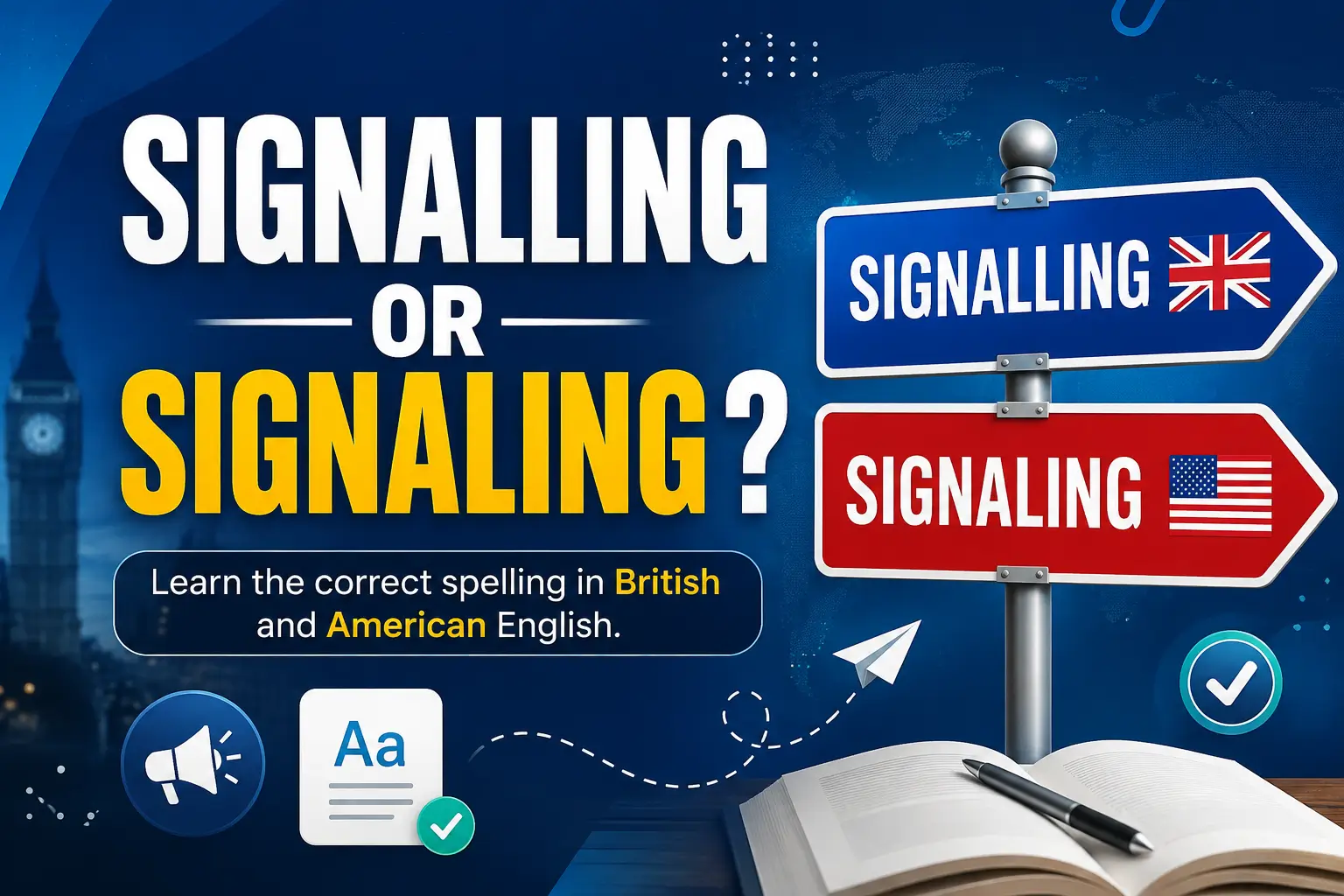
Signalling or signaling spelling difference in British and American English

Signalling or signaling is a spelling difference between British and American English. Signalling is the standard British English form, while signaling is the standard American English form. Both words have the same meaning, pronunciation, and grammatical function. If you’re writing for a US audience, choose signaling. For a UK audience, use signalling. The difference is … Read more
Traveler or Traveller: Which Spelling Is Correct in American English?

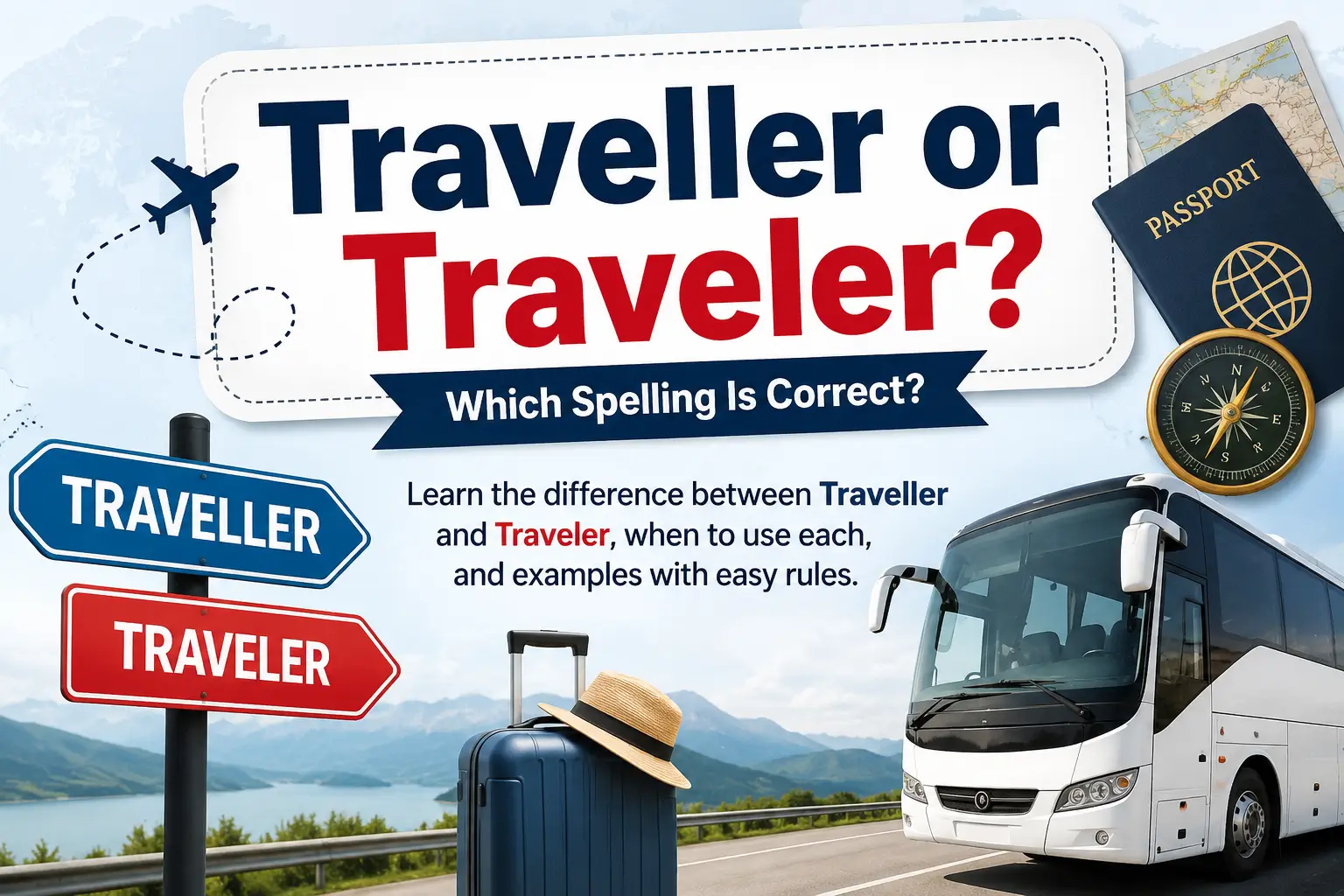
Traveller or traveler spelling difference in American and British English

Traveler or traveller is a common English spelling question, but the answer is simple: traveler is the standard American English spelling, while traveller is the standard British English form. Both words have the same meaning, so the real issue is regional spelling, not grammar or vocabulary. The difference comes down to one letter. American English … Read more

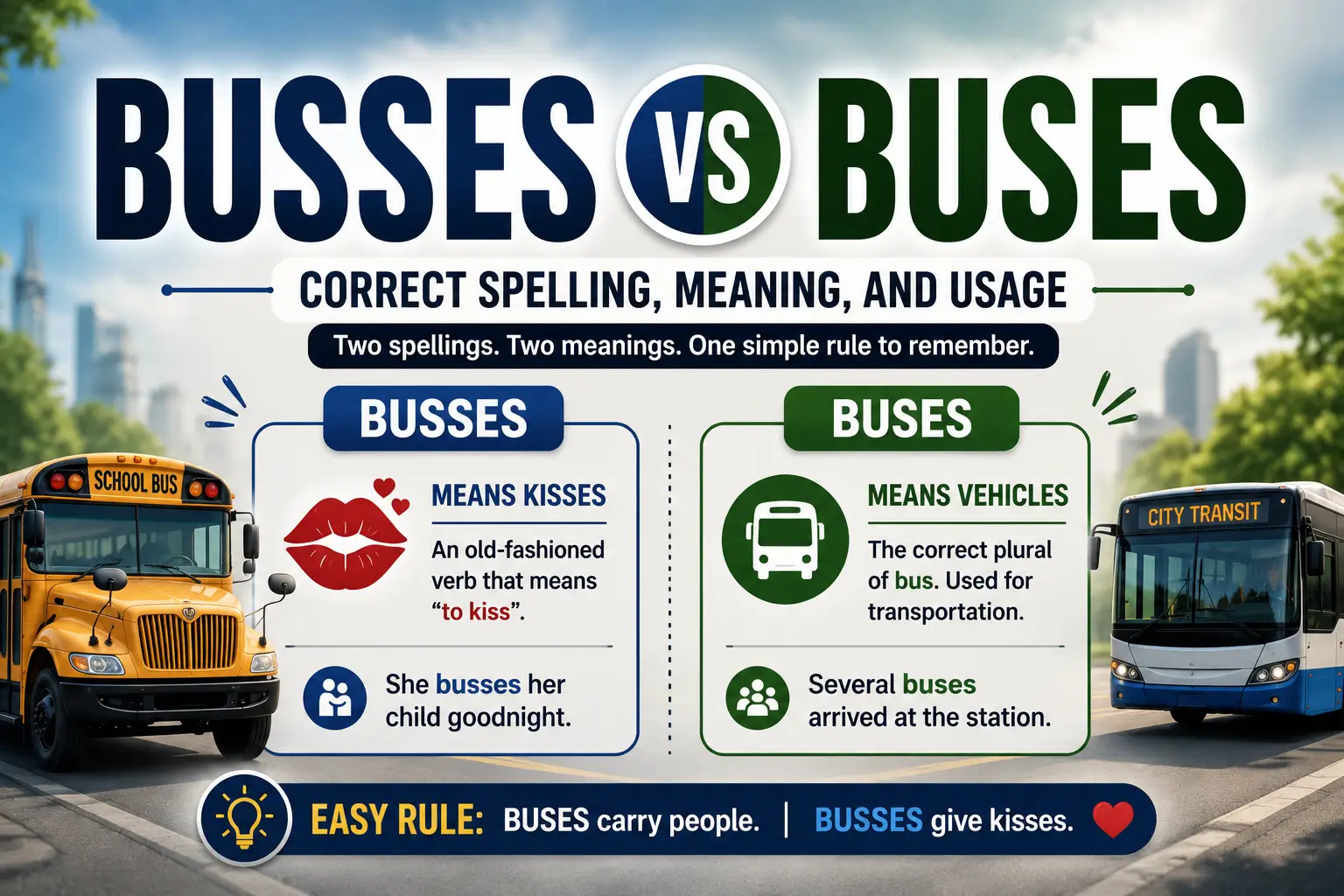
Busses vs Buses: Correct Spelling, Meaning, and Usage

Busses vs buses correct spelling and meaning explained with examples

The busses vs buses difference is simple: buses is the correct plural of bus, while busses usually means kisses in older usage. In standard English and modern English, English speakers use the standard plural form buses for multiple vehicles that transport people. Common usage contexts include public transport, private transport, public transit, school transportation, and … Read more

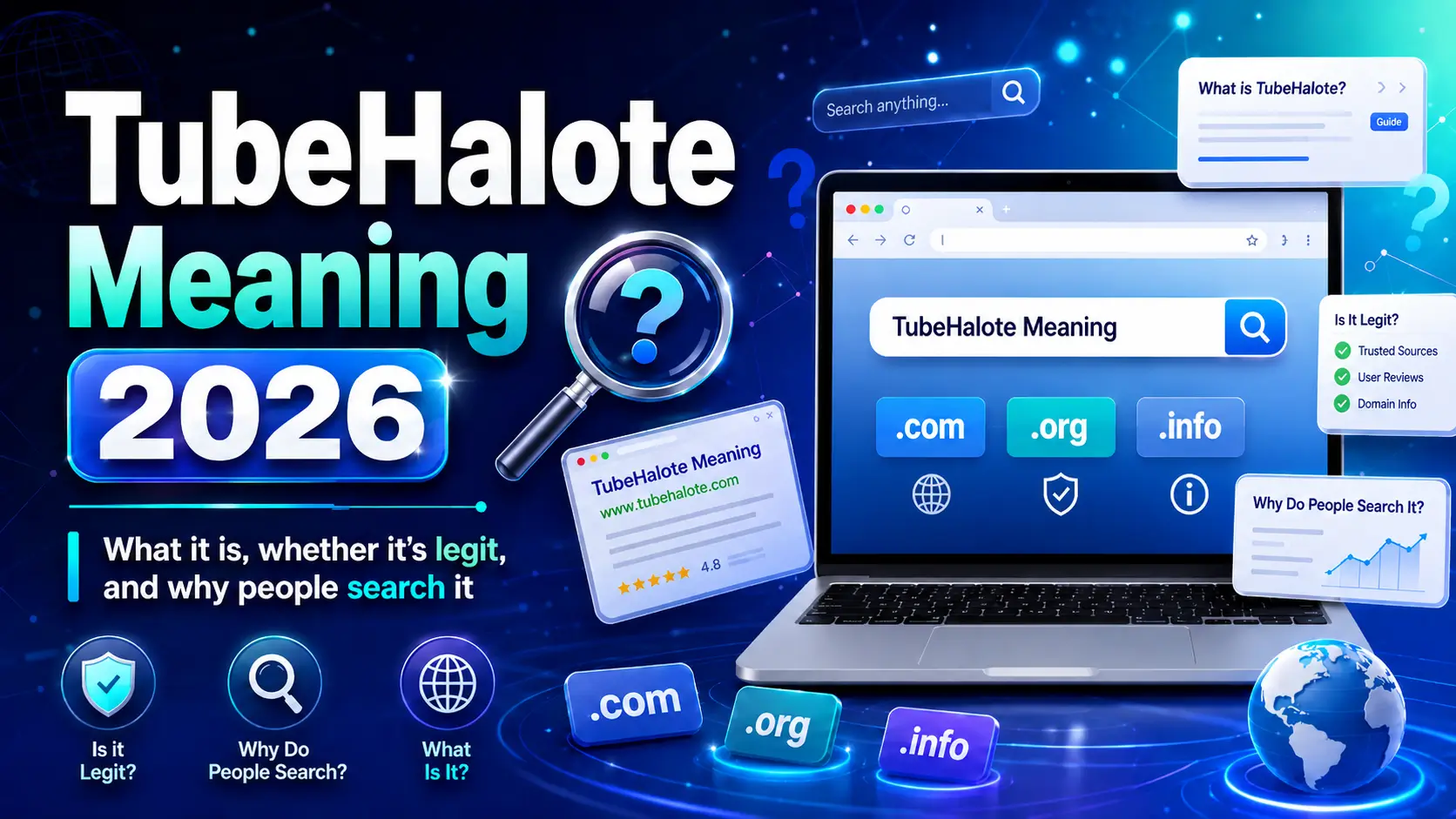
TubeHalote Meaning 2026: What It Is, How It Works, and Is It Legit?

TubeHalote Meaning 2026 website review and legitimacy guide

What Is Tubehalote has become a common question in 2026 because the TubeHalote meaning is still not clearly defined. The name appears across the internet, search results, and different websites, where it may refer to a website, online platform, content platform, or broader digital concept. Since different domains can serve different purposes, users and readers … Read more

Weather vs. Whether: What’s the Difference and How Do You Use Them Correctly?

Weather vs Whether difference shown with changing weather and two choices

If you’ve ever paused while writing a sentence because you weren’t sure whether to use weather vs. whether, you’re not alone. These two words are easy to confuse because they sound the same in most American English accents. However, their meanings and grammatical roles are completely different. Weather refers to conditions in the atmosphere, such … Read more

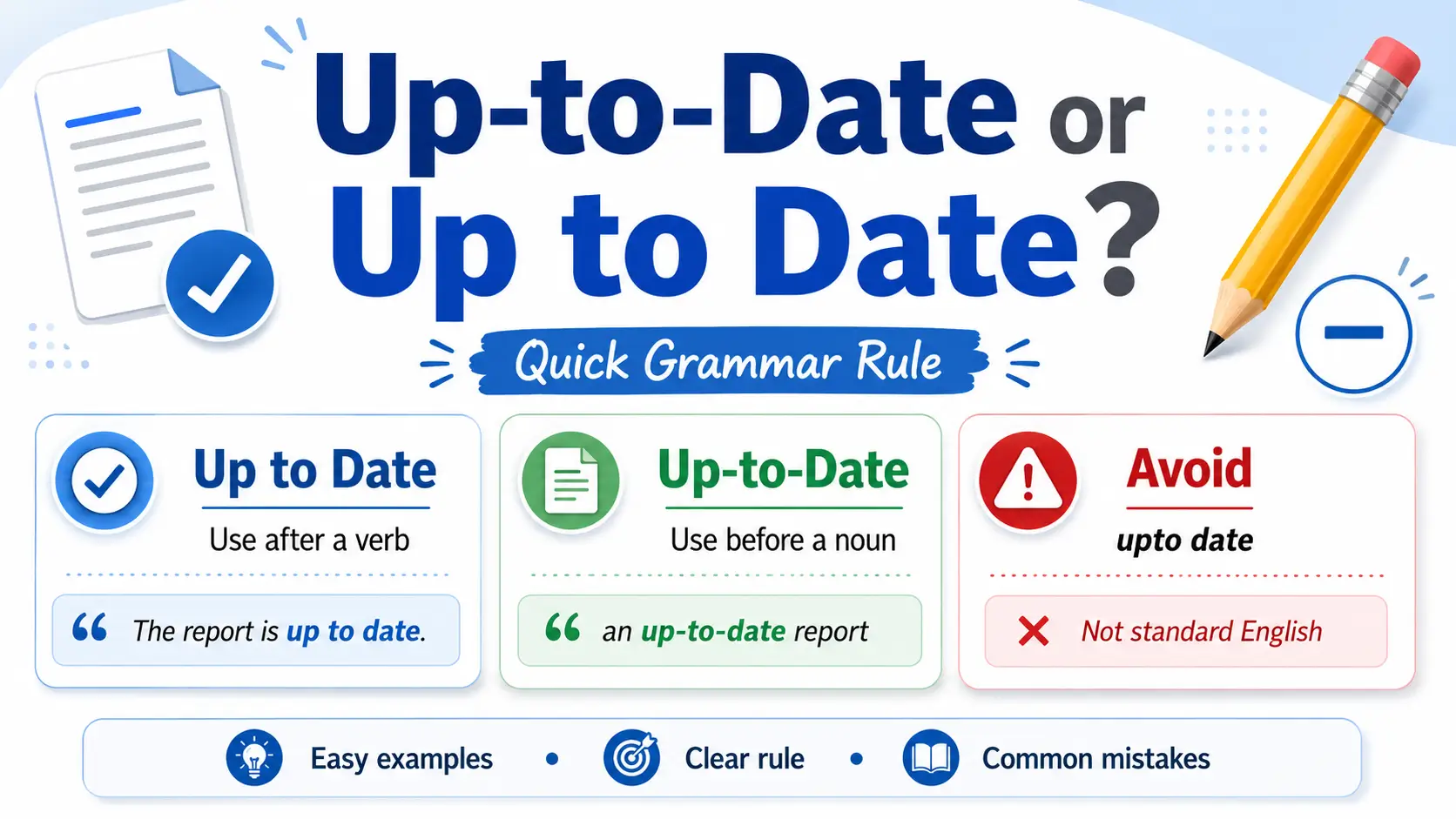
Up to Date or Up-to-Date: Meaning, Difference, Examples, and Grammar Rule

Up-to-date or up to date grammar rule explained with simple examples

Up-to-date or up to date is a common grammar question because both forms look right, but they work in different ways. The purpose is simple: you need to know when to use the hyphenated form and when to use the open phrase so your writing looks clear, correct, and professional. In simple English, use up … Read more

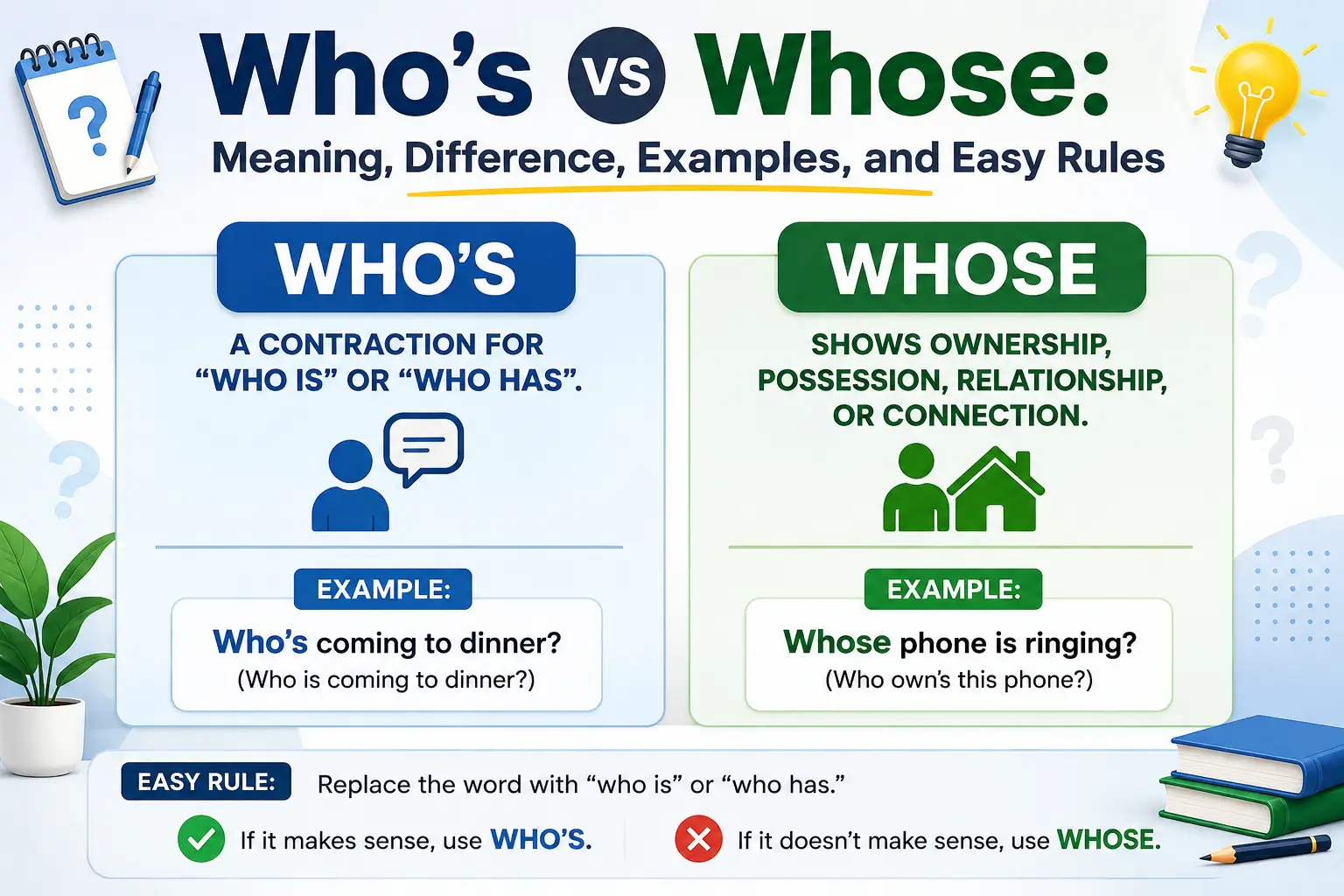
Who’s vs Whose: Meaning, Difference, Examples, and Easy Rules

Who’s vs Whose grammar guide explaining the meaning, difference, examples, and easy rules to use both words correctly.

Who’s vs whose is a common grammar confusion because both words sound the same but have different meanings. Many writers choose the wrong word because they focus on the apostrophe instead of the sentence meaning. Who’s is a contraction that means who is or who has, while whose shows ownership, possession, relationship, or connection. Understanding … Read more

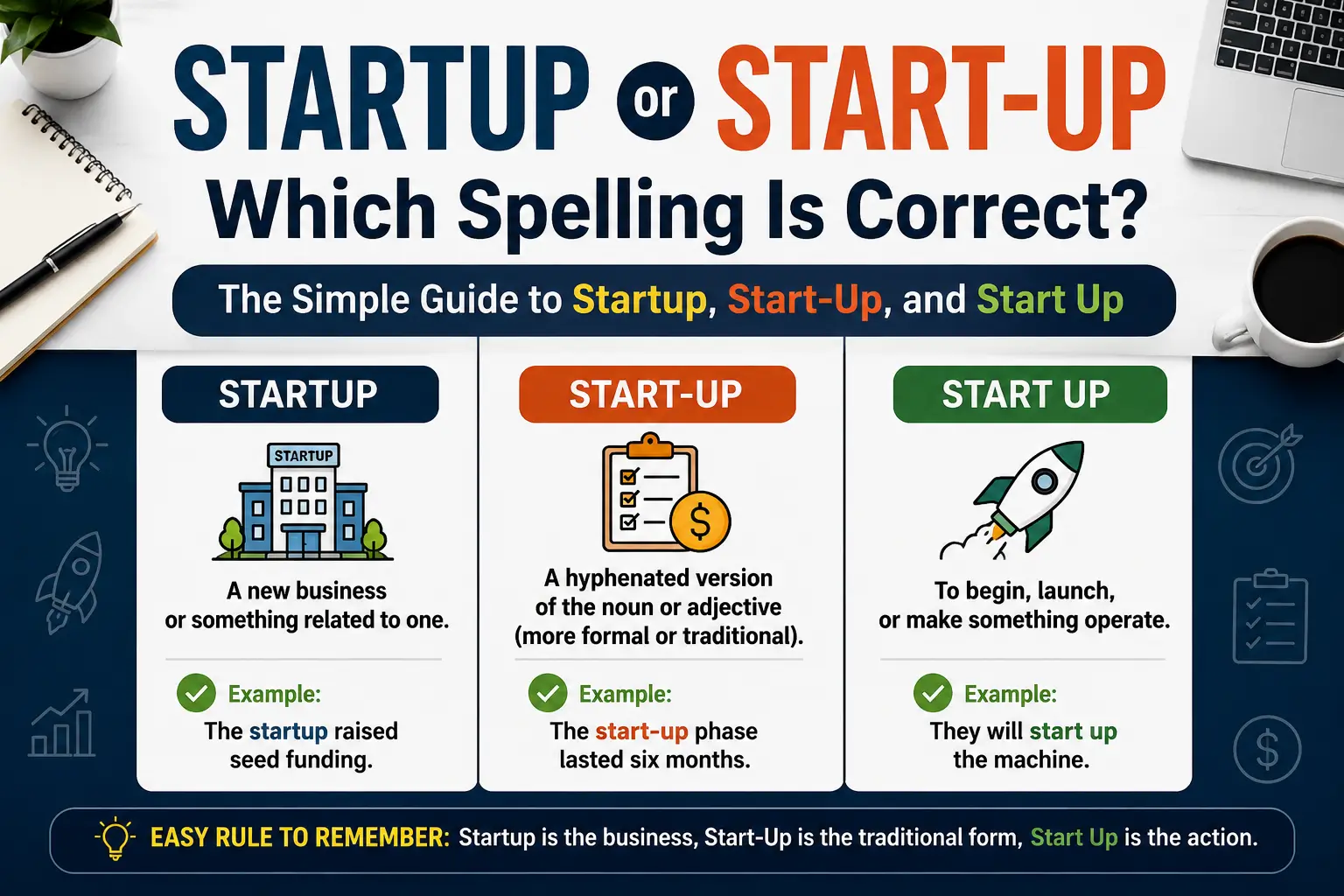
Startup or Start-Up: Which Spelling Is Correct?

Startup or Start-Up: Which Spelling Is Correct visual grammar guide

Startup or start-up is a common spelling question for writers, students, founders, and business owners. The purpose is simple: you need to know which form looks correct, clear, and professional in your writing. In most modern US English, startup is the best choice when you mean a young business. Use start-up when a formal style … Read more