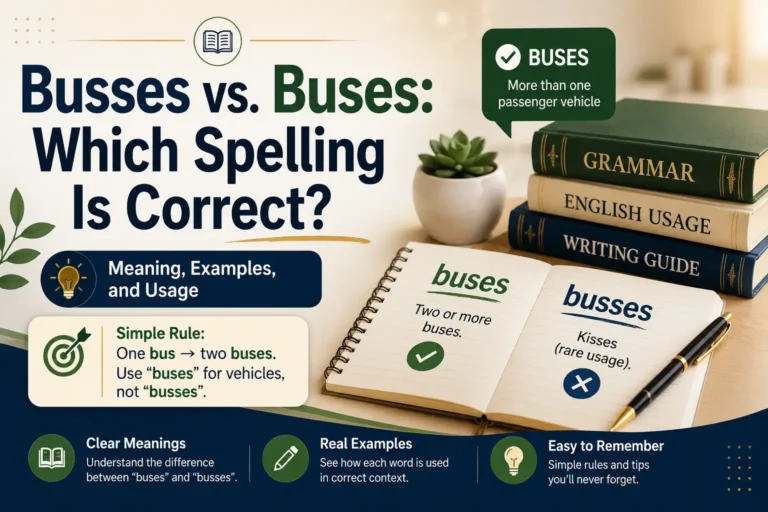
Busses vs. Buses: Which Spelling Is Correct? Meaning, Examples, and Usage

Busses vs. Buses: Which spelling is correct? Learn the difference between buses and busses with simple examples and grammar rules.

If you’ve ever hesitated between busses vs. buses, the answer is simpler than it may seem. When you mean two or more passenger vehicles, buses is the standard plural of bus in modern American English. For example, “The city added several new buses to its public transportation system.” The spelling busses can also be found … Read more

Every Day vs. Everyday: What’s the Difference and How Do You Use Them Correctly?

Every Day vs. Everyday grammar guide showing meanings, examples, and a quick test for choosing the correct form.

Every day vs everyday is a common English usage question because the two forms look and sound almost identical. However, they have different meanings and grammatical roles. Every day means each day and tells you how often something happens, as in “I practice English every day.” Everyday is an adjective that means ordinary, usual, or … Read more

Passed vs. Past: What’s the Difference and How Do You Use Each One?

Passed vs. Past grammar guide showing that passed describes an action, while past refers to earlier time or movement beyond a point.

Confused about passed vs past? You’re not alone. These words sound alike, but they have different meanings and uses. Passed is the past tense of the verb pass, while past can describe an earlier time or something beyond a place or point. For example, you passed your test, but you walked past the school. Learning … Read more

Led vs. Lead: What’s the Difference? Meaning, Pronunciation, Grammar, and Examples

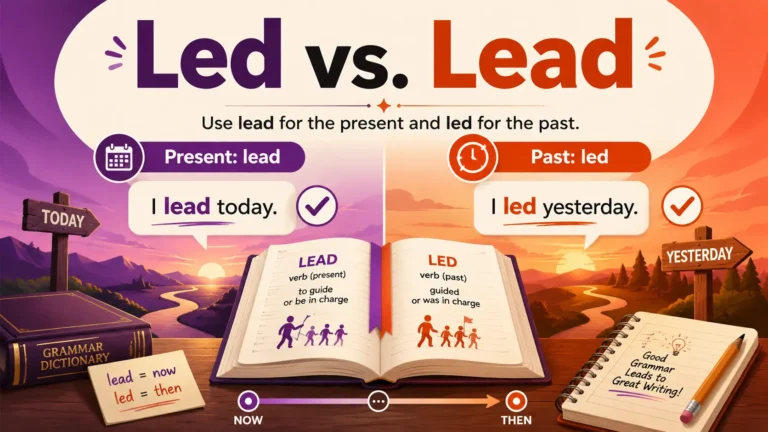
Led vs. Lead difference explained with present and past tense examples

If you’ve ever wondered whether to write led vs. lead, you’re not alone. These two words are easy to confuse because lead has two different pronunciations, while led is the past tense of the verb lead. The correct choice depends on the word’s meaning, grammatical role, and tense. Quick answer: Use lead when you mean … Read more

Whichever vs Whatever: What’s the Difference and When Should You Use Each?

Whichever vs Whatever comparison showing limited choices versus open choices.

Confused about whichever vs whatever? You’re not alone. These two words look and sound similar, and both can express a choice or possibility. However, they aren’t interchangeable in every sentence. The key difference is whether you’re choosing from a specific or limited set of options or talking about an open and unrestricted choice. Use whichever … Read more

Gases vs. Gasses: Which Spelling Is Correct?

Gases vs gasses comparison showing gases as a plural noun and gasses as a verb action

Gases vs. gasses is a common spelling question because both words exist, but they usually perform different jobs. Gases is the standard plural of gas, while gasses is commonly used as the third-person singular form of the verb gas. For example, oxygen and nitrogen are gases. However, a machine gasses a sealed container when it … Read more

Among vs. Between: Differences, Grammar Rules, and Clear Examples

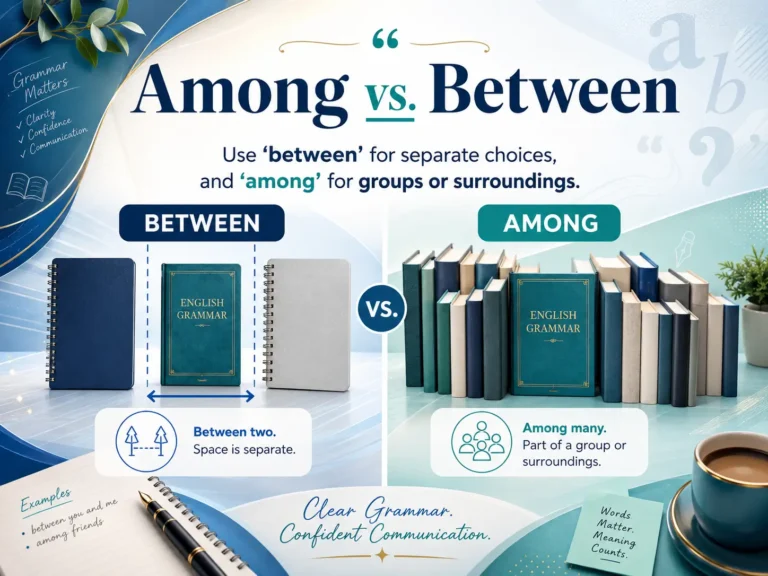
Among vs between comparison showing an English grammar book between two notebooks and among a group of books.

Among vs. Between explains when to use each preposition correctly. Use between for separate people, things, choices, or relationships. Use among when someone or something is part of a group or surrounded by several people or objects. Many learners hear that between is only for two items, while among is for three or more. However, … Read more

Could vs Can: What’s the Difference and When Should You Use Each?

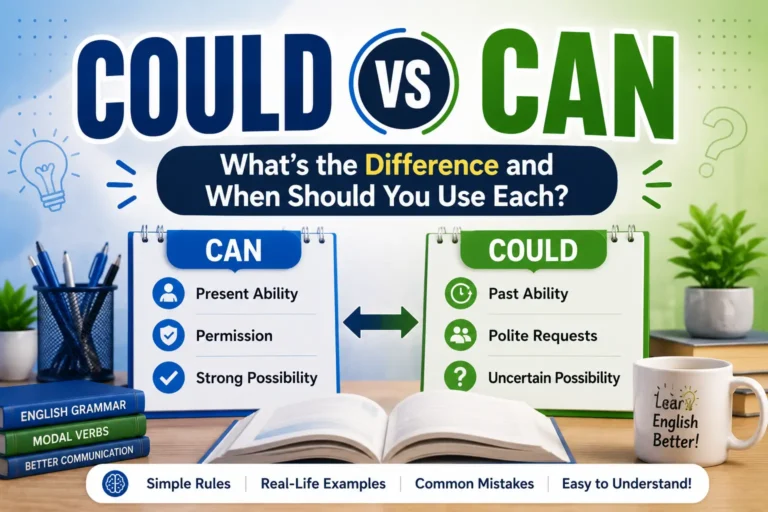
Could vs Can comparison showing the difference between present ability, past ability, permission, and polite requests in English grammar.

Could vs can is one of the most common grammar questions in English grammar, and understanding the difference can instantly improve your writing and speaking. Although both modal verbs express ability, possibility, and permission, they are used in different situations. Knowing when to use each word helps you avoid common mistakes, sound more natural, and … Read more

Neither vs Either: What’s the Difference and When Should You Use Each?

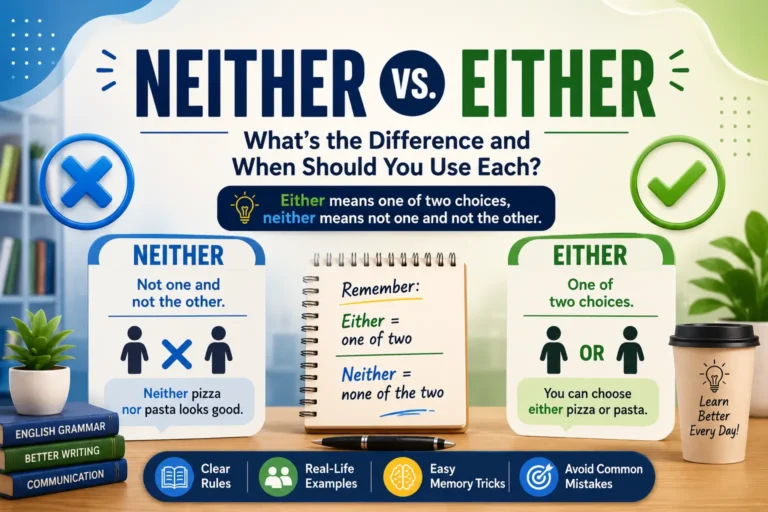
Neither vs Either grammar guide explaining the difference between neither and either with simple examples, grammar rules, and subject-verb agreement.

Neither vs either is one of the most searched English grammar topics because these two words look similar but have opposite meanings. Knowing when to use either, neither, either…or, and neither…nor will help you write more clearly, avoid common grammar mistakes, and speak confidently in everyday American English. If you’ve ever wondered which word is … Read more

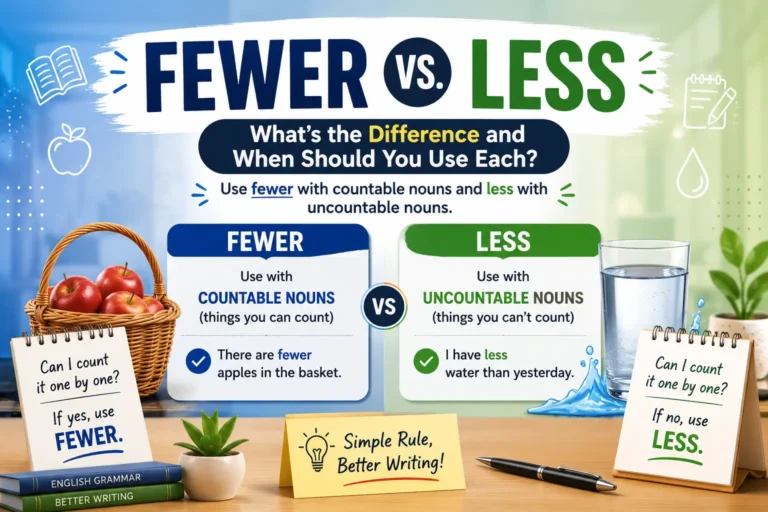
Fewer vs. Less: What’s the Difference and When Should You Use Each?

Fewer vs Less grammar guide explaining the difference between fewer and less with countable and uncountable noun examples.

Fewer vs. less is one of the most common grammar questions in American English, and understanding the difference can instantly improve your writing. The simple rule is this: use fewer with countable nouns and less with uncountable nouns. However, English also has a few common exceptions involving money, time, distance, and measurements, which often confuse … Read more