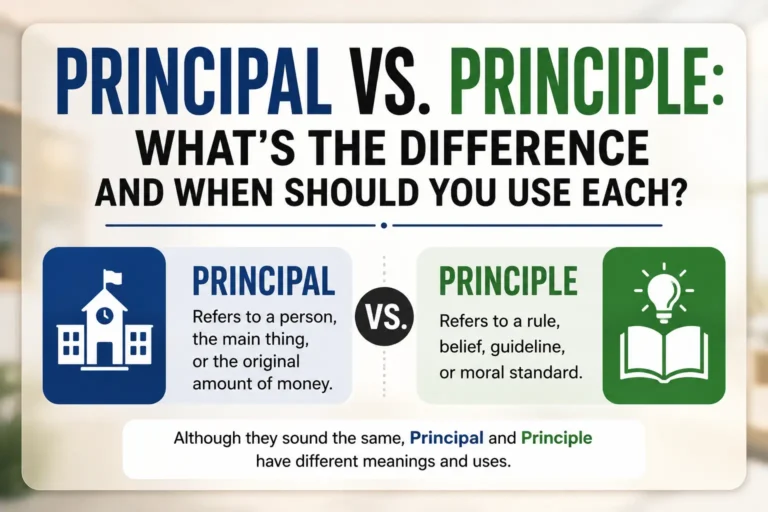
Principal vs. Principle: What’s the Difference and When Should You Use Each?

Principal vs principle comparison explaining the difference with meanings, examples, and grammar rules

Principal vs. principle is one of the most searched commonly confused words in English grammar because both words sound the same but have very different meanings. If you’ve ever wondered which spelling is correct, you’re in the right place. This guide explains the difference between principal and principle, when to use each word, and how … Read more

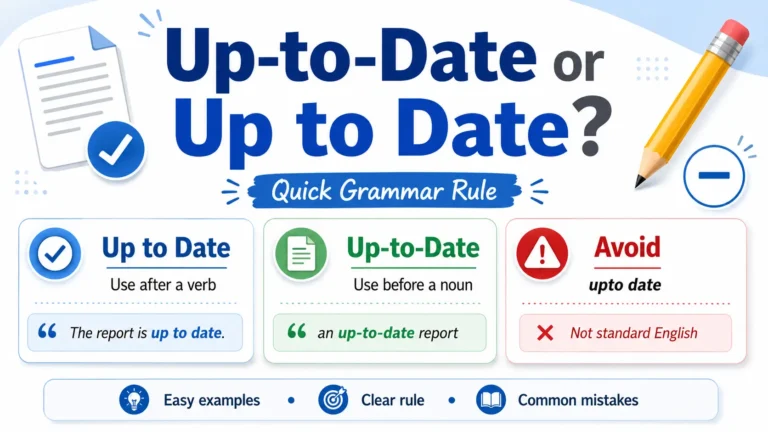
Up to Date or Up-to-Date: Meaning, Difference, Examples, and Grammar Rule

Up-to-date or up to date grammar rule explained with simple examples

Up-to-date or up to date is a common grammar question because both forms look right, but they work in different ways. The purpose is simple: you need to know when to use the hyphenated form and when to use the open phrase so your writing looks clear, correct, and professional. In simple English, use up … Read more

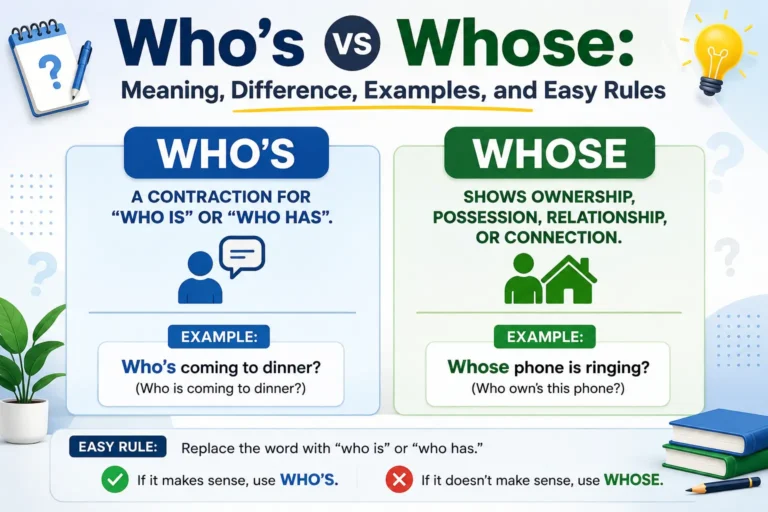
Who’s vs Whose: Meaning, Difference, Examples, and Easy Rules

Who’s vs Whose grammar guide explaining the meaning, difference, examples, and easy rules to use both words correctly.

Who’s vs whose is a common grammar confusion because both words sound the same but have different meanings. Many writers choose the wrong word because they focus on the apostrophe instead of the sentence meaning. Who’s is a contraction that means who is or who has, while whose shows ownership, possession, relationship, or connection. Understanding … Read more