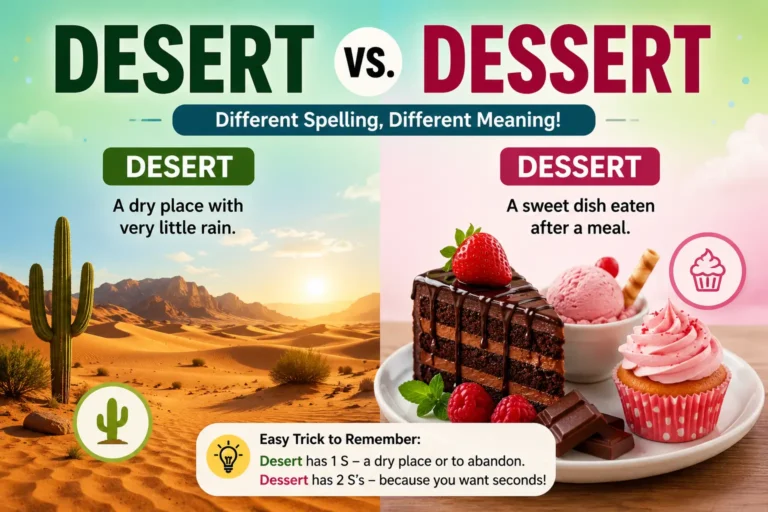
Desert vs. Dessert: What’s the Difference? Meaning, Pronunciation, Examples, and Memory Tips

Desert vs. Dessert difference with a dry desert and sweet desserts

If you’re confused about desert vs. dessert, you’re not alone. These two words look almost identical, and in some uses, they sound exactly the same. However, their meanings are completely different. Desert can mean a dry geographical region or, as a verb, to abandon someone or something. Dessert is a sweet food served after a … Read more

Emigrate vs. Immigrate: What’s the Difference? Meaning, Examples, and Easy Ways to Remember

Emigrate vs. Immigrate difference showing leaving one country and arriving in another

The choice between emigrate vs immigrate depends on the point of view in your sentence. Emigrate focuses on leaving, while immigrate focuses on arriving. Use emigrate when you talk about the point of departure. Use immigrate when you focus on the point of arrival. Meanwhile, migrate is a broader word for the process of moving … Read more

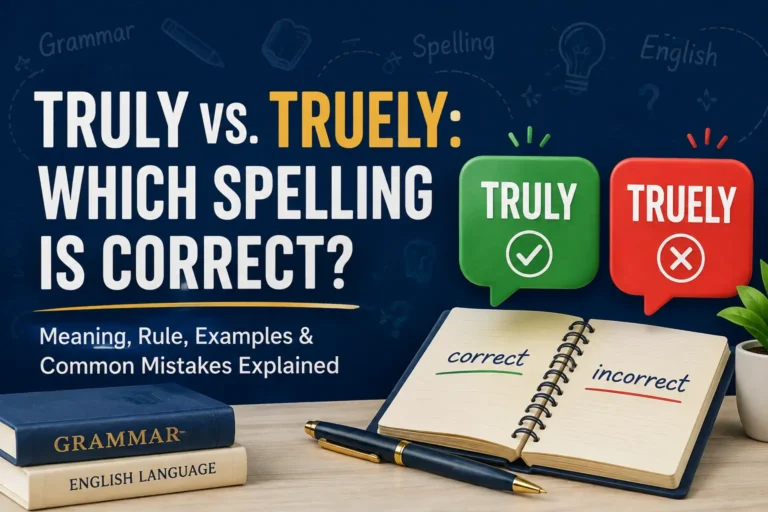
Truly vs. Truely: Which Spelling Is Correct? (Meaning, Rule, Examples & Common Mistakes)

Truly vs. Truely spelling comparison showing Truly as correct and Truely as incorrect

If you’re searching for Truely vs Truly, the answer is simple: truly is the only correct spelling. In standard English, the word true drops the final e before adding -ly. I once caught myself writing truely in an important email, and proofreading helped me remember the correct spelling rule. Understanding this small grammar rule makes … Read more

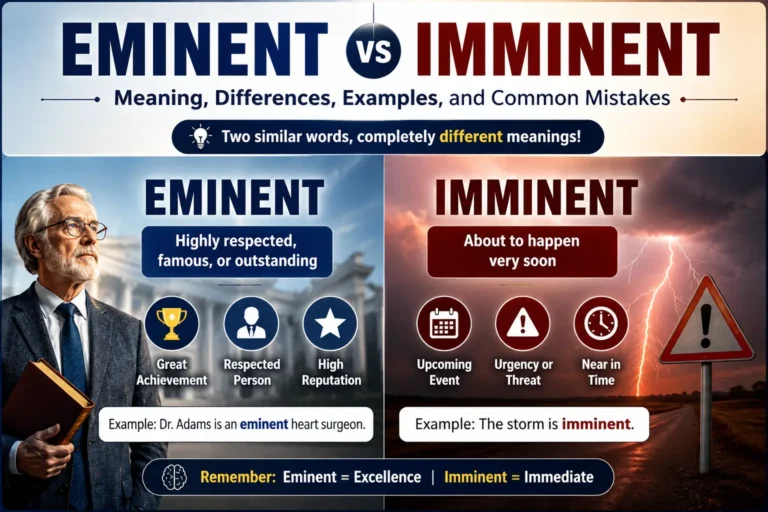
Eminent vs Imminent: Meaning, Differences, Examples, and Common Mistakes

Eminent vs imminent comparison showing eminent means highly respected, while imminent means something is about to happen soon.

The difference between eminent vs imminent often creates confusion because these words have similar pronunciation, sound alike, and look similar. However, their meanings are completely different. The key difference is that eminent describes a famous, distinguished, and highly respected person or thing, while imminent describes something that is about to happen or will happen very … Read more

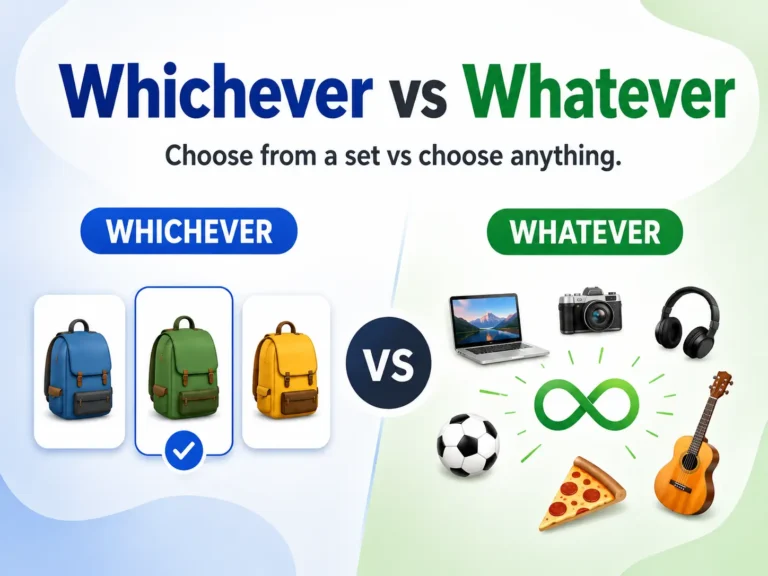
Whichever vs Whatever: What’s the Difference and When Should You Use Each?

Whichever vs Whatever comparison showing limited choices versus open choices.

Confused about whichever vs whatever? You’re not alone. These two words look and sound similar, and both can express a choice or possibility. However, they aren’t interchangeable in every sentence. The key difference is whether you’re choosing from a specific or limited set of options or talking about an open and unrestricted choice. Use whichever … Read more

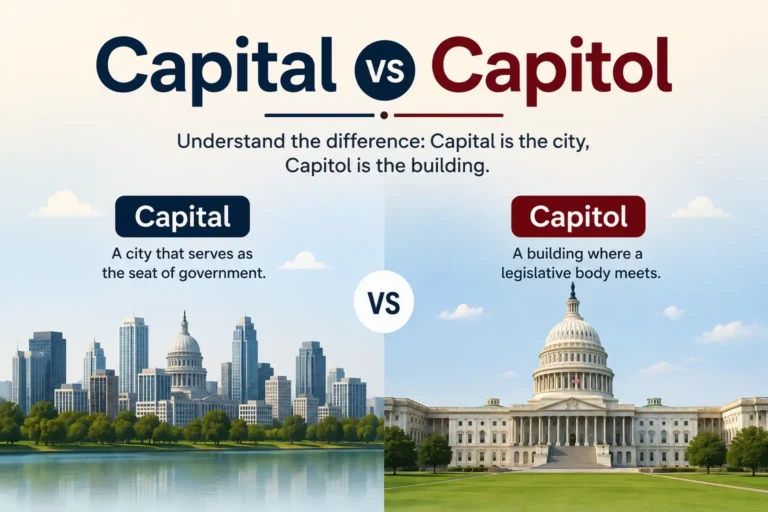
Capital vs. Capitol: What’s the Difference? Meaning, Examples, and Easy Ways to Remember

Capital vs Capitol comparison showing that capital means a government city, while capitol means a legislative building.

If you’ve ever wondered about capital vs. capitol, you’re not alone. These two words look and sound almost identical, but they have different meanings and uses. The confusion often appears when people write about government, politics, cities, or buildings. The easiest rule is this: capital can mean a city that serves as a seat of … Read more

Among vs. Between: Differences, Grammar Rules, and Clear Examples

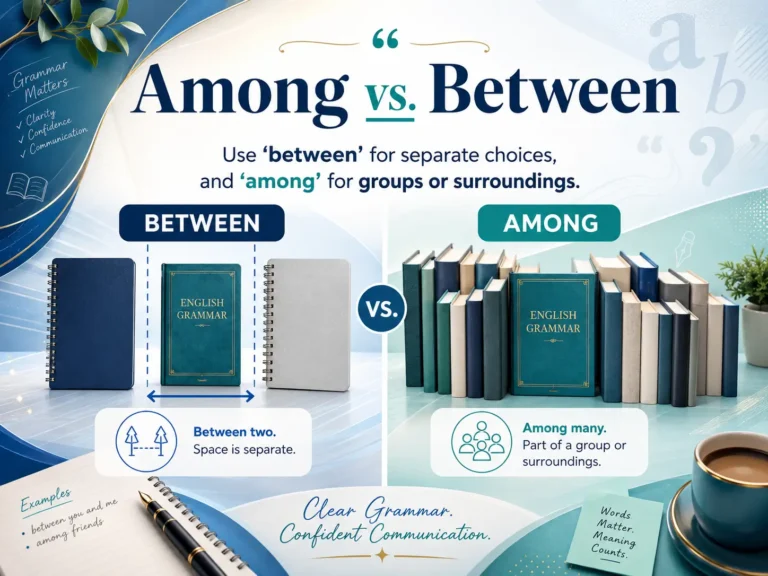
Among vs between comparison showing an English grammar book between two notebooks and among a group of books.

Among vs. Between explains when to use each preposition correctly. Use between for separate people, things, choices, or relationships. Use among when someone or something is part of a group or surrounded by several people or objects. Many learners hear that between is only for two items, while among is for three or more. However, … Read more

Allusion vs. Illusion: Meaning, Differences, and Examples

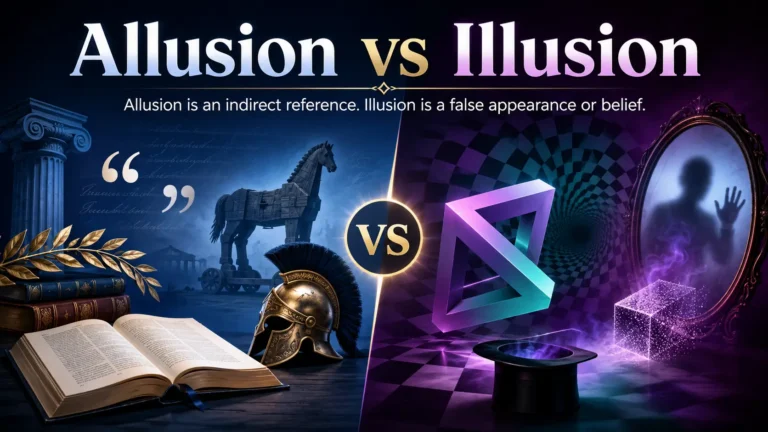
Allusion vs illusion comparison showing literary references and false appearances

Allusion vs. illusion explains the difference between an indirect reference and a false appearance or belief. An allusion points to a familiar person, story, event, or idea. In contrast, an illusion makes something seem real or true when it isn’t. Understanding this difference helps you choose the correct word in schoolwork, professional writing, emails, and … Read more

Hanged vs. Hung: What’s the Difference and Which One Is Correct?

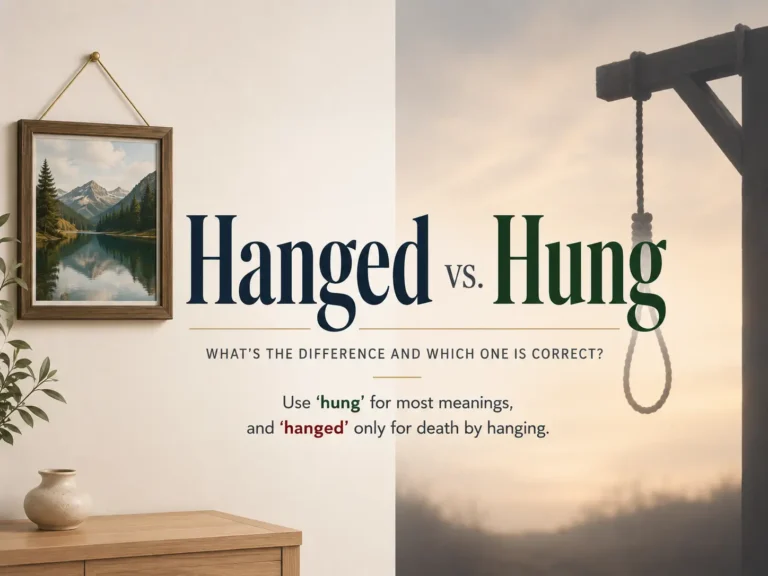
Hanged vs hung difference showing a hung picture and the correct grammar rule for using hanged and hung.

Hanged vs. hung describes two different past forms of the verb hang. Use hung when something is suspended, displayed, attached, or left in place. However, use hanged when a person is killed through death by hanging. For example, you hung a picture on the wall, but a prisoner was hanged. The correct choice depends on … Read more

Perspective vs. Prospective: Meanings, Differences, and Correct Usage

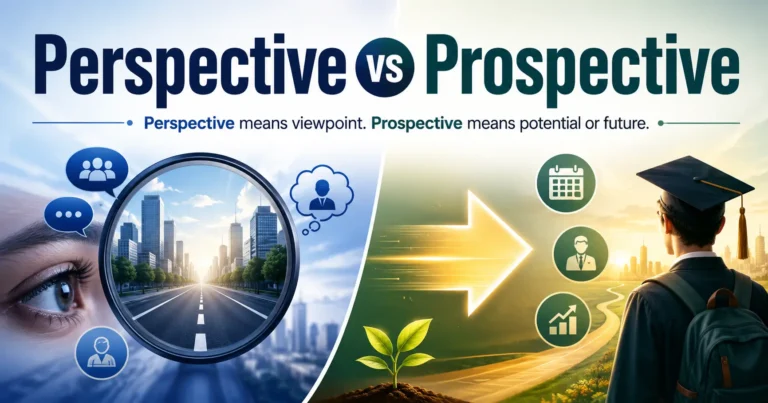
Perspective vs prospective comparison showing viewpoint and future possibilities

Perspective vs prospective explains the difference between a viewpoint and something connected with the future. Perspective is usually a noun that means a way of seeing, understanding, or judging something. Prospective is usually an adjective that describes a person, event, or result that may exist or happen later. For example, from my perspective means “from … Read more