Elicit vs. Illicit: What’s the Difference?

Elicit vs illicit comparison with speech bubbles, warning symbols, and an open dictionary

Elicit vs illicit is a common confusion in English grammar because these two words look and sound almost identical but have completely different meanings. Elicit means to draw out, obtain, or bring forth a response, reaction, or information, while illicit means illegal, forbidden, or not permitted. Knowing the difference between these commonly confused words helps … Read more

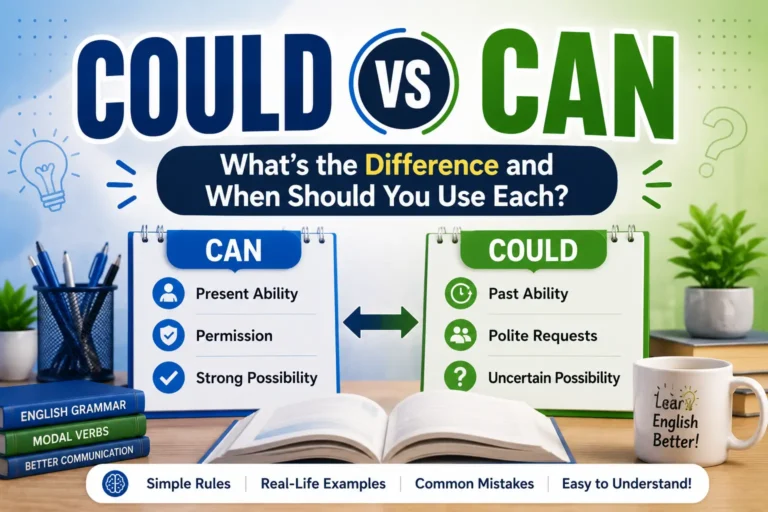
Could vs Can: What’s the Difference and When Should You Use Each?

Could vs Can comparison showing the difference between present ability, past ability, permission, and polite requests in English grammar.

Could vs can is one of the most common grammar questions in English grammar, and understanding the difference can instantly improve your writing and speaking. Although both modal verbs express ability, possibility, and permission, they are used in different situations. Knowing when to use each word helps you avoid common mistakes, sound more natural, and … Read more

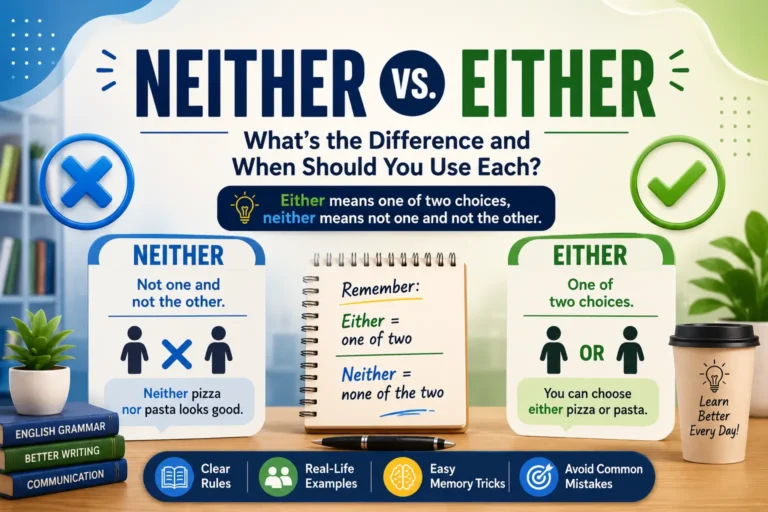
Neither vs Either: What’s the Difference and When Should You Use Each?

Neither vs Either grammar guide explaining the difference between neither and either with simple examples, grammar rules, and subject-verb agreement.

Neither vs either is one of the most searched English grammar topics because these two words look similar but have opposite meanings. Knowing when to use either, neither, either…or, and neither…nor will help you write more clearly, avoid common grammar mistakes, and speak confidently in everyday American English. If you’ve ever wondered which word is … Read more

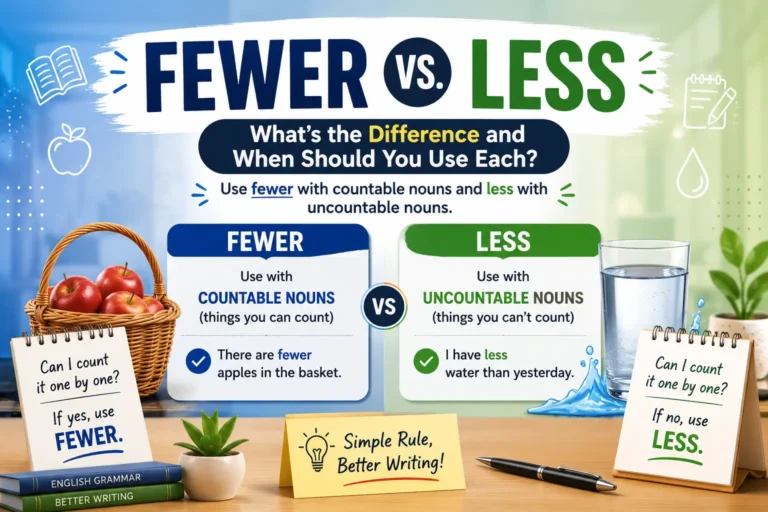
Fewer vs. Less: What’s the Difference and When Should You Use Each?

Fewer vs Less grammar guide explaining the difference between fewer and less with countable and uncountable noun examples.

Fewer vs. less is one of the most common grammar questions in American English, and understanding the difference can instantly improve your writing. The simple rule is this: use fewer with countable nouns and less with uncountable nouns. However, English also has a few common exceptions involving money, time, distance, and measurements, which often confuse … Read more

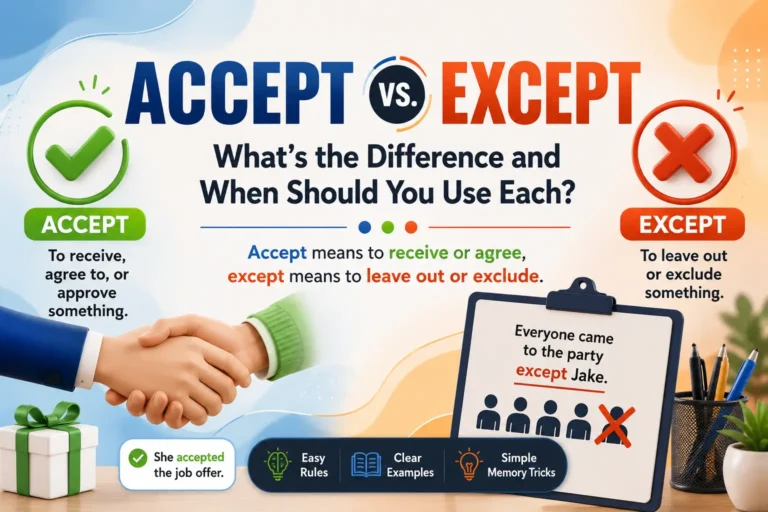
Accept vs. Except: What’s the Difference and When Should You Use Each?

Accept vs Except grammar guide explaining the difference between accept and except with simple examples and easy grammar rules.

Accept vs. except is one of the most common grammar questions because these two words sound similar but have completely different meanings. If you’ve ever wondered whether you should write accept or except, you’re in the right place. The simple answer is that accept means to receive or agree, while except means to leave out … Read more

Your vs. You’re: What’s the Difference and How to Use Them Correctly?

Your vs You’re difference explained with ownership examples and you are contraction examples

Your vs. you’re is one of the most searched English grammar questions because these two words sound alike but have different meanings and uses. If you’ve ever wondered whether to write your or you’re, you’re not alone. Understanding this difference helps you write more clearly in emails, text messages, social media posts, school assignments, and … Read more

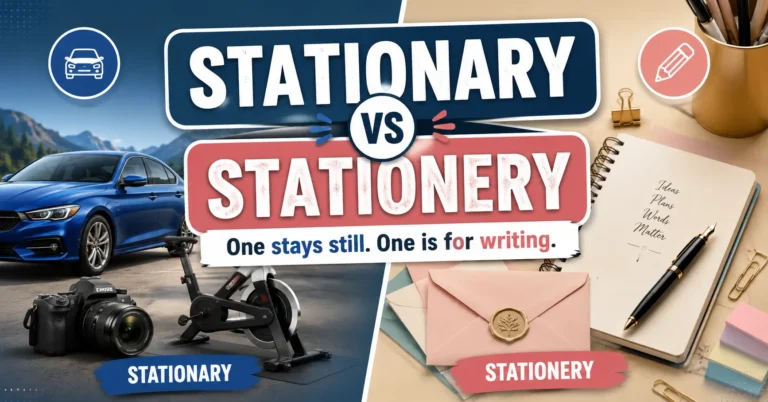
Stationary vs Stationery: What’s the Difference and When Should You Use Each?

Stationary vs Stationery difference explained with a stationary car and writing stationery supplies

Stationary vs stationery is one of the most commonly confused word pairs in English grammar. Although both words sound the same, they have different meanings, spellings, and uses. Knowing the difference helps you avoid common writing mistakes in emails, school assignments, business documents, and everyday communication. If you’re unsure whether to write stationary or stationery, … Read more

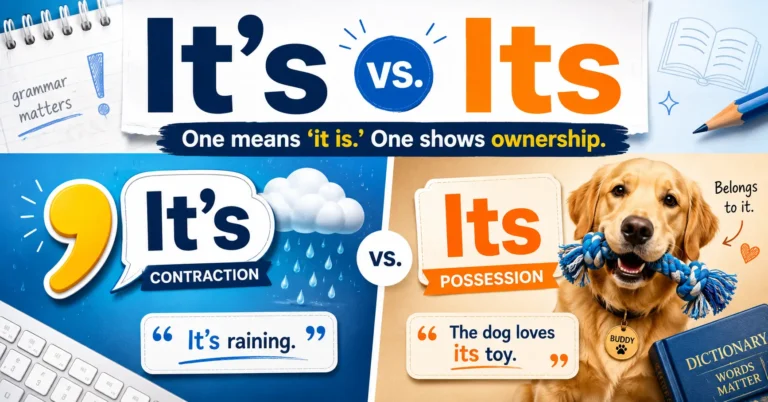
It’s vs. Its: Difference, Rules, Examples, and Easy Ways to Use Them Correctly

It’s vs Its difference explained with contraction, possession, and easy grammar examples

It’s vs its is a common English grammar confusion that affects many students, writers, and professionals. The purpose of understanding it’s vs its is to learn when to use it’s as a contraction of it is or it has, and when to use its as a possessive word that shows ownership. The easiest way to … Read more

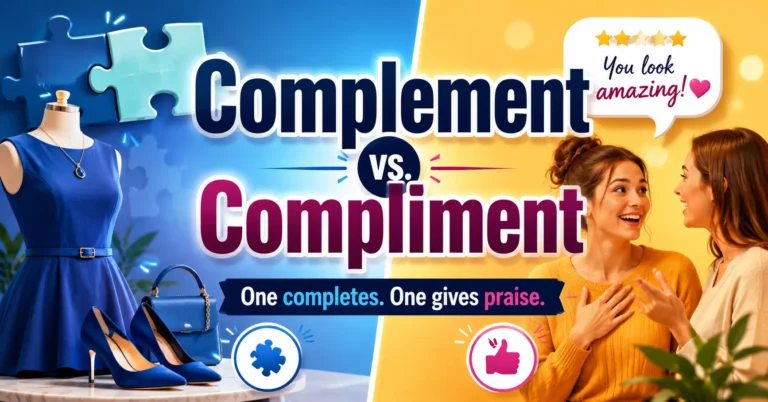
Complement vs. Compliment: What’s the Difference? Meaning, Examples, and Easy Ways to Remember

Complement vs Compliment difference explained with examples of completing something versus giving praise

Complement vs compliment is a common grammar confusion that happens because these two English words have similar pronunciation but completely different meanings. The easiest way to remember the difference is this: complement means something that completes, matches, or improves another thing, while compliment means praise, admiration, or a positive remark. Knowing the difference between these … Read more

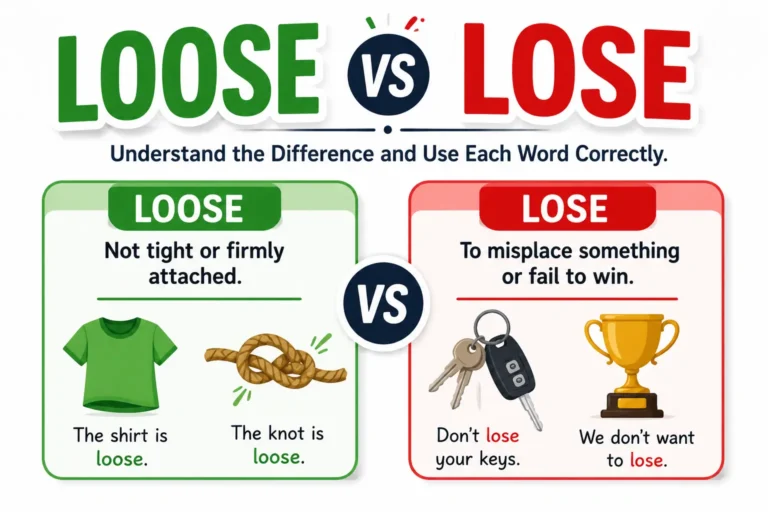
Loose vs. Lose: What’s the Difference and How Do You Use Them Correctly?

Loose vs lose difference with meanings and simple examples

Loose vs lose is one of the most searched grammar questions because these two words look almost identical but have completely different meanings. If you’ve ever wondered whether to write “lose your keys” or “loose your keys,” you’re not alone. The simple answer is this: lose is a verb that means to misplace something or … Read more