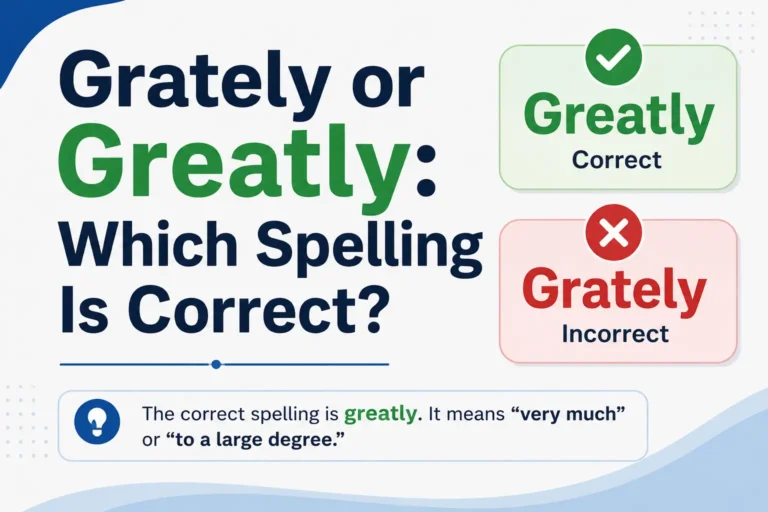
Grately or Greatly: Which Spelling Is Correct?

Grately or Greatly? Learn the correct spelling with a simple explanation and examples.

Grately or Greatly is a common spelling question, but only greatly is correct in standard English. The word grately is usually a misspelling and should not be used in formal, academic, professional, or everyday writing. Greatly is an adverb that means “very much” or “to a large degree.” For example, the correct phrase is “Your … Read more

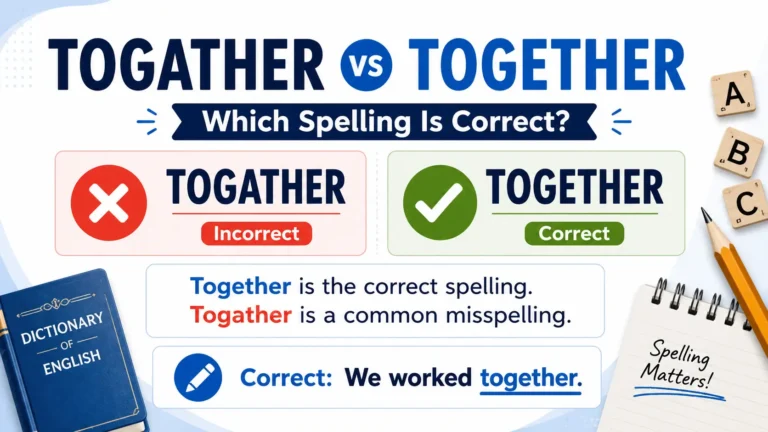
Togather vs Together: Which Spelling Is Correct?

Togather vs Together correct spelling explained with example

The together vs togather question has a simple answer: together is the correct spelling in standard English, while togather is a misspelling. Together means being with others, working as a group, or forming a united whole. This correct usage follows normal grammar rules and supports spelling accuracy. The error often comes from pronunciation. In quick … Read more

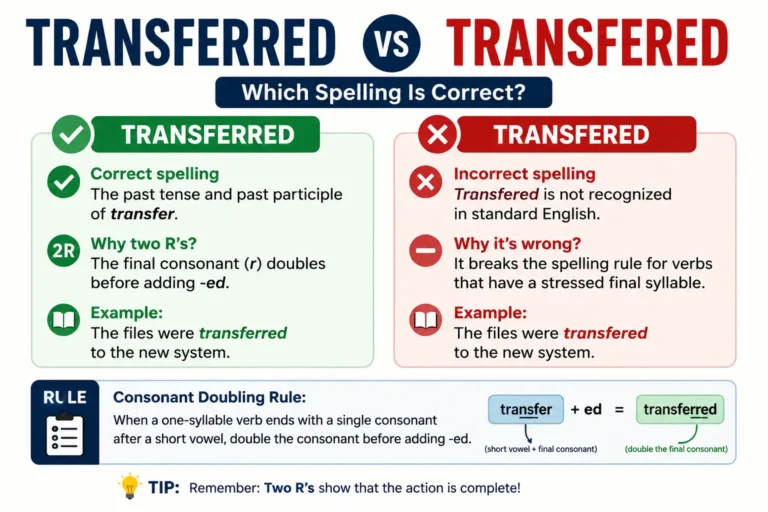
Transferred vs. Transfered: Which Spelling Is Correct?

Transferred vs transfered comparison showing that transferred with two r’s is the correct spelling.

Transferred vs transfered is easy to settle: transferred is the correct spelling, while transfered is an unrecognized spelling in standard English. The short answer follows a clear spelling rule: the base verb transfer forms its past tense and past participle with suffix -ed. Because the final syllable carries stress and ends in a final consonant, … Read more

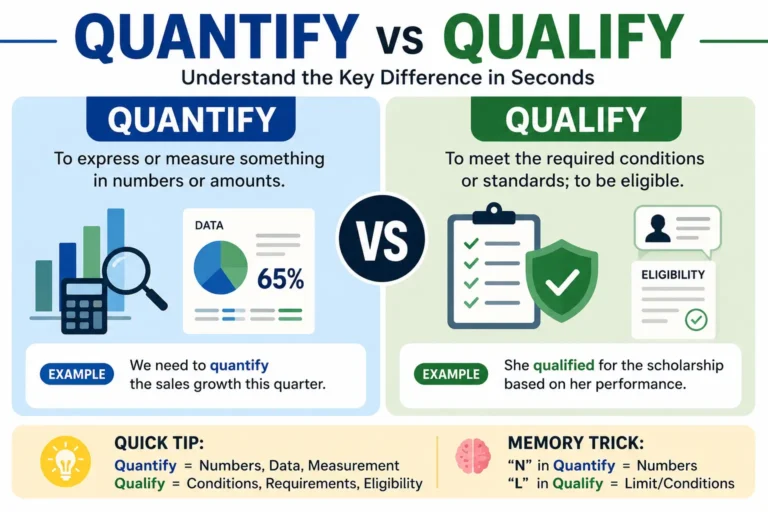
Quantify vs Qualify: Meaning, Difference, and Correct Usage

Quantify vs qualify meaning and difference explained with examples

The words quantify and qualify look and sound similar, so it’s easy to mix them up. However, they do very different jobs in English. One word is about numbers, amounts, data, and measurement. The other is about requirements, limits, conditions, and added detail. The difference matters in school essays, business emails, reports, resumes, research papers, … Read more

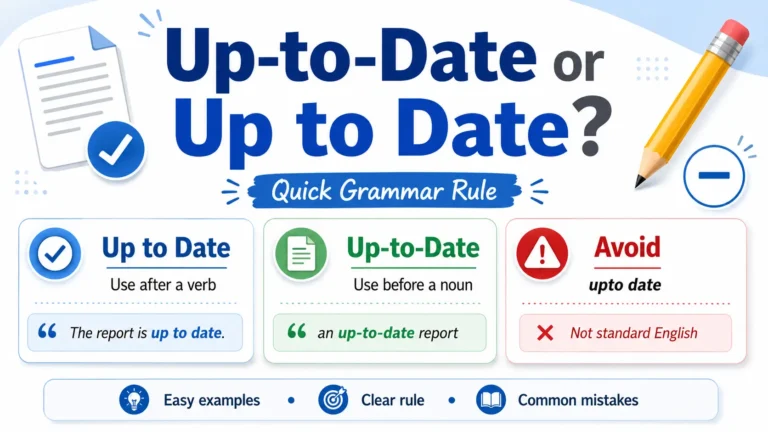
Up to Date or Up-to-Date: Meaning, Difference, Examples, and Grammar Rule

Up-to-date or up to date grammar rule explained with simple examples

Up-to-date or up to date is a common grammar question because both forms look right, but they work in different ways. The purpose is simple: you need to know when to use the hyphenated form and when to use the open phrase so your writing looks clear, correct, and professional. In simple English, use up … Read more

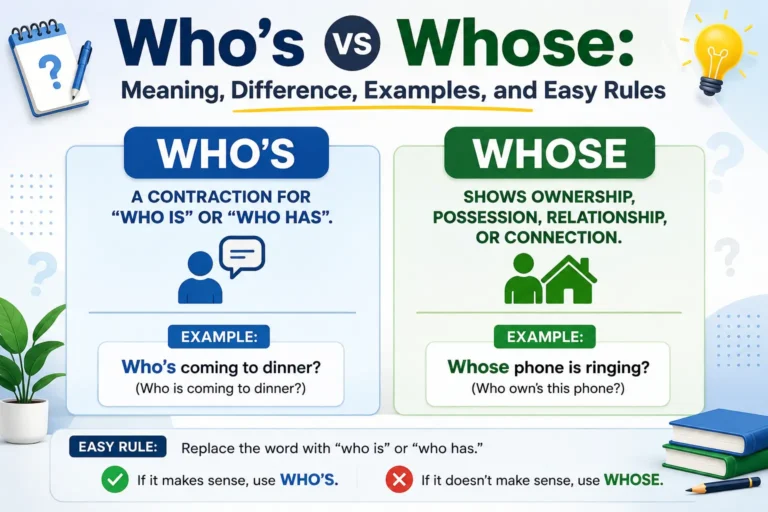
Who’s vs Whose: Meaning, Difference, Examples, and Easy Rules

Who’s vs Whose grammar guide explaining the meaning, difference, examples, and easy rules to use both words correctly.

Who’s vs whose is a common grammar confusion because both words sound the same but have different meanings. Many writers choose the wrong word because they focus on the apostrophe instead of the sentence meaning. Who’s is a contraction that means who is or who has, while whose shows ownership, possession, relationship, or connection. Understanding … Read more