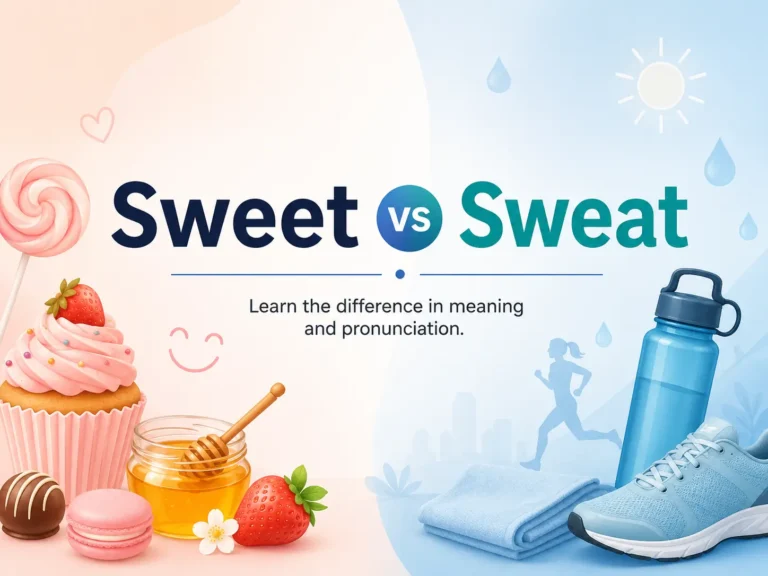
Sweet vs Sweat Differences

Sweet vs Sweat difference in meaning and pronunciation

Sweet vs sweat becomes easy to understand when you check the meaning first: sweet describes taste or kindness, while sweat means body moisture. These common English words look alike because of their spelling, yet their pronunciation, grammar role, and everyday use are completely different. Many learners mix them up in writing and speaking. A spell-check … Read more

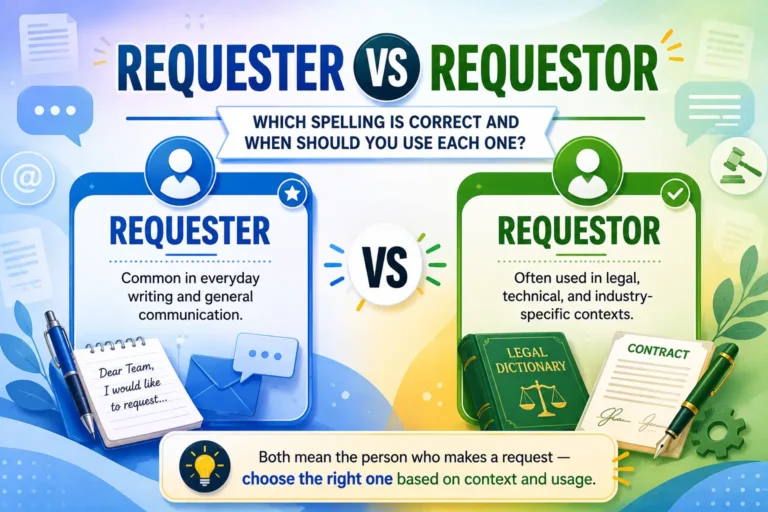
Requester vs Requestor: Which Spelling Is Correct and When Should You Use Each One?

Requester vs Requestor spelling difference explained with correct English usage examples

The difference between Requester and Requestor is mainly based on context, language usage, and industry standards rather than meaning. Both words describe a person who makes a request, but requester is more widely used in everyday communication, business writing, and general professional communication. In contrast, requestor appears more often in specialized environments such as IT, … Read more

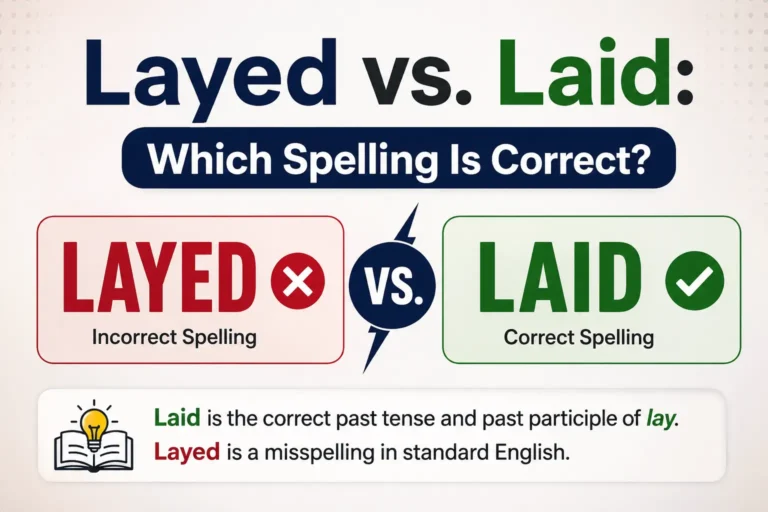
Layed vs. Laid: Which Spelling Is Correct?

Layed vs laid comparison showing laid as correct and layed as incorrect

Layed vs. Laid is a common spelling question, but the rule is simple. Laid is the correct past tense and past participle of lay, while layed is a misspelling in standard English. You should write, “She laid the book on the table,” not “She layed the book on the table.” The word lay means to … Read more

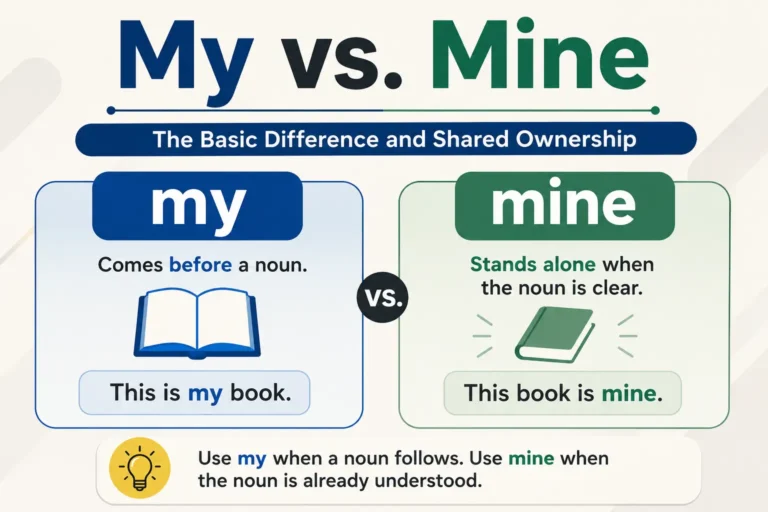
My vs. Mine: The Basic Difference and Shared Ownership

My vs. Mine difference explained with simple grammar rules and examples

My vs. Mine becomes easy once you see that my comes before a noun, while mine stands alone when the noun is already clear from the full context. My is a possessive determiner, while mine is a possessive pronoun. Use my in “This is my book” because book follows it. Use mine in “This book … Read more

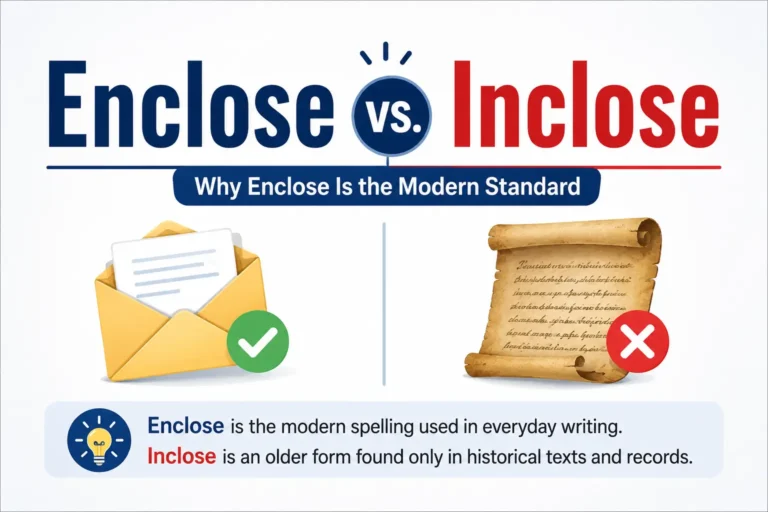
Enclose vs. Inclose: Why Enclose Is the Modern Standard

Enclose vs Inclose explained with the correct spelling, grammar rules, historical usage, and simple examples.

The enclose vs. inclose choice is simple: enclose is the modern spelling, while inclose survives mainly in older historical records and texts. Both words once meant to surround, shut in, or place something inside a container, boundary, or envelope. Today, enclose is the accepted verb in modern English. Its related forms are enclosed, enclosing, and … Read more

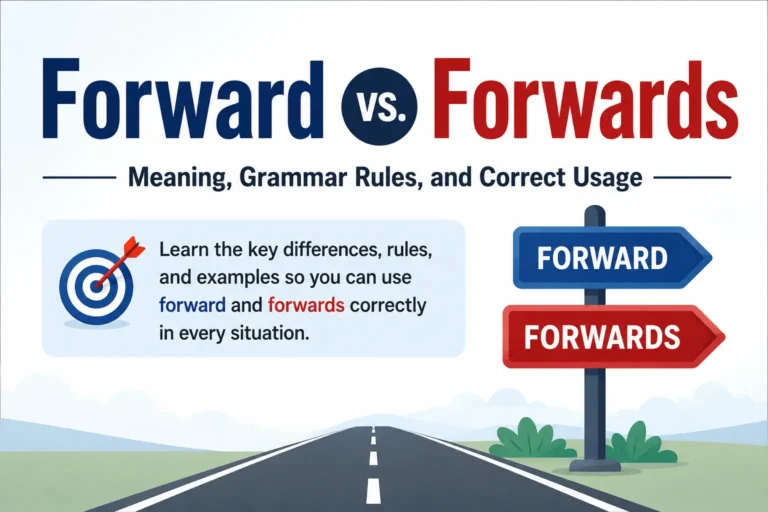
Forward vs. Forwards: Meaning, Grammar Rules, and Correct Usage

Forward vs Forwards explained with grammar rules, American vs British English differences, and simple examples.

The difference between forward vs. forwards can seem confusing because both words may describe movement toward the front. However, they are not always interchangeable. Forward has several grammatical roles, while forwards has fewer uses. In American English, writers usually prefer forward as the directional adverb. Meanwhile, British English accepts both forward and forwards, especially when … Read more

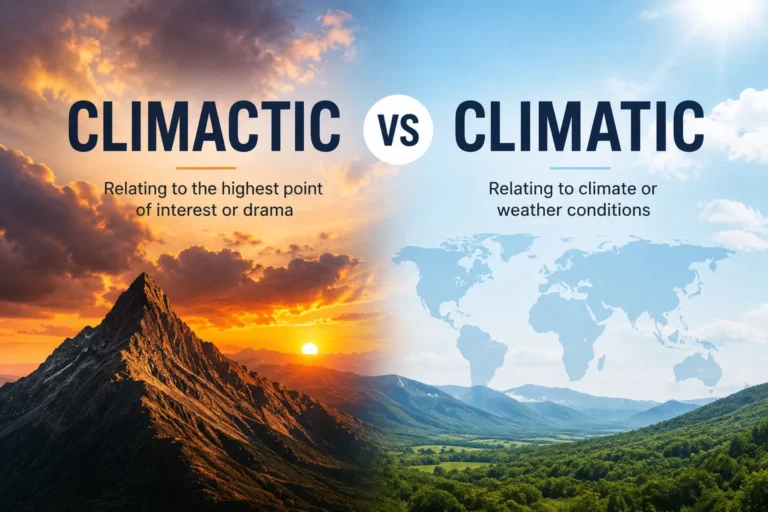
What Is the Difference Between Climactic vs Climatic?

Climactic vs Climatic Climactic vs Climatic – Difference, Meaning, Examples

The key difference in climactic vs climatic is simple: climactic refers to a climax, while climatic clearly describes climate and climate patterns. Each is an adjective, and dictionaries may mark it as adj. These two adjectives sound similar and are easy to confuse, yet their meaning is completely different. Use climactic for a final, decisive, … Read more

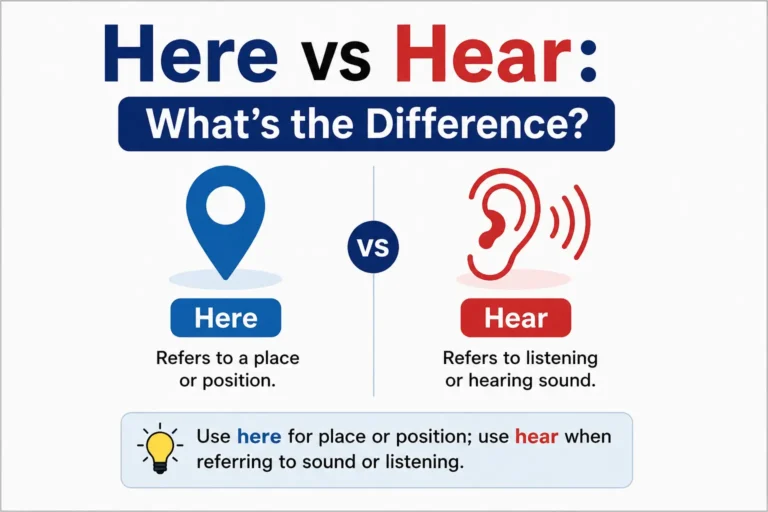
Difference Between Here and Hear

Here vs Hear explained with meanings, differences, grammar rules, memory trick, and easy examples.

Here and Hear are common homophones with the same pronunciation, but their spelling, meaning, and sentence role are completely different. The English language has many confusing elements and quirks, yet this homophone pair becomes easy when you check the context. They sound the same, but their different spellings and different meanings change word usage. Hear … Read more

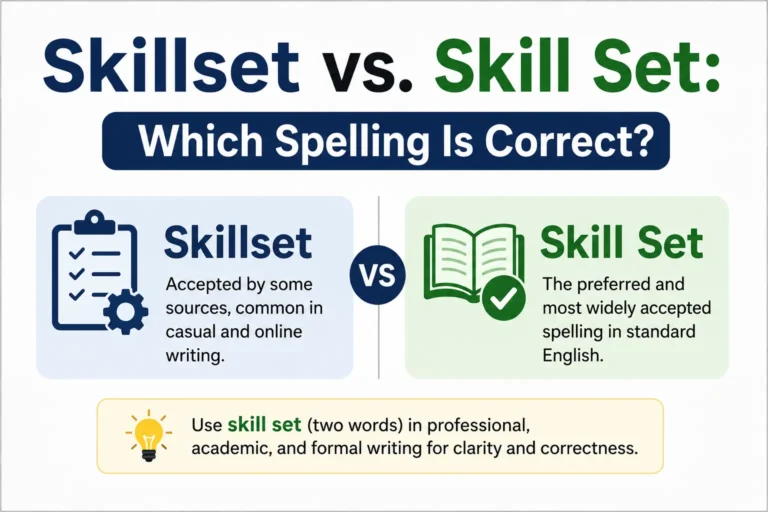
Skillset vs. Skill Set: Which Spelling Is Correct?

Skillset vs Skill Set explained with correct spelling, grammar rules, examples, and writing tips for professional English.

The key difference in skillset vs skill set is spelling: skill set is the safest and most widely accepted form in standard American English. It refers to a group of abilities that a person uses for a job, activity, or purpose. The one-word form, skillset, also appears in modern writing. Some dictionaries recognize it as … Read more

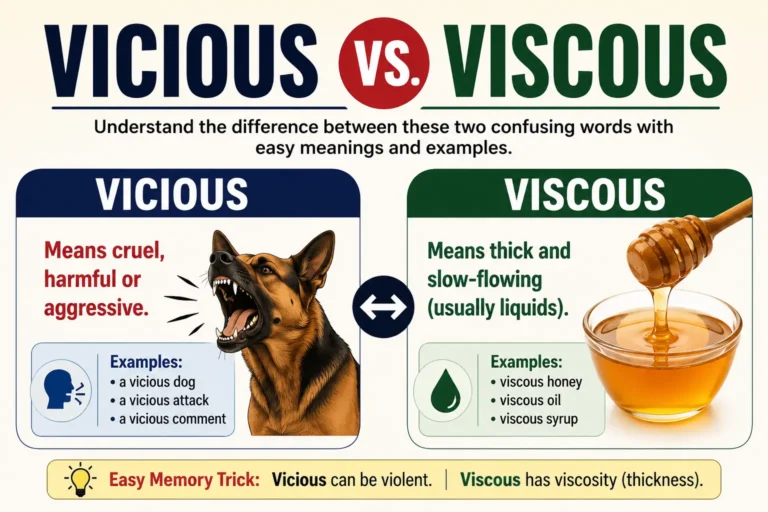
Vicious vs Viscous Word Choice: How Viscous and Vicious Differences

Vicious vs. Viscous infographic showing the difference between cruel behavior and thick slow-flowing liquids with simple examples.

Vicious vs. Viscous becomes clear when you remember that vicious describes cruel behavior, while viscous describes a thick liquid that flows slowly. Both words are adjectives, but their close spelling hides very different meanings. Vicious can describe an evil, malicious, aggressive, violent, or severe person, action, remark, storm, or attack. Viscous refers to thickness and … Read more