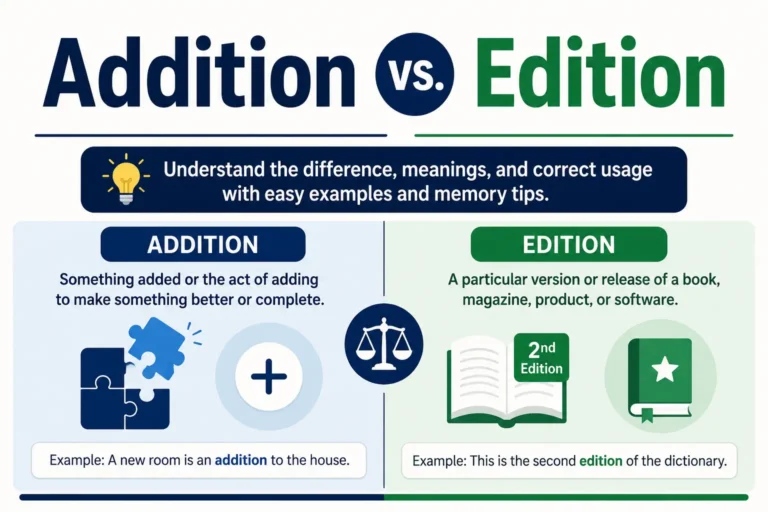
Addition vs. Edition The Difference Between Edition and Addition

Addition vs. Edition: Differences, Meanings & Examples

Addition vs. Edition becomes simple when you remember that an addition is something added, while an edition is a published version of a work. A publisher may release a revised edition of a specific book after correcting, updating, or reorganizing its content. The new publication may also use a different layout, design, or format. Use … Read more

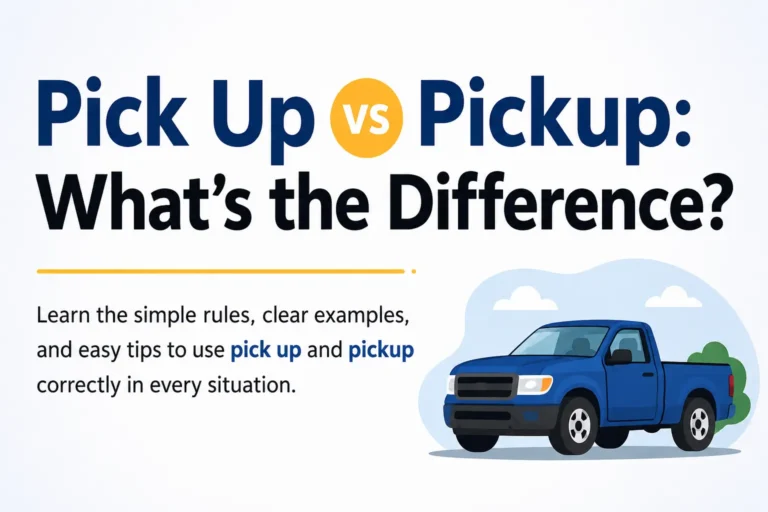
Pick Up vs Pickup Understanding the Spelling Difference

Pick Up vs Pickup grammar guide showing the difference between the phrasal verb "pick up" and the noun "pickup" with simple examples.

The pick up vs pickup choice becomes easier when you check whether the term acts as a verb, noun, or adjective before choosing its spelling. These compound words may look confusing as one combination, but their word use differs. Write pick up as two words for an action: “I picked up the order.” Write pickup … Read more

Guarantee vs Warranty Understanding Product Promises and Coverage

Guarantee vs Warranty infographic explaining the key differences between a guarantee and a warranty with simple examples.

The key difference in guarantee vs warranty is that a guarantee gives a broad promise, while a warranty explains formal product protection terms. After a purchase, this assurance may support a product, its integrity, and overall product integrity. Warranties offer several types of protections and available coverage. A manufacturer may use carefully written terms to … Read more

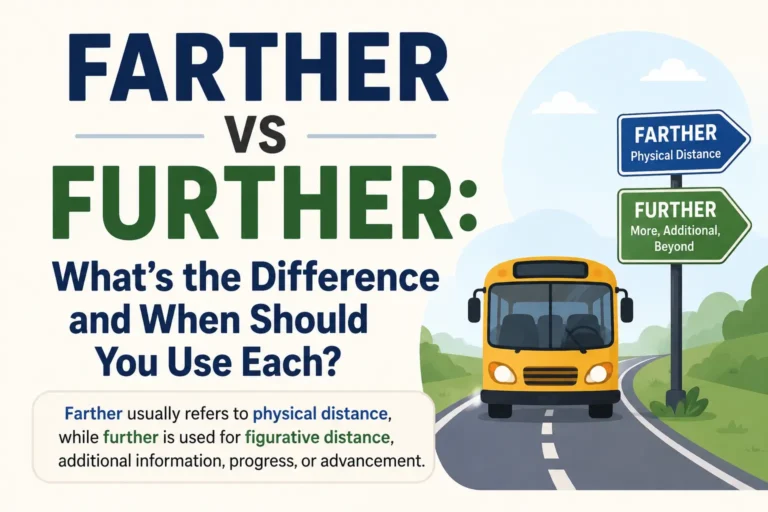
Farther vs Further: What’s the Difference and When Should You Use Each?

Farther vs Further explained with simple grammar rules, examples, and key differences in American English.

Farther vs Further is one of the most common grammar questions in American English because both words look alike and have similar meanings. The quick answer is simple: farther usually refers to physical distance, while further is used for figurative distance, additional information, progress, or advancement. Knowing this difference helps you choose the right word … Read more

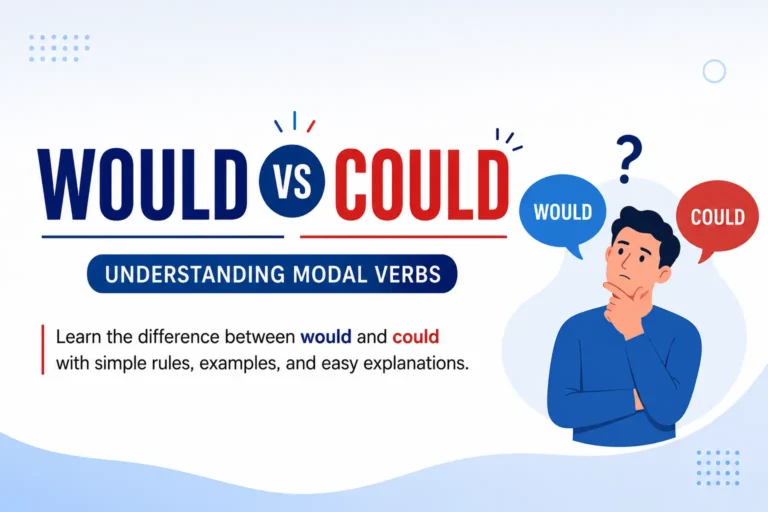
Would vs Could: Difference, Grammar Rules, Uses, and Examples

Would vs Could grammar rules, differences, and examples explained

Understanding would vs could helps English learners choose the right word when making polite requests or asking questions. These modal verbs may look similar, but their meaning changes depending on the situation. For example, “Could you bring me a cup of coffee?” asks about ability, while “Would you bring me a cup of tea?” focuses … Read more

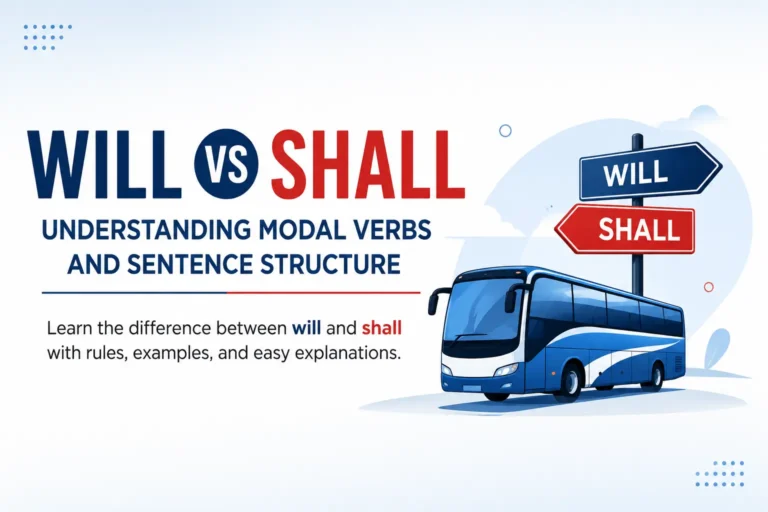
Will vs Shall: Difference, Grammar Rules, Uses, and Examples

Will vs Shall grammar rules, differences, and examples explained

Learning will vs shall becomes easier when you know how these modal verbs work in English. Both are helping verbs used to express future time, but they can also show possibility, permission, or obligation. Will is more common in daily English, while shall is often used in formal situations or special expressions. Unlike regular verbs, … Read more

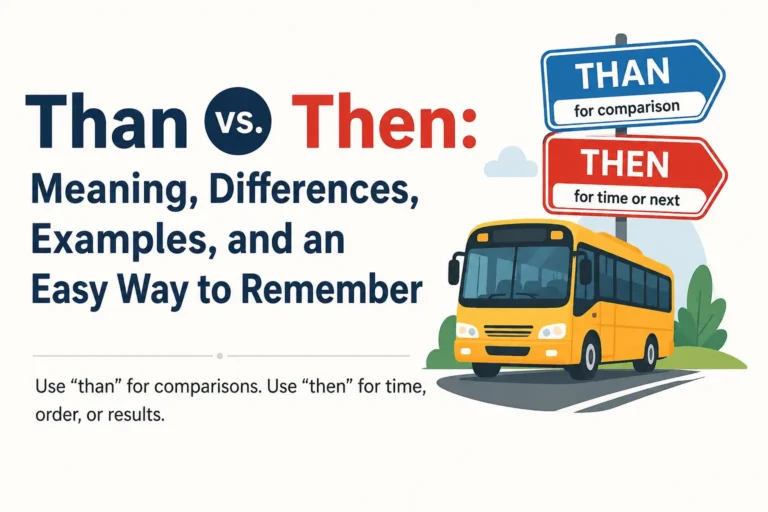
Than vs. Then: Meaning, Differences, Examples, and an Easy Way to Remember

Than vs. Then grammar comparison showing when to use "than" for comparisons and "then" for time, sequence, and results with simple examples.

Than vs then is a common grammar problem, but the difference is simple. Use than when making a comparison, and use then when discussing time, sequence, or a result. For example, “This book is better than that one” compares two books. “Finish the book, then write the review” shows what happens next. These commonly confused … Read more

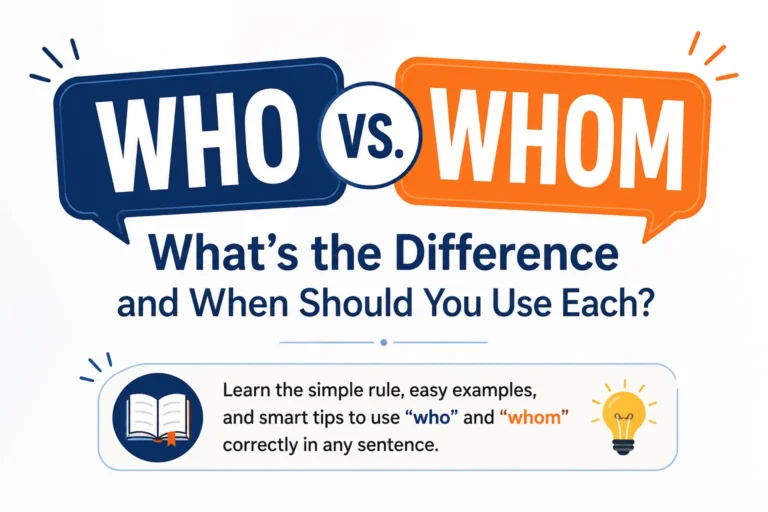
Who vs. Whom: What’s the Difference and When Should You Use Each?

Who vs whom explained with simple grammar rules, examples, and the easy he vs him memory trick.

Who vs. whom is one of the most confusing topics in English grammar, but it doesn’t have to be difficult. The simple rule is this: who is used as the subject of a sentence, while whom is used as the object of a verb or preposition. If you’ve ever stopped while writing an email, essay, … Read more

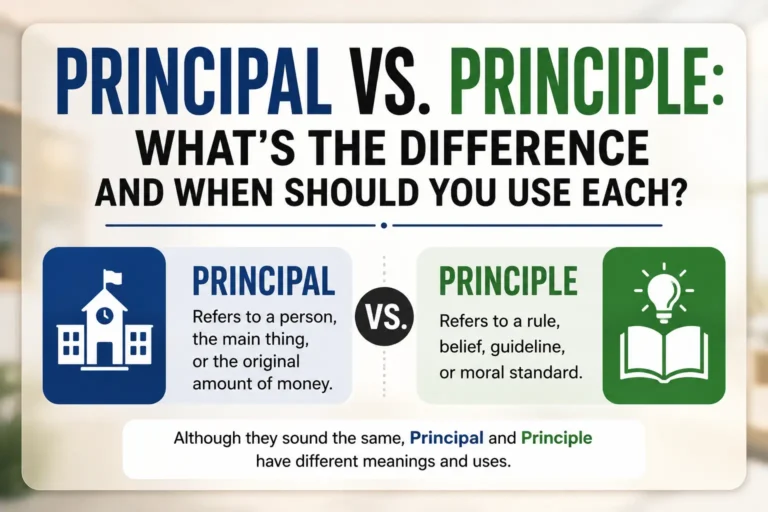
Principal vs. Principle: What’s the Difference and When Should You Use Each?

Principal vs principle comparison explaining the difference with meanings, examples, and grammar rules

Principal vs. principle is one of the most searched commonly confused words in English grammar because both words sound the same but have very different meanings. If you’ve ever wondered which spelling is correct, you’re in the right place. This guide explains the difference between principal and principle, when to use each word, and how … Read more

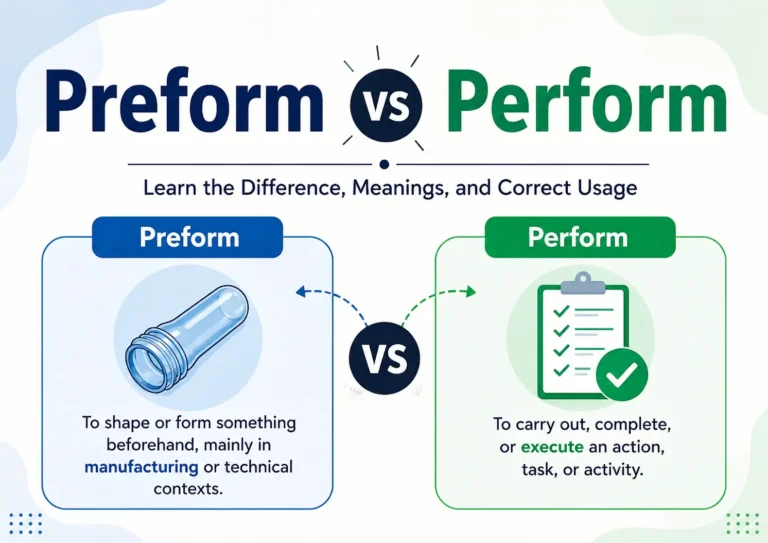
Preform vs. Perform: What’s the Difference and Which Word Is Correct?

Preform vs Perform explained with meanings, differences, and correct usage in English grammar.

Preform vs Perform is a common spelling question because these two words look almost the same but have very different meanings. However, they are not interchangeable. Perform means to do, carry out, or complete an action. In contrast, preform means to shape something before the final product is made, mainly in manufacturing and other technical … Read more