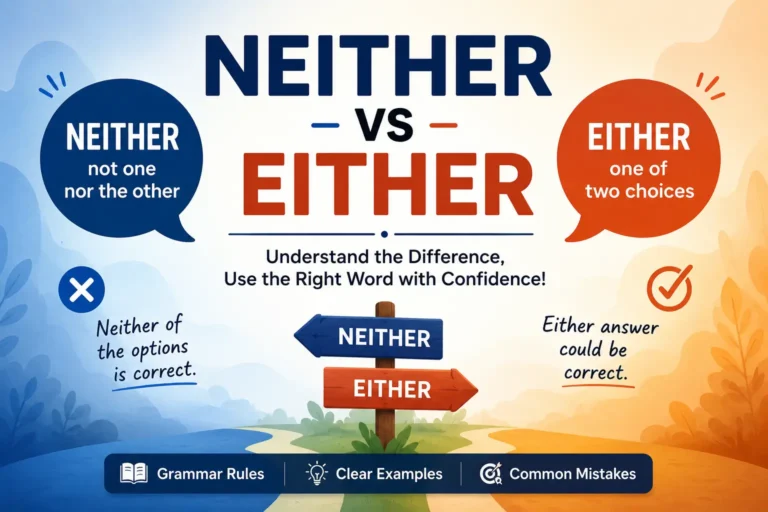
Neither vs Either: Meaning, Usage, and Grammar Rules

Neither vs Either showing the difference between two choices and rejecting both options

Neither vs Either is a common English grammar question because both words are used when talking about two choices, but they don’t mean the same thing. Either usually means one of two options, while neither means not one and not the other. Knowing this difference helps you choose the right word and avoid common grammar … Read more

Among vs Between: Meaning, Differences, Rules, and Examples

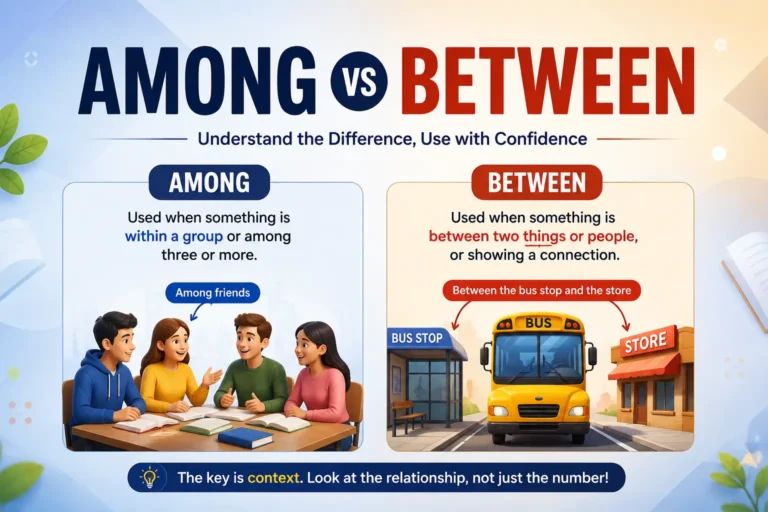
Among vs between grammar comparison showing how to use each word correctly

Among vs. between can be confusing because both words describe relationships involving people, things, places, and ideas. The key is simple: between usually highlights separate or clearly identified relationships, while among usually places someone or something within a group. Both words are prepositions, but they don’t always work in the same situations. The old rule … Read more

In Route vs En Route: Meaning, Correct Usage, and Examples

In route vs en route meaning and correct usage with a bus on the road

The in route vs en route difference is simple: use en route for “on the way,” while in-route may appear only in technical labels or route systems. En-route is the standard expression for movement toward a destination. It fits travel language, formal writing, professional English, and everyday English. For example, write, “The driver is en … Read more

Every Day vs. Everyday: What’s the Difference and How Do You Use Them Correctly?

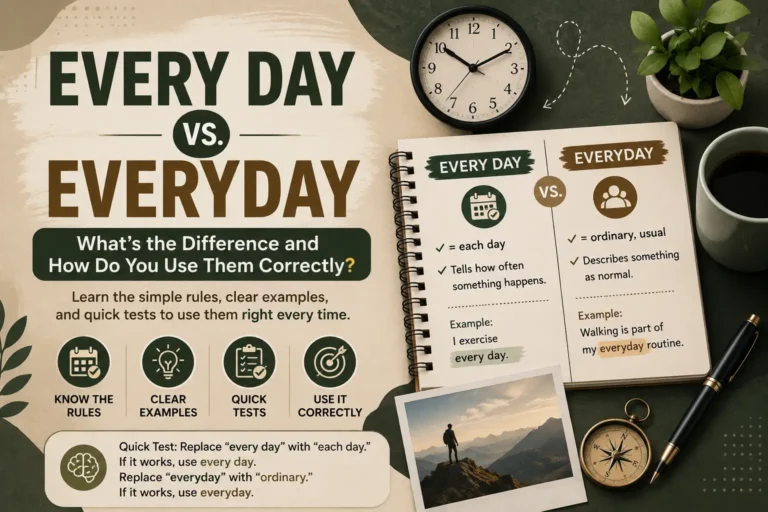
Every Day vs. Everyday grammar guide showing meanings, examples, and a quick test for choosing the correct form.

Every day vs everyday is a common English usage question because the two forms look and sound almost identical. However, they have different meanings and grammatical roles. Every day means each day and tells you how often something happens, as in “I practice English every day.” Everyday is an adjective that means ordinary, usual, or … Read more

Passed vs. Past: What’s the Difference and How Do You Use Each One?

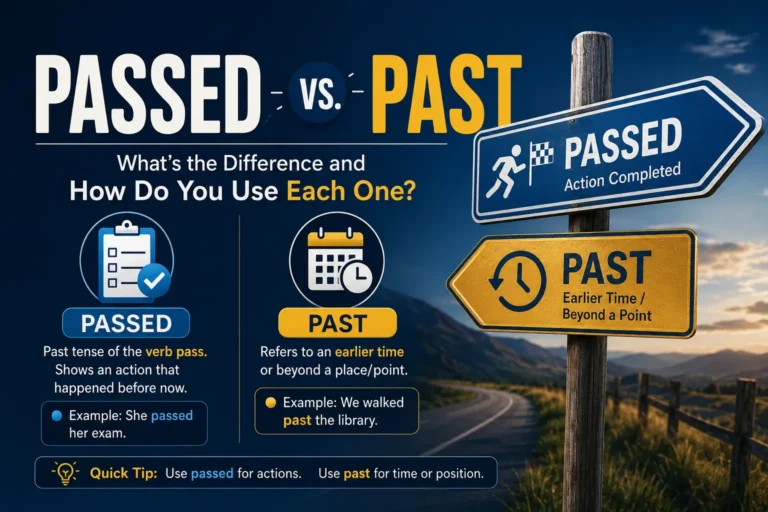
Passed vs. Past grammar guide showing that passed describes an action, while past refers to earlier time or movement beyond a point.

Confused about passed vs past? You’re not alone. These words sound alike, but they have different meanings and uses. Passed is the past tense of the verb pass, while past can describe an earlier time or something beyond a place or point. For example, you passed your test, but you walked past the school. Learning … Read more

Whichever vs Whatever: What’s the Difference and When Should You Use Each?

Whichever vs Whatever comparison showing limited choices versus open choices.

Confused about whichever vs whatever? You’re not alone. These two words look and sound similar, and both can express a choice or possibility. However, they aren’t interchangeable in every sentence. The key difference is whether you’re choosing from a specific or limited set of options or talking about an open and unrestricted choice. Use whichever … Read more

Fewer vs. Less: What’s the Difference and When Should You Use Each?

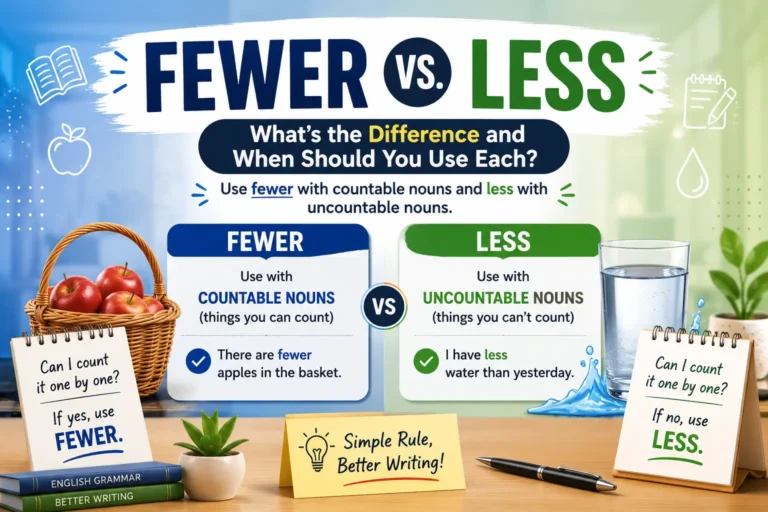
Fewer vs Less grammar guide explaining the difference between fewer and less with countable and uncountable noun examples.

Fewer vs. less is one of the most common grammar questions in American English, and understanding the difference can instantly improve your writing. The simple rule is this: use fewer with countable nouns and less with uncountable nouns. However, English also has a few common exceptions involving money, time, distance, and measurements, which often confuse … Read more

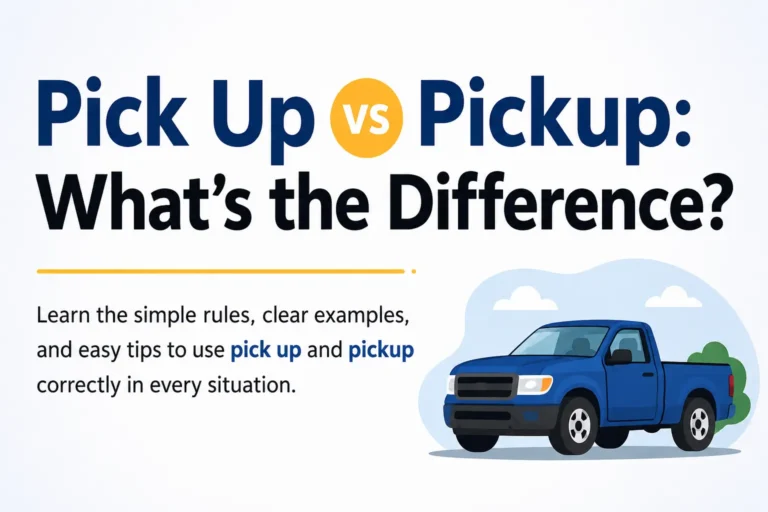
Pick Up vs Pickup Understanding the Spelling Difference

Pick Up vs Pickup grammar guide showing the difference between the phrasal verb "pick up" and the noun "pickup" with simple examples.

The pick up vs pickup choice becomes easier when you check whether the term acts as a verb, noun, or adjective before choosing its spelling. These compound words may look confusing as one combination, but their word use differs. Write pick up as two words for an action: “I picked up the order.” Write pickup … Read more

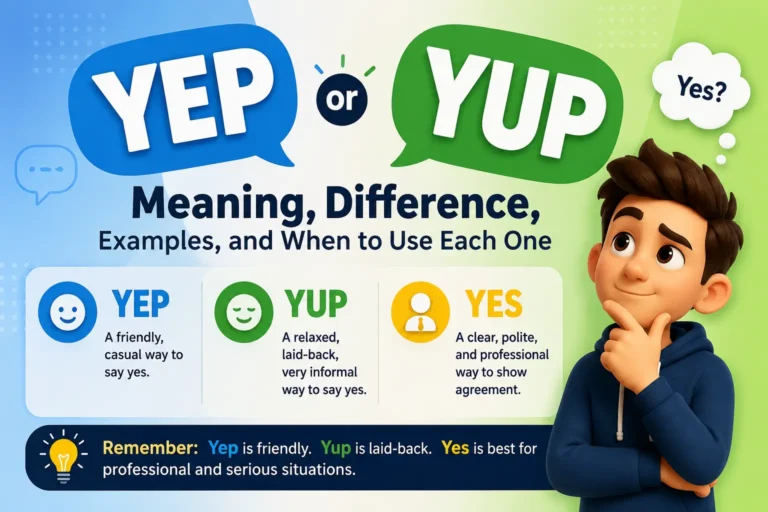
Yep or Yup: Meaning, Difference, Examples, and When to Use Each One

Yep or Yup meaning, difference, examples, and when to use each informal yes word in casual English.

For Yep or Yup, focus on tone, context, and communication style, not only spelling, because both words mean yes. In simple English, yep and yup share the same meaning as a yes variation, synonym of yes, casual yes, and informal yes. Still, yep meaning feels friendly, quick, and clear, while yup meaning sounds more relaxed, … Read more