Whichever vs Whatever: What’s the Difference and When Should You Use Each?

Whichever vs Whatever comparison showing limited choices versus open choices.

Confused about whichever vs whatever? You’re not alone. These two words look and sound similar, and both can express a choice or possibility. However, they aren’t interchangeable in every sentence. The key difference is whether you’re choosing from a specific or limited set of options or talking about an open and unrestricted choice. Use whichever … Read more

Capital vs. Capitol: What’s the Difference? Meaning, Examples, and Easy Ways to Remember

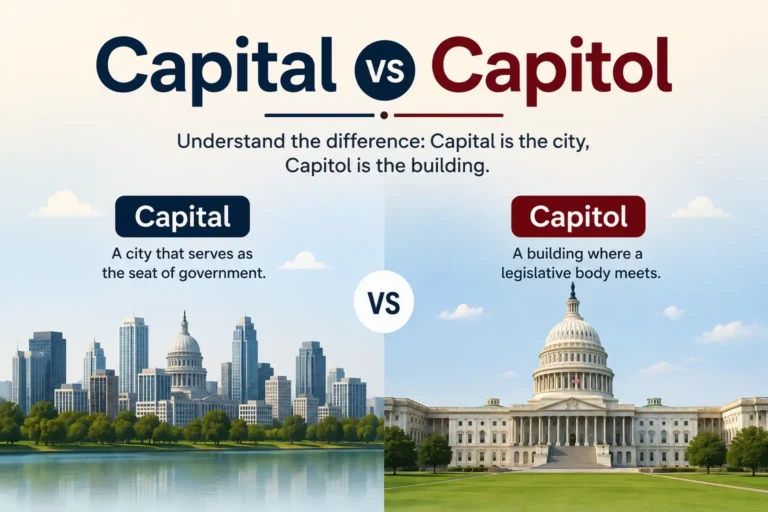
Capital vs Capitol comparison showing that capital means a government city, while capitol means a legislative building.

If you’ve ever wondered about capital vs. capitol, you’re not alone. These two words look and sound almost identical, but they have different meanings and uses. The confusion often appears when people write about government, politics, cities, or buildings. The easiest rule is this: capital can mean a city that serves as a seat of … Read more

Requester vs Requestor: Which Spelling Is Correct and When Should You Use Each One?

Requester vs requestor comparison showing requester for general use and requestor for technical or legal contexts

The difference between Requester vs Requestor is mainly based on context, language usage, and industry standards rather than meaning. Both words describe a person who makes a request, but requester is more widely used in everyday communication, business writing, and general professional communication. In contrast, requestor appears more often in specialized environments such as IT, … Read more

Gases vs. Gasses: Which Spelling Is Correct?

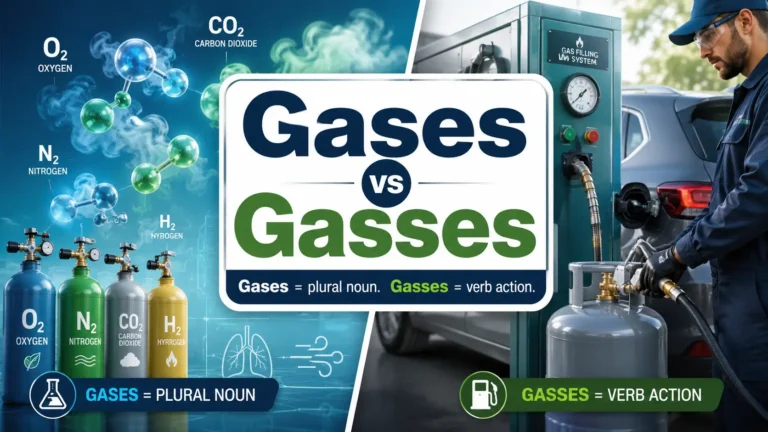
Gases vs gasses comparison showing gases as a plural noun and gasses as a verb action

Gases vs. gasses is a common spelling question because both words exist, but they usually perform different jobs. Gases is the standard plural of gas, while gasses is commonly used as the third-person singular form of the verb gas. For example, oxygen and nitrogen are gases. However, a machine gasses a sealed container when it … Read more

Adapter vs. Adaptor: Which Spelling Is Correct in American English?

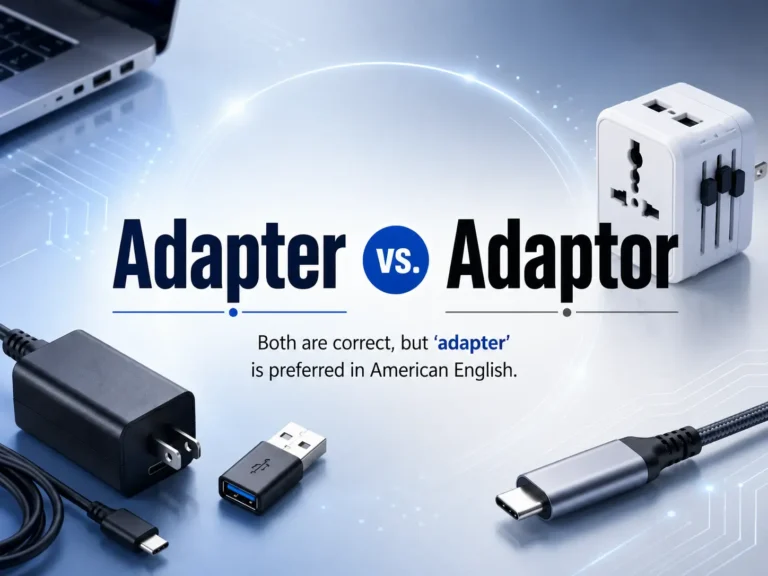
Adapter vs adaptor comparison with power, USB, travel and USB-C adapters explaining the preferred American English spelling.

Adapter vs adaptor is a spelling question with a simple answer: both forms are correct, but adapter is the preferred spelling in American English. The two words have the same meaning and usually refer to a person, device, or system that helps something adjust, connect, or work in a new way. You’ll often see adapter … Read more

Allusion vs. Illusion: Meaning, Differences, and Examples

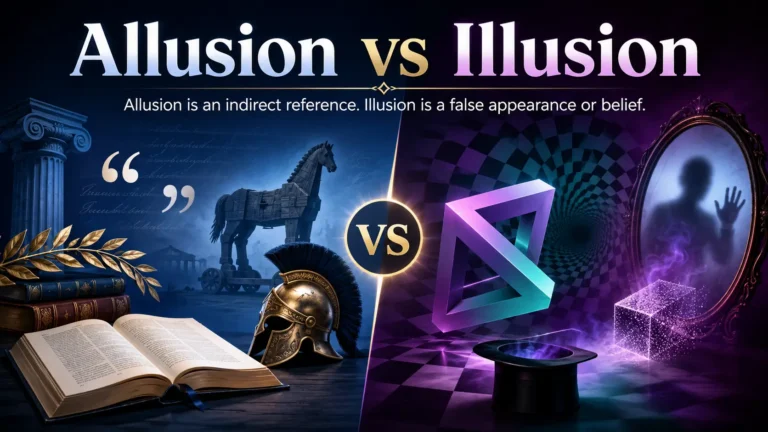
Allusion vs illusion comparison showing literary references and false appearances

Allusion vs. illusion explains the difference between an indirect reference and a false appearance or belief. An allusion points to a familiar person, story, event, or idea. In contrast, an illusion makes something seem real or true when it isn’t. Understanding this difference helps you choose the correct word in schoolwork, professional writing, emails, and … Read more

Hanged vs. Hung: What’s the Difference and Which One Is Correct?

Hanged vs hung difference showing a hung picture and the correct grammar rule for using hanged and hung.

Hanged vs. hung describes two different past forms of the verb hang. Use hung when something is suspended, displayed, attached, or left in place. However, use hanged when a person is killed through death by hanging. For example, you hung a picture on the wall, but a prisoner was hanged. The correct choice depends on … Read more

Perspective vs. Prospective: Meanings, Differences, and Correct Usage

Perspective vs prospective comparison showing viewpoint and future possibilities

Perspective vs prospective explains the difference between a viewpoint and something connected with the future. Perspective is usually a noun that means a way of seeing, understanding, or judging something. Prospective is usually an adjective that describes a person, event, or result that may exist or happen later. For example, from my perspective means “from … Read more

Elicit vs. Illicit: What’s the Difference?

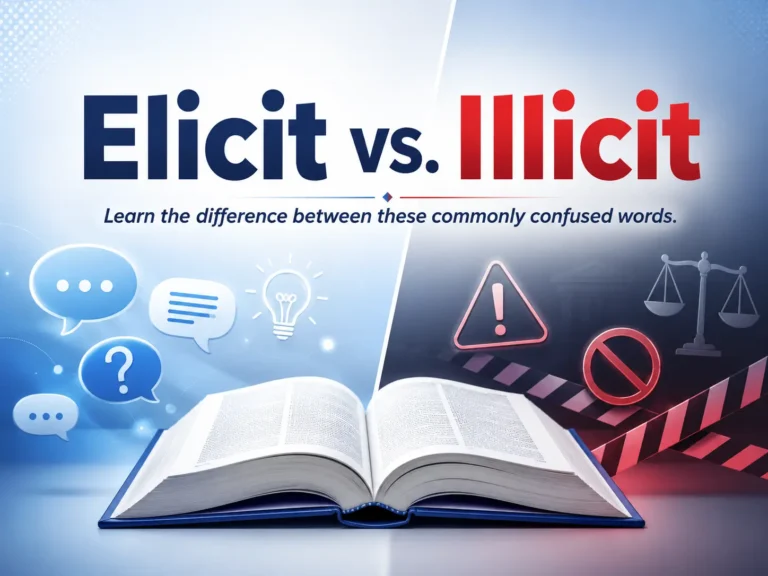
Elicit vs illicit comparison with speech bubbles, warning symbols, and an open dictionary

Elicit vs illicit is a common confusion in English grammar because these two words look and sound almost identical but have completely different meanings. Elicit means to draw out, obtain, or bring forth a response, reaction, or information, while illicit means illegal, forbidden, or not permitted. Knowing the difference between these commonly confused words helps … Read more

Neither vs Either: What’s the Difference and When Should You Use Each?

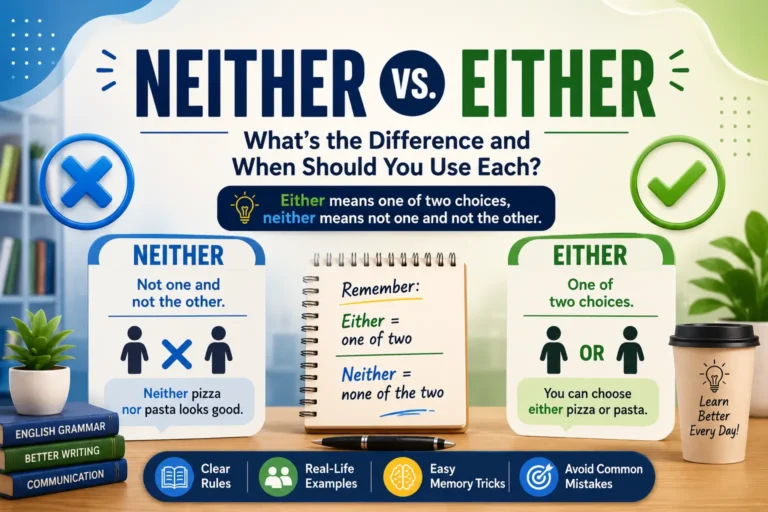
Neither vs Either grammar guide explaining the difference between neither and either with simple examples, grammar rules, and subject-verb agreement.

Neither vs either is one of the most searched English grammar topics because these two words look similar but have opposite meanings. Knowing when to use either, neither, either…or, and neither…nor will help you write more clearly, avoid common grammar mistakes, and speak confidently in everyday American English. If you’ve ever wondered which word is … Read more