Sleave or Sleeve: Which Spelling Is Correct?

Sleave or sleeve spelling comparison showing the correct word for clothing and the historical meaning of sleave

Sleave or sleeve can be confusing because both are real English words, but they don’t have the same meaning. If you’re talking about the part of a shirt, jacket, or dress that covers the arm, the correct spelling is sleeve. Sleave is a rare historical textile term linked to silk fibers and older English. For … Read more

Traveler or Traveller: Which Spelling Is Correct in American English?

Traveller or traveler spelling difference in American and British English

Traveler or traveller is a common English spelling question, but the answer is simple: traveler is the standard American English spelling, while traveller is the standard British English form. Both words have the same meaning, so the real issue is regional spelling, not grammar or vocabulary. The difference comes down to one letter. American English … Read more

In Route vs En Route: Meaning, Correct Usage, and Examples

In route vs en route meaning and correct usage with a bus on the road

The in route vs en route difference is simple: use en route for “on the way,” while in-route may appear only in technical labels or route systems. En-route is the standard expression for movement toward a destination. It fits travel language, formal writing, professional English, and everyday English. For example, write, “The driver is en … Read more

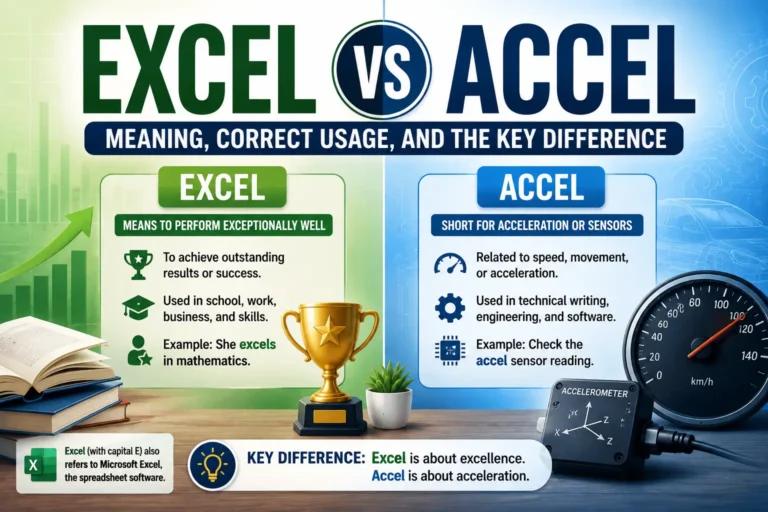
Excel vs Accel : Meaning, Correct Usage, and the Key Difference

Excel vs Accel meaning and correct usage

The excel vs accel question is often simple: excel means to perform well, while accel is technical shorthand linked to acceleration or sensors. Use excel for success in school, work, business, education, or a career. It is a standard English verb, as in, “She excels in science.” Use Excel with a capital letter only for … Read more

Whichever vs Whatever: Meaning, Differences, and Correct Usage

Whichever vs whatever meaning and difference with examples

The whichever vs whatever difference depends on whether your choice comes from a known group or from an open range without clear limits. The meaning of whichever points to one item from specific options, known options, or other limited options. Both words express choice, but they describe a different kind of choice. For example, “Choose … Read more

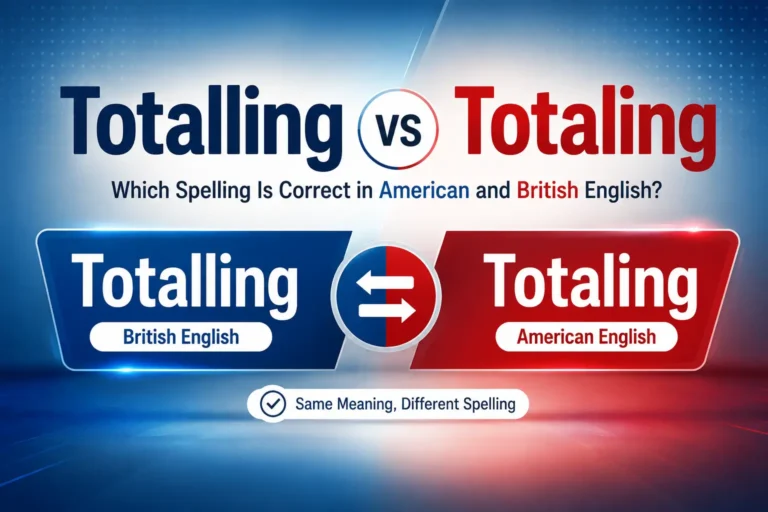
Totalling vs Totaling: Which Spelling Is Correct in American and British English?

Totalling vs totaling difference in British and American English

When writing about totalling vs totaling, many English writers face spelling confusion because English spelling rules change between regions. Both forms are correct spelling choices, but American English usually uses totaling with one L, while British English prefers totalling with two Ls. The meaning stays the same: both describe adding numbers to find a complete … Read more

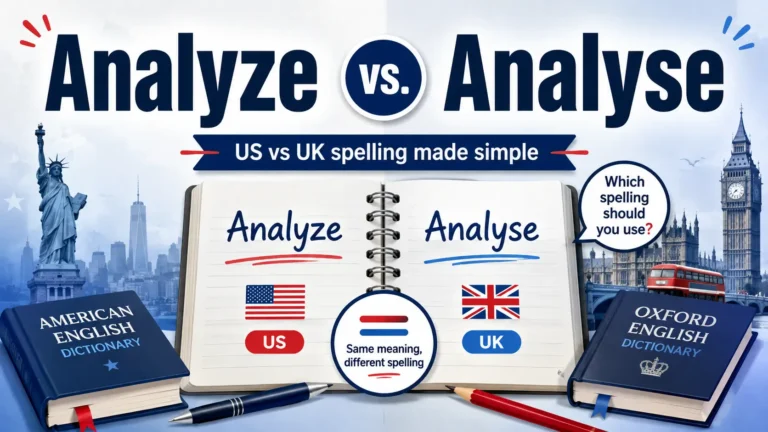
Analyze vs Analyse: Which Spelling Is Correct in American and British English?

Analyze vs Analyse US vs UK spelling difference

Analyze vs. analyse can be confusing because both spellings have the same meaning and pronunciation. The main difference is regional spelling: analyze is the standard form in American English, while analyse is commonly used in British English. If you’re writing for a US audience, use analyze. For example, you might write, “Students analyze the evidence … Read more

Onsite vs On Site: What’s the Difference and Which One Is Correct?

Onsite vs on site difference with meaning and examples

Understanding onsite vs on site becomes easier when you focus on meaning, grammar, and context. Onsite is often used as a compound adjective before a noun, such as onsite support or onsite training. On site is commonly used to show a location, as in “The technician is on site.” In American English, both forms appear … Read more

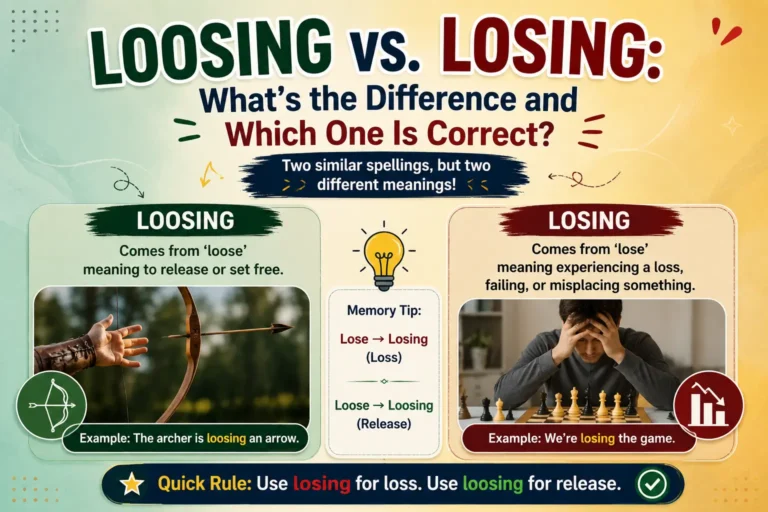
Loosing vs. Losing: What’s the Difference and Which One Is Correct?

Loosing vs. Losing explained with meanings, differences, examples, and simple grammar rules to help you choose the correct spelling.

Confused about loosing vs losing? The difference becomes clear when you look at their base words and meanings. Losing comes from lose and means failing to win, misplacing something, or no longer having it. For example, you might be losing a game, losing your keys, or losing confidence. Loosing, however, comes from the verb loose … Read more

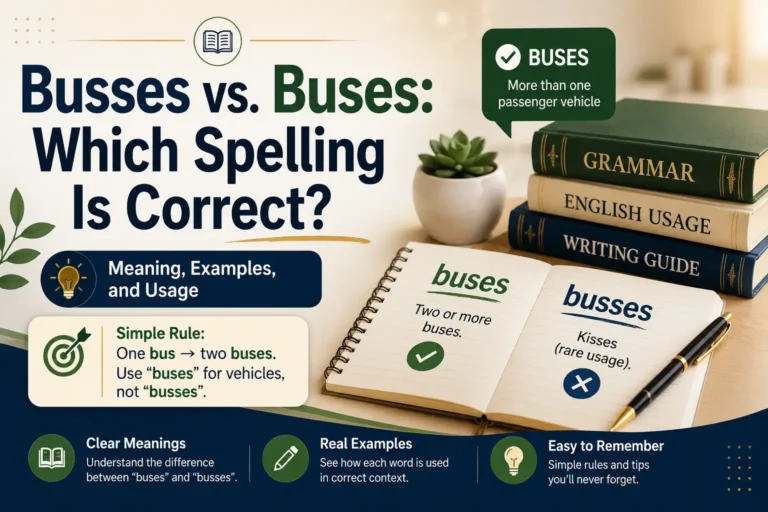
Busses vs. Buses: Which Spelling Is Correct? Meaning, Examples, and Usage

Busses vs. Buses: Which spelling is correct? Learn the difference between buses and busses with simple examples and grammar rules.

If you’ve ever hesitated between busses vs. buses, the answer is simpler than it may seem. When you mean two or more passenger vehicles, buses is the standard plural of bus in modern American English. For example, “The city added several new buses to its public transportation system.” The spelling busses can also be found … Read more