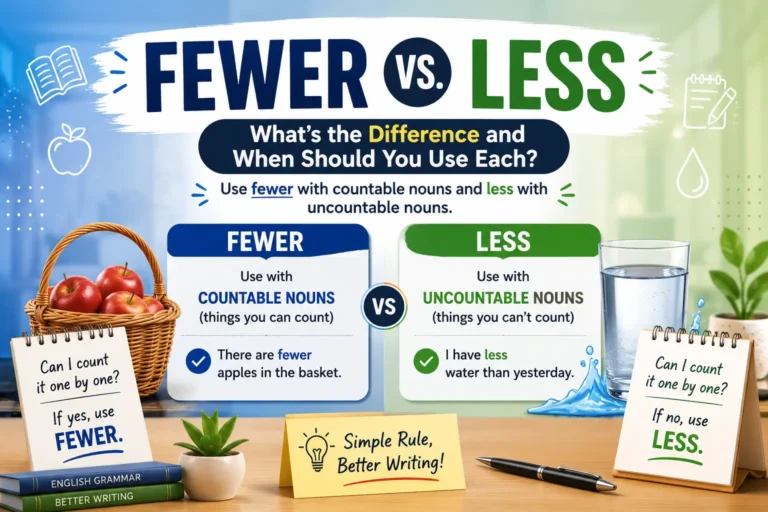
Fewer vs. Less: What’s the Difference and When Should You Use Each?

Fewer vs Less grammar guide explaining the difference between fewer and less with countable and uncountable noun examples.

Fewer vs. less is one of the most common grammar questions in American English, and understanding the difference can instantly improve your writing. The simple rule is this: use fewer with countable nouns and less with uncountable nouns. However, English also has a few common exceptions involving money, time, distance, and measurements, which often confuse … Read more

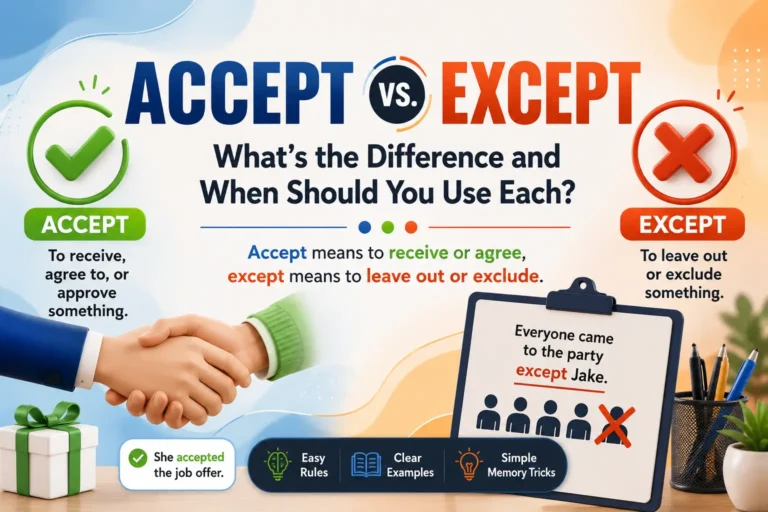
Accept vs. Except: What’s the Difference and When Should You Use Each?

Accept vs Except grammar guide explaining the difference between accept and except with simple examples and easy grammar rules.

Accept vs. except is one of the most common grammar questions because these two words sound similar but have completely different meanings. If you’ve ever wondered whether you should write accept or except, you’re in the right place. The simple answer is that accept means to receive or agree, while except means to leave out … Read more

Complement vs. Compliment: What’s the Difference? Meaning, Examples, and Easy Ways to Remember

Complement vs Compliment difference explained with examples of completing something versus giving praise

Complement vs compliment is a common grammar confusion that happens because these two English words have similar pronunciation but completely different meanings. The easiest way to remember the difference is this: complement means something that completes, matches, or improves another thing, while compliment means praise, admiration, or a positive remark. Knowing the difference between these … Read more

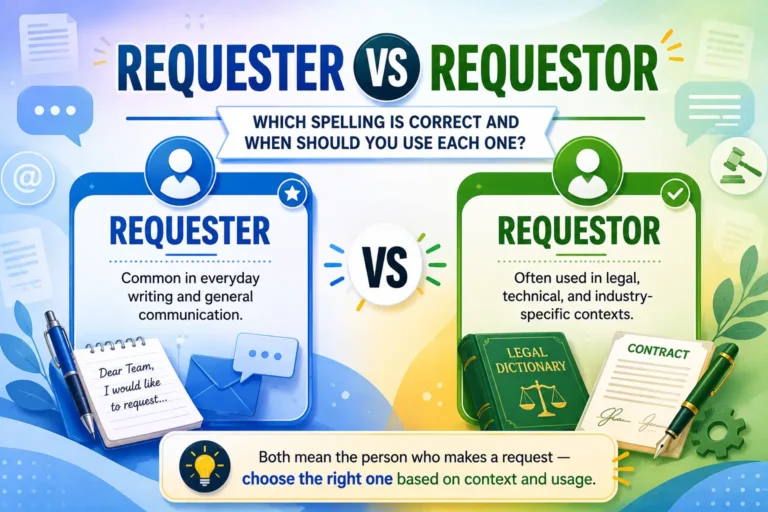
Requester vs Requestor: Which Spelling Is Correct and When Should You Use Each One?

Requester vs Requestor spelling difference explained with correct English usage examples

The difference between Requester and Requestor is mainly based on context, language usage, and industry standards rather than meaning. Both words describe a person who makes a request, but requester is more widely used in everyday communication, business writing, and general professional communication. In contrast, requestor appears more often in specialized environments such as IT, … Read more

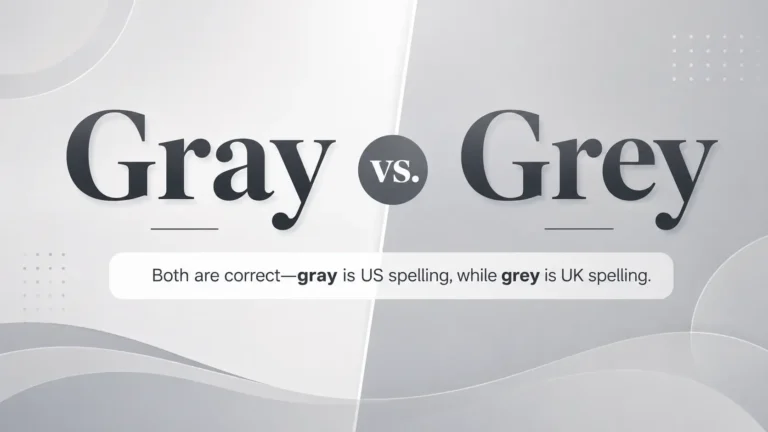
Gray vs. Grey: What’s the Difference and Which Spelling Is Correct?

Gray vs grey comparison showing gray as US spelling and grey as UK spelling

Gray vs. Grey is a common spelling question, but the answer is simple. Both words describe the same color between black and white. However, gray is the preferred spelling in American English, while grey is more common in British English, Canada, and several other English-speaking regions. Neither form is wrong, but the best choice depends … Read more

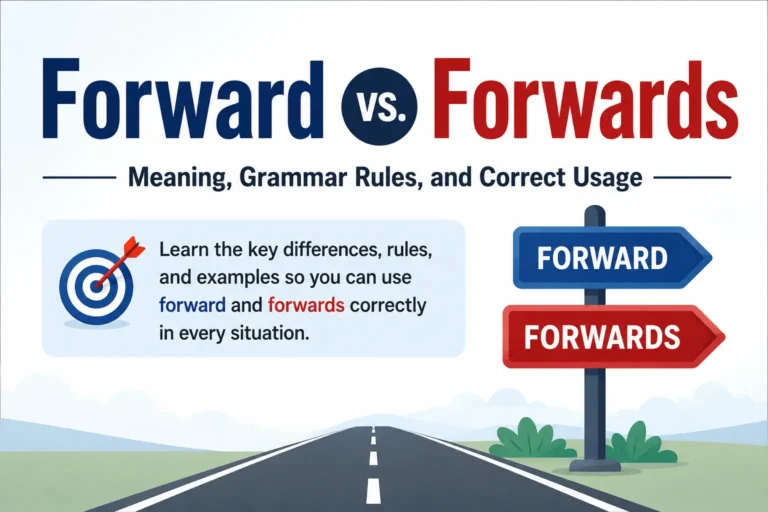
Forward vs. Forwards: Meaning, Grammar Rules, and Correct Usage

Forward vs Forwards explained with grammar rules, American vs British English differences, and simple examples.

The difference between forward vs. forwards can seem confusing because both words may describe movement toward the front. However, they are not always interchangeable. Forward has several grammatical roles, while forwards has fewer uses. In American English, writers usually prefer forward as the directional adverb. Meanwhile, British English accepts both forward and forwards, especially when … Read more

What Is the Difference Between Climactic vs Climatic?

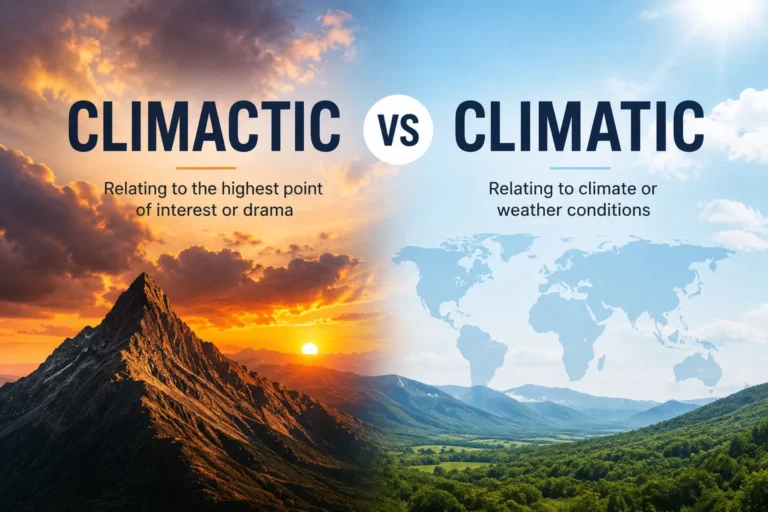
Climactic vs Climatic Climactic vs Climatic – Difference, Meaning, Examples

The key difference in climactic vs climatic is simple: climactic refers to a climax, while climatic clearly describes climate and climate patterns. Each is an adjective, and dictionaries may mark it as adj. These two adjectives sound similar and are easy to confuse, yet their meaning is completely different. Use climactic for a final, decisive, … Read more

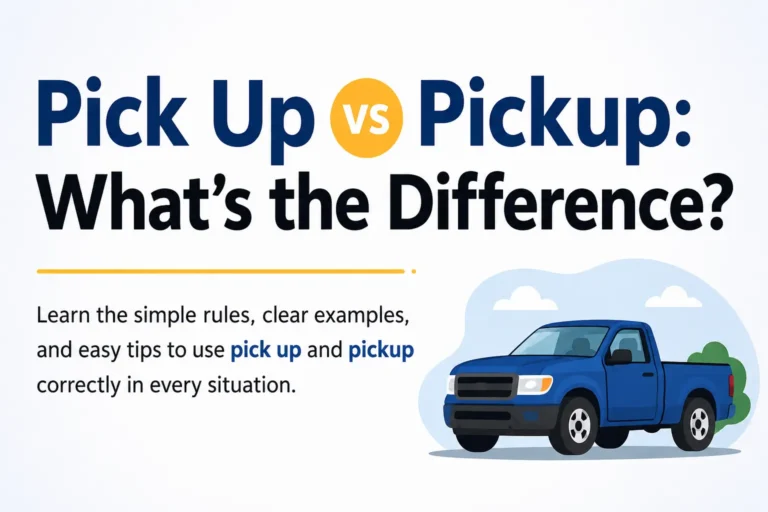
Pick Up vs Pickup Understanding the Spelling Difference

Pick Up vs Pickup grammar guide showing the difference between the phrasal verb "pick up" and the noun "pickup" with simple examples.

The pick up vs pickup choice becomes easier when you check whether the term acts as a verb, noun, or adjective before choosing its spelling. These compound words may look confusing as one combination, but their word use differs. Write pick up as two words for an action: “I picked up the order.” Write pickup … Read more

Farther vs Further: What’s the Difference and When Should You Use Each?

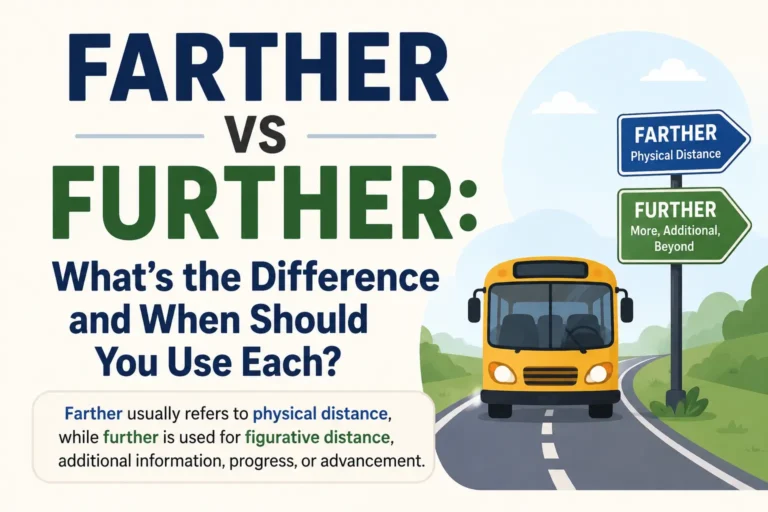
Farther vs Further explained with simple grammar rules, examples, and key differences in American English.

Farther vs Further is one of the most common grammar questions in American English because both words look alike and have similar meanings. The quick answer is simple: farther usually refers to physical distance, while further is used for figurative distance, additional information, progress, or advancement. Knowing this difference helps you choose the right word … Read more

Would vs Could: Difference, Grammar Rules, Uses, and Examples

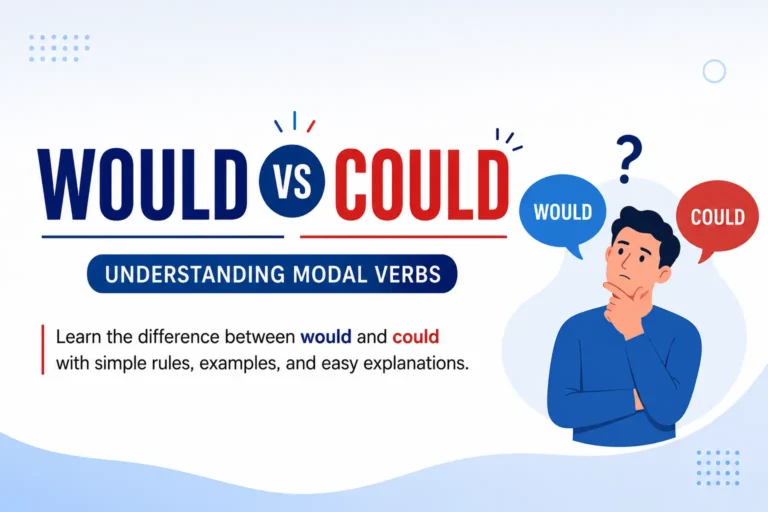
Would vs Could grammar rules, differences, and examples explained

Understanding would vs could helps English learners choose the right word when making polite requests or asking questions. These modal verbs may look similar, but their meaning changes depending on the situation. For example, “Could you bring me a cup of coffee?” asks about ability, while “Would you bring me a cup of tea?” focuses … Read more