Every Day vs. Everyday: What’s the Difference and How Do You Use Them Correctly?

Every Day vs. Everyday grammar guide showing meanings, examples, and a quick test for choosing the correct form.

Every day vs everyday is a common English usage question because the two forms look and sound almost identical. However, they have different meanings and grammatical roles. Every day means each day and tells you how often something happens, as in “I practice English every day.” Everyday is an adjective that means ordinary, usual, or … Read more

Passed vs. Past: What’s the Difference and How Do You Use Each One?

Passed vs. Past grammar guide showing that passed describes an action, while past refers to earlier time or movement beyond a point.

Confused about passed vs past? You’re not alone. These words sound alike, but they have different meanings and uses. Passed is the past tense of the verb pass, while past can describe an earlier time or something beyond a place or point. For example, you passed your test, but you walked past the school. Learning … Read more

Bare vs. Bear: What’s the Difference? Meaning, Examples, and Easy Ways to Remember

Bare vs. bear difference explained with bare feet and a brown bear

If you’re confused by bare vs bear, you’re not alone. These words are homophones, so they sound the same but have different meanings and spellings. Bare usually means uncovered, exposed, or minimal, while bear can mean a large animal or a verb meaning to carry, support, or tolerate something. For example, you can have bare … Read more

Council vs. Counsel: What’s the Difference? Meaning, Examples, and Easy Ways to Remember

Council vs. Counsel difference showing a council group and a lawyer giving legal advice

The council vs counsel difference is easy to understand once you focus on meaning, spelling, and context. Both words have the same pronunciation, but they are different homophones. Council is a noun for a group or organized body, such as a city council or student council. In contrast, counsel can mean advice or guidance, a … Read more

Weather vs. Whether: What’s the Difference and How Do You Use Them Correctly?

Weather vs Whether difference shown with changing weather and two choices

If you’ve ever paused while writing a sentence because you weren’t sure whether to use weather vs. whether, you’re not alone. These two words are easy to confuse because they sound the same in most American English accents. However, their meanings and grammatical roles are completely different. Weather refers to conditions in the atmosphere, such … Read more

Vicious vs Viscous Word Choice: How Viscous and Vicious Differences

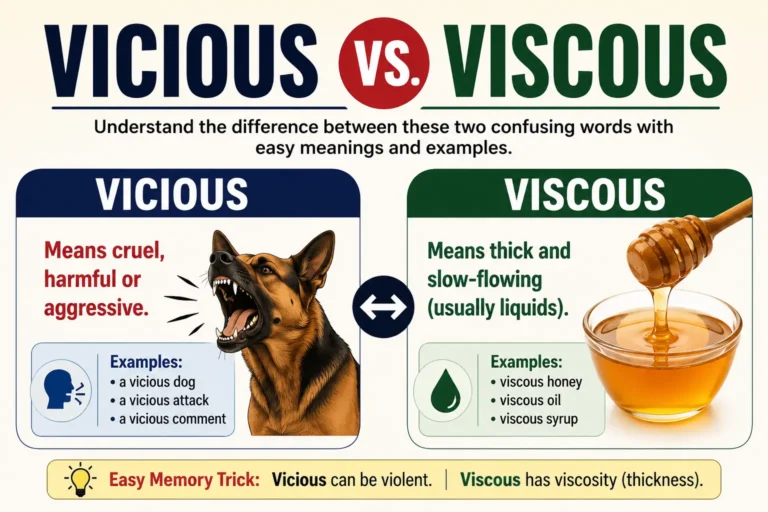
Vicious vs. Viscous infographic showing the difference between cruel behavior and thick slow-flowing liquids with simple examples.

Vicious vs. Viscous becomes clear when you remember that vicious describes cruel behavior, while viscous describes a thick liquid that flows slowly. Both words are adjectives, but their close spelling hides very different meanings. Vicious can describe an evil, malicious, aggressive, violent, or severe person, action, remark, storm, or attack. Viscous refers to thickness and … Read more

Commit vs. Comit: Correct Spelling, Meaning, and Usage Explained

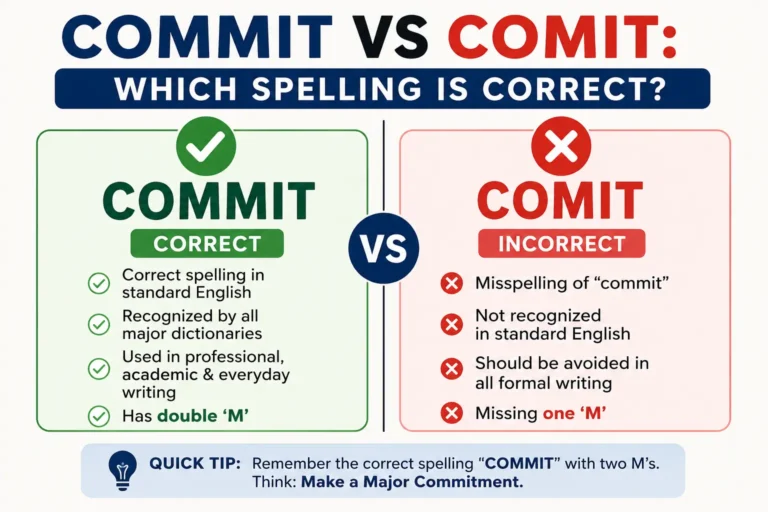
Commit vs comit comparison showing commit as the correct spelling and comit as an incorrect spelling

The commit vs comit choice is simple: commit is correct in standard English, while comit is a misspelling with one m missing from the word itself. Dictionaries recognize only the double-m form, pronounced “kuh-MIT,” when the verb means to promise, dedicate, or carry out an action. This common spelling error often appears when writers, students, … Read more

Transferred vs. Transfered: Which Spelling Is Correct?

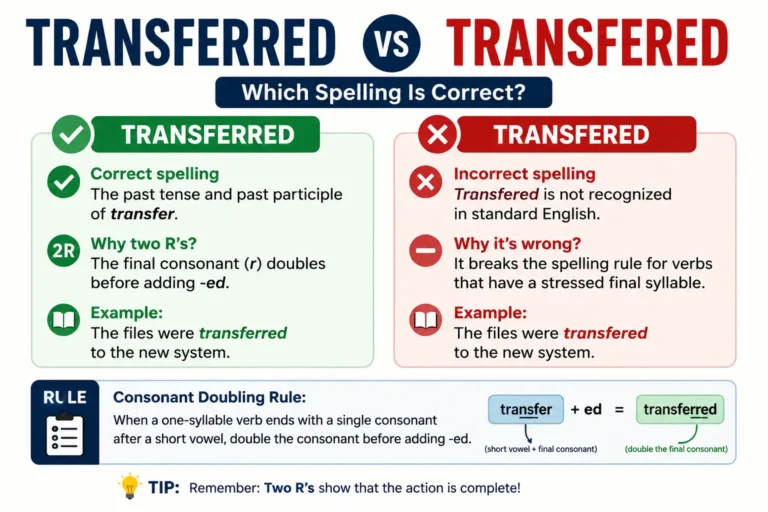
Transferred vs transfered comparison showing that transferred with two r’s is the correct spelling.

Transferred vs transfered is easy to settle: transferred is the correct spelling, while transfered is an unrecognized spelling in standard English. The short answer follows a clear spelling rule: the base verb transfer forms its past tense and past participle with suffix -ed. Because the final syllable carries stress and ends in a final consonant, … Read more

Naive vs. Nieve: Which Spelling Is Correct?

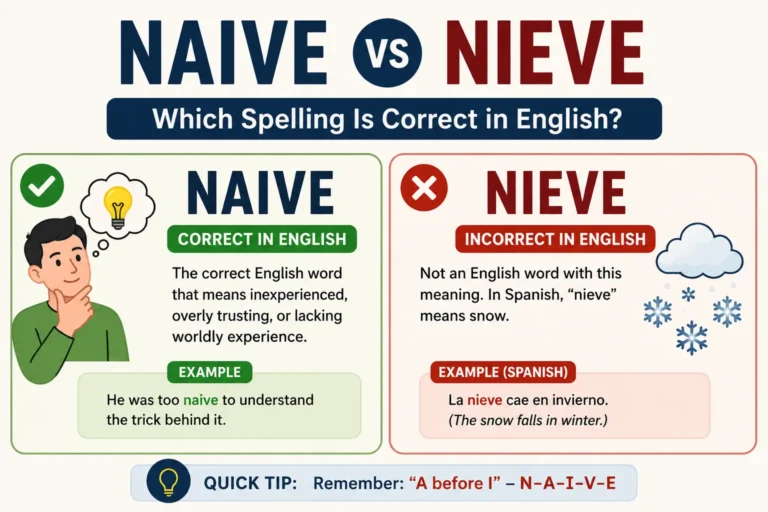
Naive vs nieve spelling comparison showing naive as correct in English and nieve as the Spanish word for snow

Naive vs nieve confuses many writers, but naive is the correct adjective in standard English for someone who lacks experience or trusts too easily. The word entered English through French, which explains its unusual spelling. Nieve is not the English form; in Spanish, it means snow. Naive is pronounced “ny-EEV,” with both vowel sounds heard … Read more

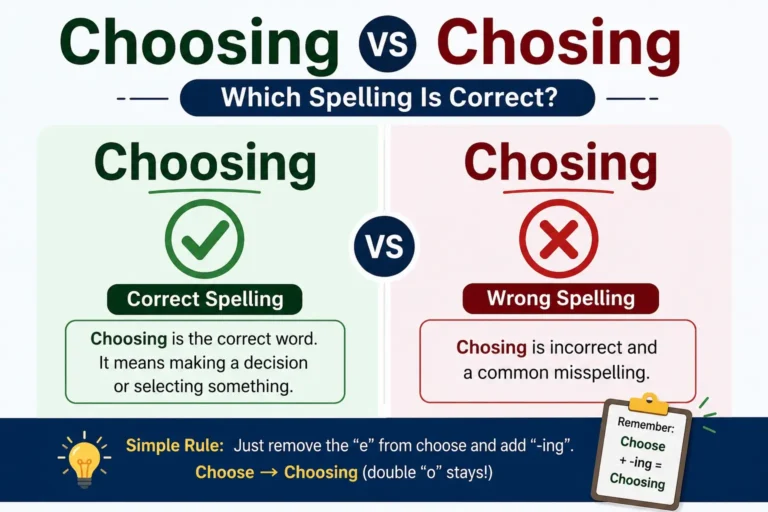
Choosing vs. Chosing: Which Spelling Is Correct?

Choosing vs chosing infographic showing choosing as the correct spelling and chosing as the wrong spelling

Choosing vs chosing is a common spelling question, and the purpose of this guide is to show which form is correct and how to use it without mistakes. Choosing is the correct spelling in standard English, while chosing is a common misspelling. Knowing this difference helps you write clear emails, assignments, messages, and professional documents. … Read more