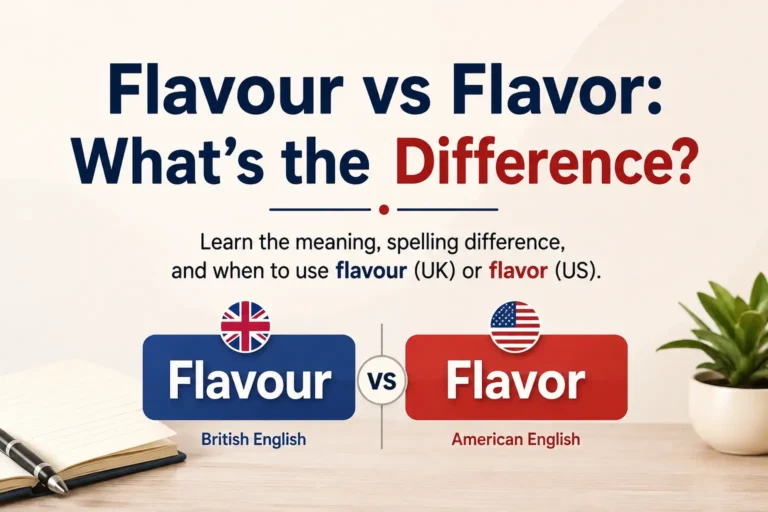
Flavour vs Flavor: What’s the Difference? British and American English Spelling Guide

Flavour vs Flavor: difference between British and American English spelling

Understanding flavour vs flavor becomes easier when you know that both words have the same meaning, same pronunciation, and the same role in English writing. The difference comes from regional spelling rules. In American English, writers use flavor, while British English prefers flavour. This small spelling difference often appears in food labels, product descriptions, blogs, … Read more

He Is Risen vs He Has Risen: Meaning, Grammar Difference, and Correct Usage Explained

He Is Risen vs He Has Risen meaning and grammar difference

He Is Risen vs He Has Risen is a common grammar and meaning question connected with faith, tradition, and language. Both expressions refer to Jesus Christ’s resurrection, but they emphasize different ideas. He has risen focuses on the completed action of rising from the dead, while He is risen highlights the continuing state of being … Read more

Grate vs Great: Meaning, Differences, and Examples

Grate vs Great difference explained with meaning and examples

Many English learners and native speakers confuse grate vs great because these two words sound exactly alike. Their pronunciation is the same, but their meanings and uses are completely different. Great describes something excellent, impressive, important, or above average, while grate can be a verb or noun related to shredding, scraping, irritation, or a metal … Read more

Eventhough vs Even Though: Correct Spelling, Meaning, Grammar Rules, and Examples

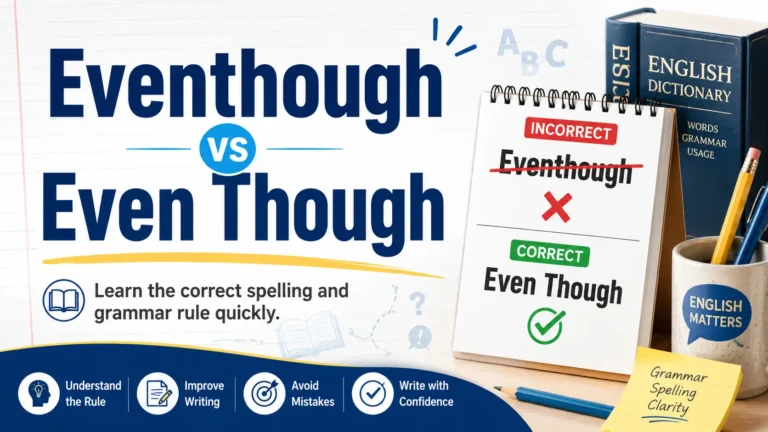
Eventhough vs Even Though comparison showing the incorrect and correct spelling with a simple English grammar guide.

Many English learners and native speakers confuse eventhough vs even though because both forms look similar while typing fast or writing in everyday usage. However, the correct spelling is always even though, which is a proper English phrase and a standard form in English. Eventhough is an incorrect spelling and a common spelling mistake that … Read more

Invision vs Envision: Which Word Is Correct? Meaning, Differences, and Usage Guide

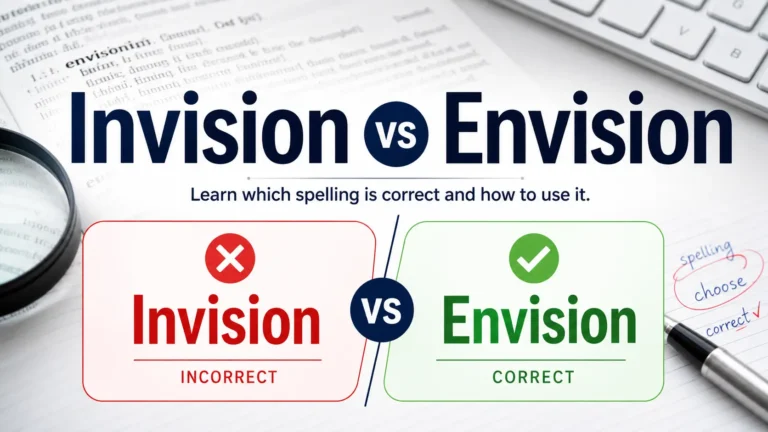
Invision vs Envision correct spelling and usage explained

When people compare invision vs envision, the confusion usually comes from the similar spelling, sound, and connection to the word vision. The correct English word is envision, which means to imagine, picture, or create a mental image of a future possibility. Many writers, editors, and students accidentally use invision because it looks logical, but standard … Read more

Canvas vs Canvass: What Is the Difference and How Do You Use Them Correctly?

Canvas vs Canvass comparison showing the difference in meaning and correct English usage

Canvas vs Canvass is a common spelling and vocabulary confusion because both words look similar and sound similar, yet their meanings and uses are completely different. Canvas usually refers to a strong fabric or material used for paintings, bags, shoes, and other products. For example, an artist may paint on a canvas, while a company … Read more

Allude vs. Elude: What’s the Difference? Meaning, Examples, and Easy Ways to Remember

Allude vs Elude difference with meanings and examples

Allude vs. elude can be confusing because these words look and sound similar, but they have different meanings. Allude means to refer to something indirectly or hint at it, while elude means to escape, avoid, or remain difficult to understand or remember. For example, a writer may allude to a historical event without explaining it … Read more

Loosing vs. Losing: What’s the Difference and Which One Is Correct?

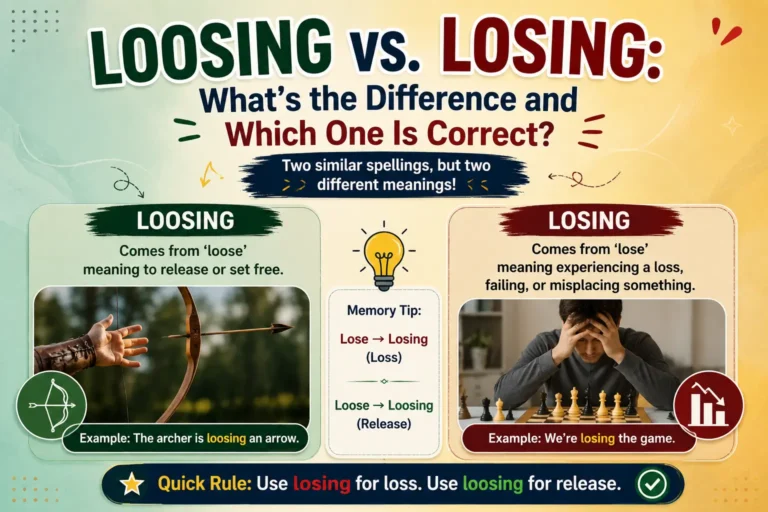
Loosing vs. Losing explained with meanings, differences, examples, and simple grammar rules to help you choose the correct spelling.

Confused about loosing vs losing? The difference becomes clear when you look at their base words and meanings. Losing comes from lose and means failing to win, misplacing something, or no longer having it. For example, you might be losing a game, losing your keys, or losing confidence. Loosing, however, comes from the verb loose … Read more

Busses vs. Buses: Which Spelling Is Correct? Meaning, Examples, and Usage

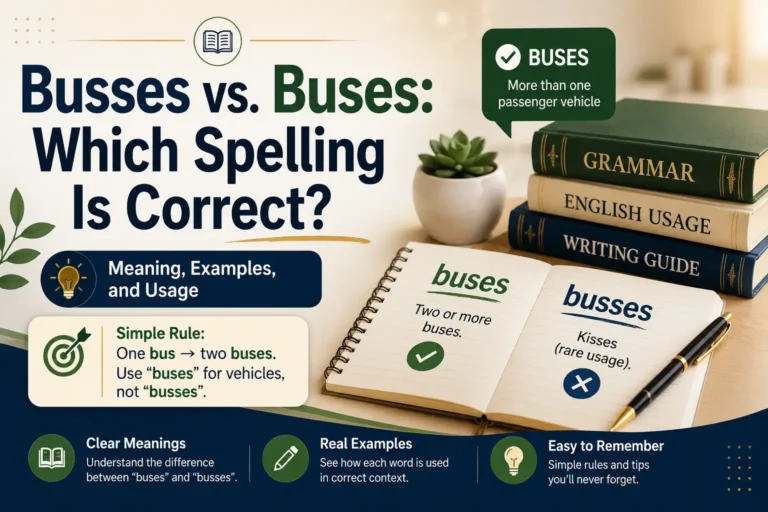
Busses vs. Buses: Which spelling is correct? Learn the difference between buses and busses with simple examples and grammar rules.

If you’ve ever hesitated between busses vs. buses, the answer is simpler than it may seem. When you mean two or more passenger vehicles, buses is the standard plural of bus in modern American English. For example, “The city added several new buses to its public transportation system.” The spelling busses can also be found … Read more

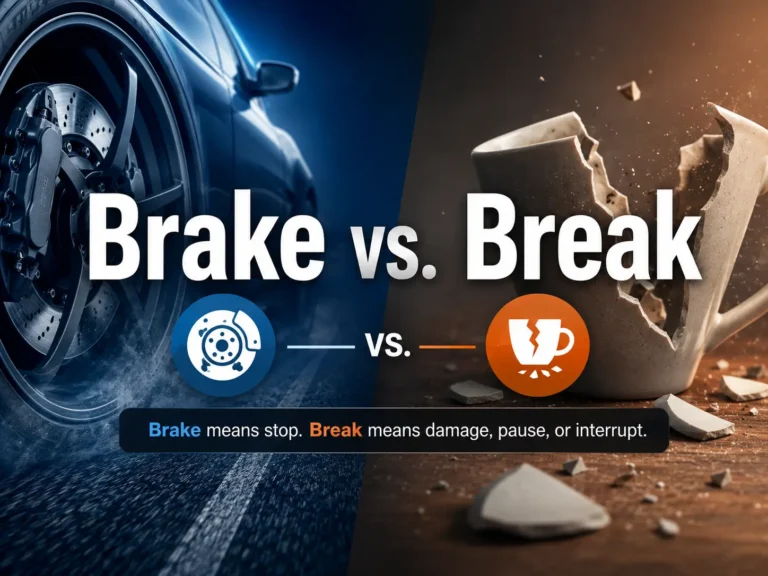
Brake vs. Break: What’s the Difference? Meaning, Usage, Examples, and Easy Tips

Brake vs. break difference with brake and broken object examples

If you’ve ever wondered about brake vs. break, you’re not alone. These two words are easy to confuse because they sound exactly the same, but they have different spellings and meanings. Brake is connected mainly to slowing down or stopping a vehicle or machine, while break has many meanings, including damaging something, interrupting something, separating … Read more