Scraped vs Scrapped: Meaning, Difference, Examples, and Correct Usage
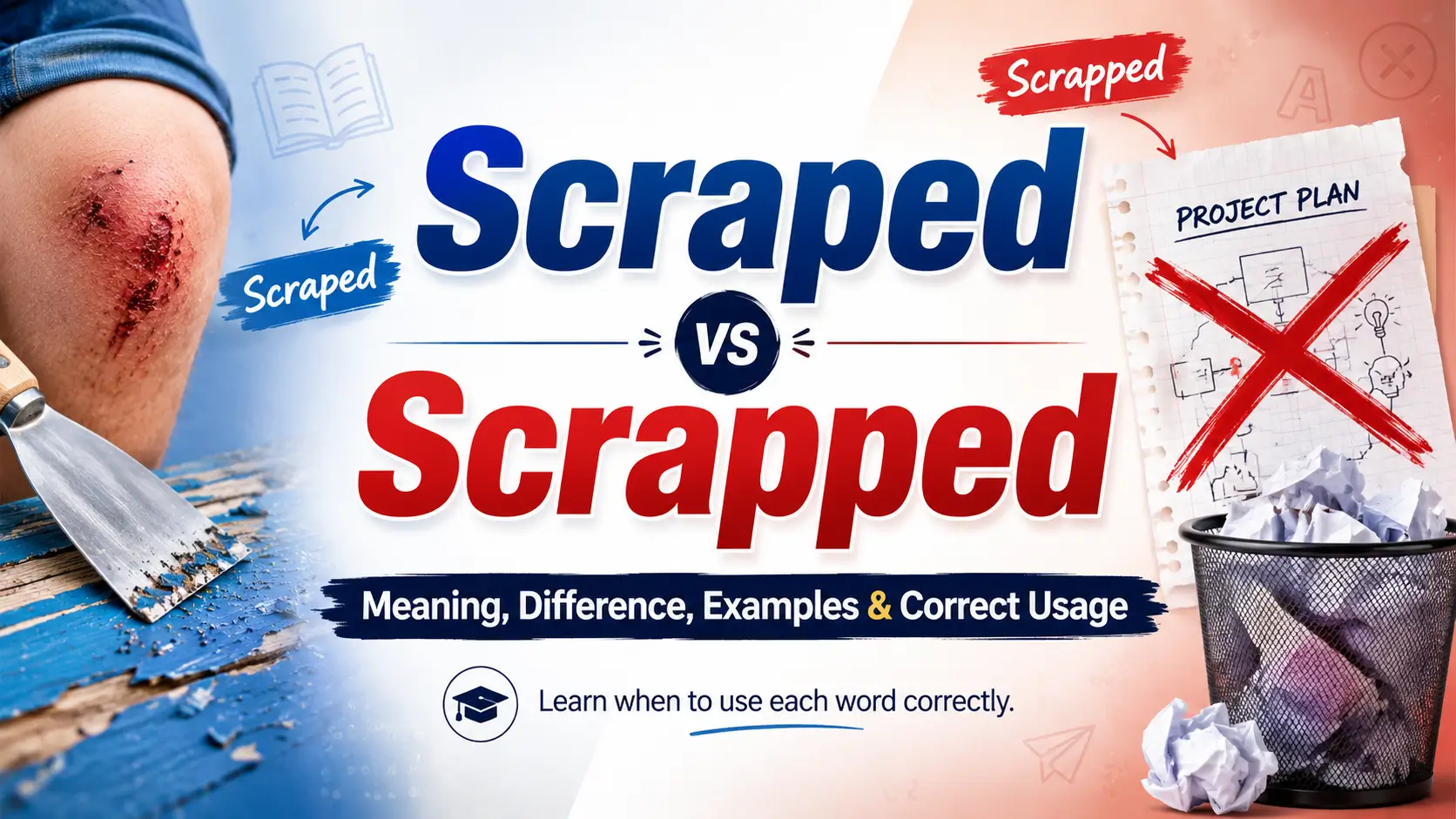
Scraped vs scrapped meaning and difference with examples

Confused about scraped vs scrapped? You’re not alone. These two words look and sound similar, but they have different meanings and uses. Scraped comes from scrape and usually means rubbed against, removed from a surface, or collected, as in scraped data. Scrapped comes from scrap and usually means canceled, abandoned, rejected, or discarded, as in … Read more

TubeHalote Meaning 2026: What It Is, How It Works, and Is It Legit?

TubeHalote Meaning 2026 website review and legitimacy guide

What Is Tubehalote has become a common question in 2026 because the TubeHalote meaning is still not clearly defined. The name appears across the internet, search results, and different websites, where it may refer to a website, online platform, content platform, or broader digital concept. Since different domains can serve different purposes, users and readers … Read more

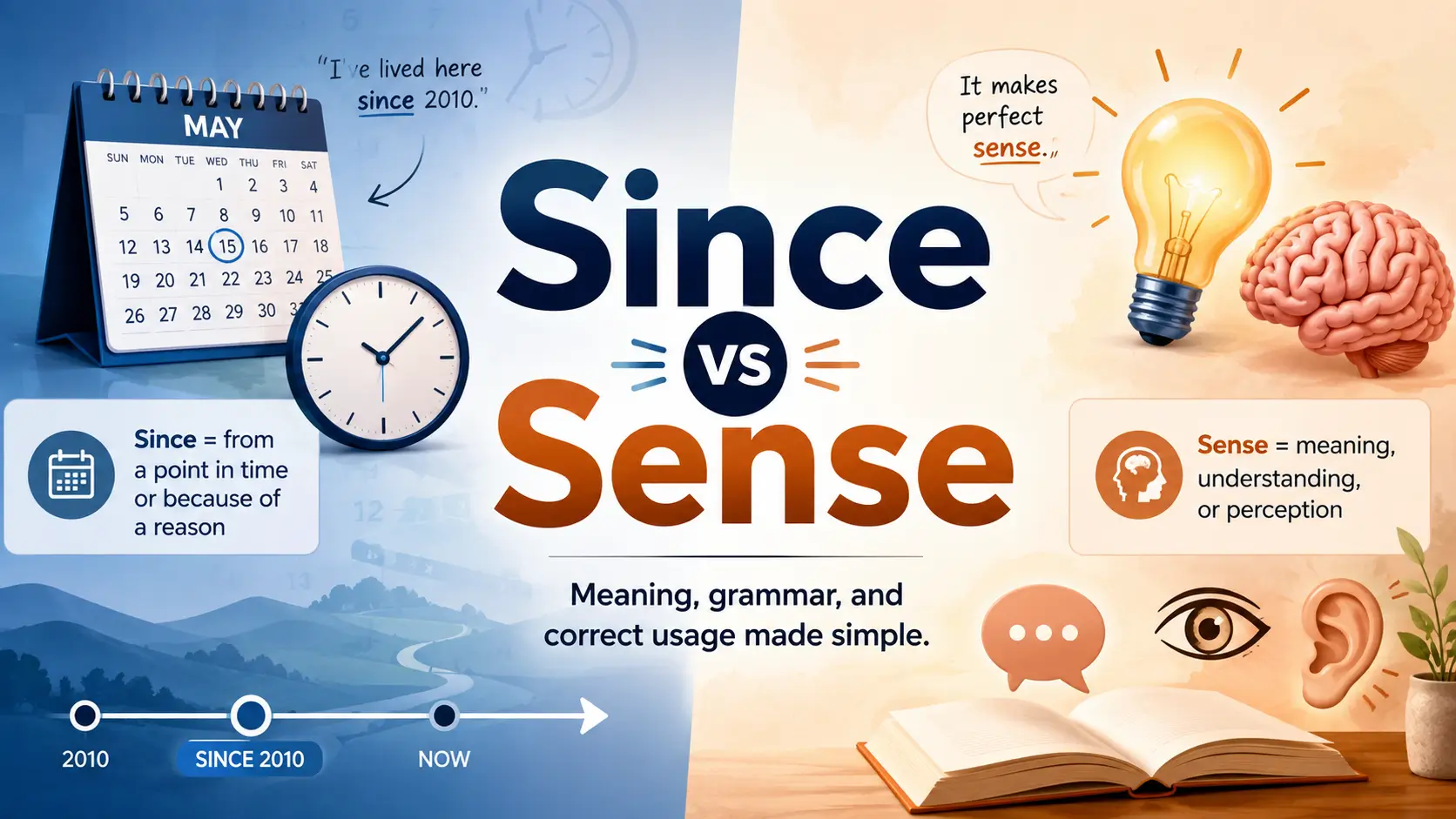
Since vs Sense: Meaning, Differences, Grammar Rules, Examples, and Correct Usage

Since vs Sense meaning and difference with easy examples

If you’re confused about since vs sense, you’re not alone. These words can sound similar, but they have completely different meanings and grammatical functions. Since usually refers to a starting point in time or introduces a reason, while sense relates to meaning, logic, perception, awareness, or judgment. For example, you might say, “I’ve lived here … Read more

Personal vs Personnel: What’s the Difference? Meaning, Usage, and Examples

Personal vs Personnel difference with private matters and company staff

Personal vs Personnel can be confusing because the two words look and sound similar but have very different meanings. Personal is usually an adjective that describes something related to one person, their private life, belongings, opinions, goals, or interests. Personnel, on the other hand, is a noun that refers to employees, staff, or people who … Read more

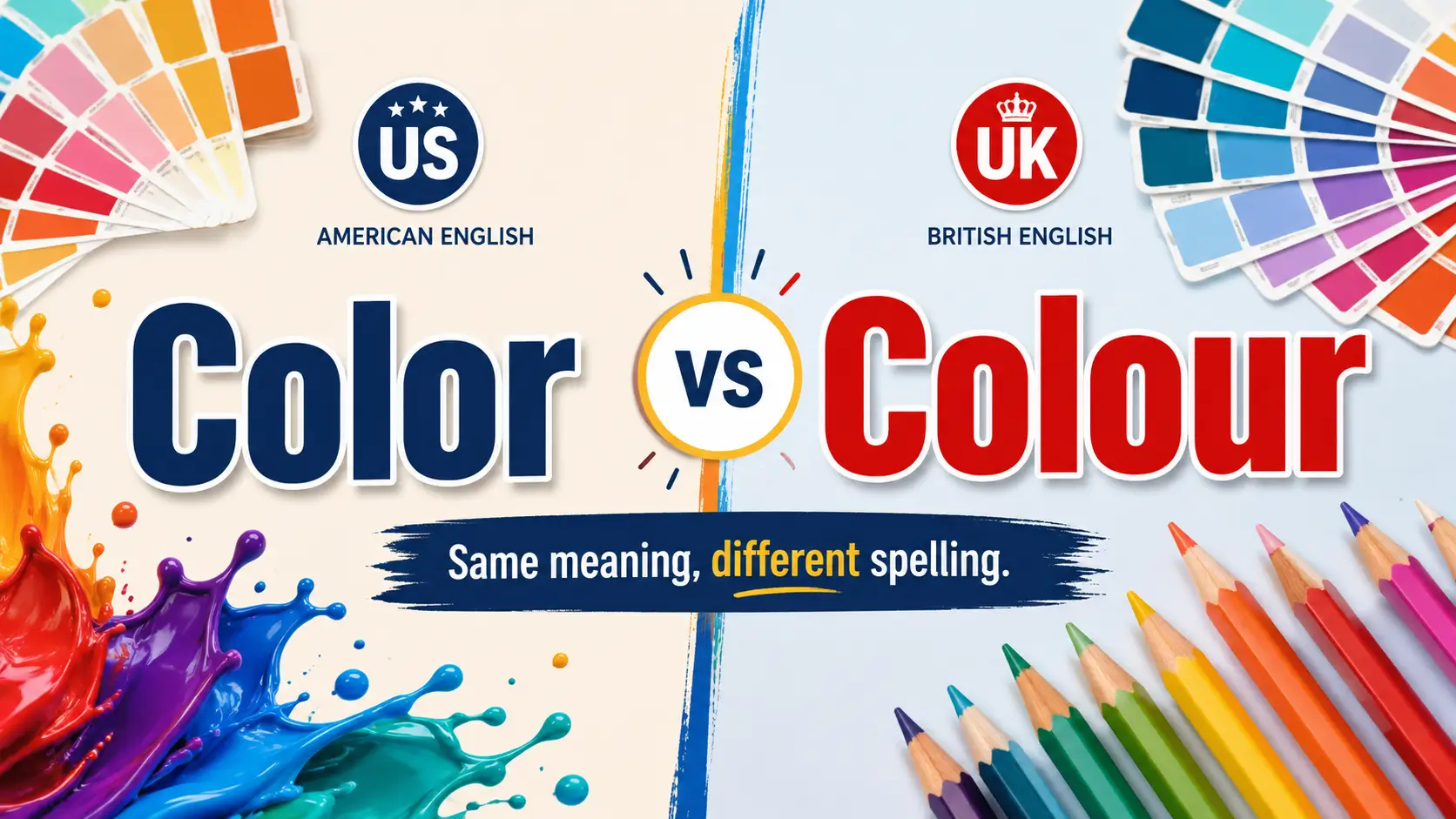
Color vs Colour: Which Spelling Is Correct in American and British English?

Color vs Colour US vs UK spelling difference

The difference between color vs colour comes from the history of English spelling and the way American English, British English, and Canadian English developed their own English varieties. In American English, color is the standard form, while colour follows UK guidelines and is common in British English and Canadian English. These spellings have the same … Read more

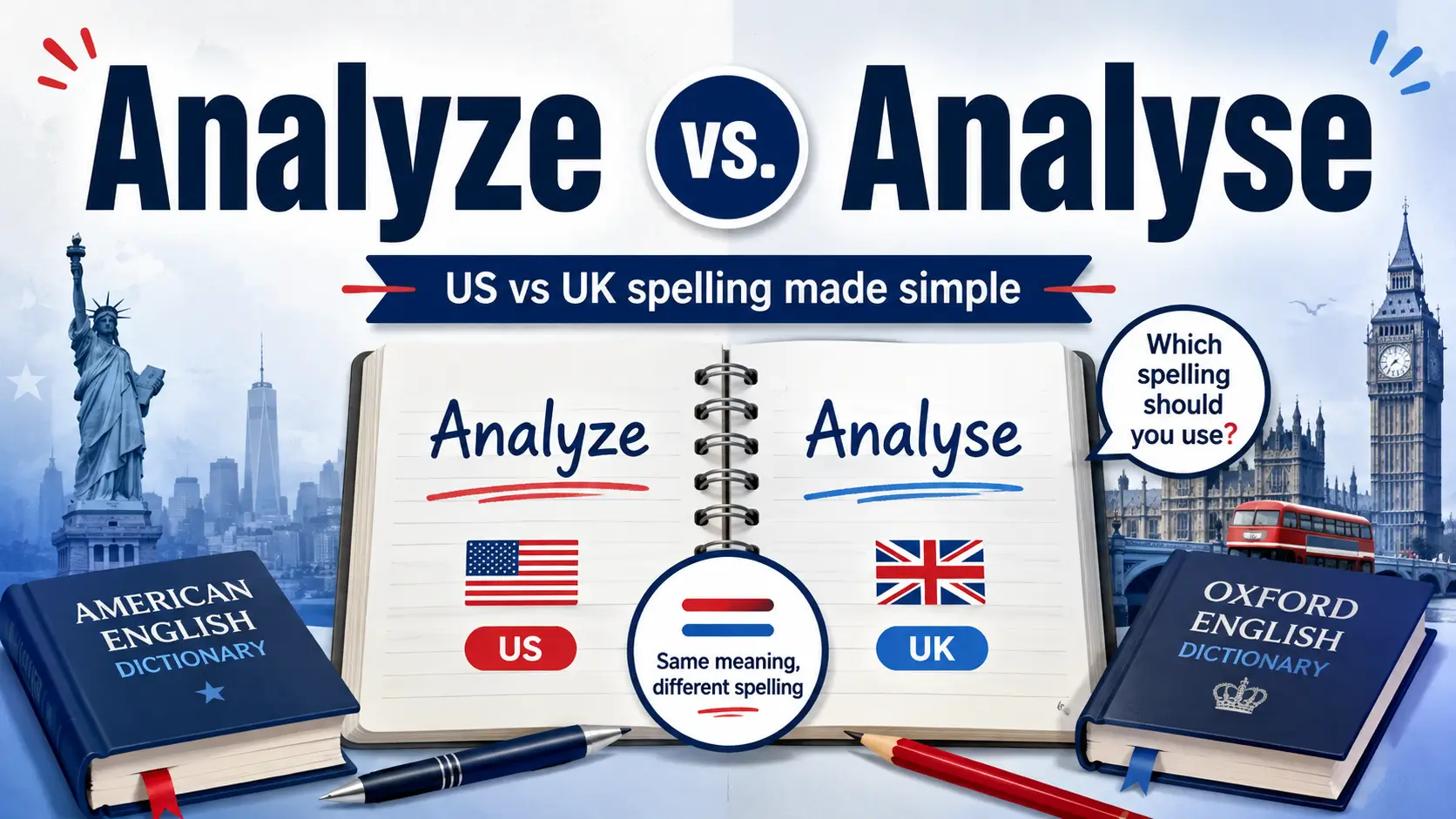
Analyze vs Analyse: Which Spelling Is Correct in American and British English?

Analyze vs Analyse US vs UK spelling difference

Analyze vs. analyse can be confusing because both spellings have the same meaning and pronunciation. The main difference is regional spelling: analyze is the standard form in American English, while analyse is commonly used in British English. If you’re writing for a US audience, use analyze. For example, you might write, “Students analyze the evidence … Read more

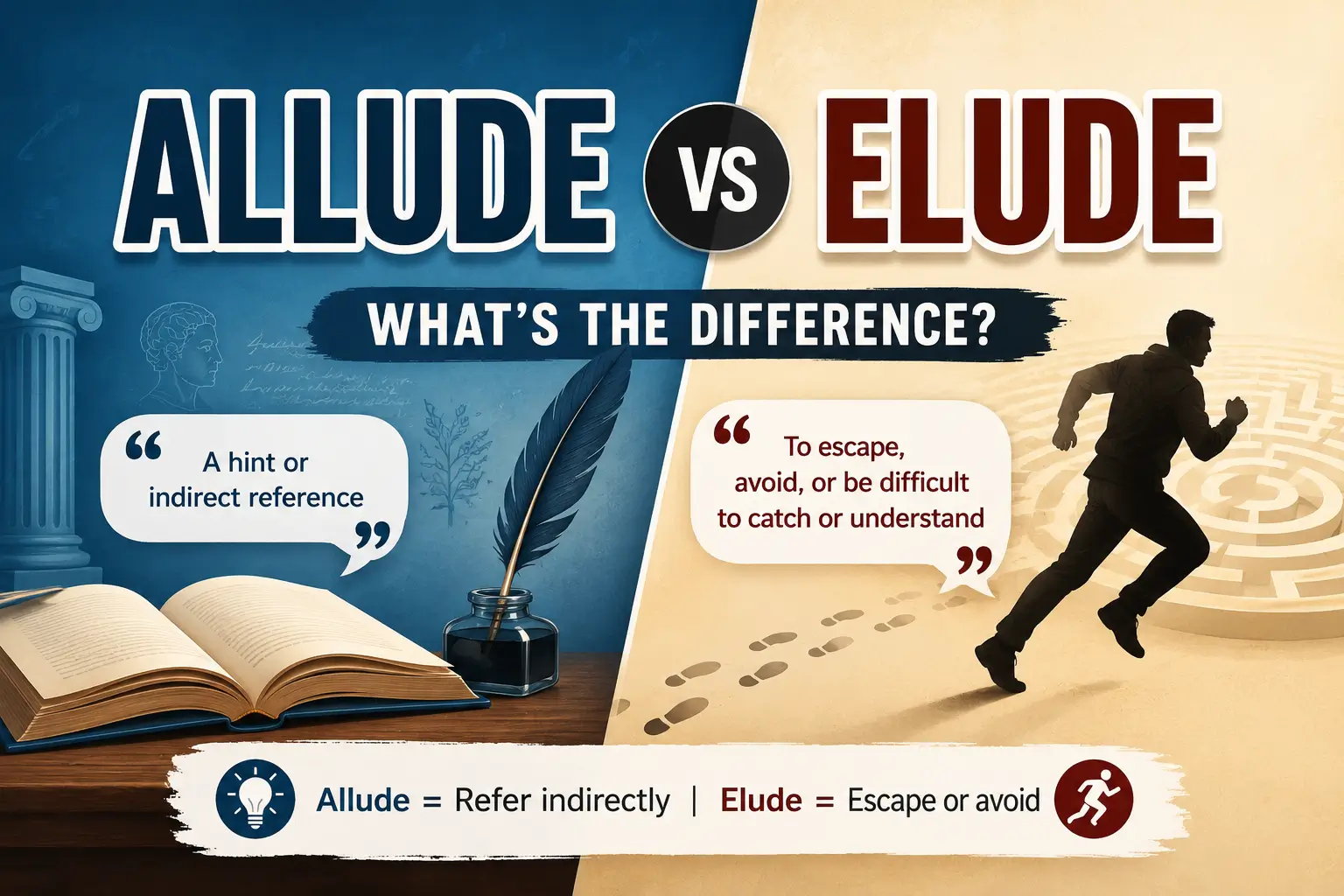
Allude vs Elude: What’s the Difference? Meaning, Examples, and Easy Ways to Remember

Allude vs Elude difference and correct usage

Allude vs. elude can be confusing because these words look and sound similar, but they have different meanings. Allude means to refer to something indirectly or hint at it, while elude means to escape, avoid, or remain difficult to understand or remember. For example, a writer may allude to a historical event without explaining it … Read more

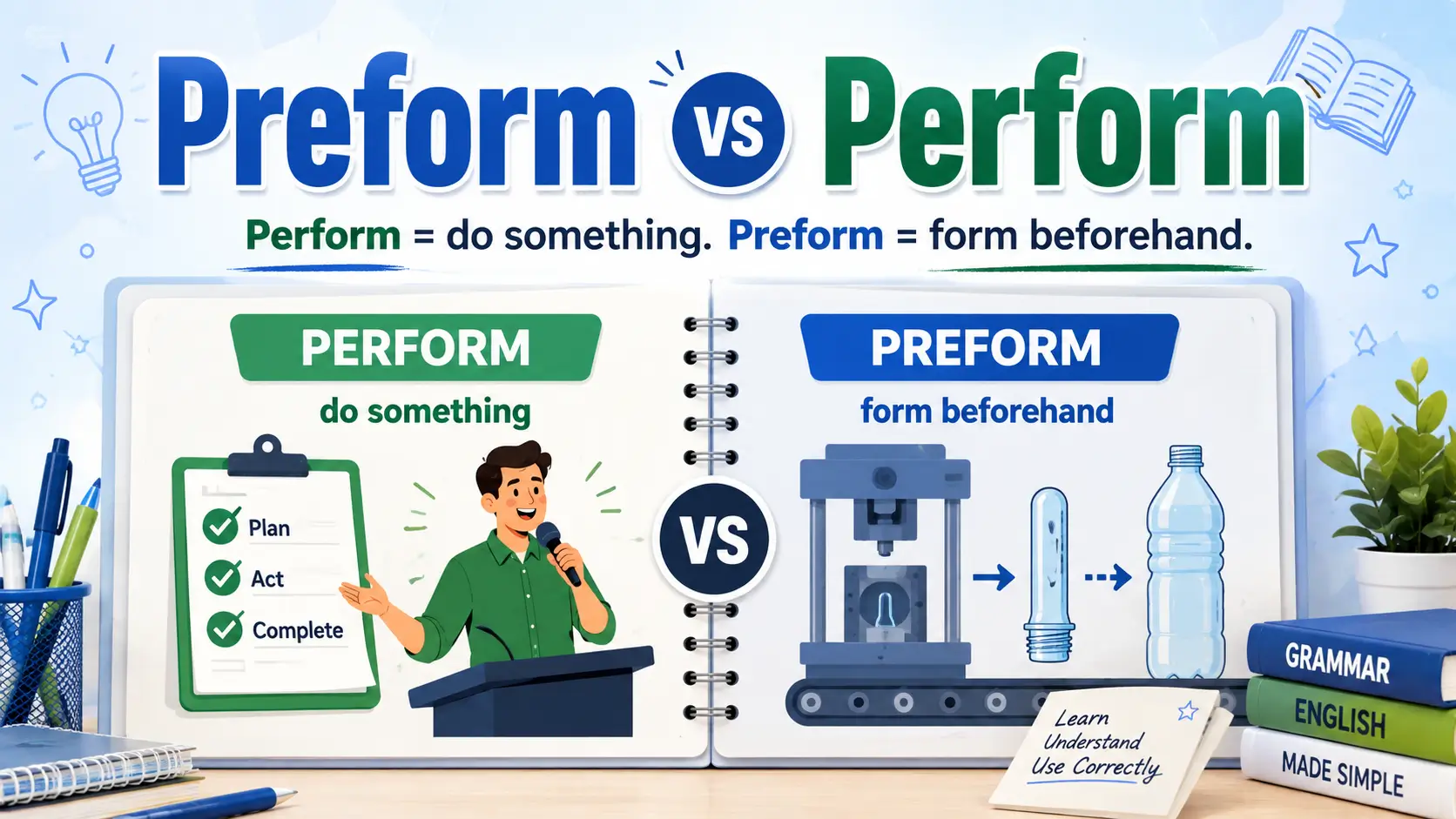
Preform vs Perform: What’s the Difference? Meaning, Usage, and Examples

Preform vs Perform difference and correct usage

Preform vs perform can be confusing because these two words look and sound similar, but they have completely different meanings. Perform means to do, carry out, or present something, while preform means to form or shape something in advance, usually in a technical or manufacturing context. For example, you perform a task, perform surgery, or … Read more

Fourty vs Forty: Which Spelling Is Correct?

Fourty vs Forty correct spelling of 40

Fourty vs. forty is a common spelling confusion, but the answer is simple: forty is the correct spelling of the number 40, while fourty is incorrect. The confusion happens because four is spelled with a u, so it may seem logical to write fourty. However, standard English uses forty, without the u. Whether you’re writing … Read more