Respond vs Response: Difference, Meaning, Grammar Rules, and Correct Usage
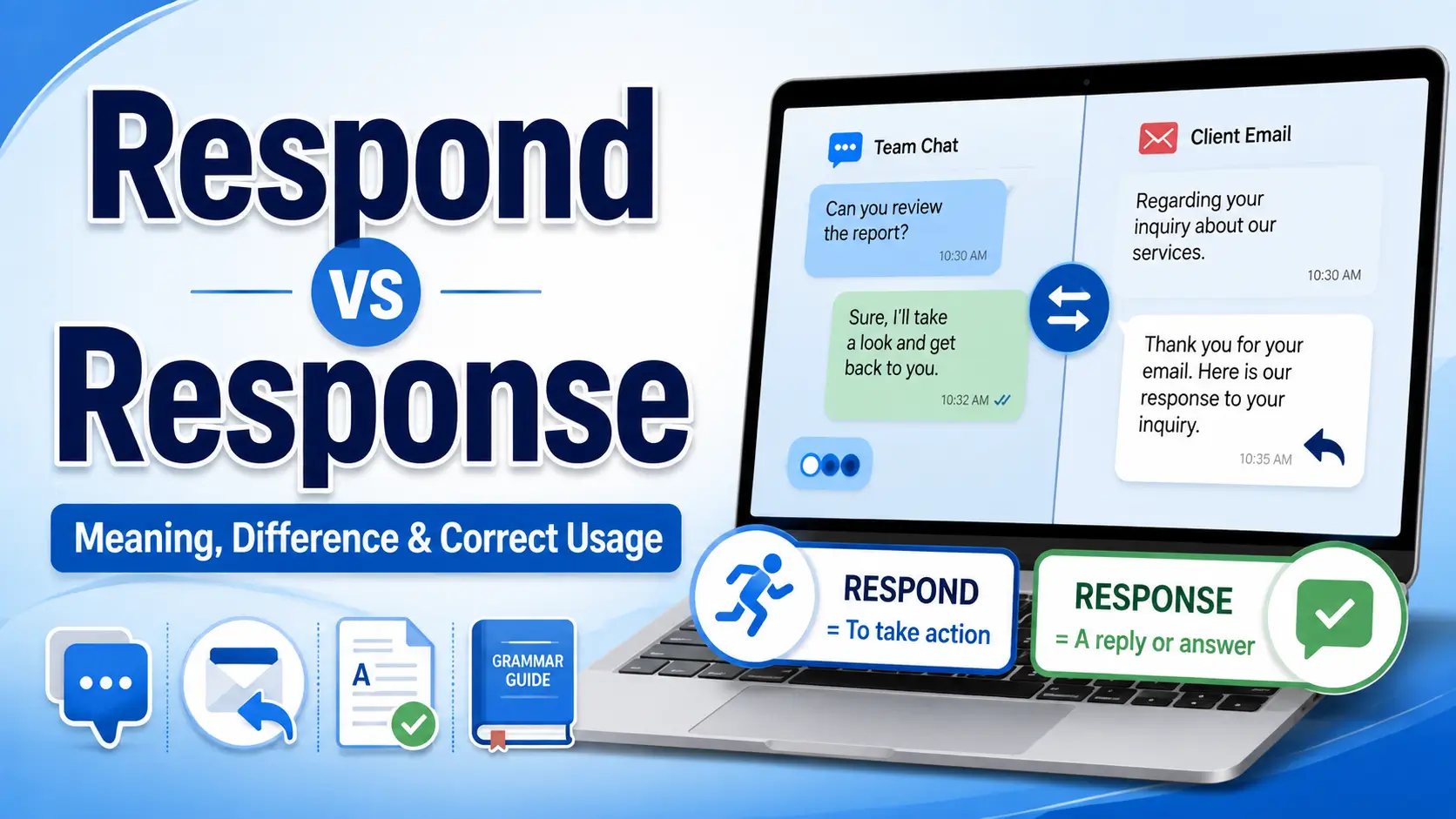
Respond vs response meaning, difference, grammar rules, and correct usage explained

Respond vs response becomes easy to understand once you know their grammar roles. Respond is a verb that means to answer, reply, or react. Response is a noun that means an answer, reaction, or result. Although these words look similar, they work differently in English. Knowing this difference improves writing, speaking, emails, and professional communication … Read more
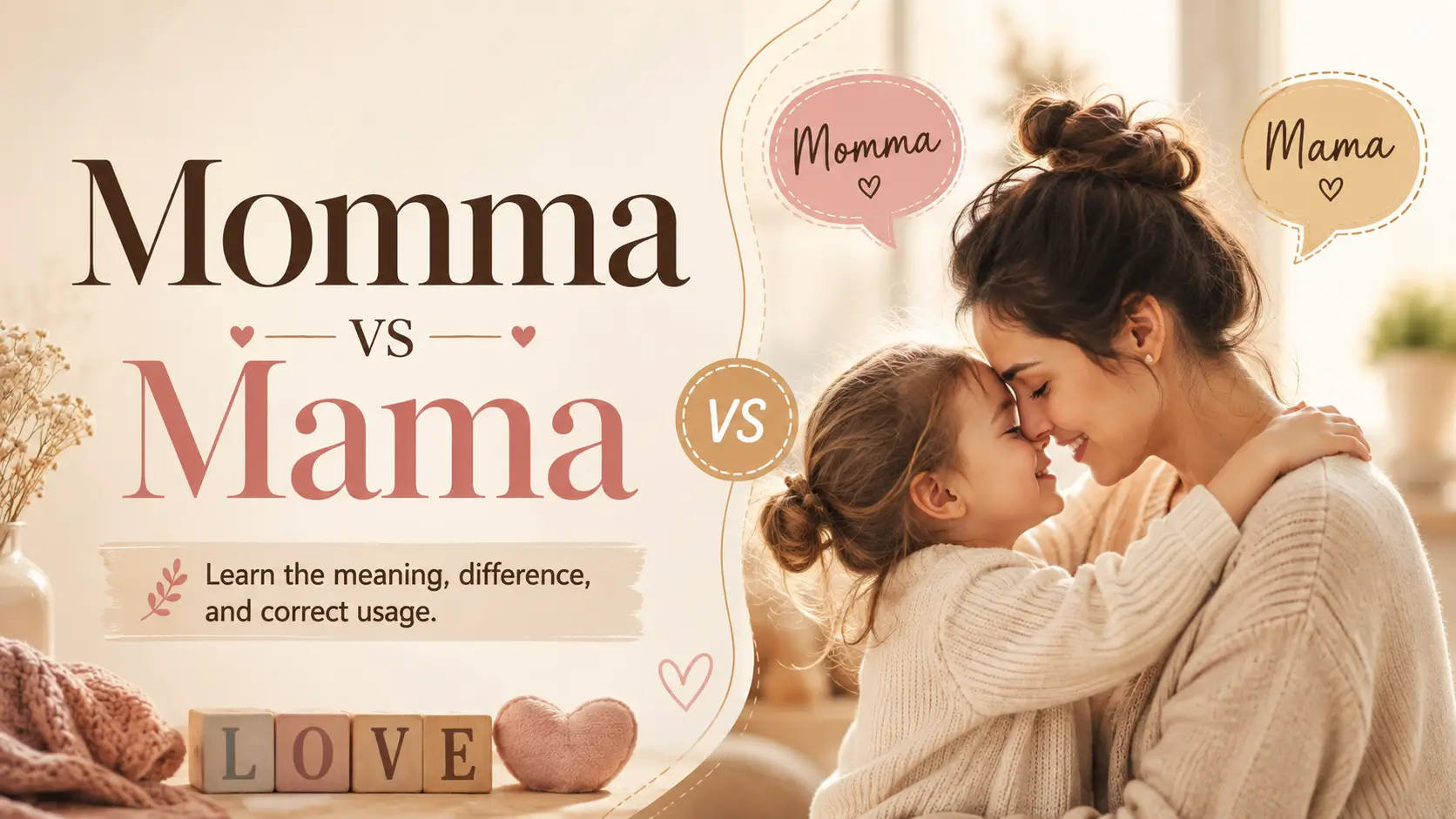

Momma vs Mama: Meaning, Difference, Correct Usage, and Spelling Guide

Momma vs Mama comparison showing the meaning, spelling difference, tone, and correct English usage.

Many people search for the difference between momma vs mama because both words are affectionate terms for a mother and carry a strong sense of emotion, memory, and family connection. Both are commonly used as terms of endearment, but they can create slightly different tones. The main difference between momma and mama comes from spelling, … Read more

Invision vs Envision: Which Word Is Correct? Meaning, Differences, and Usage Guide

Invision vs Envision comparison showing the correct spelling, meaning, and English usage with envision marked as correct.

When people compare invision vs envision, the confusion usually comes from the similar spelling, sound, and connection to the word vision. The correct English word is envision, which means to imagine, picture, or create a mental image of a future possibility. Many writers, editors, and students accidentally use invision because it looks logical, but standard … Read more

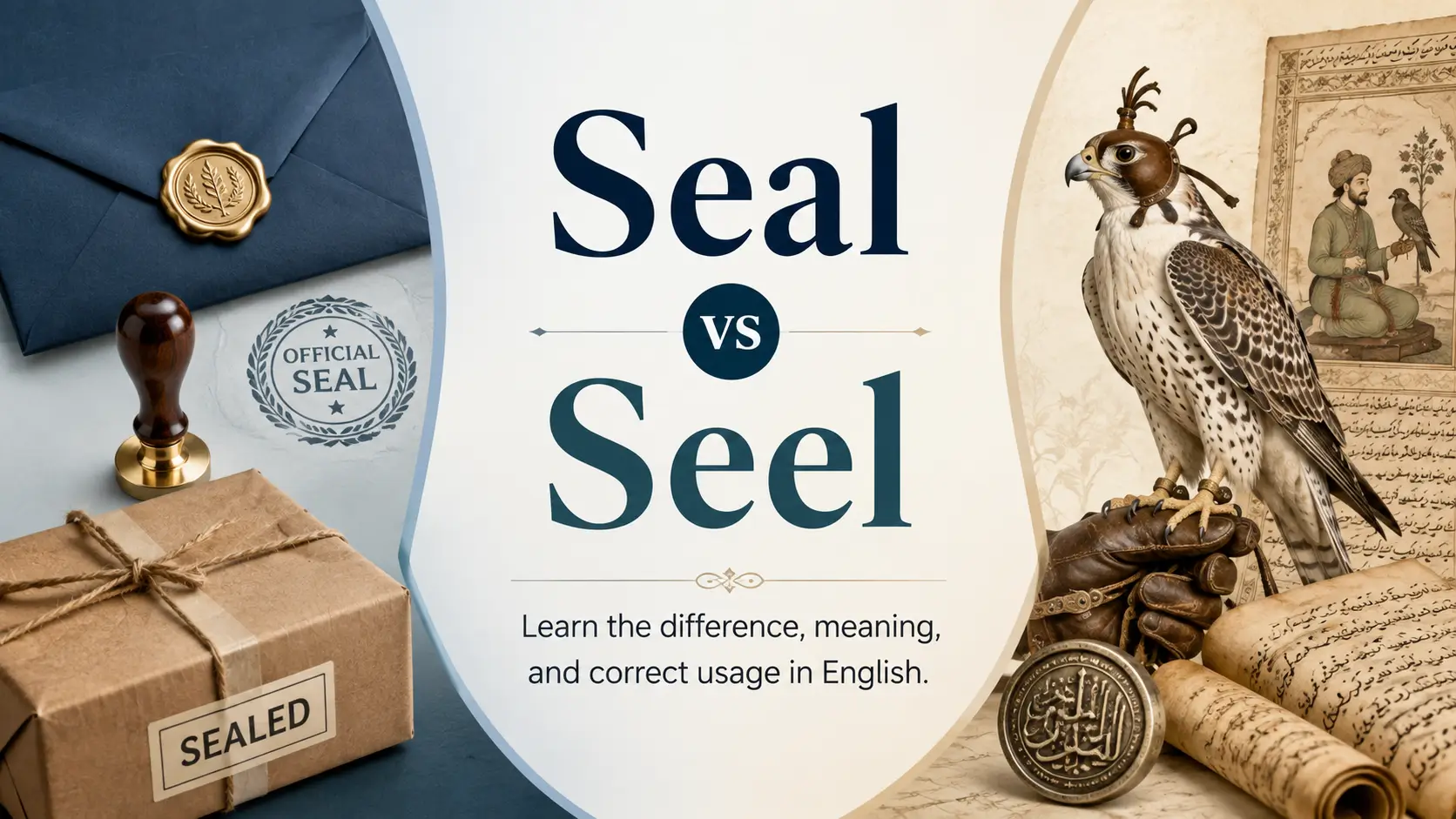
Seal vs Seel: Difference, Meaning, and Correct Usage in English

Seal vs Seel difference showing correct meanings, spelling, usage, official seal, package, and historical falconry example.

The main seal vs seel difference comes from their meaning, usage, and context. Both words have the same pronunciation in most English accents, which creates confusion for many English learners, students, and professionals. However, seal is a common modern word used in writing, business, and everyday communication, while seel is an old, rarely used historical … Read more

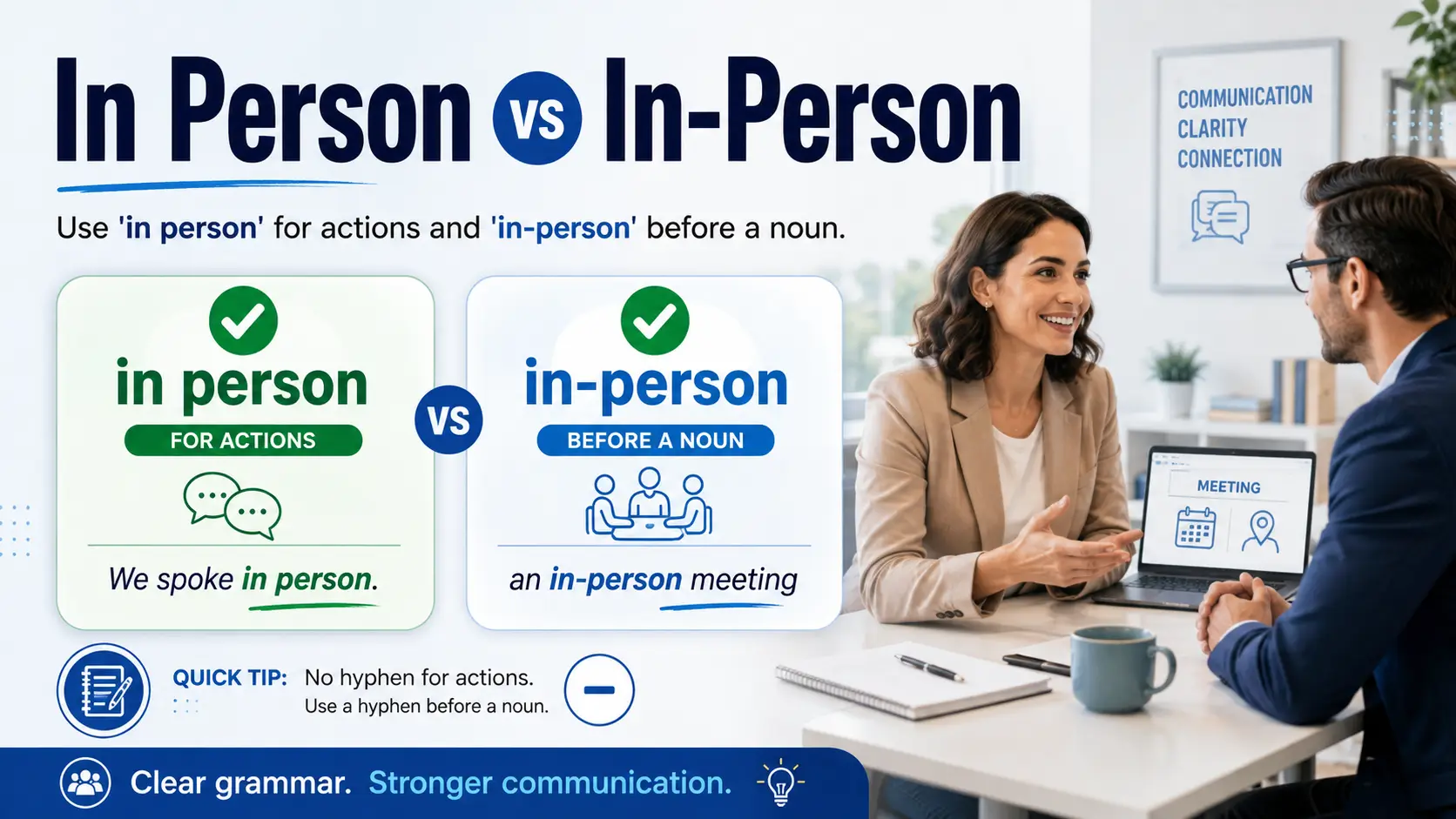
In Person vs In-Person: The Correct Usage, Difference, and Examples

In person vs in-person difference with grammar rules and examples

Confused about in person vs in-person? Learn simple grammar rules, examples, and differences that help you use these phrases correctly every day. Many writers mix up these two forms because they look similar, but they have different grammar roles. This guide explains when to use in person for direct actions and when to use in-person … Read more

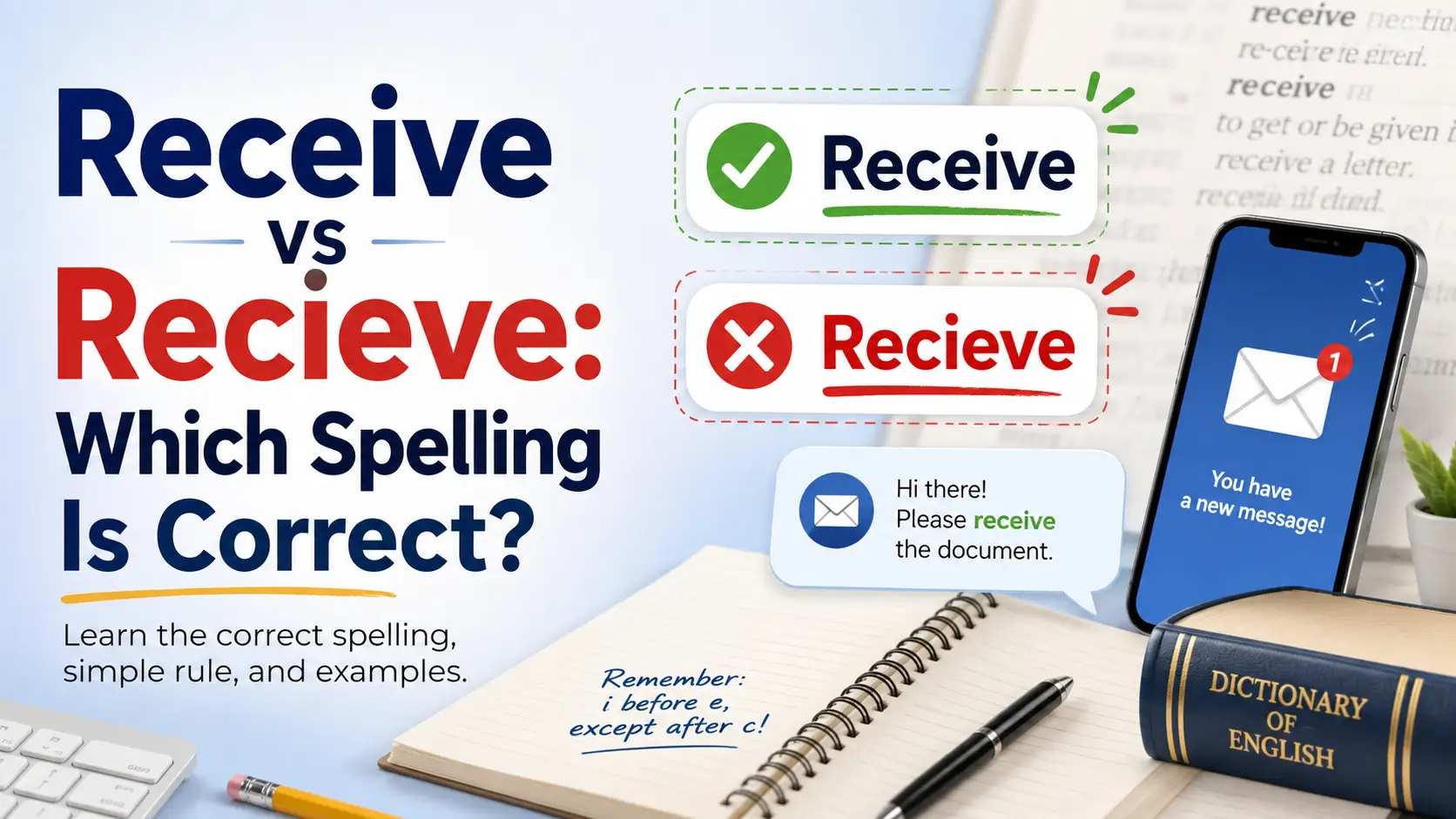
Receive vs Recieve: Which Spelling Is Correct? Meaning, Rules, Examples, and Common Mistakes

Receive vs Recieve correct spelling with simple rule and examples

Receive vs Recieve is a common spelling confusion among English learners because the two words look almost identical. However, only receive is the correct spelling in standard English. Recieve is an incorrect spelling that happens when people accidentally reverse the order of i and e. The difference between receive vs recieve is not about meaning … Read more

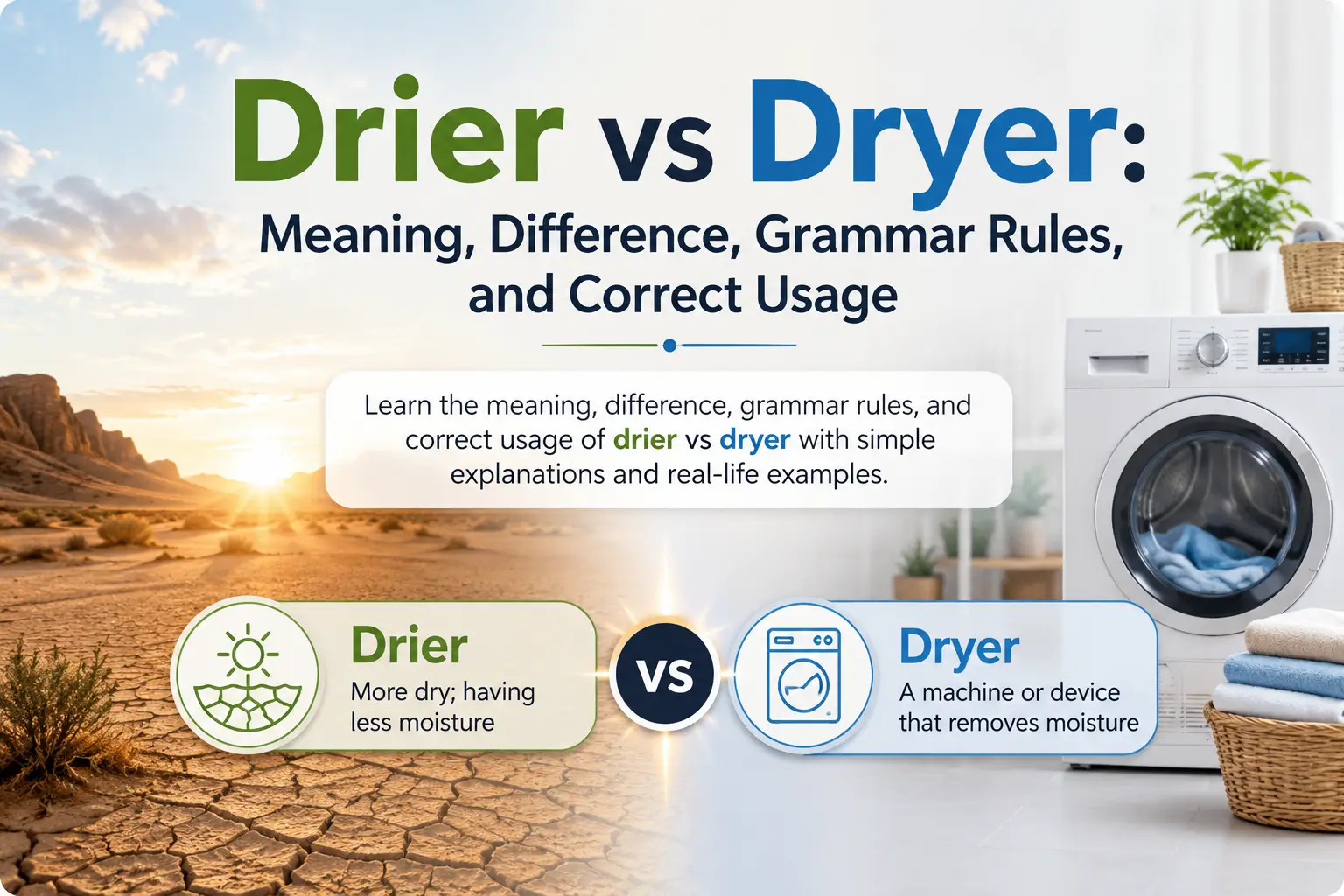
Drier vs Dryer: Meaning, Difference, Grammar Rules, and Correct Usage

Drier vs dryer difference explained with examples of dry weather and a clothes dryer.

Many writers, students, bloggers, and non-native English speakers struggle to understand drier vs dryer because these English homophones sound alike and usually have the same pronunciation in spoken English. However, their meaning, difference, and usage depend on context. When I review writing and content, I often notice that people choose a word based only on … Read more

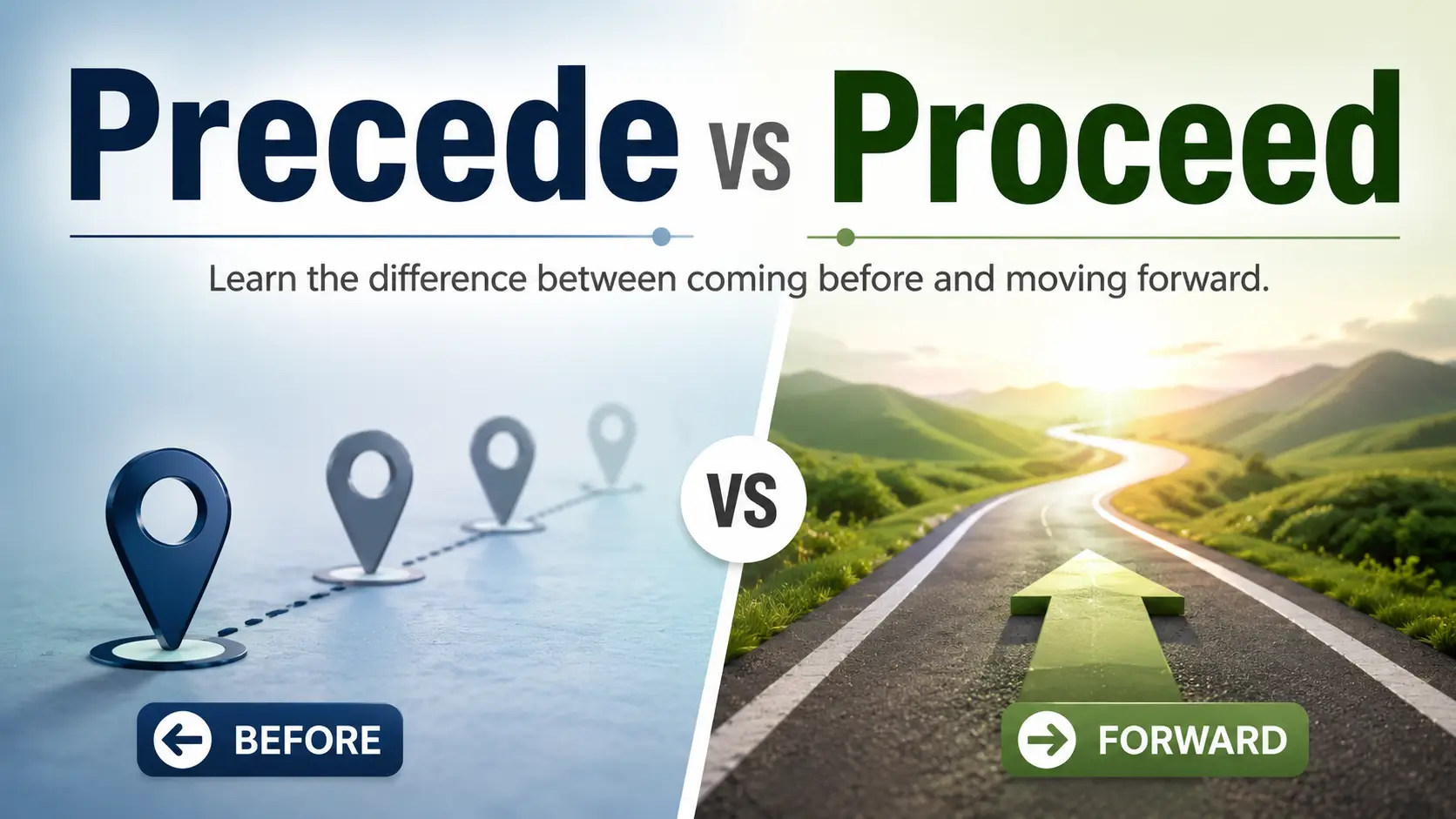
Precede vs Proceed: Meaning, Differences, Examples, and How to Use Them Correctly

Precede vs proceed meaning and difference between before and forward

Many English learners confuse precede vs proceed because both words have similar spelling, similar pronunciation, and different meanings. Understanding their correct usage helps improve writing and speaking skills by avoiding common grammar mistakes. Precede means something happens before, while proceed means to continue or move forward with an action. A common mistake is using proceed … Read more

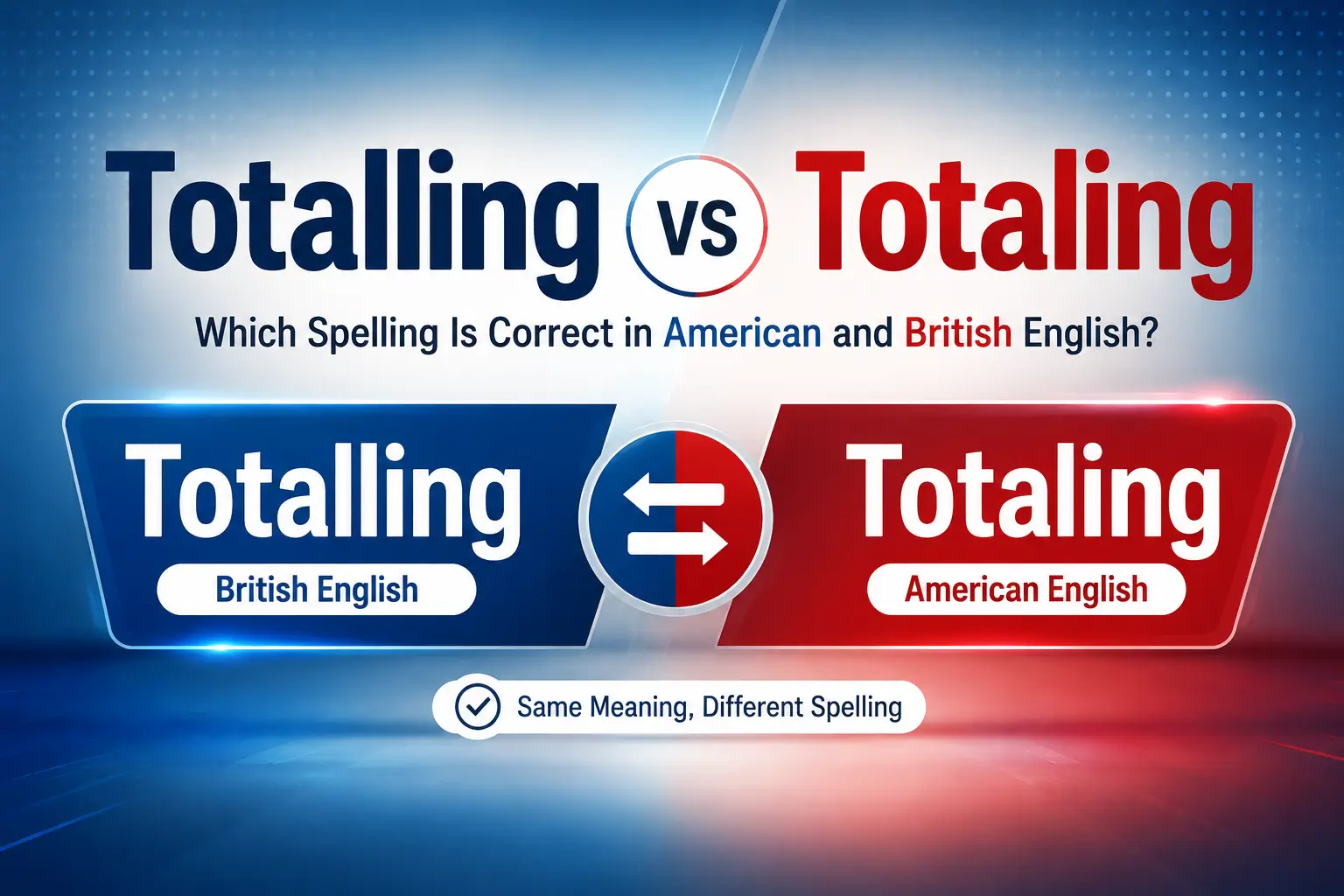
Totalling vs Totaling: Which Spelling Is Correct in American and British English?

Totalling vs totaling difference in British and American English

When writing about totalling vs totaling, many English writers face spelling confusion because English spelling rules change between regions. Both forms are correct spelling choices, but American English usually uses totaling with one L, while British English prefers totalling with two Ls. The meaning stays the same: both describe adding numbers to find a complete … Read more

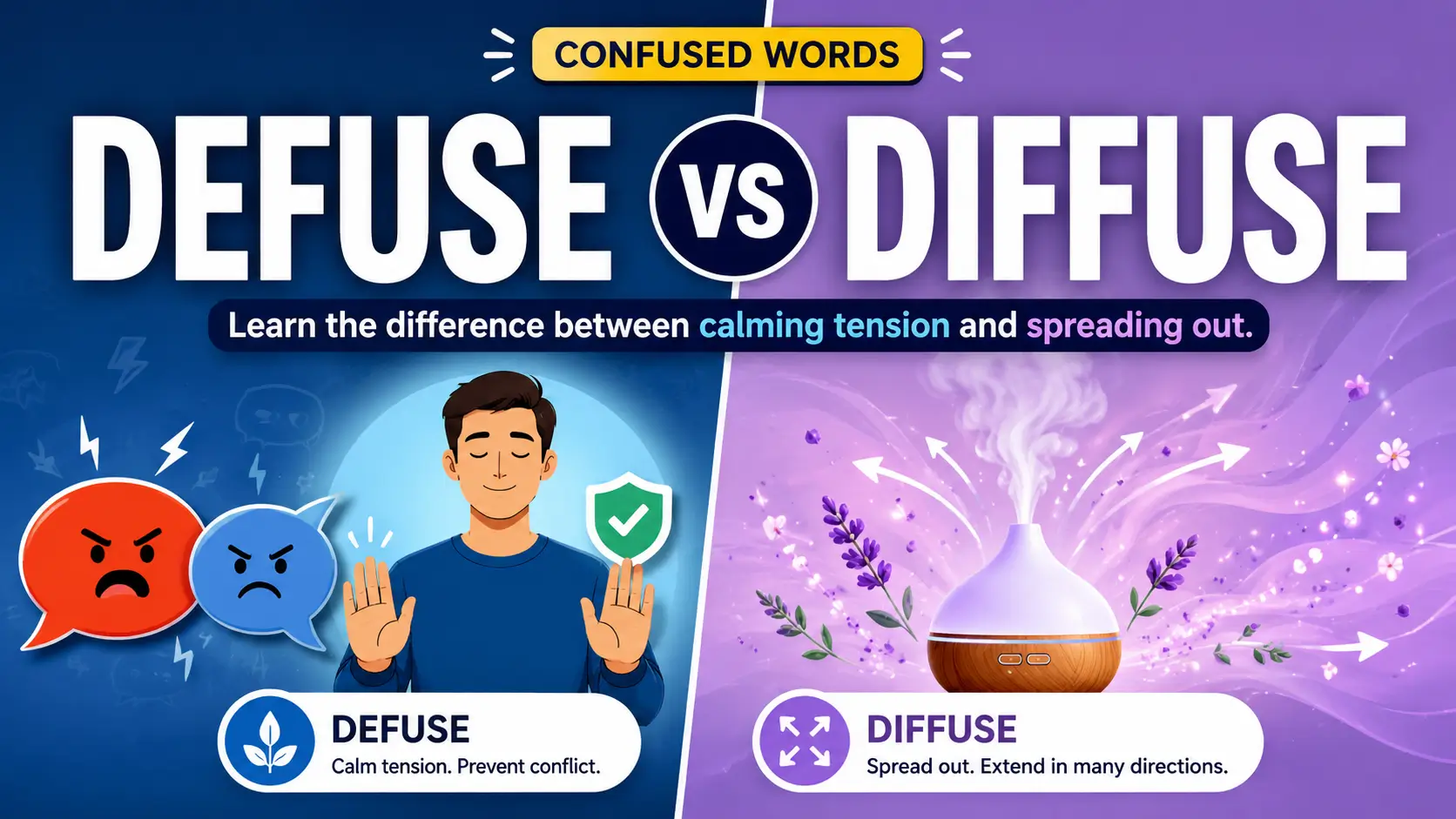
Defuse vs Diffuse: What’s the Difference and How to Use Each Word Correctly?

Defuse vs diffuse meaning and difference with examples

Defuse vs Diffuse is a common English word pair that often confuses learners because the two words look and sound similar but have very different meanings. Defuse means to reduce danger, tension, or conflict, while diffuse means to spread or scatter something over a wider area. Understanding this difference helps you use both words correctly … Read more