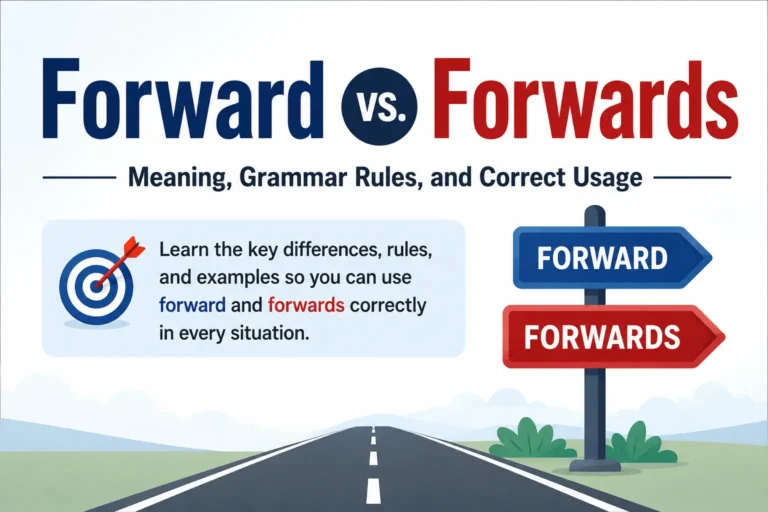
Forward vs. Forwards: Meaning, Grammar Rules, and Correct Usage

Forward vs Forwards explained with grammar rules, American vs British English differences, and simple examples.

The difference between forward vs. forwards can seem confusing because both words may describe movement toward the front. However, they are not always interchangeable. Forward has several grammatical roles, while forwards has fewer uses. In American English, writers usually prefer forward as the directional adverb. Meanwhile, British English accepts both forward and forwards, especially when … Read more

Vicious vs Viscous Word Choice: How Viscous and Vicious Differences

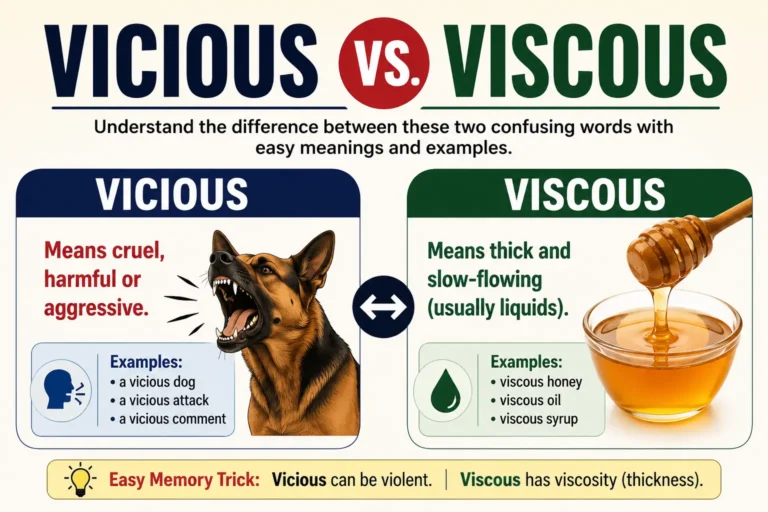
Vicious vs. Viscous infographic showing the difference between cruel behavior and thick slow-flowing liquids with simple examples.

Vicious vs. Viscous becomes clear when you remember that vicious describes cruel behavior, while viscous describes a thick liquid that flows slowly. Both words are adjectives, but their close spelling hides very different meanings. Vicious can describe an evil, malicious, aggressive, violent, or severe person, action, remark, storm, or attack. Viscous refers to thickness and … Read more

Naive vs. Nieve: Which Spelling Is Correct?

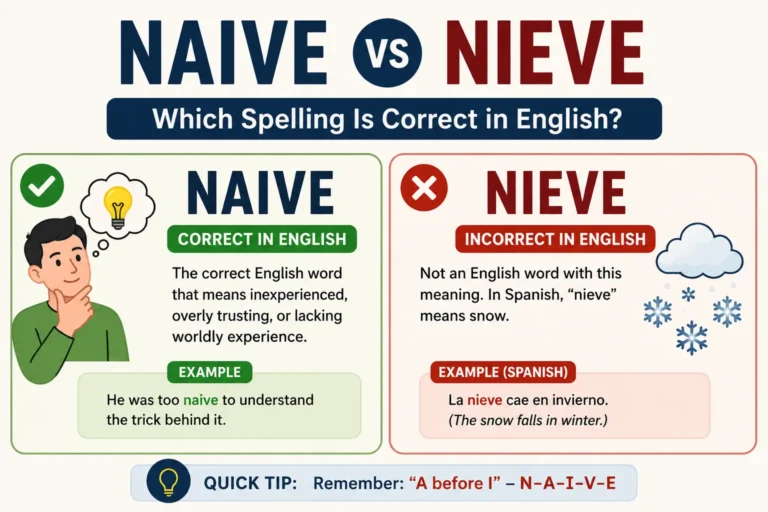
Naive vs nieve spelling comparison showing naive as correct in English and nieve as the Spanish word for snow

Naive vs nieve confuses many writers, but naive is the correct adjective in standard English for someone who lacks experience or trusts too easily. The word entered English through French, which explains its unusual spelling. Nieve is not the English form; in Spanish, it means snow. Naive is pronounced “ny-EEV,” with both vowel sounds heard … Read more

Quantify vs Qualify: Meaning, Difference, and Correct Usage

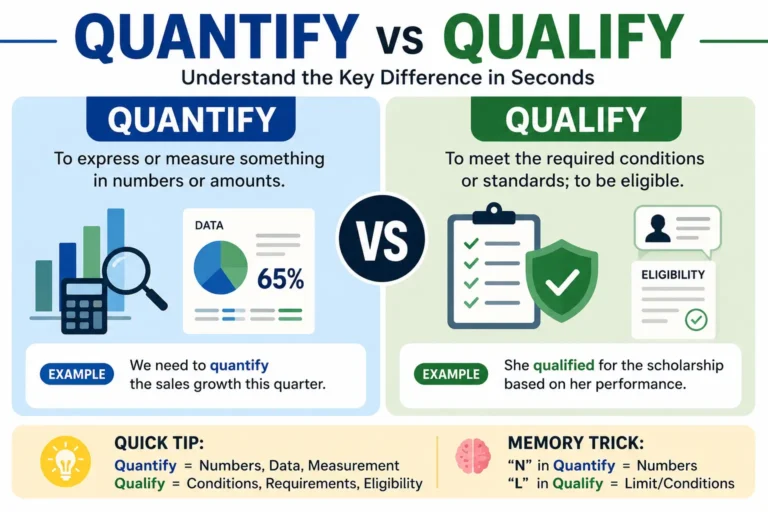
Quantify vs qualify meaning and difference explained with examples

The words quantify and qualify look and sound similar, so it’s easy to mix them up. However, they do very different jobs in English. One word is about numbers, amounts, data, and measurement. The other is about requirements, limits, conditions, and added detail. The difference matters in school essays, business emails, reports, resumes, research papers, … Read more

Encorporate vs Incorporate: Which Spelling Is Correct?

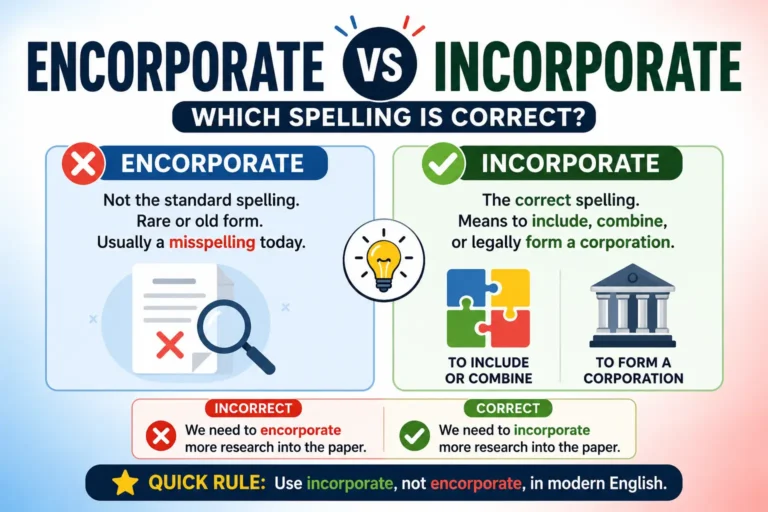
Encorporate vs incorporate spelling difference explained with correct usage examples

Encorporate vs incorporate is a common spelling question because the two forms look like they could both be correct. They also sound similar when spoken quickly. However, in modern American English, the correct spelling is incorporate. You should use incorporate when you mean to include, combine, or add something into a larger whole. You can … Read more

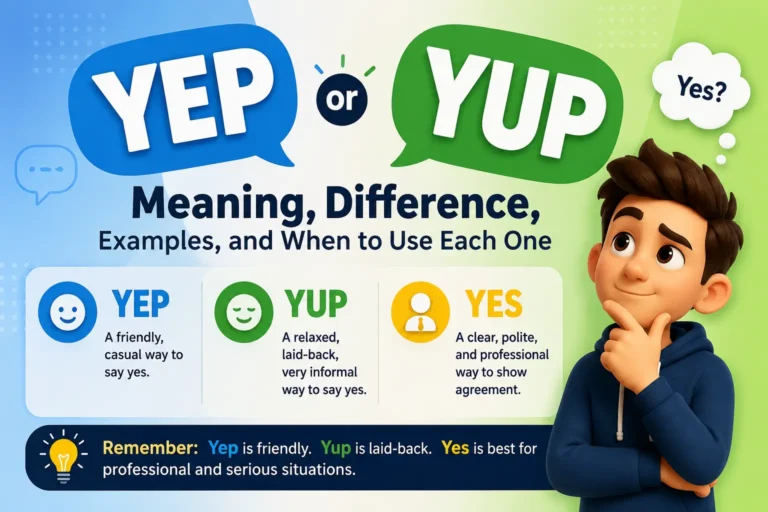
Yep or Yup: Meaning, Difference, Examples, and When to Use Each One

Yep or Yup meaning, difference, examples, and when to use each informal yes word in casual English.

For Yep or Yup, focus on tone, context, and communication style, not only spelling, because both words mean yes. In simple English, yep and yup share the same meaning as a yes variation, synonym of yes, casual yes, and informal yes. Still, yep meaning feels friendly, quick, and clear, while yup meaning sounds more relaxed, … Read more