Serpent vs Snake: What’s the Difference in Meaning and Usage?

Serpent vs snake comparison showing a real snake beside a mythical serpent in an ancient jungle temple

Serpent vs snake describes the difference between two words that can name the same reptile but often carry different tones. A snake is the standard term used in modern English, science, conversation, and wildlife writing. A serpent usually sounds more literary, symbolic, religious, or mythical. The key difference is therefore not biological. Instead, it comes … Read more

Adapter vs. Adaptor: Which Spelling Is Correct in American English?

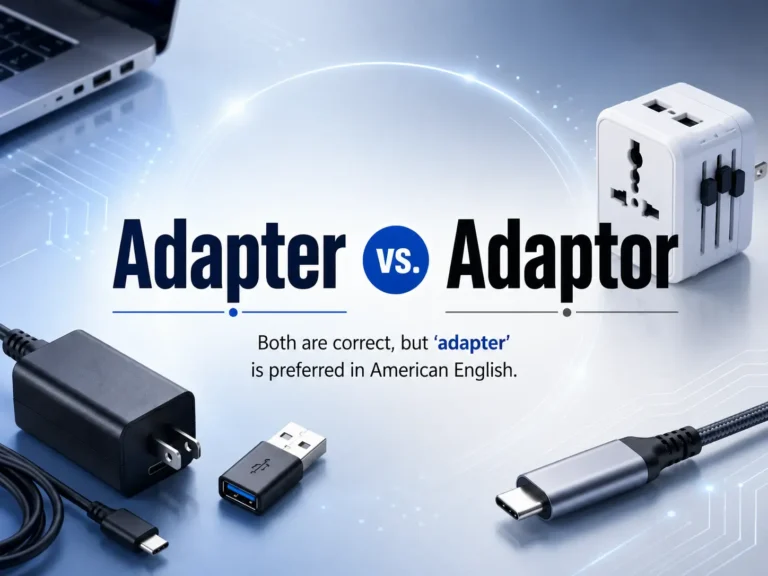
Adapter vs adaptor comparison with power, USB, travel and USB-C adapters explaining the preferred American English spelling.

Adapter vs adaptor is a spelling question with a simple answer: both forms are correct, but adapter is the preferred spelling in American English. The two words have the same meaning and usually refer to a person, device, or system that helps something adjust, connect, or work in a new way. You’ll often see adapter … Read more

Elicit vs. Illicit: What’s the Difference?

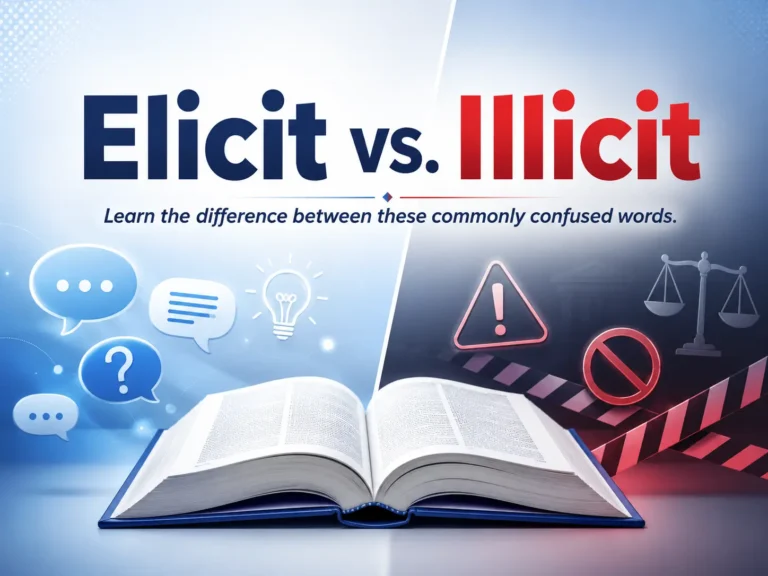
Elicit vs illicit comparison with speech bubbles, warning symbols, and an open dictionary

Elicit vs illicit is a common confusion in English grammar because these two words look and sound almost identical but have completely different meanings. Elicit means to draw out, obtain, or bring forth a response, reaction, or information, while illicit means illegal, forbidden, or not permitted. Knowing the difference between these commonly confused words helps … Read more

Your vs. You’re: What’s the Difference and How to Use Them Correctly?

Your vs You’re difference explained with ownership examples and you are contraction examples

Your vs. you’re is one of the most searched English grammar questions because these two words sound alike but have different meanings and uses. If you’ve ever wondered whether to write your or you’re, you’re not alone. Understanding this difference helps you write more clearly in emails, text messages, social media posts, school assignments, and … Read more

Complement vs. Compliment: What’s the Difference? Meaning, Examples, and Easy Ways to Remember

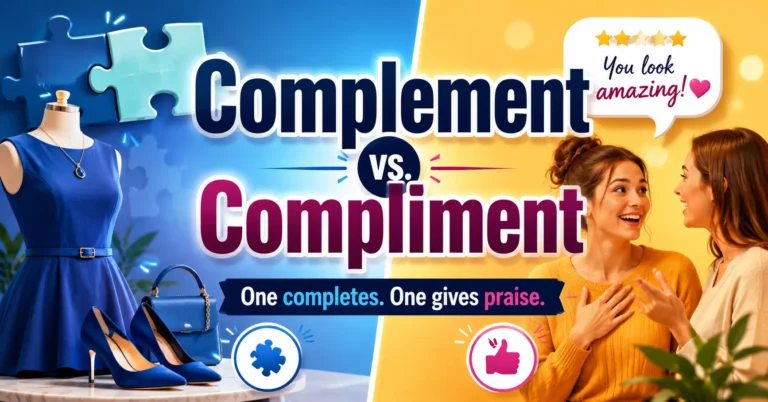
Complement vs Compliment difference explained with examples of completing something versus giving praise

Complement vs compliment is a common grammar confusion that happens because these two English words have similar pronunciation but completely different meanings. The easiest way to remember the difference is this: complement means something that completes, matches, or improves another thing, while compliment means praise, admiration, or a positive remark. Knowing the difference between these … Read more

To vs. Too: What’s the Difference? (Complete Grammar Guide with Examples)

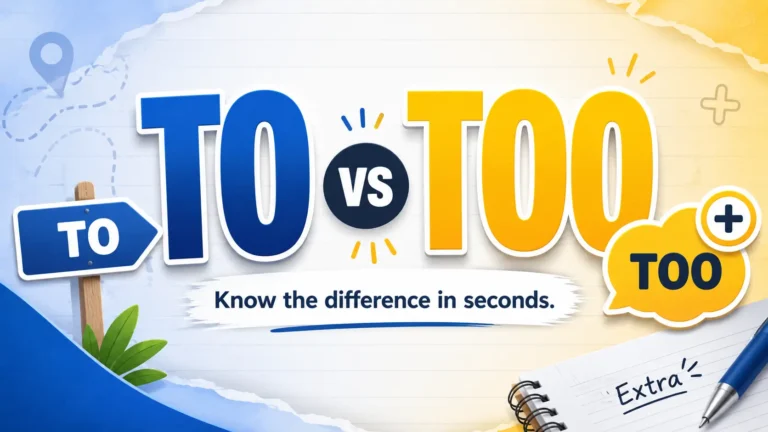
To vs Too difference explained with simple grammar rules and examples

To vs Too is one of the most searched and commonly confused topics in English grammar because these words sound the same but have different meanings and uses. If you’ve ever wondered whether to write to, too, or even two, you’re not alone. The good news is that the difference is simple once you understand … Read more

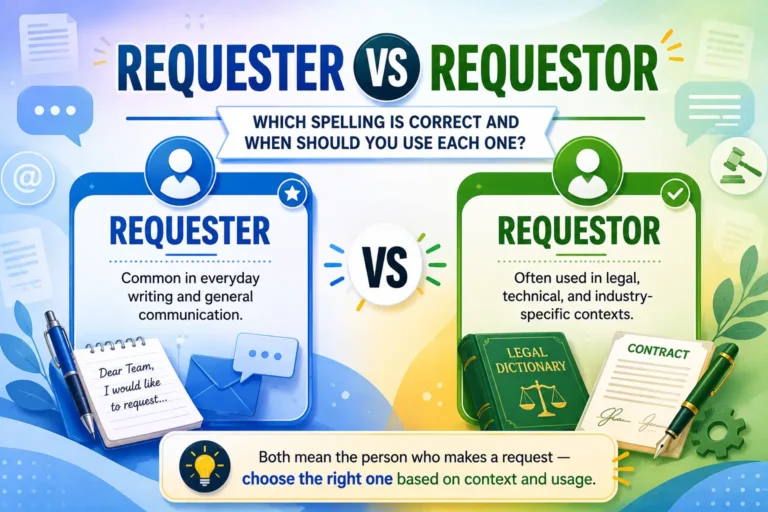
Requester vs Requestor: Which Spelling Is Correct and When Should You Use Each One?

Requester vs Requestor spelling difference explained with correct English usage examples

The difference between Requester and Requestor is mainly based on context, language usage, and industry standards rather than meaning. Both words describe a person who makes a request, but requester is more widely used in everyday communication, business writing, and general professional communication. In contrast, requestor appears more often in specialized environments such as IT, … Read more

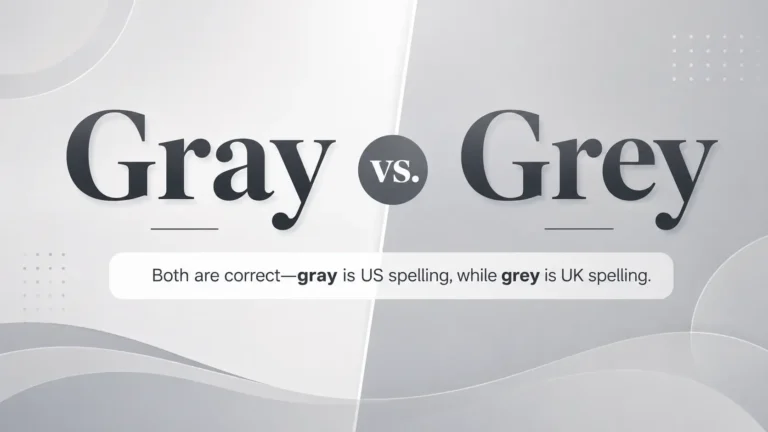
Gray vs. Grey: What’s the Difference and Which Spelling Is Correct?

Gray vs grey comparison showing gray as US spelling and grey as UK spelling

Gray vs. Grey is a common spelling question, but the answer is simple. Both words describe the same color between black and white. However, gray is the preferred spelling in American English, while grey is more common in British English, Canada, and several other English-speaking regions. Neither form is wrong, but the best choice depends … Read more

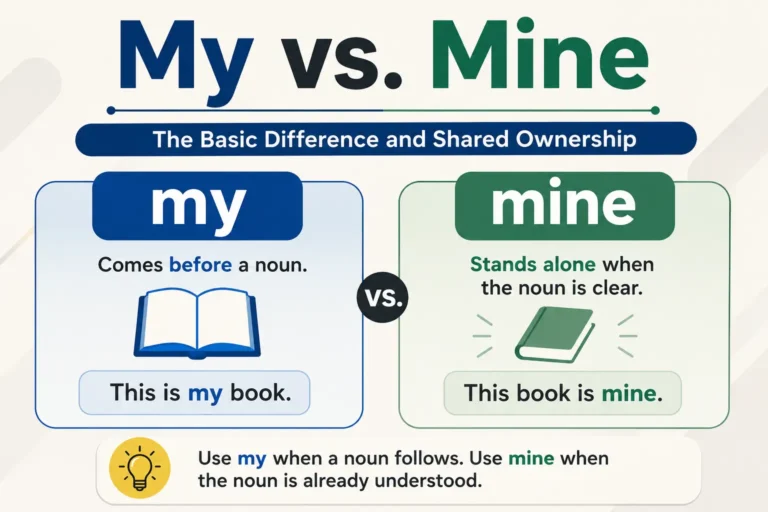
My vs. Mine: The Basic Difference and Shared Ownership

My vs. Mine difference explained with simple grammar rules and examples

My vs. Mine becomes easy once you see that my comes before a noun, while mine stands alone when the noun is already clear from the full context. My is a possessive determiner, while mine is a possessive pronoun. Use my in “This is my book” because book follows it. Use mine in “This book … Read more

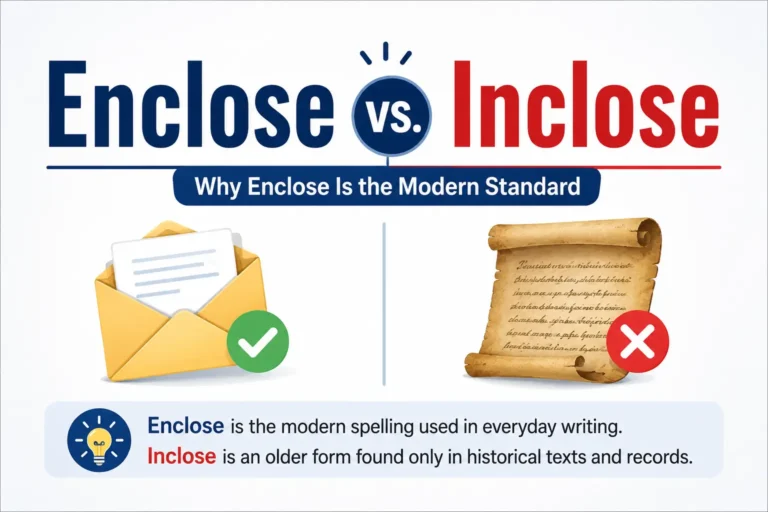
Enclose vs. Inclose: Why Enclose Is the Modern Standard

Enclose vs Inclose explained with the correct spelling, grammar rules, historical usage, and simple examples.

The enclose vs. inclose choice is simple: enclose is the modern spelling, while inclose survives mainly in older historical records and texts. Both words once meant to surround, shut in, or place something inside a container, boundary, or envelope. Today, enclose is the accepted verb in modern English. Its related forms are enclosed, enclosing, and … Read more