Skip to content
Grammar Spark
  • Home
  • About Us
  • Contact Us
  • Blog
  • Confusing Words

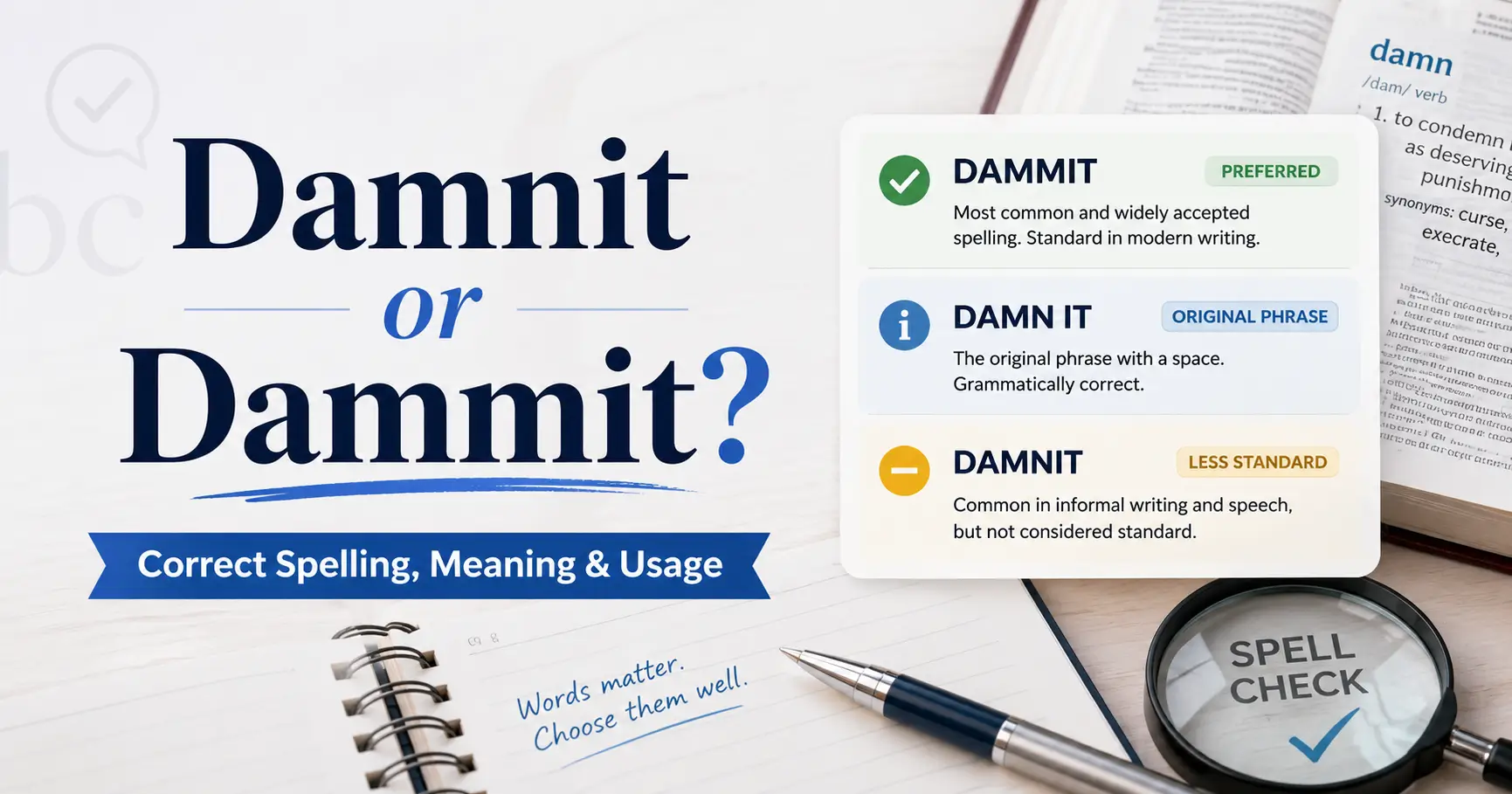
Damnit or Dammit? Correct Spelling, Meaning, and Usage
June 20, 2026 by David Sterling
Damnit or dammit correct spelling, meaning, and usage comparison

When deciding between damnit or dammit, many writers are unsure which form is correct and which one looks natural in polished English. The preferred correct spelling of dammit is dammit when you need the informal one-word form, while damn it remains the original two-word expression. Although is damnit correct is a common search question, damnit … Read more
Categories Uncategorized Leave a comment

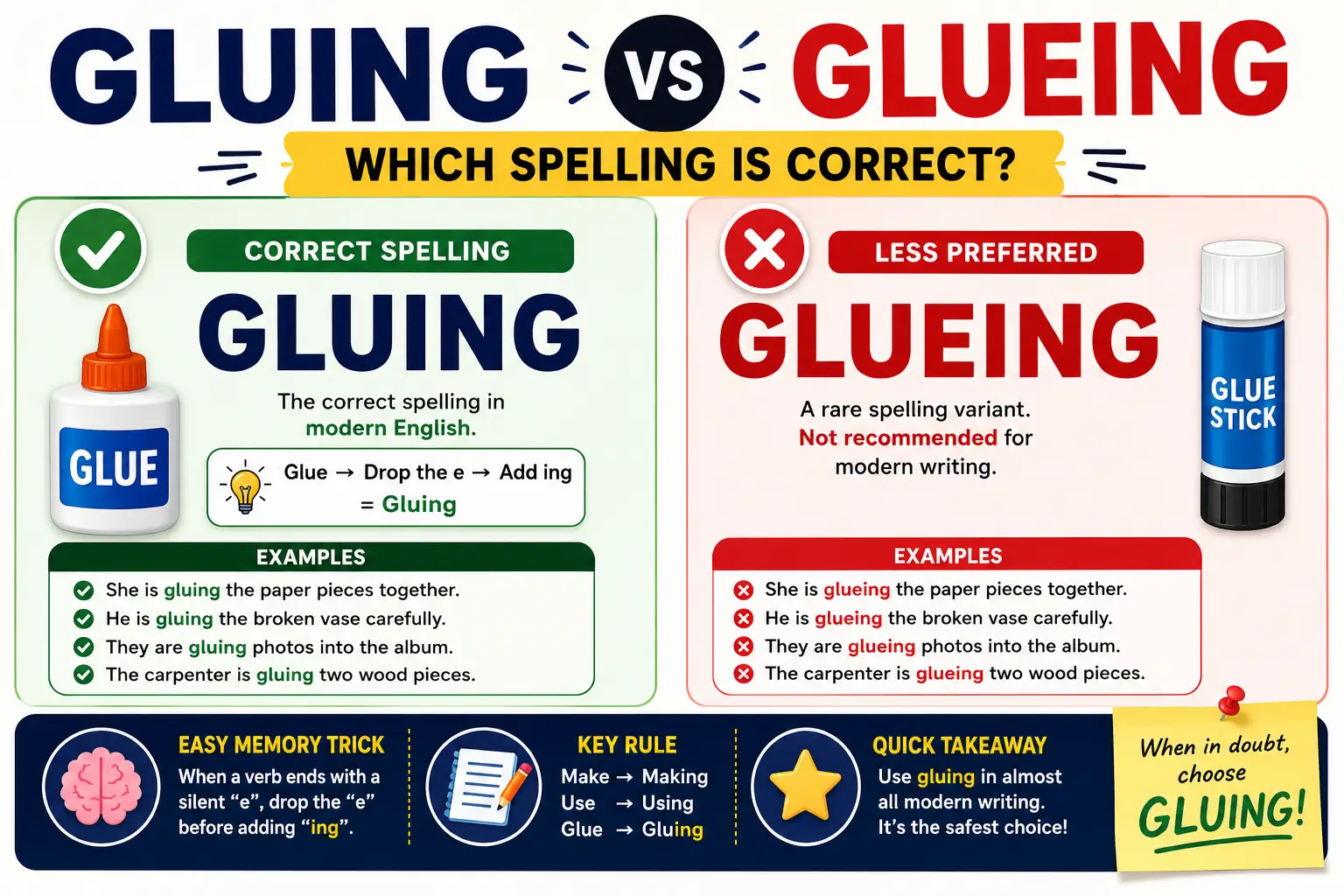
Gluing vs Glueing: Which Spelling Is Correct?

June 20, 2026 by David Sterling
Gluing vs Glueing comparison showing the correct spelling with examples and grammar rules

Many people wonder whether they should write gluing or glueing. The two spellings look similar, so it is easy to see why they cause confusion. The good news is that the answer is simple. In modern English, gluing is the preferred spelling. Most teachers, editors, and style guides recommend using it. The spelling glueing may … Read more

Categories Confusing Words Leave a comment

Ladder vs Latter: Meaning, Difference, and Easy Examples

June 20, 2026 by David Sterling
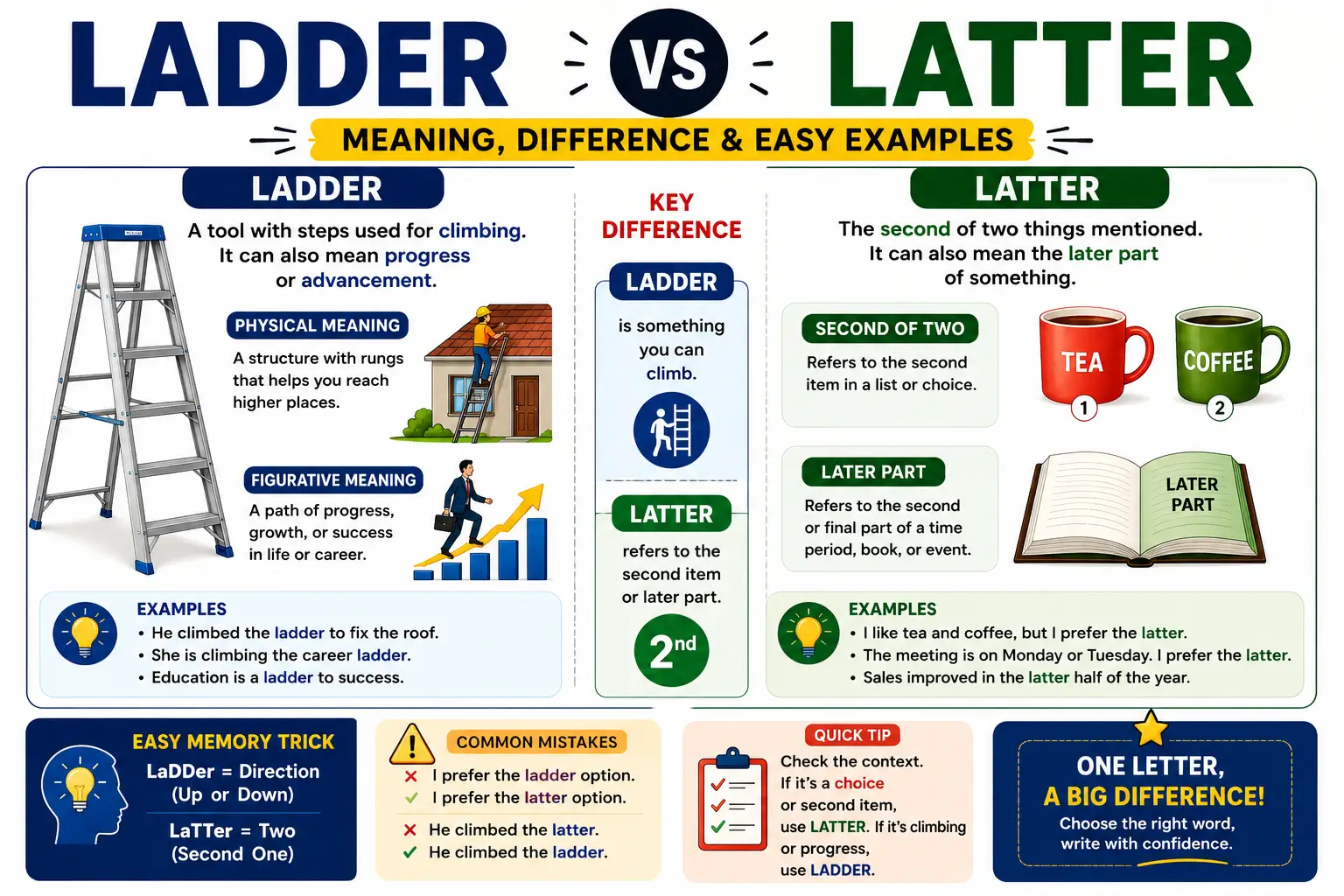
Ladder vs Latter meaning difference examples infographic showing how to use ladder and latter correctly in English

Ladder vs Latter: Meaning, Difference, and Easy Examples Many people confuse ladder and latter because the words look and sound similar. However, they have different meanings and are used in different situations. A ladder is a tool with steps that helps people climb up or down. The word can also describe progress, such as moving … Read more

Categories Confusing Words, Meaning in Text Leave a comment

Border vs. Boarder: Meaning, Difference, and Examples

June 19, 2026 by David Sterling
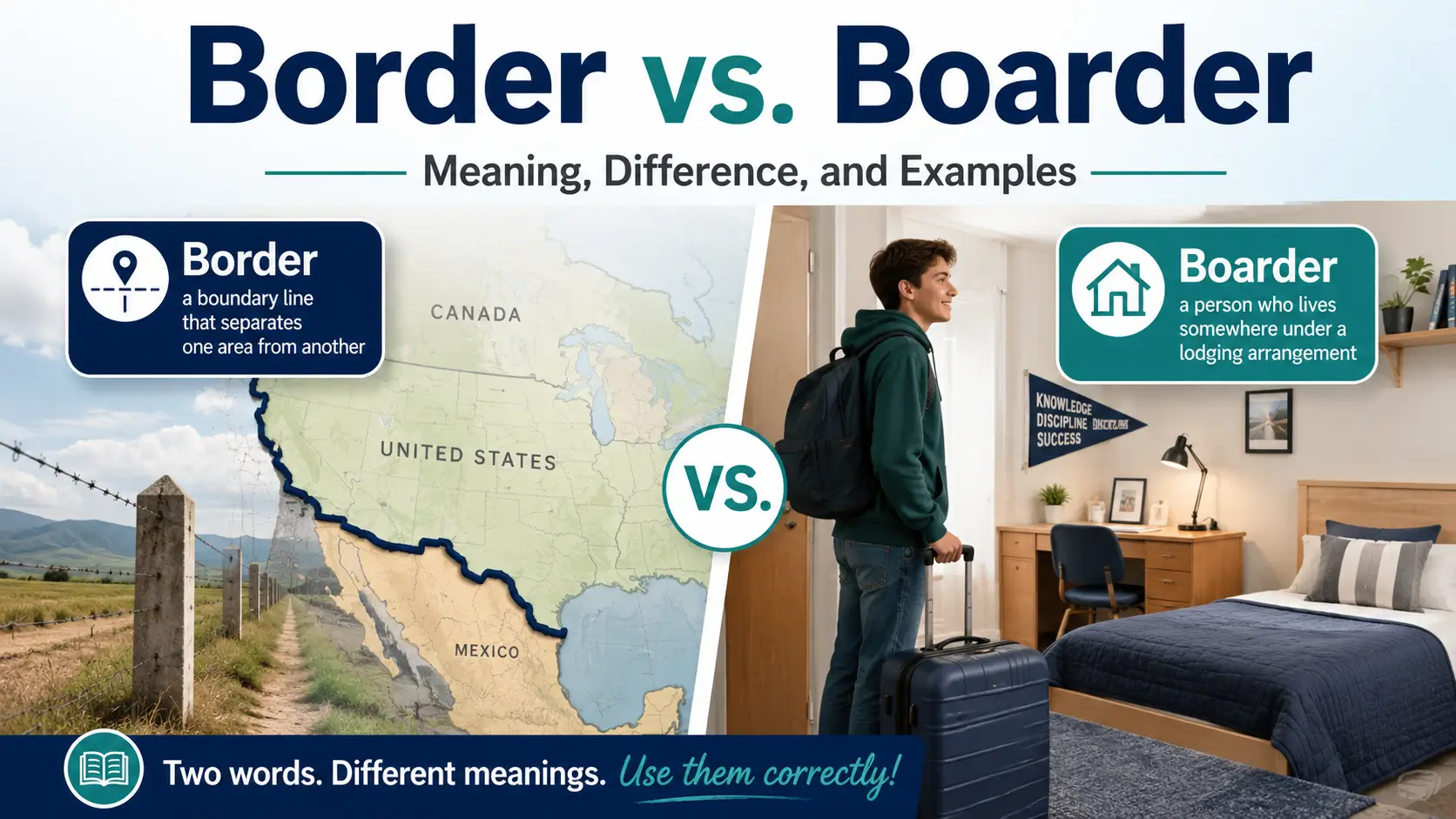
Border vs Boarder comparison showing border as a boundary line and boarder as a person living under a lodging arrangement.

Understanding border vs. boarder is important because these words look similar and often sound alike, yet they have completely different uses. The border meaning relates to a boundary, dividing line, outer edge, or limit, such as the line between two countries or the frame around a picture.The boarder meaning, however, refers to a person who … Read more

Categories Uncategorized Leave a comment

Rather or Whether: Meaning, Difference, and Correct Usage

June 19, 2026 by David Sterling
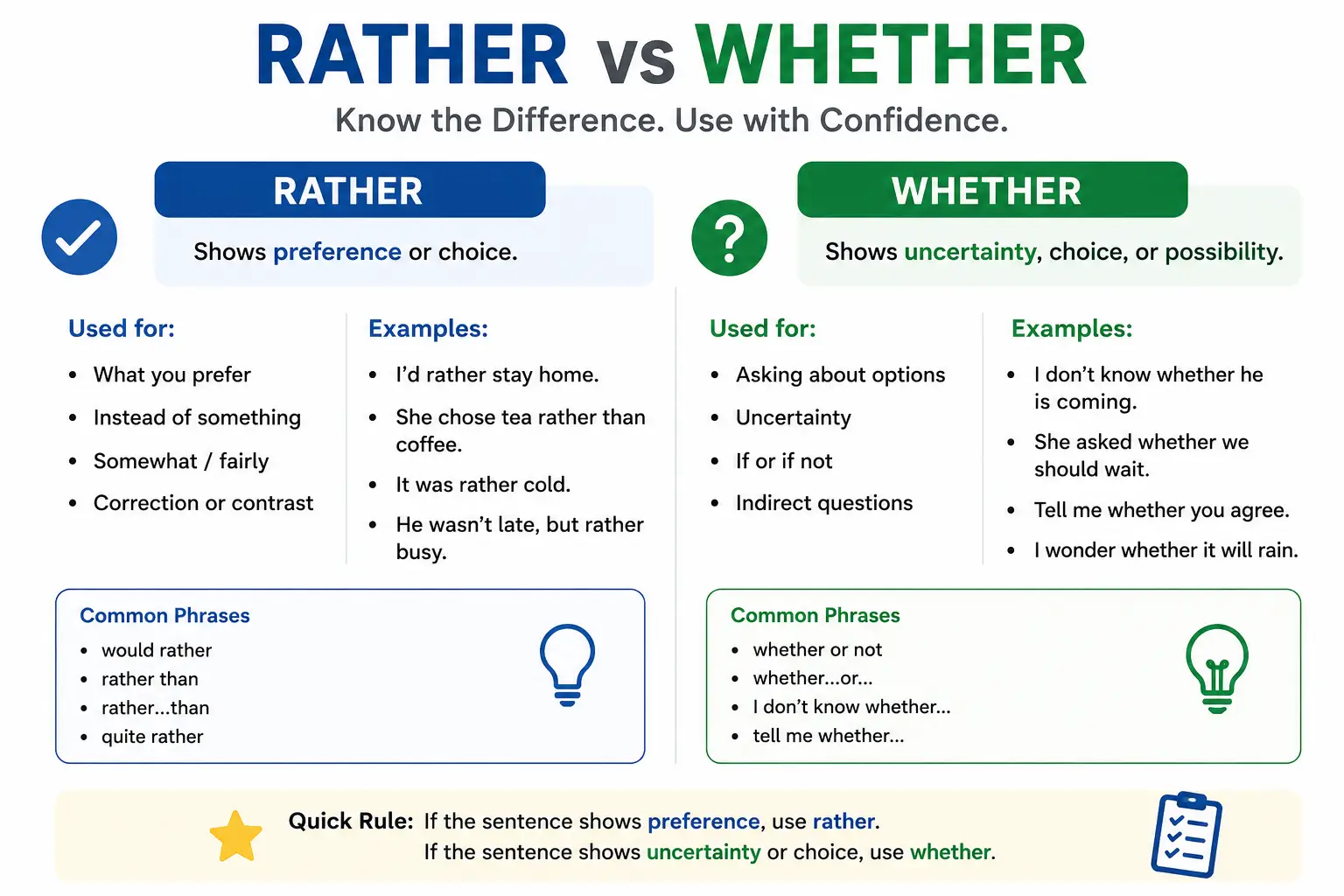
Simple infographic explaining the difference between rather and whether with meanings, examples, common phrases, and quick grammar rules.

When writing, many people have paused and wondered which word to use: rather or whether. You are not alone because these words look different, but they appear in similar sentences, which can confuse learners. If you feel confused, the short answer is this: rather shows preference or choice, while whether shows doubt, options, or uncertainty. … Read more

Categories Confusing Words Leave a comment

Laid Out vs. Layed Out: Correct Spelling, Meaning, and Examples

June 19, 2026 by David Sterling
Laid Out vs Layed Out spelling comparison showing laid out as the correct phrase and layed out as the incorrect spelling.

When comparing laid out vs. layed out, only one form is correct in standard English: laid out. The phrase comes from the verb lay, which means to place, arrange, or position something. Because lay is an irregular verb, its past tense and past participle are both laid, not layed. This spelling often causes confusion because … Read more

Categories Confusing Words Leave a comment

Infront or In Front: Correct Spelling, Meaning, and Examples

June 18, 2026 by David Sterling
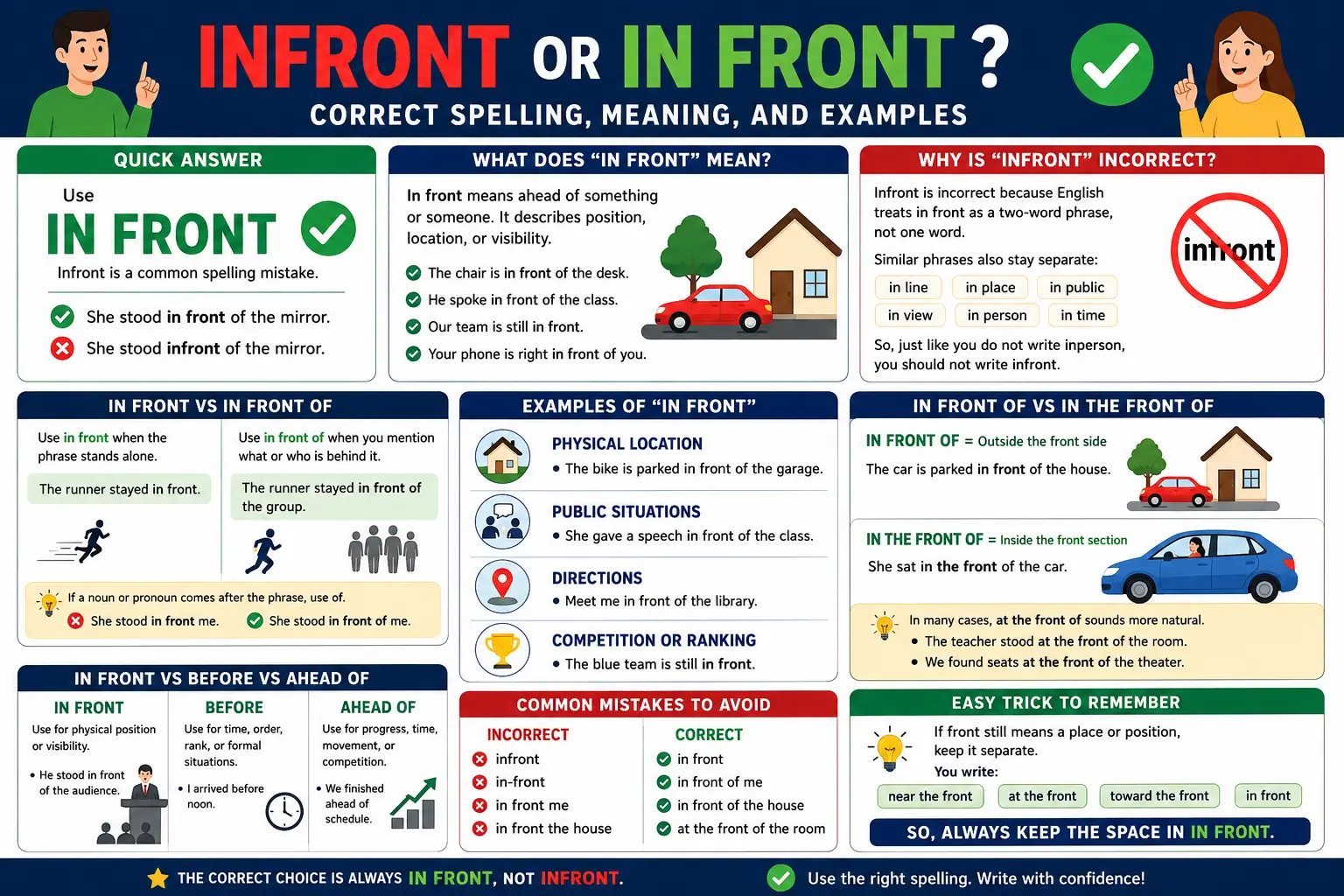
Infront or in front correct spelling, meaning, and examples explained

Many writers feel confused about infront or in front because both forms look similar when typed quickly. However, the correct spelling is in front as two separate words, while infront is a common misspelling. This phrase is used to show position, location, or something placed ahead of another person, object, or place. For example, “The … Read more

Categories Uncategorized Leave a comment

Color or Colour: Correct Spelling, Difference, and Examples

June 18, 2026 by David Sterling
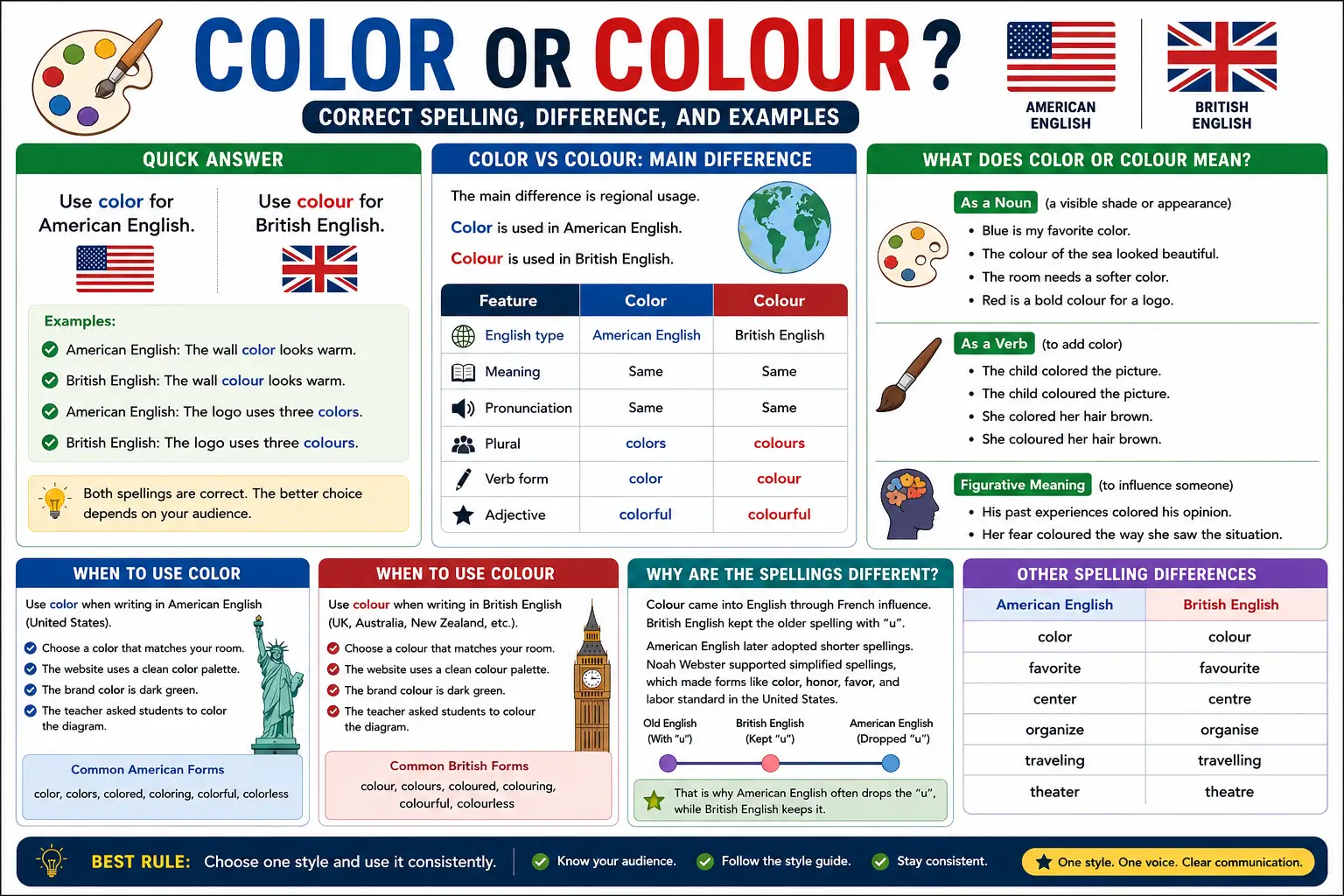
Color or colour correct spelling difference and examples

Many writers wonder whether they should use color or colour. The answer depends on the type of English you are using. Color is the standard spelling in American English, while colour is the standard spelling in British English. Both words have the same meaning. They refer to a visible shade, hue, or appearance created by … Read more

Categories Confusing Words Leave a comment

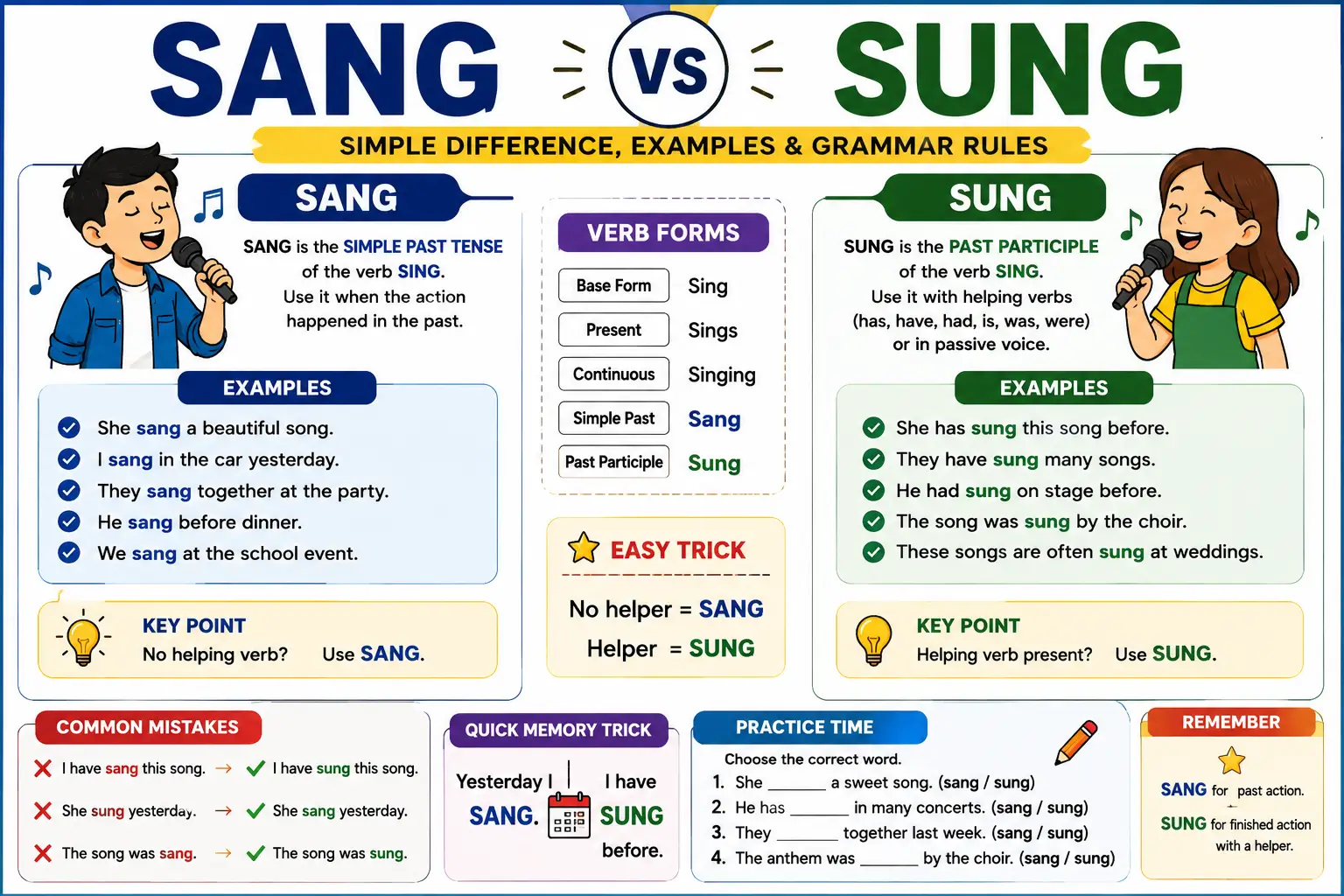
Sang vs Sung: Meaning, Difference, and Easy Examples

June 18, 2026 by David Sterling
Sang vs sung infographic explaining the difference between sang and sung with grammar rules, examples, and memory tricks

Many people confuse sang and sung because both words come from the verb sing. However, the difference is simple. Sang is the simple past tense of sing. Sung is the past participle of sing. For example: ✔ She sang yesterday. ✔ She has sung before. A simple trick can help: No helping verb = sang … Read more

Categories Uncategorized Leave a comment

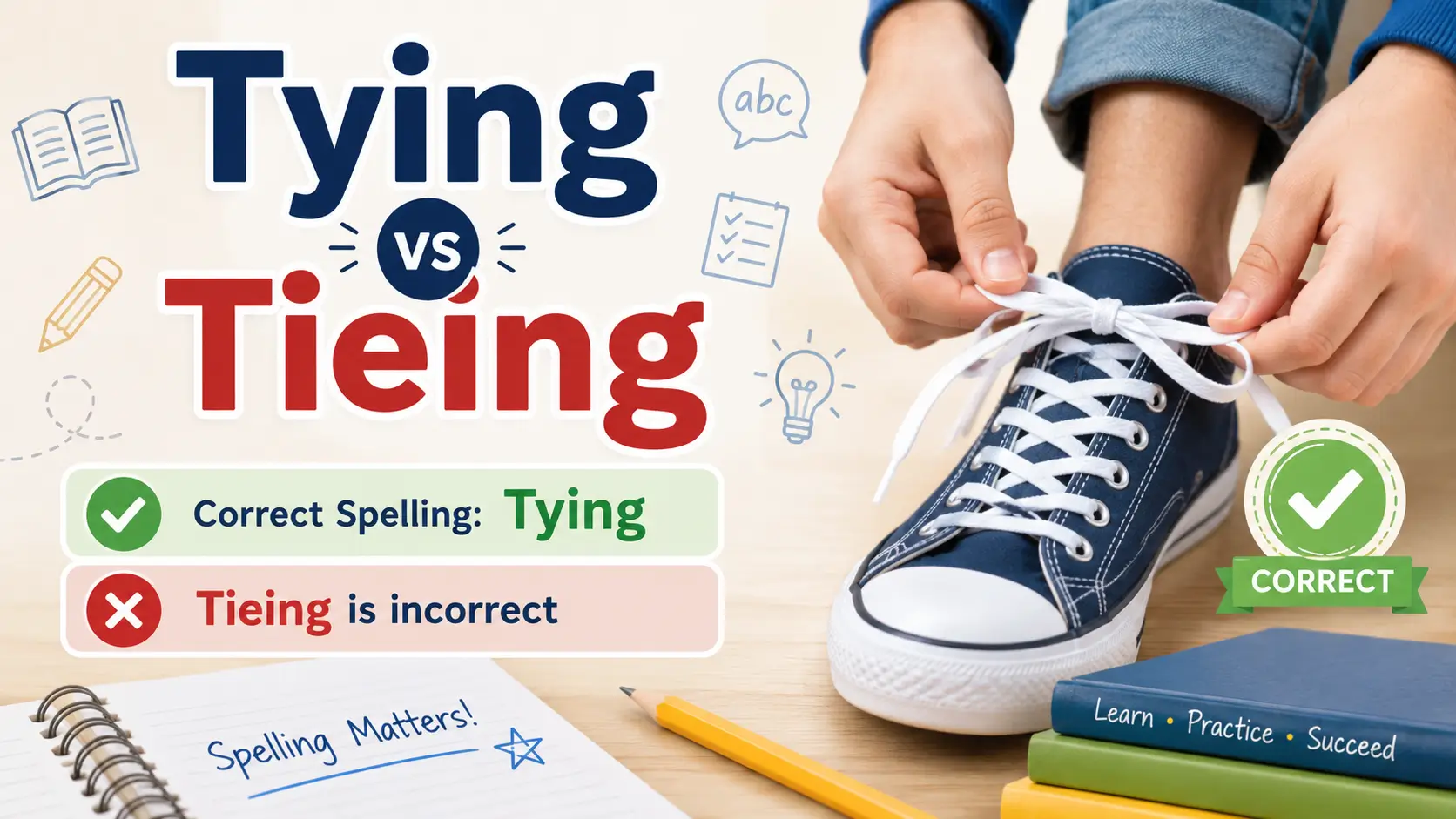
Tying vs Tieing: Which Spelling Is Correct?

June 18, 2026June 17, 2026 by David Sterling
Tying vs tieing spelling comparison showing that tying is the correct spelling with a person tying shoelaces.

Do you get confused between tying vs tieing? You are not alone. Many students, writers, and even native English speakers make this mistake every day. The good news is that the correct answer is simple: tying is correct and tieing is always wrong. The word tying comes from the verb tie. It means fastening, connecting, … Read more

Categories Confusing Words Leave a comment
Older posts
Newer posts
← Previous Page1 … Page11 Page12 Page13 Page14 Next →

Recent Posts

  • Elicit vs. Illicit: What’s the Difference?
  • Could vs Can: What’s the Difference and When Should You Use Each?
  • Neither vs Either: What’s the Difference and When Should You Use Each?
  • Fewer vs. Less: What’s the Difference and When Should You Use Each?
  • Accept vs. Except: What’s the Difference and When Should You Use Each?

Recent Comments

No comments to show.
© 2026 Grammar Spark • Built with GeneratePress