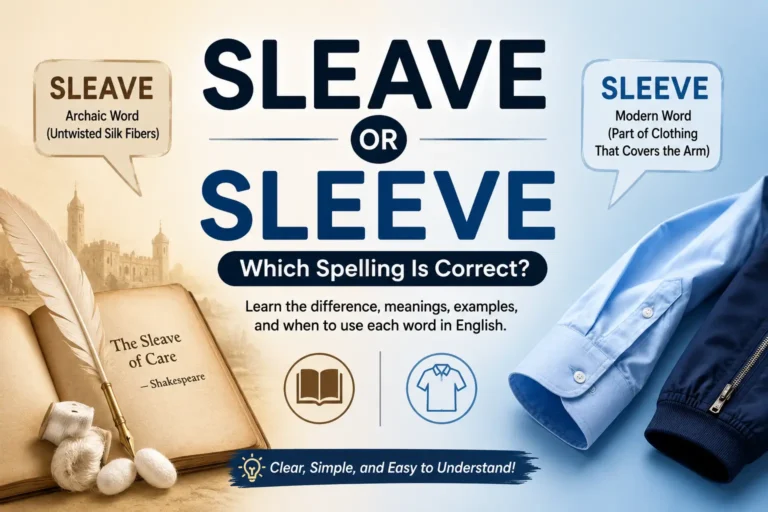
Sleave or Sleeve: Which Spelling Is Correct?

Sleave or sleeve spelling comparison showing the correct word for clothing and the historical meaning of sleave

Sleave or sleeve can be confusing because both are real English words, but they don’t have the same meaning. If you’re talking about the part of a shirt, jacket, or dress that covers the arm, the correct spelling is sleeve. Sleave is a rare historical textile term linked to silk fibers and older English. For … Read more

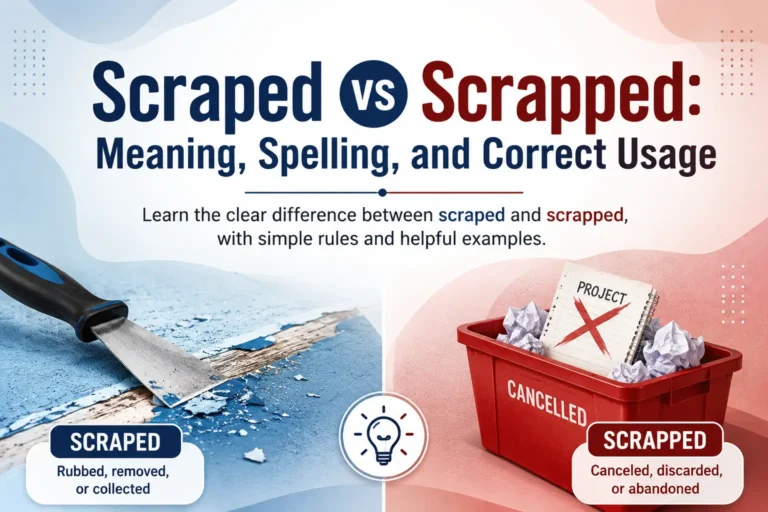
Scraped vs Scrapped: Meaning, Spelling, and Correct Usage

Scraped vs Scrapped: meaning, spelling, and correct usage

The scraped vs scrapped difference is simple: scraped means rubbed, removed, or collected, while scrapped means canceled or discarded. Use scraped for a physical action, removal, collection, or data collection. You may scrape paint, ice, or online information. Use scrapped for a project, plan, canceled project, or canceled plan involving cancellation, abandonment, or rejection. For … Read more

In Route vs En Route: Meaning, Correct Usage, and Examples

In route vs en route meaning and correct usage with a bus on the road

The in route vs en route difference is simple: use en route for “on the way,” while in-route may appear only in technical labels or route systems. En-route is the standard expression for movement toward a destination. It fits travel language, formal writing, professional English, and everyday English. For example, write, “The driver is en … Read more

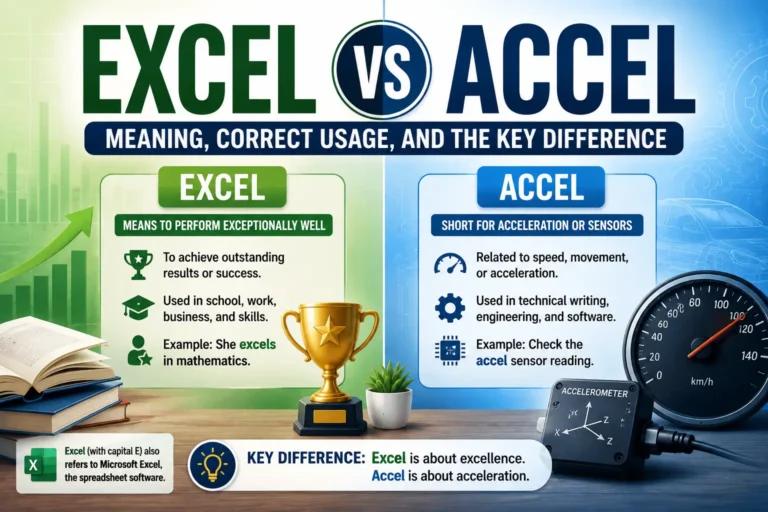
Excel vs Accel : Meaning, Correct Usage, and the Key Difference

Excel vs Accel meaning and correct usage

The excel vs accel question is often simple: excel means to perform well, while accel is technical shorthand linked to acceleration or sensors. Use excel for success in school, work, business, education, or a career. It is a standard English verb, as in, “She excels in science.” Use Excel with a capital letter only for … Read more

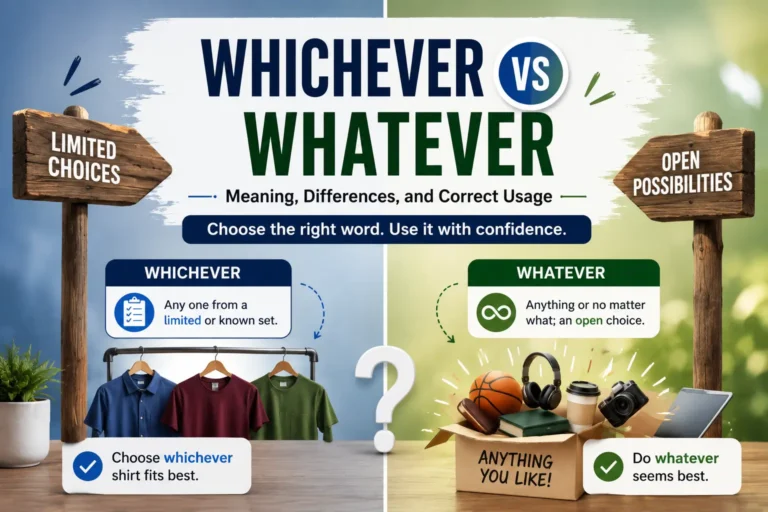
Whichever vs Whatever: Meaning, Differences, and Correct Usage

Whichever vs whatever meaning and difference with examples

The whichever vs whatever difference depends on whether your choice comes from a known group or from an open range without clear limits. The meaning of whichever points to one item from specific options, known options, or other limited options. Both words express choice, but they describe a different kind of choice. For example, “Choose … Read more

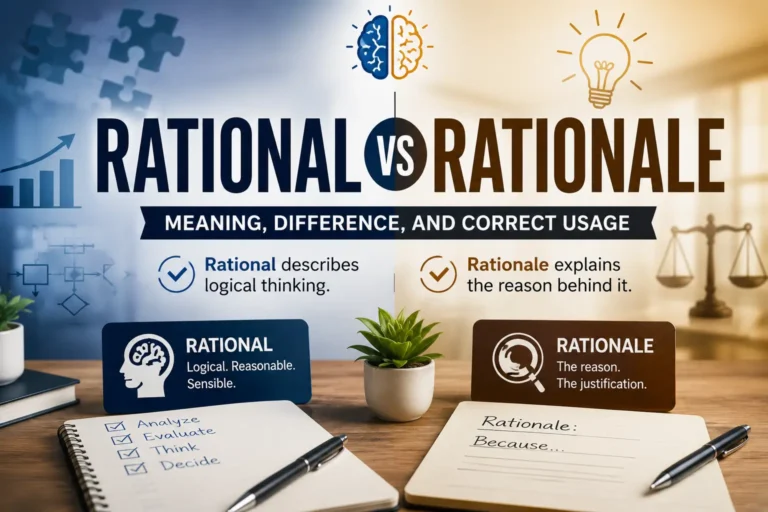
Rational vs Rationale: Meaning, Difference, and Correct Usage

Rational vs rationale meaning and difference with examples

The rational vs rationale difference becomes clear when you know that one describes logical thinking while the other names the reason behind it. Rational is an adjective for a sensible decision, clear idea, logical plan, or reasoned behavior. Rationale is a noun for the underlying reason, reasoning, or justification behind an action, belief, or choice. … Read more

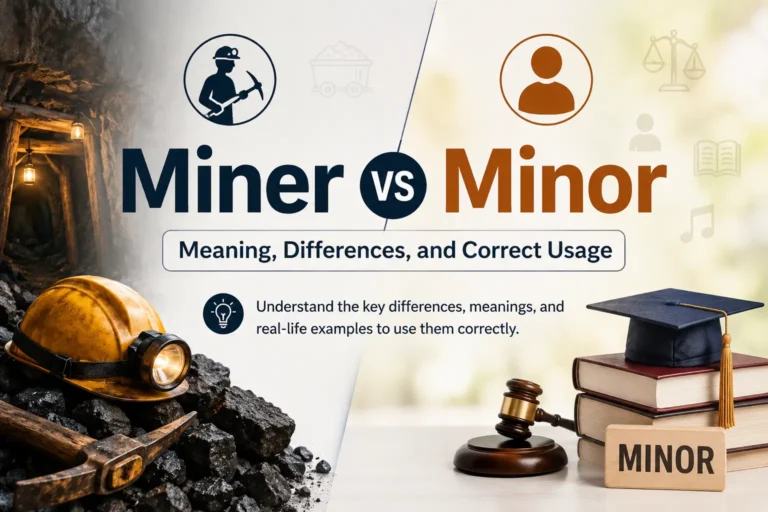
Miner vs Minor: Meaning, Differences, and Correct Usage

Miner vs Minor meaning and differences with examples

The miner vs minor difference is easy to understand: a miner works in a mine, while a minor is young or describes something less serious in context. These homophones have an almost identical sound, yet both words have entirely different definitions, usage, and implications. A miner is a person or mining worker who works in … Read more

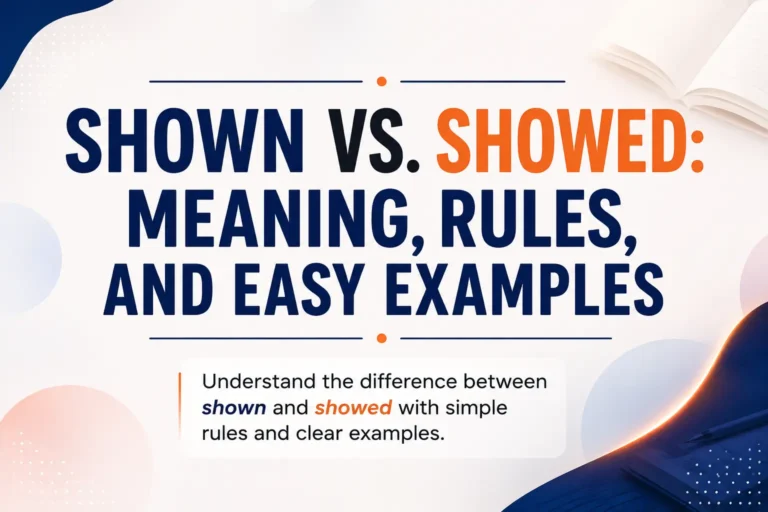
Shown vs. Showed: Meaning, Rules, and Easy Examples

Shown vs showed: meaning, grammar rules, and easy examples

The shown vs showed choice becomes simple when you check whether the sentence needs a finished past action or a helping verb before the main form. The verb show has two past forms. Showed is the simple past and can stand alone: She showed me her notebook. Shown is the past participle, so it normally … Read more

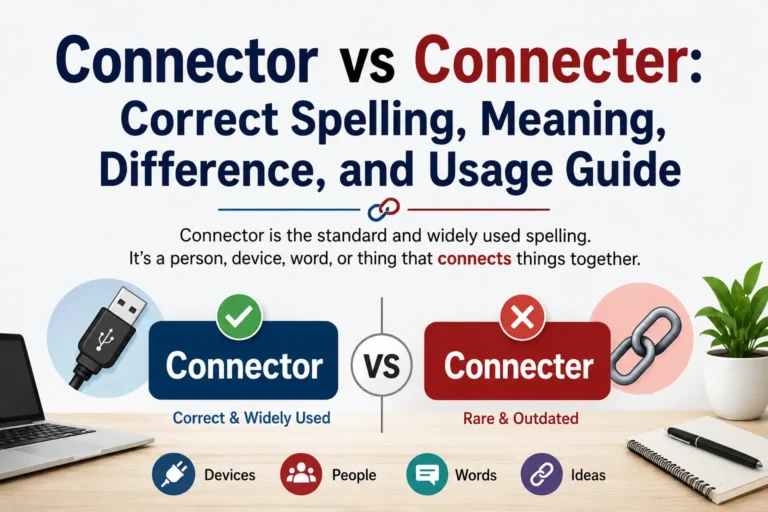
Connecter vs Connector: Correct Spelling, Meaning, Difference, and Usage Guide

Connector vs Connecter: correct spelling and difference in English

The main difference between connecter vs connector is that connector is the standard and widely accepted spelling in modern English, while connecter is a rare and outdated alternative. Both words come from the verb connect, but connector is the form most people use in professional writing, technical communication, and everyday language. A connector can be … Read more