Every Day vs. Everyday: What’s the Difference and How Do You Use Them Correctly?
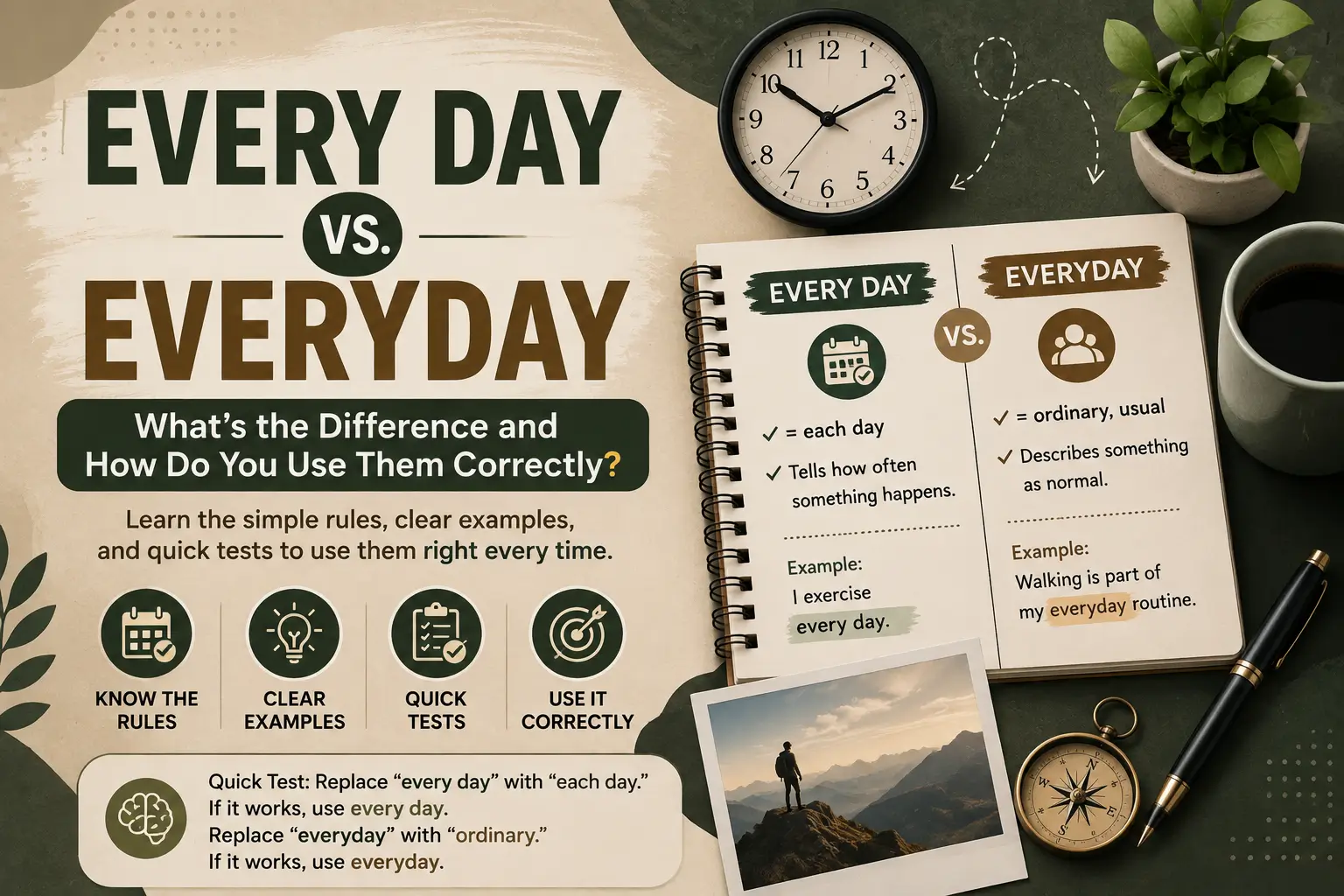
Every Day vs. Everyday grammar guide showing meanings, examples, and a quick test for choosing the correct form.

Every day vs everyday is a common English usage question because the two forms look and sound almost identical. However, they have different meanings and grammatical roles. Every day means each day and tells you how often something happens, as in “I practice English every day.” Everyday is an adjective that means ordinary, usual, or … Read more
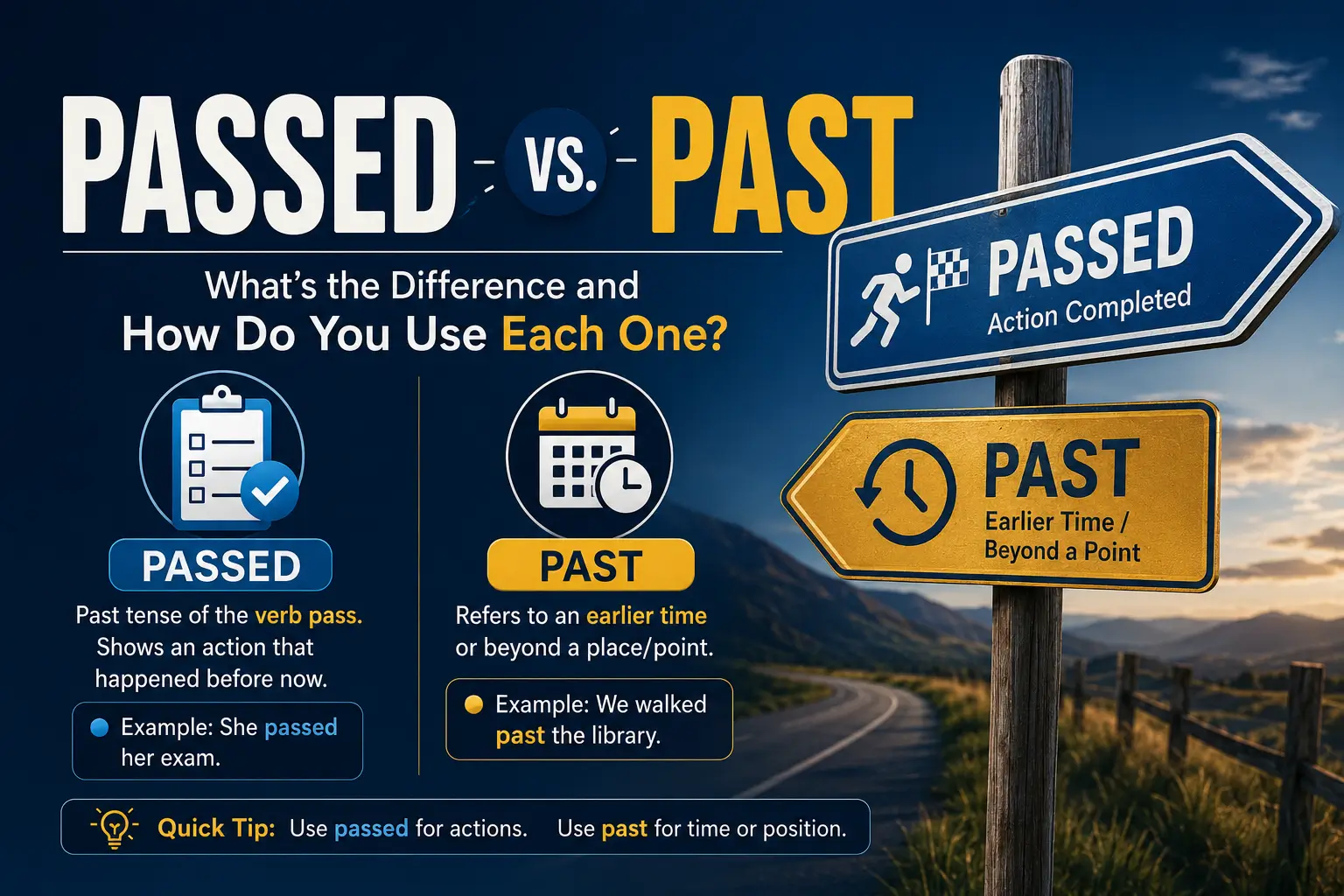

Passed vs. Past: What’s the Difference and How Do You Use Each One?

Passed vs. Past grammar guide showing that passed describes an action, while past refers to earlier time or movement beyond a point.

Confused about passed vs past? You’re not alone. These words sound alike, but they have different meanings and uses. Passed is the past tense of the verb pass, while past can describe an earlier time or something beyond a place or point. For example, you passed your test, but you walked past the school. Learning … Read more

Bare vs. Bear: What’s the Difference? Meaning, Examples, and Easy Ways to Remember

Bare vs. bear difference explained with bare feet and a brown bear

If you’re confused by bare vs bear, you’re not alone. These words are homophones, so they sound the same but have different meanings and spellings. Bare usually means uncovered, exposed, or minimal, while bear can mean a large animal or a verb meaning to carry, support, or tolerate something. For example, you can have bare … Read more

Council vs. Counsel: What’s the Difference? Meaning, Examples, and Easy Ways to Remember

Council vs. Counsel difference showing a council group and a lawyer giving legal advice

The council vs counsel difference is easy to understand once you focus on meaning, spelling, and context. Both words have the same pronunciation, but they are different homophones. Council is a noun for a group or organized body, such as a city council or student council. In contrast, counsel can mean advice or guidance, a … Read more

Weather vs. Whether: What’s the Difference and How Do You Use Them Correctly?

Weather vs Whether difference shown with changing weather and two choices

If you’ve ever paused while writing a sentence because you weren’t sure whether to use weather vs. whether, you’re not alone. These two words are easy to confuse because they sound the same in most American English accents. However, their meanings and grammatical roles are completely different. Weather refers to conditions in the atmosphere, such … Read more

Desert vs. Dessert: What’s the Difference? Meaning, Pronunciation, Examples, and Memory Tips

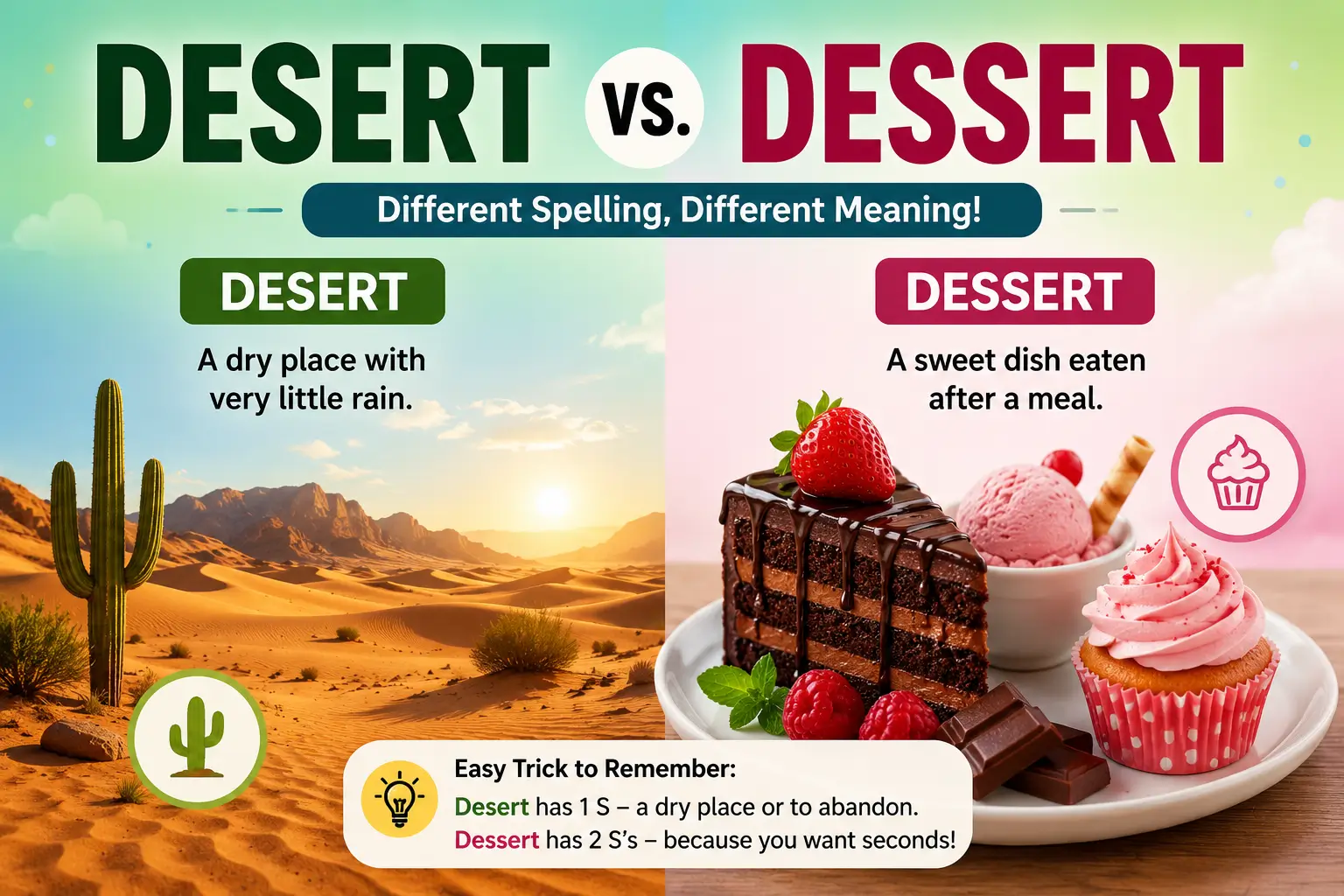
Desert vs. Dessert difference with a dry desert and sweet desserts

If you’re confused about desert vs. dessert, you’re not alone. These two words look almost identical, and in some uses, they sound exactly the same. However, their meanings are completely different. Desert can mean a dry geographical region or, as a verb, to abandon someone or something. Dessert is a sweet food served after a … Read more

Emigrate vs. Immigrate: What’s the Difference? Meaning, Examples, and Easy Ways to Remember

Emigrate vs. Immigrate difference showing leaving one country and arriving in another

The choice between emigrate vs immigrate depends on the point of view in your sentence. Emigrate focuses on leaving, while immigrate focuses on arriving. Use emigrate when you talk about the point of departure. Use immigrate when you focus on the point of arrival. Meanwhile, migrate is a broader word for the process of moving … Read more

Led vs. Lead: What’s the Difference? Meaning, Pronunciation, Grammar, and Examples

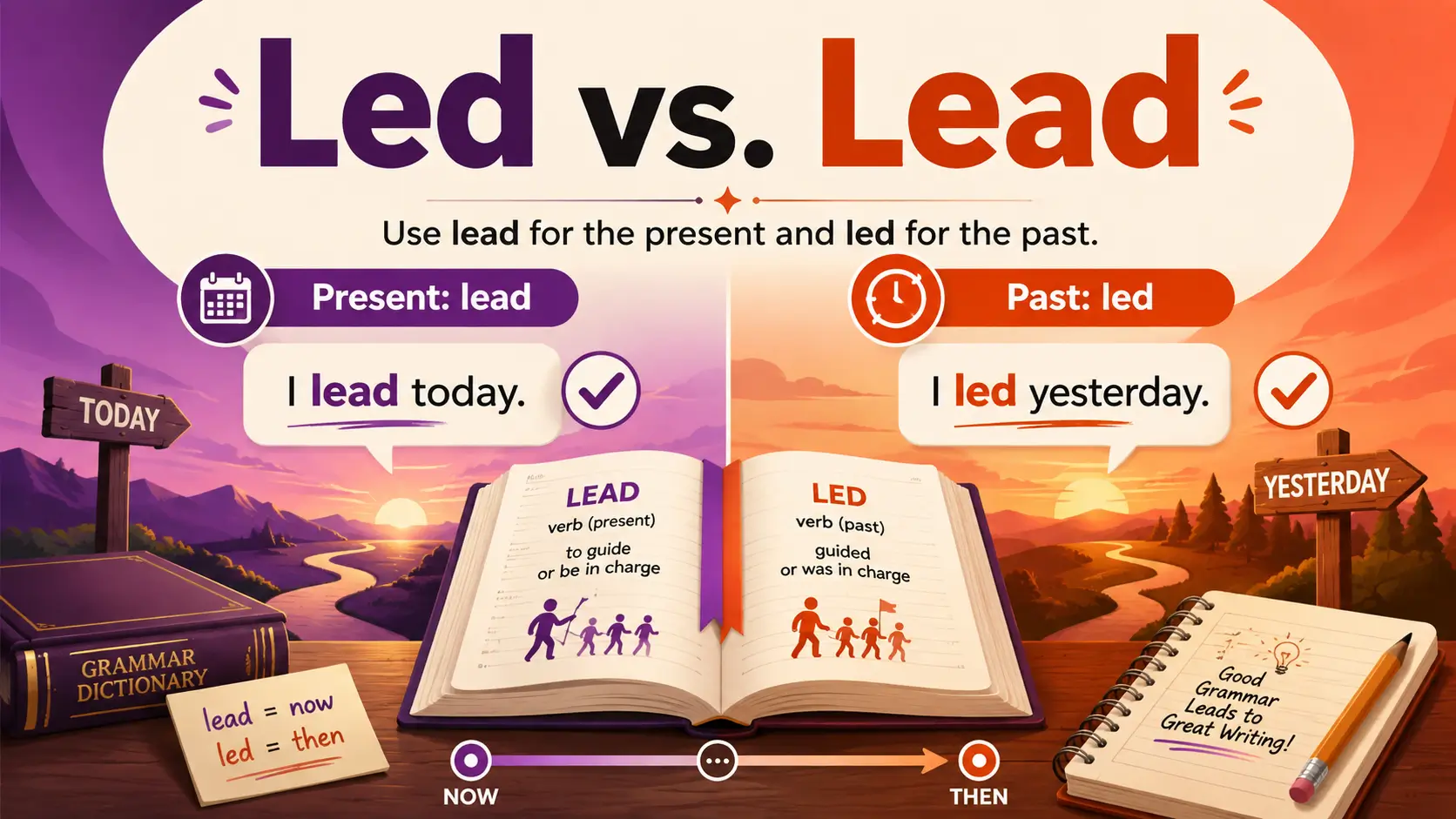
Led vs. Lead difference explained with present and past tense examples

If you’ve ever wondered whether to write led vs. lead, you’re not alone. These two words are easy to confuse because lead has two different pronunciations, while led is the past tense of the verb lead. The correct choice depends on the word’s meaning, grammatical role, and tense. Quick answer: Use lead when you mean … Read more

Serpent vs Snake: What’s the Difference in Meaning and Usage?

Serpent vs snake comparison showing a real snake beside a mythical serpent in an ancient jungle temple

Serpent vs snake describes the difference between two words that can name the same reptile but often carry different tones. A snake is the standard term used in modern English, science, conversation, and wildlife writing. A serpent usually sounds more literary, symbolic, religious, or mythical. The key difference is therefore not biological. Instead, it comes … Read more

Concave vs. Convex: Meaning, Differences, Examples, and Easy Ways to Remember

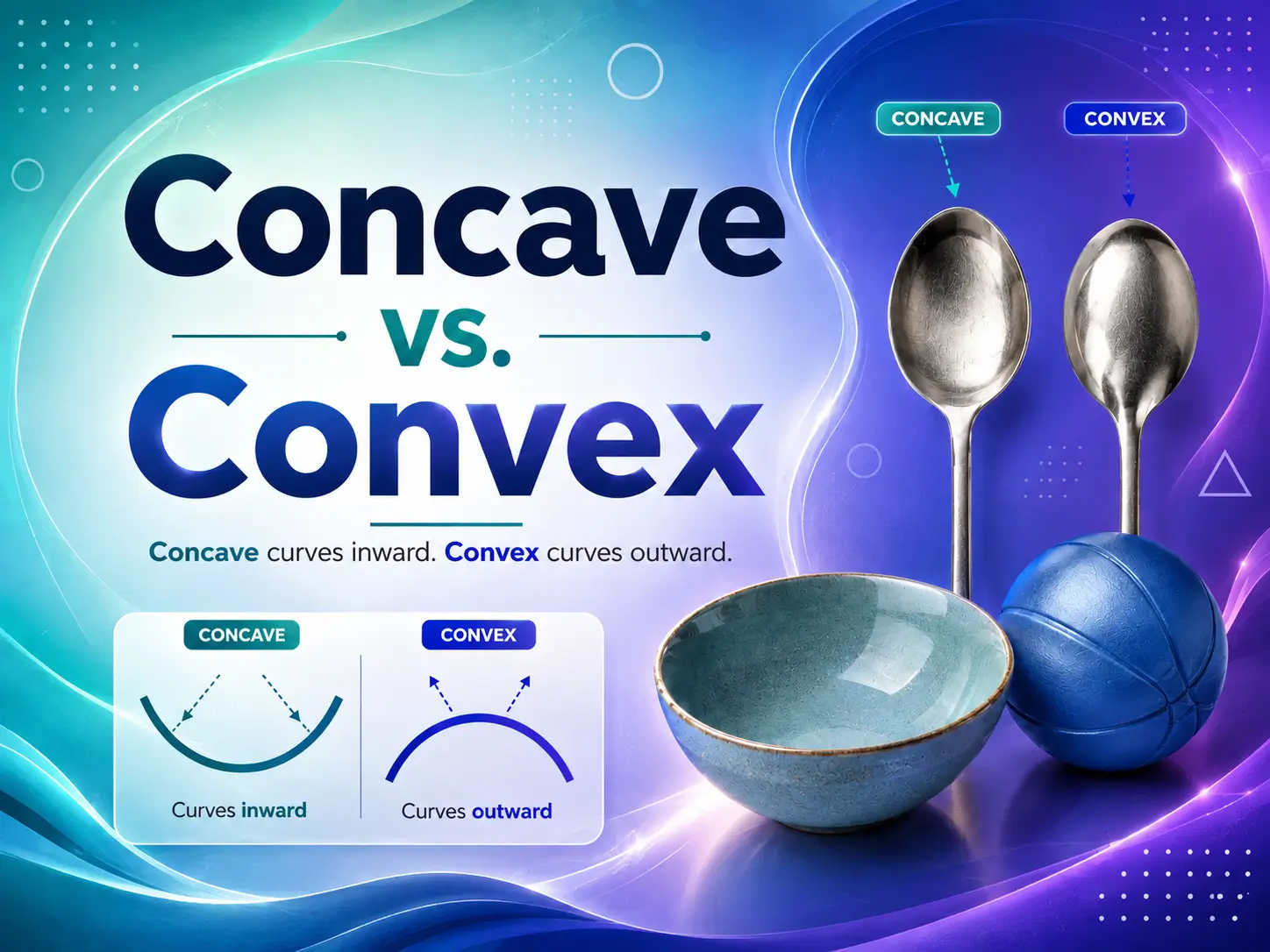
Concave vs. convex comparison showing inward and outward curves with a spoon, bowl, and ball

Concave vs. convex describes two opposite ways that a line, shape, or surface can curve. A concave surface bends inward, like the inside of a bowl. A convex surface curves outward, like the outside of a ball. These words appear in geometry, optics, engineering, medicine, product design, and everyday American English. You may use them … Read more