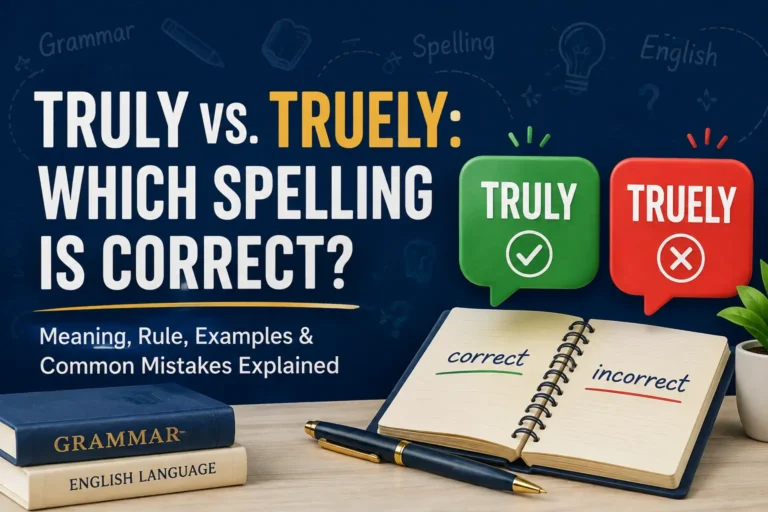
Truly vs. Truely: Which Spelling Is Correct? (Meaning, Rule, Examples & Common Mistakes)

Truly vs. Truely spelling comparison showing Truly as correct and Truely as incorrect

If you’re searching for Truely vs Truly, the answer is simple: truly is the only correct spelling. In standard English, the word true drops the final e before adding -ly. I once caught myself writing truely in an important email, and proofreading helped me remember the correct spelling rule. Understanding this small grammar rule makes … Read more

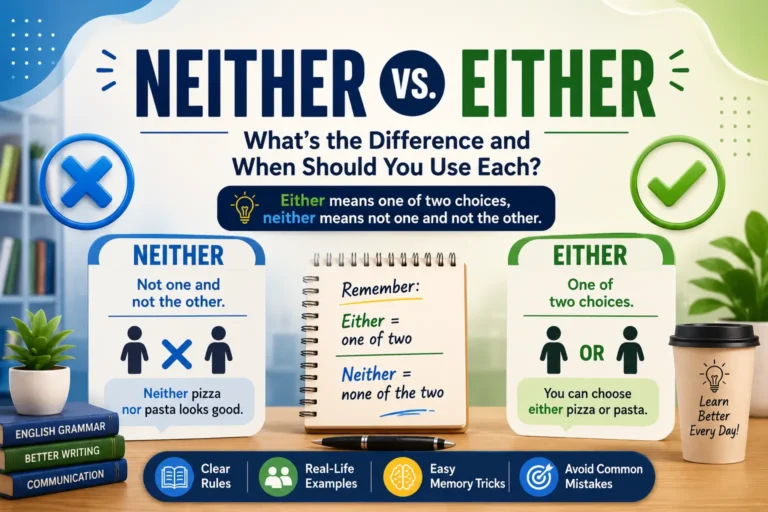
Neither vs Either: What’s the Difference and When Should You Use Each?

Neither vs Either grammar guide explaining the difference between neither and either with simple examples, grammar rules, and subject-verb agreement.

Neither vs either is one of the most searched English grammar topics because these two words look similar but have opposite meanings. Knowing when to use either, neither, either…or, and neither…nor will help you write more clearly, avoid common grammar mistakes, and speak confidently in everyday American English. If you’ve ever wondered which word is … Read more

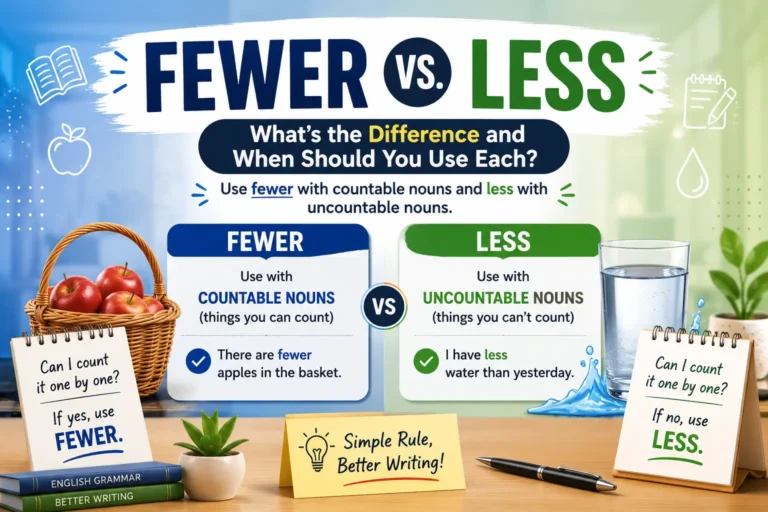
Fewer vs. Less: What’s the Difference and When Should You Use Each?

Fewer vs Less grammar guide explaining the difference between fewer and less with countable and uncountable noun examples.

Fewer vs. less is one of the most common grammar questions in American English, and understanding the difference can instantly improve your writing. The simple rule is this: use fewer with countable nouns and less with uncountable nouns. However, English also has a few common exceptions involving money, time, distance, and measurements, which often confuse … Read more

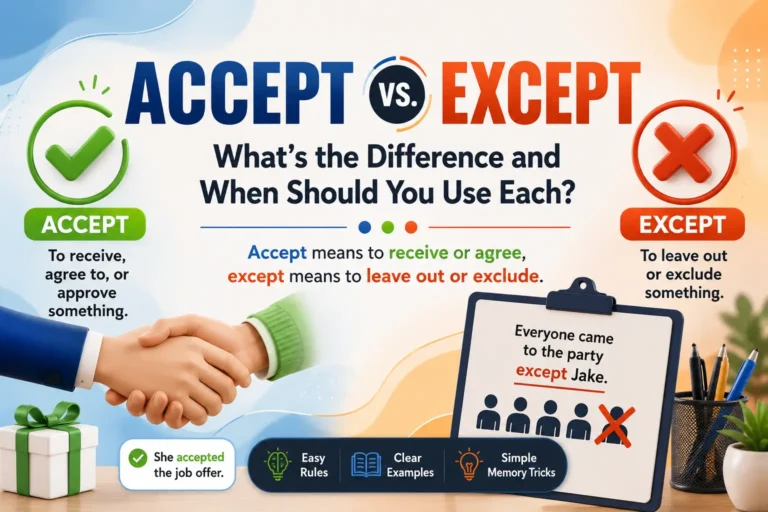
Accept vs. Except: What’s the Difference and When Should You Use Each?

Accept vs Except grammar guide explaining the difference between accept and except with simple examples and easy grammar rules.

Accept vs. except is one of the most common grammar questions because these two words sound similar but have completely different meanings. If you’ve ever wondered whether you should write accept or except, you’re in the right place. The simple answer is that accept means to receive or agree, while except means to leave out … Read more

To vs. Too: What’s the Difference? (Complete Grammar Guide with Examples)

To vs Too difference explained with simple grammar rules and examples

To vs Too is one of the most searched and commonly confused topics in English grammar because these words sound the same but have different meanings and uses. If you’ve ever wondered whether to write to, too, or even two, you’re not alone. The good news is that the difference is simple once you understand … Read more

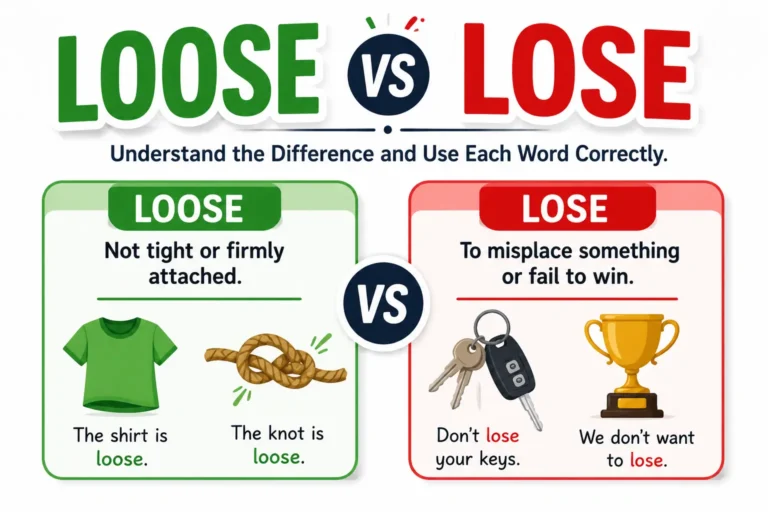
Loose vs. Lose: What’s the Difference and How Do You Use Them Correctly?

Loose vs lose difference with meanings and simple examples

Loose vs lose is one of the most searched grammar questions because these two words look almost identical but have completely different meanings. If you’ve ever wondered whether to write “lose your keys” or “loose your keys,” you’re not alone. The simple answer is this: lose is a verb that means to misplace something or … Read more

What Is the Difference Between Climactic vs Climatic?

Climactic vs Climatic Climactic vs Climatic – Difference, Meaning, Examples

The key difference in climactic vs climatic is simple: climactic refers to a climax, while climatic clearly describes climate and climate patterns. Each is an adjective, and dictionaries may mark it as adj. These two adjectives sound similar and are easy to confuse, yet their meaning is completely different. Use climactic for a final, decisive, … Read more

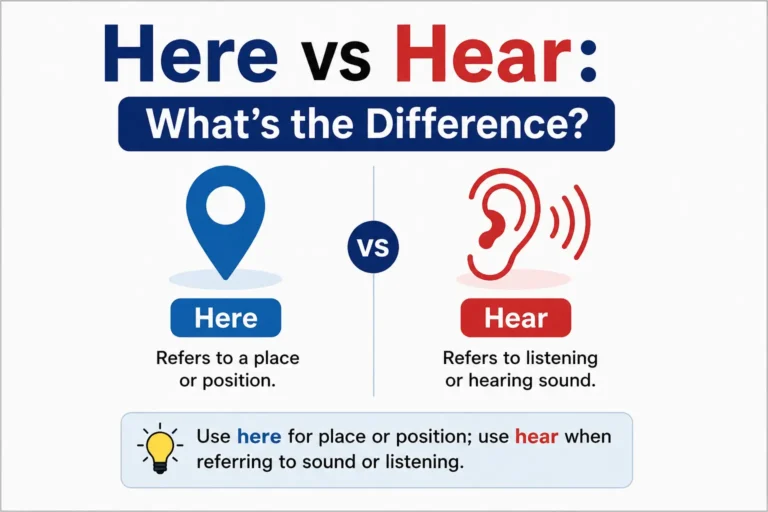
Difference Between Here and Hear

Here vs Hear explained with meanings, differences, grammar rules, memory trick, and easy examples.

Here and Hear are common homophones with the same pronunciation, but their spelling, meaning, and sentence role are completely different. The English language has many confusing elements and quirks, yet this homophone pair becomes easy when you check the context. They sound the same, but their different spellings and different meanings change word usage. Hear … Read more

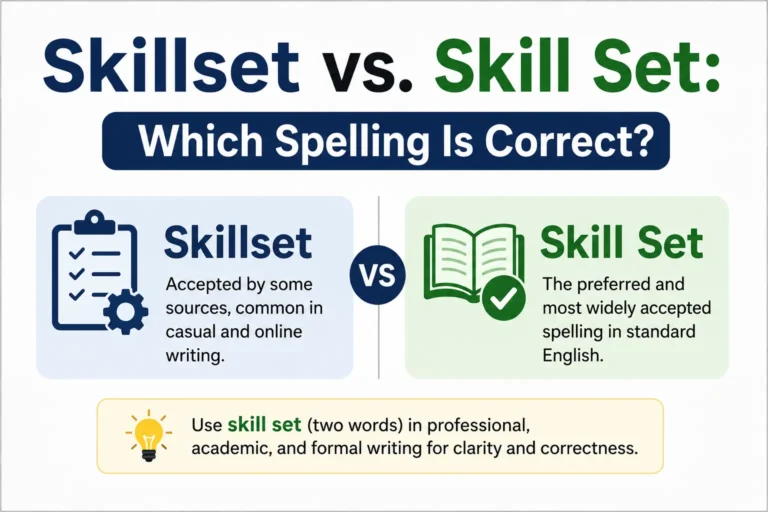
Skillset vs. Skill Set: Which Spelling Is Correct?

Skillset vs Skill Set explained with correct spelling, grammar rules, examples, and writing tips for professional English.

The key difference in skillset vs skill set is spelling: skill set is the safest and most widely accepted form in standard American English. It refers to a group of abilities that a person uses for a job, activity, or purpose. The one-word form, skillset, also appears in modern writing. Some dictionaries recognize it as … Read more

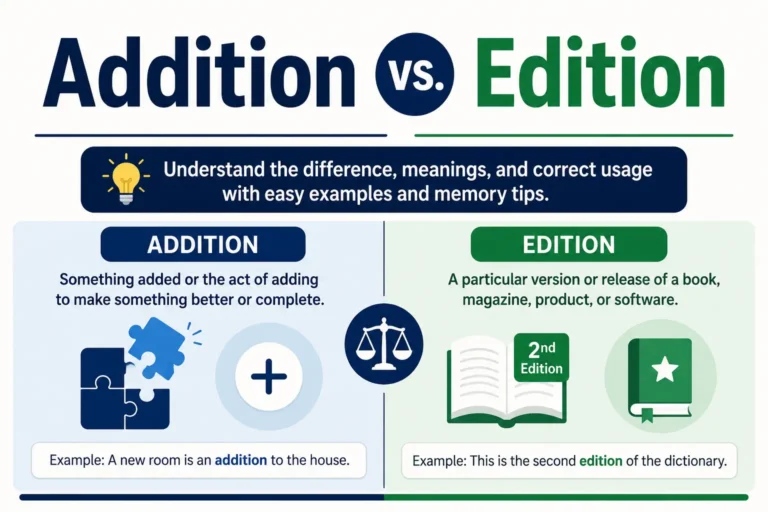
Addition vs. Edition The Difference Between Edition and Addition

Addition vs. Edition: Differences, Meanings & Examples

Addition vs. Edition becomes simple when you remember that an addition is something added, while an edition is a published version of a work. A publisher may release a revised edition of a specific book after correcting, updating, or reorganizing its content. The new publication may also use a different layout, design, or format. Use … Read more