Whichever vs Whatever: What’s the Difference and When Should You Use Each?

Whichever vs Whatever comparison showing limited choices versus open choices.

Confused about whichever vs whatever? You’re not alone. These two words look and sound similar, and both can express a choice or possibility. However, they aren’t interchangeable in every sentence. The key difference is whether you’re choosing from a specific or limited set of options or talking about an open and unrestricted choice. Use whichever … Read more

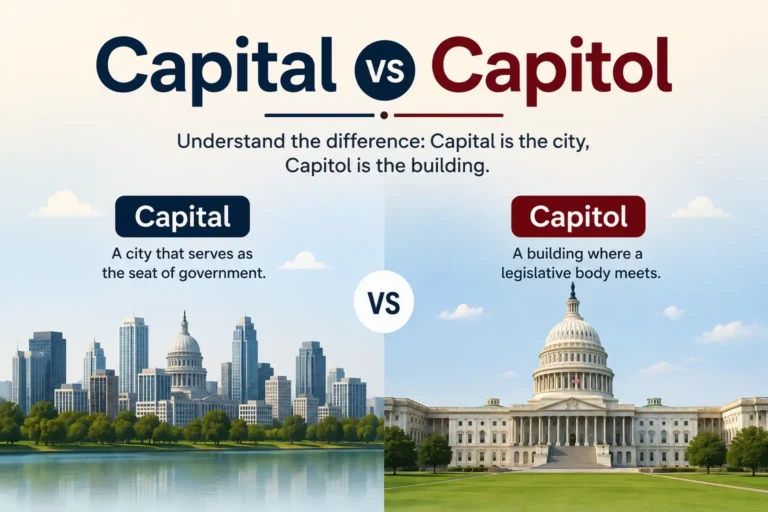
Capital vs. Capitol: What’s the Difference? Meaning, Examples, and Easy Ways to Remember

Capital vs Capitol comparison showing that capital means a government city, while capitol means a legislative building.

If you’ve ever wondered about capital vs. capitol, you’re not alone. These two words look and sound almost identical, but they have different meanings and uses. The confusion often appears when people write about government, politics, cities, or buildings. The easiest rule is this: capital can mean a city that serves as a seat of … Read more

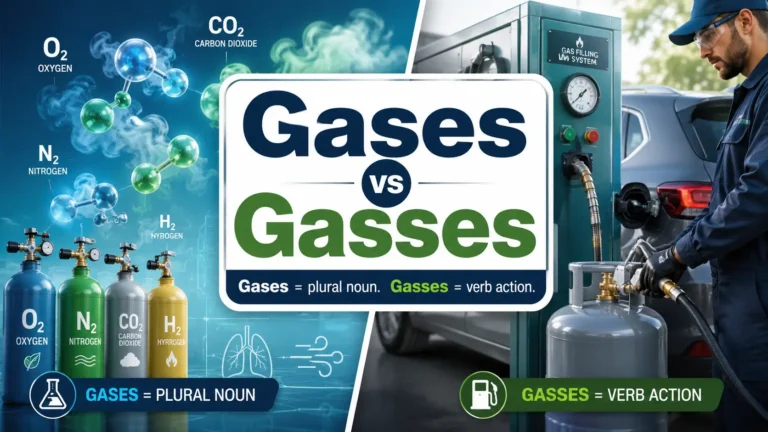
Gases vs. Gasses: Which Spelling Is Correct?

Gases vs gasses comparison showing gases as a plural noun and gasses as a verb action

Gases vs. gasses is a common spelling question because both words exist, but they usually perform different jobs. Gases is the standard plural of gas, while gasses is commonly used as the third-person singular form of the verb gas. For example, oxygen and nitrogen are gases. However, a machine gasses a sealed container when it … Read more

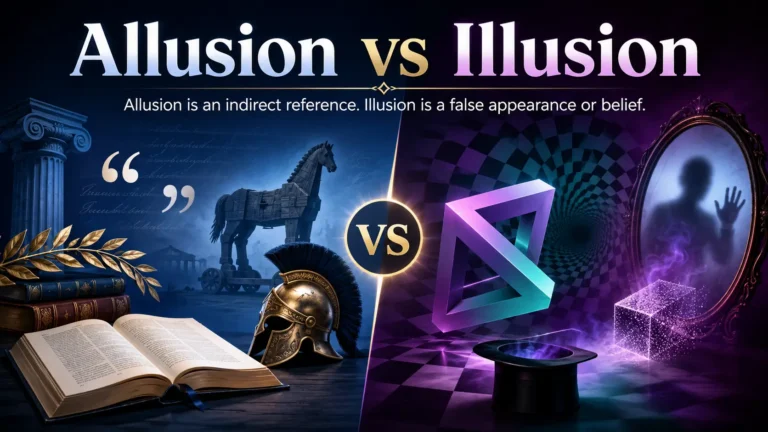
Allusion vs. Illusion: Meaning, Differences, and Examples

Allusion vs illusion comparison showing literary references and false appearances

Allusion vs. illusion explains the difference between an indirect reference and a false appearance or belief. An allusion points to a familiar person, story, event, or idea. In contrast, an illusion makes something seem real or true when it isn’t. Understanding this difference helps you choose the correct word in schoolwork, professional writing, emails, and … Read more

Perspective vs. Prospective: Meanings, Differences, and Correct Usage

Perspective vs prospective comparison showing viewpoint and future possibilities

Perspective vs prospective explains the difference between a viewpoint and something connected with the future. Perspective is usually a noun that means a way of seeing, understanding, or judging something. Prospective is usually an adjective that describes a person, event, or result that may exist or happen later. For example, from my perspective means “from … Read more

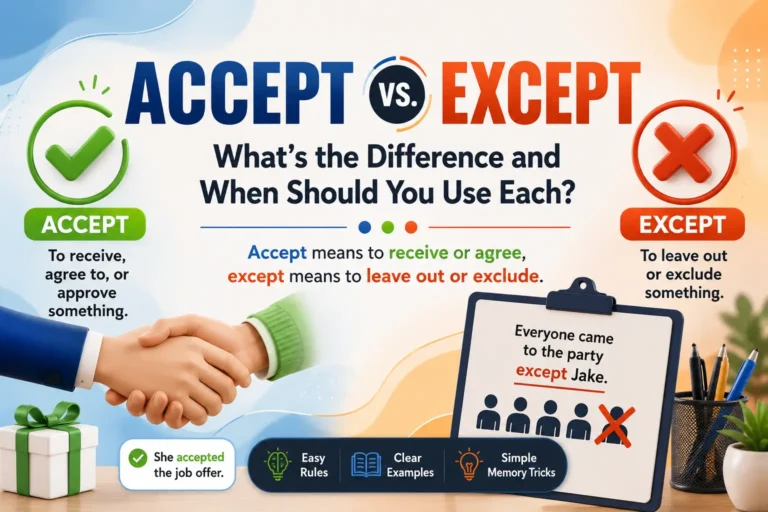
Accept vs. Except: What’s the Difference and When Should You Use Each?

Accept vs Except grammar guide explaining the difference between accept and except with simple examples and easy grammar rules.

Accept vs. except is one of the most common grammar questions because these two words sound similar but have completely different meanings. If you’ve ever wondered whether you should write accept or except, you’re in the right place. The simple answer is that accept means to receive or agree, while except means to leave out … Read more

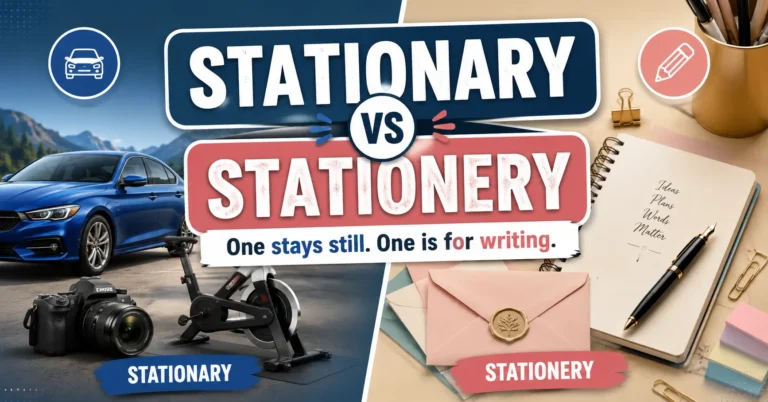
Stationary vs Stationery: What’s the Difference and When Should You Use Each?

Stationary vs Stationery difference explained with a stationary car and writing stationery supplies

Stationary vs stationery is one of the most commonly confused word pairs in English grammar. Although both words sound the same, they have different meanings, spellings, and uses. Knowing the difference helps you avoid common writing mistakes in emails, school assignments, business documents, and everyday communication. If you’re unsure whether to write stationary or stationery, … Read more

Complement vs. Compliment: What’s the Difference? Meaning, Examples, and Easy Ways to Remember

Complement vs Compliment difference explained with examples of completing something versus giving praise

Complement vs compliment is a common grammar confusion that happens because these two English words have similar pronunciation but completely different meanings. The easiest way to remember the difference is this: complement means something that completes, matches, or improves another thing, while compliment means praise, admiration, or a positive remark. Knowing the difference between these … Read more

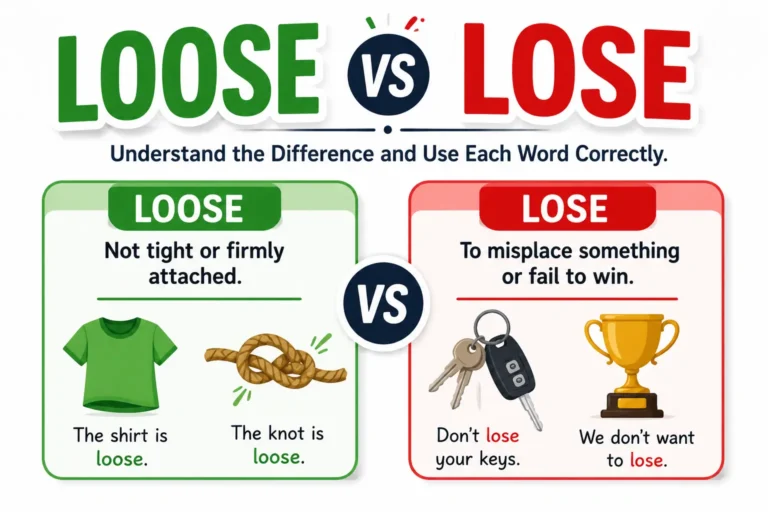
Loose vs. Lose: What’s the Difference and How Do You Use Them Correctly?

Loose vs lose difference with meanings and simple examples

Loose vs lose is one of the most searched grammar questions because these two words look almost identical but have completely different meanings. If you’ve ever wondered whether to write “lose your keys” or “loose your keys,” you’re not alone. The simple answer is this: lose is a verb that means to misplace something or … Read more

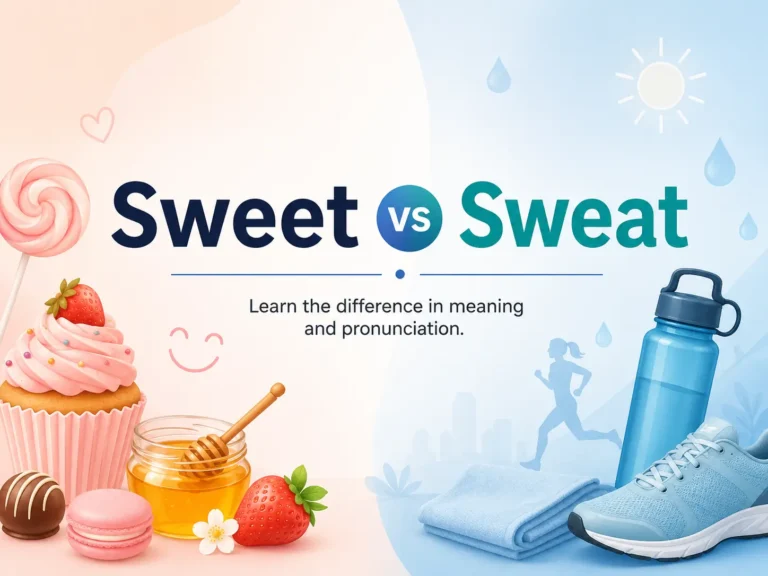
Sweet vs Sweat Differences

Sweet vs Sweat difference in meaning and pronunciation

Sweet vs sweat becomes easy to understand when you check the meaning first: sweet describes taste or kindness, while sweat means body moisture. These common English words look alike because of their spelling, yet their pronunciation, grammar role, and everyday use are completely different. Many learners mix them up in writing and speaking. A spell-check … Read more