Defuse vs Diffuse: What’s the Difference and How to Use Each Word Correctly?

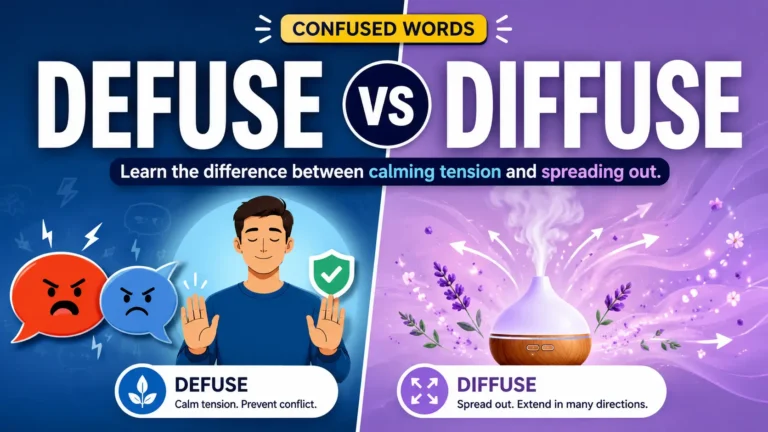
Defuse vs diffuse meaning and difference with examples

Defuse vs Diffuse is a common English word pair that often confuses learners because the two words look and sound similar but have very different meanings. Defuse means to reduce danger, tension, or conflict, while diffuse means to spread or scatter something over a wider area. Understanding this difference helps you use both words correctly … Read more

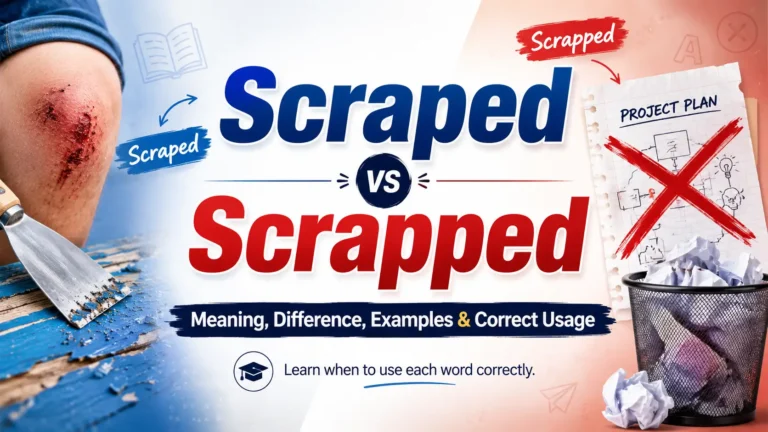
Scraped vs Scrapped: Meaning, Difference, Examples, and Correct Usage

Scraped vs scrapped meaning and difference with examples

Confused about scraped vs scrapped? You’re not alone. These two words look and sound similar, but they have different meanings and uses. Scraped comes from scrape and usually means rubbed against, removed from a surface, or collected, as in scraped data. Scrapped comes from scrap and usually means canceled, abandoned, rejected, or discarded, as in … Read more

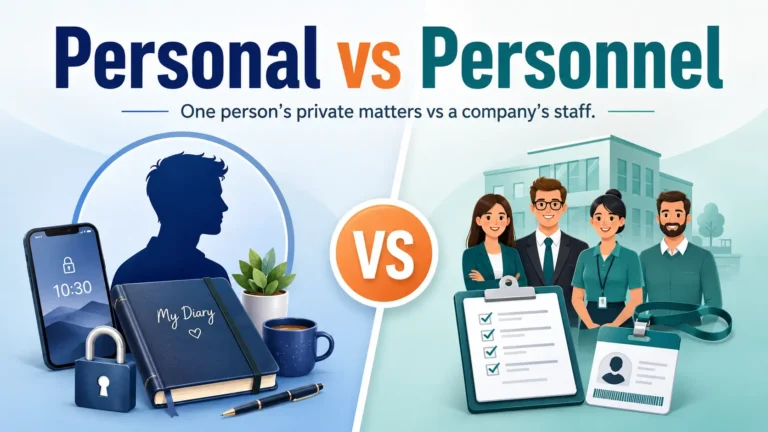
Personal vs Personnel: What’s the Difference? Meaning, Usage, and Examples

Personal vs Personnel difference with private matters and company staff

Personal vs Personnel can be confusing because the two words look and sound similar but have very different meanings. Personal is usually an adjective that describes something related to one person, their private life, belongings, opinions, goals, or interests. Personnel, on the other hand, is a noun that refers to employees, staff, or people who … Read more

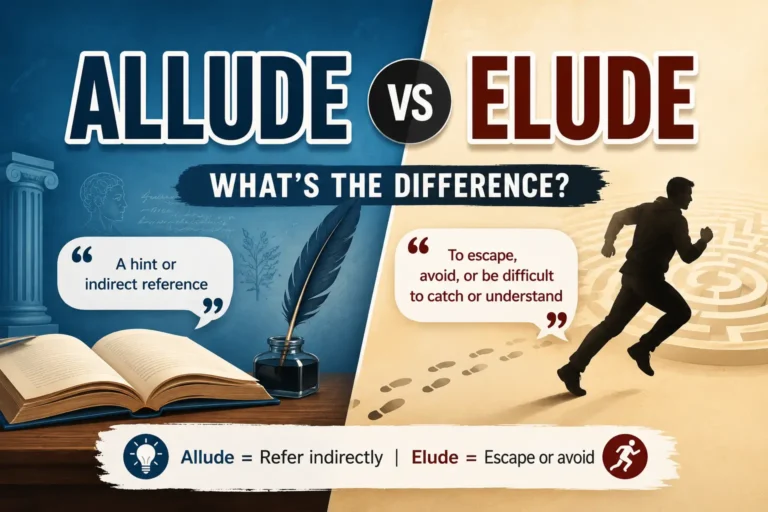
Allude vs Elude: What’s the Difference? Meaning, Examples, and Easy Ways to Remember

Allude vs Elude difference and correct usage

Allude vs. elude can be confusing because these words look and sound similar, but they have different meanings. Allude means to refer to something indirectly or hint at it, while elude means to escape, avoid, or remain difficult to understand or remember. For example, a writer may allude to a historical event without explaining it … Read more

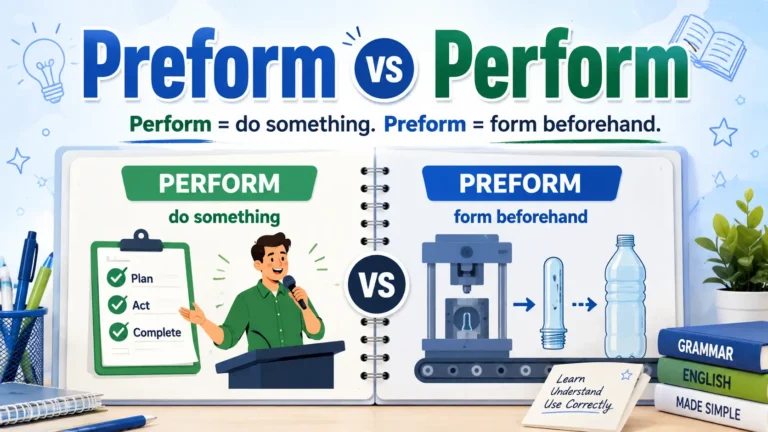
Preform vs Perform: What’s the Difference? Meaning, Usage, and Examples

Preform vs Perform difference and correct usage

Preform vs perform can be confusing because these two words look and sound similar, but they have completely different meanings. Perform means to do, carry out, or present something, while preform means to form or shape something in advance, usually in a technical or manufacturing context. For example, you perform a task, perform surgery, or … Read more

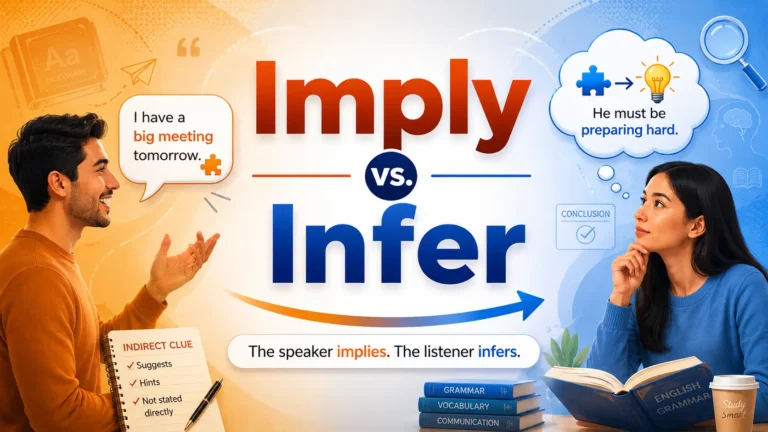
Imply vs. Infer: The Clear Difference, With Examples and Grammar Tips

Imply vs infer difference with speaker and listener example

Imply vs. Infer explains two related actions in communication. To imply means to suggest an idea without saying it directly. To infer means to reach a conclusion from clues or evidence. In simple terms, the speaker implies, while the listener infers. These words may describe the same conversation, but they show different points of view. … Read more

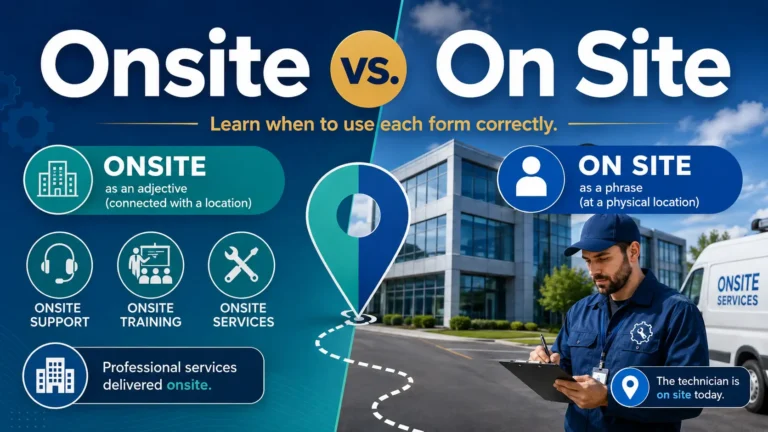
Onsite vs On Site: What’s the Difference and Which One Is Correct?

Onsite vs on site difference with meaning and examples

Understanding onsite vs on site becomes easier when you focus on meaning, grammar, and context. Onsite is often used as a compound adjective before a noun, such as onsite support or onsite training. On site is commonly used to show a location, as in “The technician is on site.” In American English, both forms appear … Read more

Allude vs. Elude: What’s the Difference? Meaning, Examples, and Easy Ways to Remember

Allude vs Elude difference with meanings and examples

Allude vs. elude can be confusing because these words look and sound similar, but they have different meanings. Allude means to refer to something indirectly or hint at it, while elude means to escape, avoid, or remain difficult to understand or remember. For example, a writer may allude to a historical event without explaining it … Read more

Bare vs. Bear: What’s the Difference? Meaning, Examples, and Easy Ways to Remember

Bare vs. bear difference explained with bare feet and a brown bear

If you’re confused by bare vs bear, you’re not alone. These words are homophones, so they sound the same but have different meanings and spellings. Bare usually means uncovered, exposed, or minimal, while bear can mean a large animal or a verb meaning to carry, support, or tolerate something. For example, you can have bare … Read more

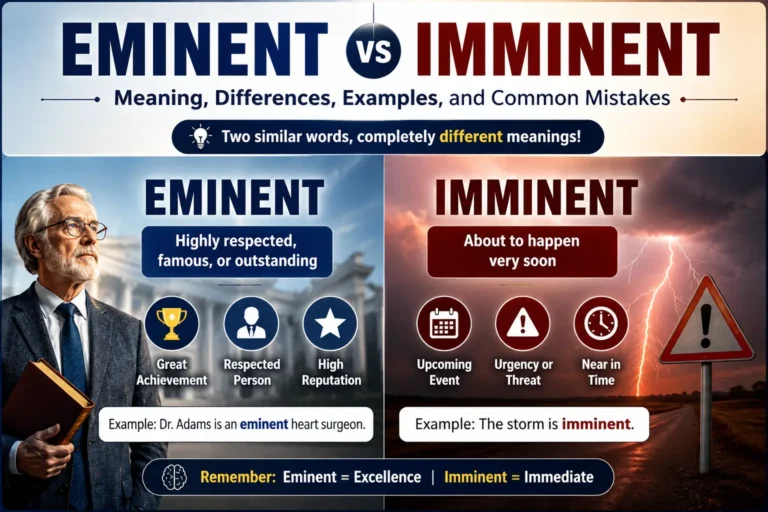
Eminent vs Imminent: Meaning, Differences, Examples, and Common Mistakes

Eminent vs imminent comparison showing eminent means highly respected, while imminent means something is about to happen soon.

The difference between eminent vs imminent often creates confusion because these words have similar pronunciation, sound alike, and look similar. However, their meanings are completely different. The key difference is that eminent describes a famous, distinguished, and highly respected person or thing, while imminent describes something that is about to happen or will happen very … Read more