
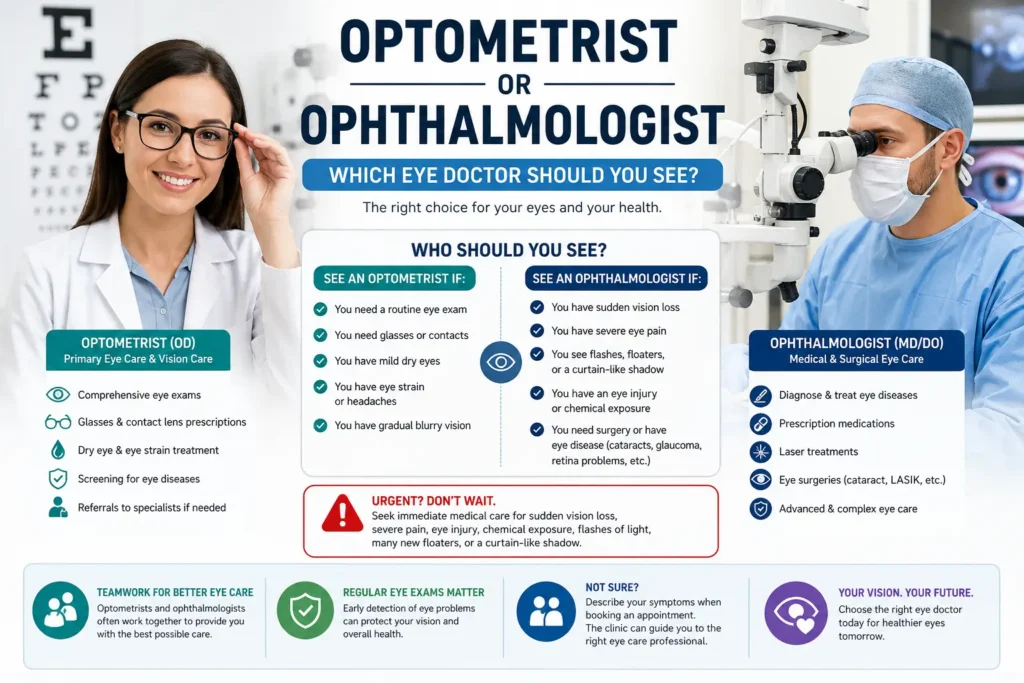
Optometrist or ophthalmologist is a common question when your eyes feel blurry, dry, painful, or tired. The purpose is simple: you want the right eye doctor without wasting time, money, or energy. If you need a routine eye exam, glasses, contacts, or help with mild vision problems, an optometrist is often the best first choice. If you have serious pain, sudden vision loss, cataracts, eye disease, or need eye surgery, an ophthalmologist may be the safer option.
The main difference comes down to the type of eye care you need. An optometrist handles primary eye care, routine checks, prescriptions, and many common conditions like dry eyes. An ophthalmologist provides medical eye care, surgical eye care, and advanced eye condition treatment. Knowing this difference helps you book the right appointment and protect your eye health with more confidence.
Quick Answer: Optometrist vs Ophthalmologist
| Your Situation | Best First Choice |
| Routine eye exam | Optometrist |
| Need glasses or contacts | Optometrist |
| Gradual blurry vision | Optometrist |
| Mild dry eyes or eye strain | Optometrist |
| Contact lens discomfort | Optometrist |
| Sudden vision loss | Emergency care or ophthalmologist |
| Severe eye pain | Emergency care or ophthalmologist |
| New flashes, many new floaters, or a curtain-like shadow | Emergency care or ophthalmologist |
| Cataract surgery evaluation | Ophthalmologist |
| Advanced glaucoma treatment | Ophthalmologist |
| Diabetes-related eye exam | Optometrist or ophthalmologist |
| Eye trauma or chemical injury | Emergency care or ophthalmologist |
| LASIK or eye surgery | Ophthalmologist |
| Frame fitting or lens adjustment | Optician |
Simple rule: Start with an optometrist for routine eye care. Choose an ophthalmologist for serious, surgical, or complex medical eye problems.
Read this also: Loses or Losses: Meaning, Difference, Grammar Rules, and Easy Examples
What Is an Optometrist?
An optometrist is a Doctor of Optometry, also called an OD. Optometrists provide primary eye and vision care. They check your eyesight, prescribe glasses and contact lenses, diagnose many common eye conditions, and manage routine eye health needs.
The American Optometric Association describes doctors of optometry as primary eye care providers, and the organization notes that optometrists provide a large share of primary eye care in the United States.
In everyday terms, an optometrist is often the first eye doctor you see when your vision feels blurry, your glasses no longer work well, or your eyes feel dry, tired, or irritated.
What Does an Optometrist Do?
An optometrist commonly provides:
- Comprehensive eye exams
- Vision testing
- Glasses prescriptions
- Contact lens prescriptions and fittings
- Dry eye care
- Eye strain and digital fatigue care
- Screening for cataracts, glaucoma, and diabetic eye disease
- Treatment for some common eye infections or inflammation
- Referrals to ophthalmologists when advanced care is needed
Many people think optometrists only prescribe glasses, but they do more than vision correction. They can also detect early signs of eye disease, sometimes before you notice symptoms.
When Should You See an Optometrist?
You should usually start with an optometrist if you have:
- Blurry vision that developed gradually
- Trouble seeing signs, books, or screens
- Frequent squinting
- Headaches linked to vision strain
- Dry, burning, tired, or irritated eyes
- Contact lens discomfort
- A child who struggles to see the board at school
- A need for a routine eye exam
- A need for glasses or contact lenses
For example, if you have started holding your phone farther away to read messages, you may need a prescription update. An optometrist can check your vision and recommend the right correction.
If your contact lenses feel uncomfortable by midday, an optometrist can check the lens fit, tear quality, and overall eye surface health.
What Is an Ophthalmologist?
An ophthalmologist is a medical doctor or osteopathic doctor who specializes in eye and vision care. Ophthalmologists hold an MD or DO degree and complete medical and surgical training in eye disease.
The American Academy of Ophthalmology explains that ophthalmologists complete more medical training than optometrists and opticians, and they can diagnose and treat eye diseases, prescribe medication, and perform eye surgery.
Think of an ophthalmologist as the eye specialist you need when the problem is more serious, complex, or surgical.
What Does an Ophthalmologist Do?
An ophthalmologist can provide:
- Medical eye exams
- Diagnosis of complex eye diseases
- Prescription medications
- Laser treatments
- Eye surgery
- Cataract treatment and surgery
- Glaucoma treatment
- Retina care
- Diabetic retinopathy treatment
- Macular degeneration care
- Cornea disease treatment
- Eye injury treatment
- LASIK and other refractive surgeries
Ophthalmologists can also prescribe glasses and contact lenses, but many focus more on medical eye disease, advanced treatment, and surgery.
When Should You See an Ophthalmologist?
You should see an ophthalmologist, or seek urgent medical care, if you have:
- Sudden vision loss
- Severe eye pain
- New flashes of light
- A sudden increase in floaters
- A dark curtain or shadow across your vision
- Serious eye injury
- Chemical exposure to the eye
- Cataracts affecting daily life
- Glaucoma that needs advanced treatment
- Retinal disease
- Macular degeneration
- Diabetes-related eye damage
- Double vision
- Severe light sensitivity
- Repeated eye inflammation
- A need for eye surgery
Some symptoms should not wait for a routine appointment. The National Eye Institute lists sudden new floaters, flashes of light, and a dark curtain or shadow as symptoms of retinal detachment, and it advises going to an eye doctor or emergency room right away if these symptoms occur.
Chemical eye injuries also need immediate evaluation and treatment because they can damage the eye quickly.
Optometrist vs Ophthalmologist: Key Differences
| Category | Optometrist | Ophthalmologist |
| Professional title | Doctor of Optometry | Medical Doctor or Doctor of Osteopathy |
| Common initials | OD | MD or DO |
| Main role | Primary eye care and vision care | Medical and surgical eye care |
| Prescribes glasses | Yes | Yes |
| Prescribes contacts | Yes | Yes |
| Diagnoses eye disease | Yes | Yes |
| Treats eye disease | Yes, depending on condition and local law | Yes |
| Performs major eye surgery | Usually no | Yes |
| Best for | Routine exams, prescriptions, mild or common eye concerns | Serious disease, surgery, trauma, and complex care |
The main difference is not that one is “better” than the other. The difference is their training and role.
An optometrist is often the best first choice for routine vision and primary eye care. An ophthalmologist is the better choice for surgery, serious disease, or urgent symptoms.
What Is an Optician?
An optician is different from both an optometrist and an ophthalmologist.
Opticians help fit, adjust, and provide eyeglasses or lenses based on a prescription written by an optometrist or ophthalmologist. They do not diagnose eye disease, perform eye exams, or prescribe glasses.
| Eye Care Professional | Main Job |
| Optician | Fits glasses and lenses |
| Optometrist | Tests vision and provides primary eye care |
| Ophthalmologist | Treats medical eye disease and performs surgery |
A simple way to remember it:
- Optician: helps with eyewear
- Optometrist: checks vision and routine eye health
- Ophthalmologist: treats medical eye problems and performs surgery
Routine Eye Exam vs Medical Eye Exam
Not every eye exam has the same purpose.
A routine eye exam checks how clearly you see. It often includes a glasses or contact lens prescription.
A medical eye exam checks your eye health because of symptoms, disease, injury, or a medical condition.
Routine Vision Exam
A routine vision exam may include:
- Visual acuity testing
- Refraction testing
- Glasses prescription
- Contact lens evaluation
- Eye movement checks
- Basic eye pressure screening
- General eye health review
This type of visit often starts with an optometrist.
Medical Eye Exam
A medical eye exam may include:
- Eye pressure testing
- Slit-lamp exam
- Dilated retina exam
- Optic nerve evaluation
- Retinal imaging
- Disease monitoring
- Medication planning
- Surgical referral or planning
This visit may involve an optometrist or ophthalmologist, depending on your condition and local scope of practice.
When Eye Symptoms Are Urgent
Some symptoms need fast attention. Do not wait for a routine appointment if you have:
- Sudden loss of vision
- Severe eye pain
- A serious eye injury
- Chemical exposure to the eye
- Sudden flashes of light
- Many new floaters
- A curtain-like shadow across your vision
- Sudden blurry vision in one eye
- Redness with severe pain or light sensitivity
These symptoms may point to a condition that needs urgent treatment.
For example, retinal detachment can cause sudden floaters, flashes, or a dark curtain in your vision. The National Eye Institute states that retinal detachment can lead to permanent vision loss if not treated quickly.
Diabetes and Eye Exams
People with diabetes need regular eye care, even if their vision seems normal.
The CDC says people with diabetes have a higher risk of vision loss and eye diseases, including retinopathy, glaucoma, and cataracts. It recommends yearly comprehensive vision exams, including dilated eye exams.
Diabetic retinopathy can also begin without early symptoms. The National Eye Institute notes that early diabetic retinopathy may have no symptoms, while later symptoms can include blurry vision and floating spots. Diagnosis involves a dilated eye exam.
An optometrist or ophthalmologist can perform a diabetic eye exam. If the exam shows advanced disease, you may need treatment from an ophthalmologist or retina specialist.
Common Eye Problems: Who Should You See First?
Blurry Vision
If blurry vision develops slowly, start with an optometrist. You may need glasses, contacts, or a prescription update.
If blurry vision happens suddenly, especially in one eye, treat it as urgent and seek medical care.
Dry Eye
An optometrist is often a good first choice for dry eye symptoms such as burning, stinging, watering, redness, or a gritty feeling.
Severe or stubborn dry eye may need an ophthalmologist, especially if inflammation, autoimmune disease, or corneal damage is involved.
Cataracts
Cataracts happen when the eye’s natural lens becomes cloudy. They may cause blurry vision, glare, faded colors, or trouble seeing at night.
An optometrist may detect cataracts during an exam. An ophthalmologist performs cataract surgery when cataracts affect daily life.
Glaucoma
Glaucoma is a group of eye diseases that can damage the optic nerve. It may develop without obvious early symptoms.
Optometrists can screen for glaucoma and may manage some cases. Ophthalmologists usually handle advanced glaucoma, laser treatment, surgery, or complex cases.
Eye Infection
Mild eye irritation or infection may start with an optometrist.
However, severe pain, light sensitivity, swelling, reduced vision, or contact lens-related redness needs faster medical attention.
Flashes and Floaters
A few long-standing floaters may not be urgent. New flashes, a sudden increase in floaters, or a shadow across your vision can be serious.
These symptoms may point to a retinal tear or detachment and need urgent evaluation.
LASIK or Vision Correction Surgery
An ophthalmologist performs LASIK and other refractive surgeries.
An optometrist may help with screening, pre-surgery testing, and follow-up care. This team approach is common.
How Optometrists and Ophthalmologists Work Together
Eye care often works best as a team.
You may start with an optometrist for a routine exam. If the optometrist finds signs of cataracts, glaucoma, diabetic eye disease, or retinal damage, they may refer you to an ophthalmologist.
After surgery or advanced treatment, the ophthalmologist may send you back to an optometrist for routine follow-up, glasses updates, or long-term monitoring.
That does not mean one doctor failed. It means you are getting the right care at the right step.
| Condition | How Care May Be Shared |
| Cataracts | Optometrist detects; ophthalmologist performs surgery |
| Diabetes | Either doctor screens; ophthalmologist treats advanced disease |
| Glaucoma | Optometrist may monitor some cases; ophthalmologist handles advanced care |
| LASIK | Ophthalmologist performs surgery; optometrist may help with follow-up |
| Dry eye | Either doctor may treat; specialist care may be needed if severe |
Cost, Insurance, and Referrals
Cost depends on your location, insurance plan, symptoms, and type of visit.
A routine vision exam for glasses or contacts may fall under vision insurance. A medical eye exam for pain, injury, infection, diabetes, cataracts, glaucoma, or retinal problems may fall under medical insurance.
Before booking, ask the office:
- Is this a routine vision exam or a medical eye exam?
- Do you accept my vision insurance?
- Do you accept my medical insurance?
- Do I need a referral?
- Will my eyes be dilated?
- Should someone drive me home after dilation?
These questions can help you avoid surprise costs and scheduling problems.
What to Bring to an Eye Appointment
Bring these items to your visit:
- Current glasses
- Contact lenses and lens packaging
- Medication list
- Medical insurance card
- Vision insurance card
- Previous eye records, if available
- Diabetes or blood pressure history, if relevant
- Family history of eye disease
- A list of symptoms
- Questions you want answered
Also write down when your symptoms started. “Three days ago” helps more than “recently.”
Questions to Ask Before Booking
When you call the clinic, describe your symptoms clearly. Then ask:
- Should I see an optometrist or ophthalmologist?
- Do my symptoms sound urgent?
- Is this visit routine or medical?
- Will I need dilation?
- Do you treat this condition?
- Can you refer me if I need surgery?
- Do I need a referral from my primary doctor?
A good eye care office can help guide you to the right provider.
FAQs About Optometrist or Ophthalmologist
Q1:Is it better to see an optometrist or ophthalmologist first?
For most routine vision needs, it’s better to see an optometrist first. They can check your eyesight, update your prescription, treat mild issues, and refer you to an ophthalmologist if you need advanced medical eye care or surgery.
Q2:Can an optometrist treat eye problems?
Yes, an optometrist can treat many common eye problems, including dry eyes, mild infections, blurry vision, and routine eye health concerns. However, complex diseases, serious injuries, or surgical cases usually need an ophthalmologist.
Q3:When should I see an ophthalmologist?
You should see an ophthalmologist if you have sudden vision loss, severe eye pain, cataracts, glaucoma, retinal problems, eye injury, or need eye surgery. These issues often require advanced eye disease care or specialized treatment.
Q4:Can an ophthalmologist prescribe glasses?
Yes, an ophthalmologist can prescribe glasses and contact lenses. However, many people see an optometrist for routine prescriptions because optometrists focus strongly on vision care, eye exams, and everyday sight correction.
Q5:What is the difference between an optometrist, ophthalmologist, and optician?
An optometrist provides routine eye care, exams, prescriptions, and treatment for many common conditions. An ophthalmologist treats serious eye disease and performs surgery. An optician fits glasses and lenses after you receive a prescription.
Conclusion: Optometrist or Ophthalmologist?
Choosing an optometrist or ophthalmologist becomes much easier when you focus on your symptoms instead of the title. For regular vision care, glasses, contacts, a routine eye exam, or mild eye problems, an optometrist is usually the right place to start. They support primary eye care and help you manage common concerns before they become bigger issues.
However, if you have sudden vision changes, severe eye pain, cataracts, advanced eye disease, injury, or need vision correction surgery, an ophthalmologist is the better choice. They provide medical eye care, specialty care, and surgical eye care for more complex conditions.
Your eyes deserve quick and correct care. When the problem feels simple, book routine care. When it feels sudden, painful, or serious, don’t wait. The right eye care professional can protect your sight and guide you toward the best treatment.
