Preform vs Perform: What’s the Difference? Meaning, Usage, and Examples

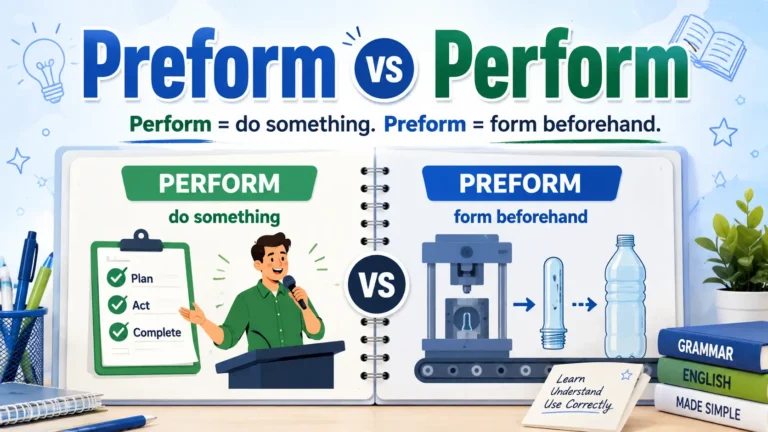
Preform vs Perform difference and correct usage

Preform vs perform can be confusing because these two words look and sound similar, but they have completely different meanings. Perform means to do, carry out, or present something, while preform means to form or shape something in advance, usually in a technical or manufacturing context. For example, you perform a task, perform surgery, or … Read more

Fourty vs Forty: Which Spelling Is Correct?

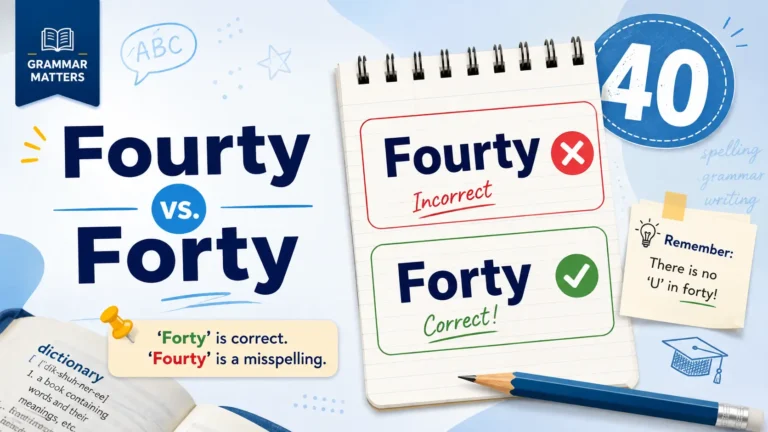
Fourty vs Forty correct spelling of 40

Fourty vs. forty is a common spelling confusion, but the answer is simple: forty is the correct spelling of the number 40, while fourty is incorrect. The confusion happens because four is spelled with a u, so it may seem logical to write fourty. However, standard English uses forty, without the u. Whether you’re writing … Read more

Desert vs. Dessert: What’s the Difference? Meaning, Pronunciation, Examples, and Memory Tips

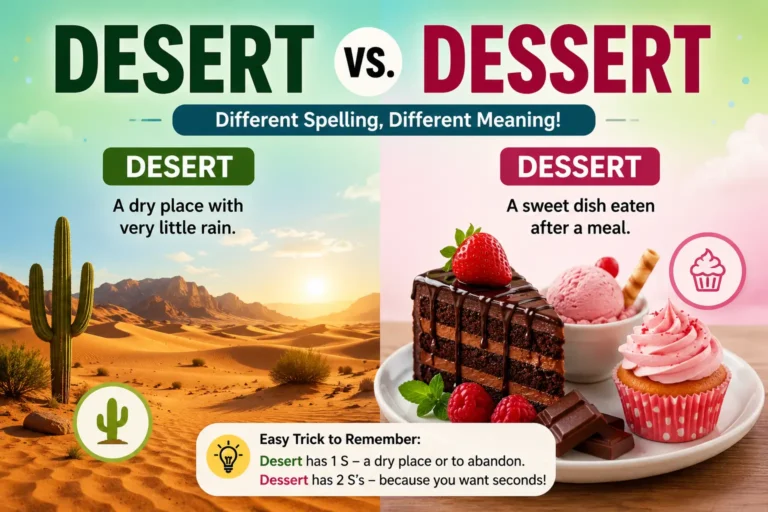
Desert vs. Dessert difference with a dry desert and sweet desserts

If you’re confused about desert vs. dessert, you’re not alone. These two words look almost identical, and in some uses, they sound exactly the same. However, their meanings are completely different. Desert can mean a dry geographical region or, as a verb, to abandon someone or something. Dessert is a sweet food served after a … Read more

Emigrate vs. Immigrate: What’s the Difference? Meaning, Examples, and Easy Ways to Remember

Emigrate vs. Immigrate difference showing leaving one country and arriving in another

The choice between emigrate vs immigrate depends on the point of view in your sentence. Emigrate focuses on leaving, while immigrate focuses on arriving. Use emigrate when you talk about the point of departure. Use immigrate when you focus on the point of arrival. Meanwhile, migrate is a broader word for the process of moving … Read more

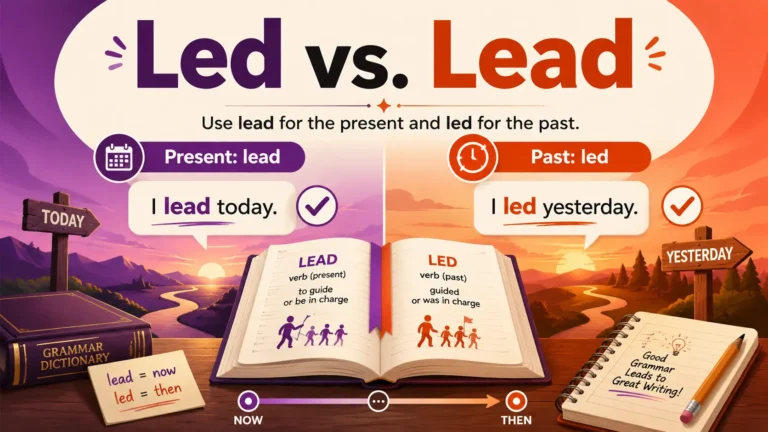
Led vs. Lead: What’s the Difference? Meaning, Pronunciation, Grammar, and Examples

Led vs. Lead difference explained with present and past tense examples

If you’ve ever wondered whether to write led vs. lead, you’re not alone. These two words are easy to confuse because lead has two different pronunciations, while led is the past tense of the verb lead. The correct choice depends on the word’s meaning, grammatical role, and tense. Quick answer: Use lead when you mean … Read more

Serpent vs Snake: What’s the Difference in Meaning and Usage?

Serpent vs snake comparison showing a real snake beside a mythical serpent in an ancient jungle temple

Serpent vs snake describes the difference between two words that can name the same reptile but often carry different tones. A snake is the standard term used in modern English, science, conversation, and wildlife writing. A serpent usually sounds more literary, symbolic, religious, or mythical. The key difference is therefore not biological. Instead, it comes … Read more

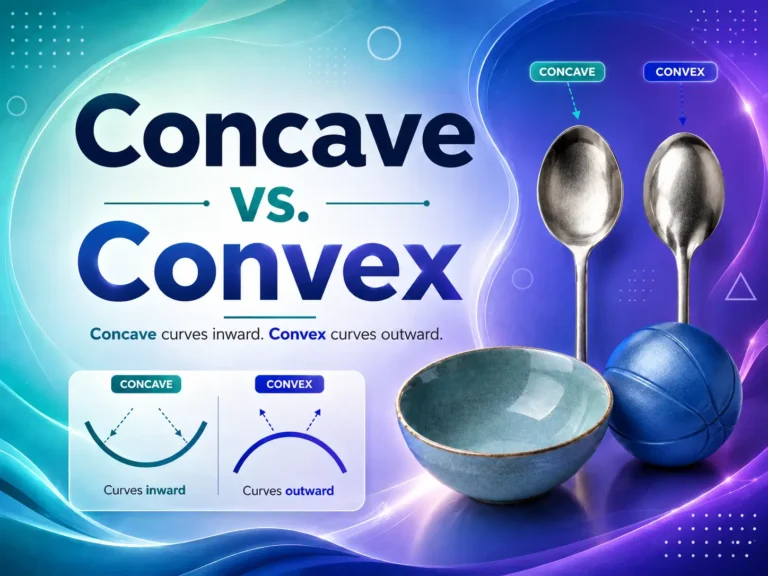
Concave vs. Convex: Meaning, Differences, Examples, and Easy Ways to Remember

Concave vs. convex comparison showing inward and outward curves with a spoon, bowl, and ball

Concave vs. convex describes two opposite ways that a line, shape, or surface can curve. A concave surface bends inward, like the inside of a bowl. A convex surface curves outward, like the outside of a ball. These words appear in geometry, optics, engineering, medicine, product design, and everyday American English. You may use them … Read more

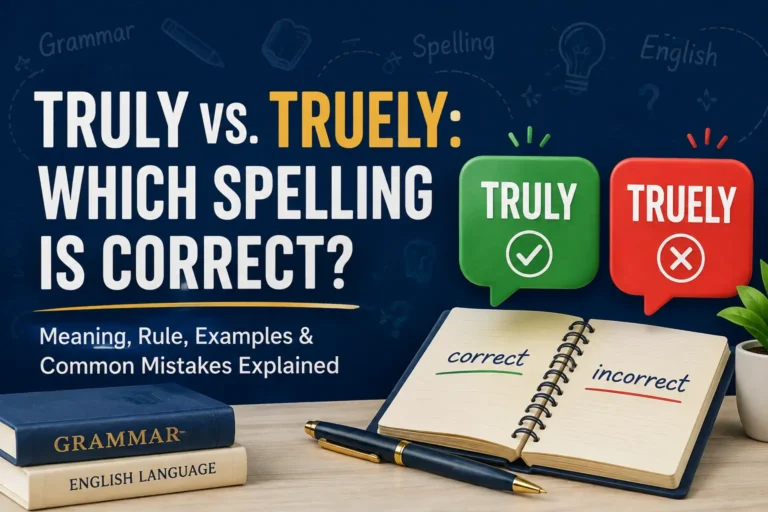
Truly vs. Truely: Which Spelling Is Correct? (Meaning, Rule, Examples & Common Mistakes)

Truly vs. Truely spelling comparison showing Truly as correct and Truely as incorrect

If you’re searching for Truely vs Truly, the answer is simple: truly is the only correct spelling. In standard English, the word true drops the final e before adding -ly. I once caught myself writing truely in an important email, and proofreading helped me remember the correct spelling rule. Understanding this small grammar rule makes … Read more

Eminent vs Imminent: Meaning, Differences, Examples, and Common Mistakes

Eminent vs imminent comparison showing eminent means highly respected, while imminent means something is about to happen soon.

The difference between eminent vs imminent often creates confusion because these words have similar pronunciation, sound alike, and look similar. However, their meanings are completely different. The key difference is that eminent describes a famous, distinguished, and highly respected person or thing, while imminent describes something that is about to happen or will happen very … Read more