Rational vs Rationale: Meaning, Difference, and Correct Usage
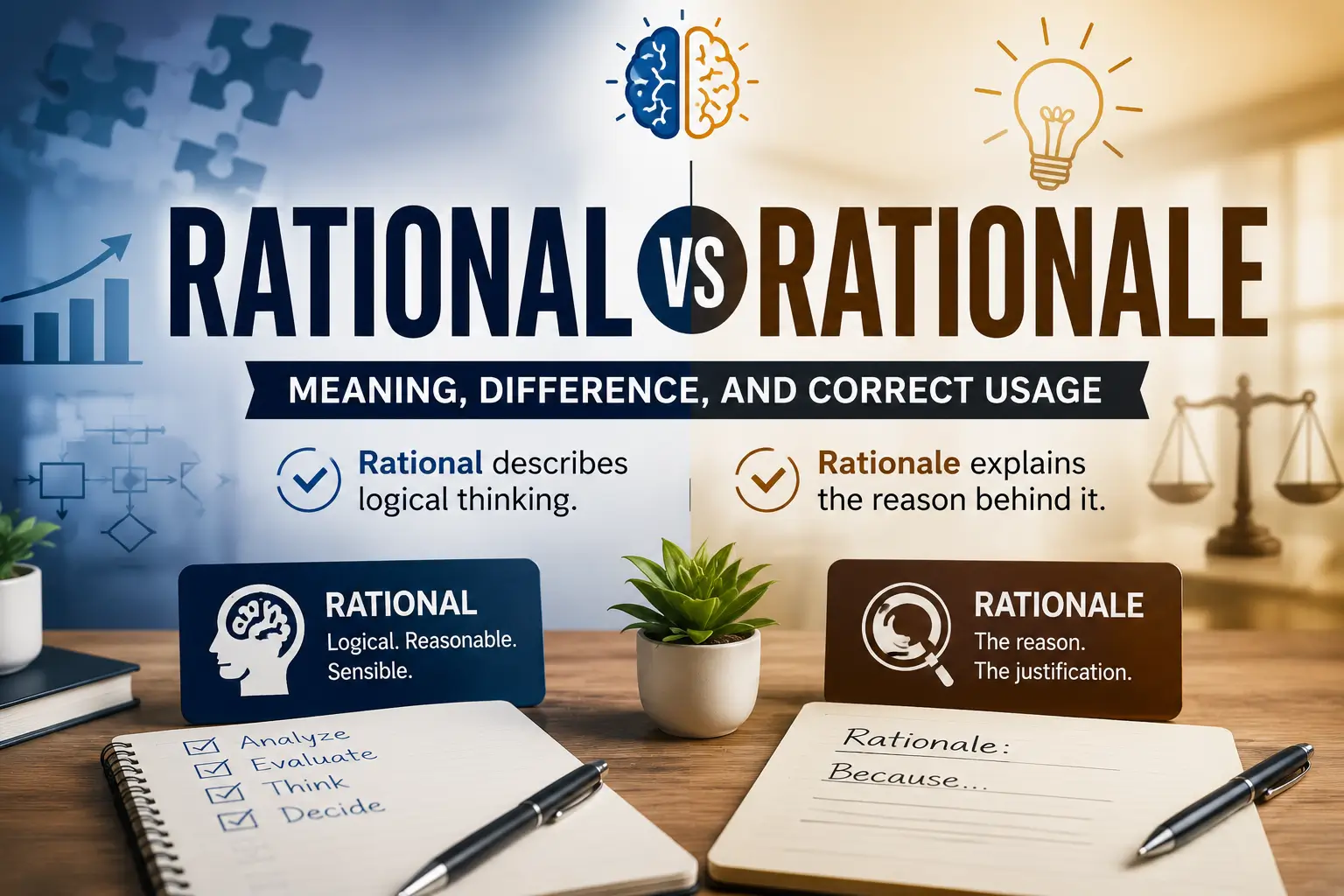
Rational vs rationale meaning and difference with examples

The rational vs rationale difference becomes clear when you know that one describes logical thinking while the other names the reason behind it. Rational is an adjective for a sensible decision, clear idea, logical plan, or reasoned behavior. Rationale is a noun for the underlying reason, reasoning, or justification behind an action, belief, or choice. … Read more

Serpent vs Snake: What’s the Difference in Meaning and Usage?

Serpent vs snake comparison showing a real snake beside a mythical serpent in an ancient jungle temple

Serpent vs snake describes the difference between two words that can name the same reptile but often carry different tones. A snake is the standard term used in modern English, science, conversation, and wildlife writing. A serpent usually sounds more literary, symbolic, religious, or mythical. The key difference is therefore not biological. Instead, it comes … Read more

Adapter vs. Adaptor: Which Spelling Is Correct in American English?

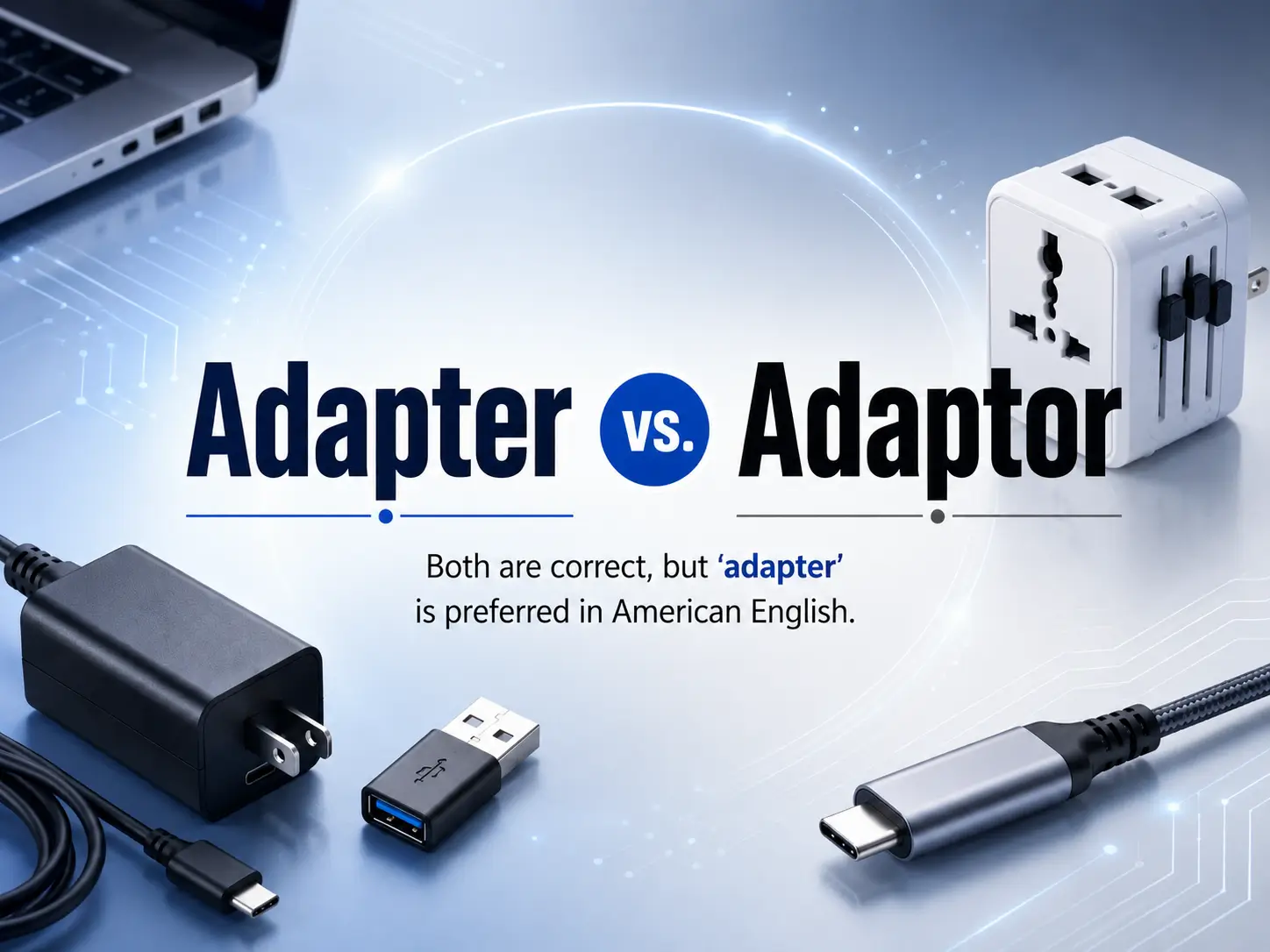
Adapter vs adaptor comparison with power, USB, travel and USB-C adapters explaining the preferred American English spelling.

Adapter vs adaptor is a spelling question with a simple answer: both forms are correct, but adapter is the preferred spelling in American English. The two words have the same meaning and usually refer to a person, device, or system that helps something adjust, connect, or work in a new way. You’ll often see adapter … Read more

Accept vs. Except: What’s the Difference and When Should You Use Each?

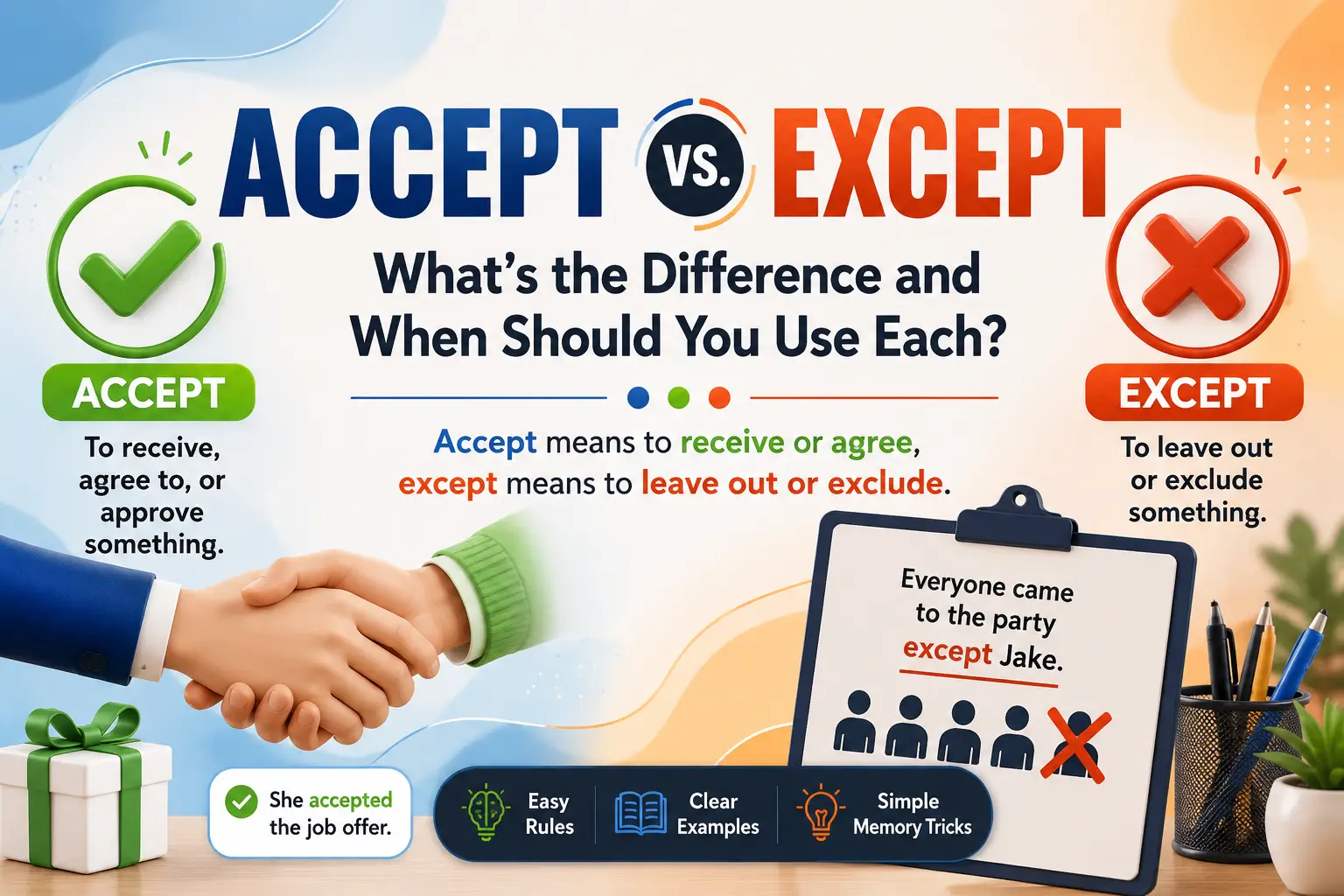
Accept vs Except grammar guide explaining the difference between accept and except with simple examples and easy grammar rules.

Accept vs. except is one of the most common grammar questions because these two words sound similar but have completely different meanings. If you’ve ever wondered whether you should write accept or except, you’re in the right place. The simple answer is that accept means to receive or agree, while except means to leave out … Read more

Requester vs Requestor: Which Spelling Is Correct and When Should You Use Each One?

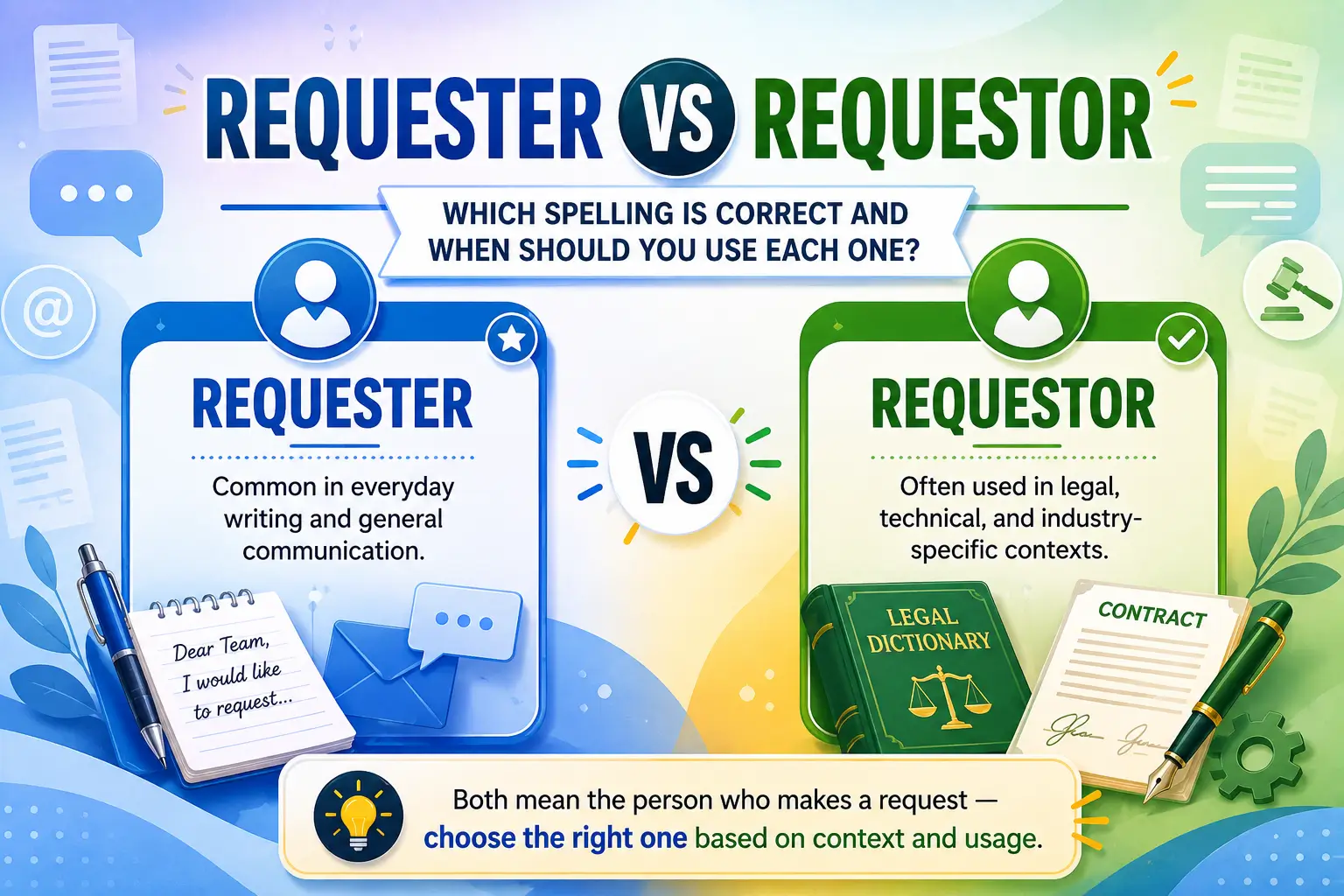
Requester vs Requestor spelling difference explained with correct English usage examples

The difference between Requester and Requestor is mainly based on context, language usage, and industry standards rather than meaning. Both words describe a person who makes a request, but requester is more widely used in everyday communication, business writing, and general professional communication. In contrast, requestor appears more often in specialized environments such as IT, … Read more

Principal vs. Principle: What’s the Difference and When Should You Use Each?

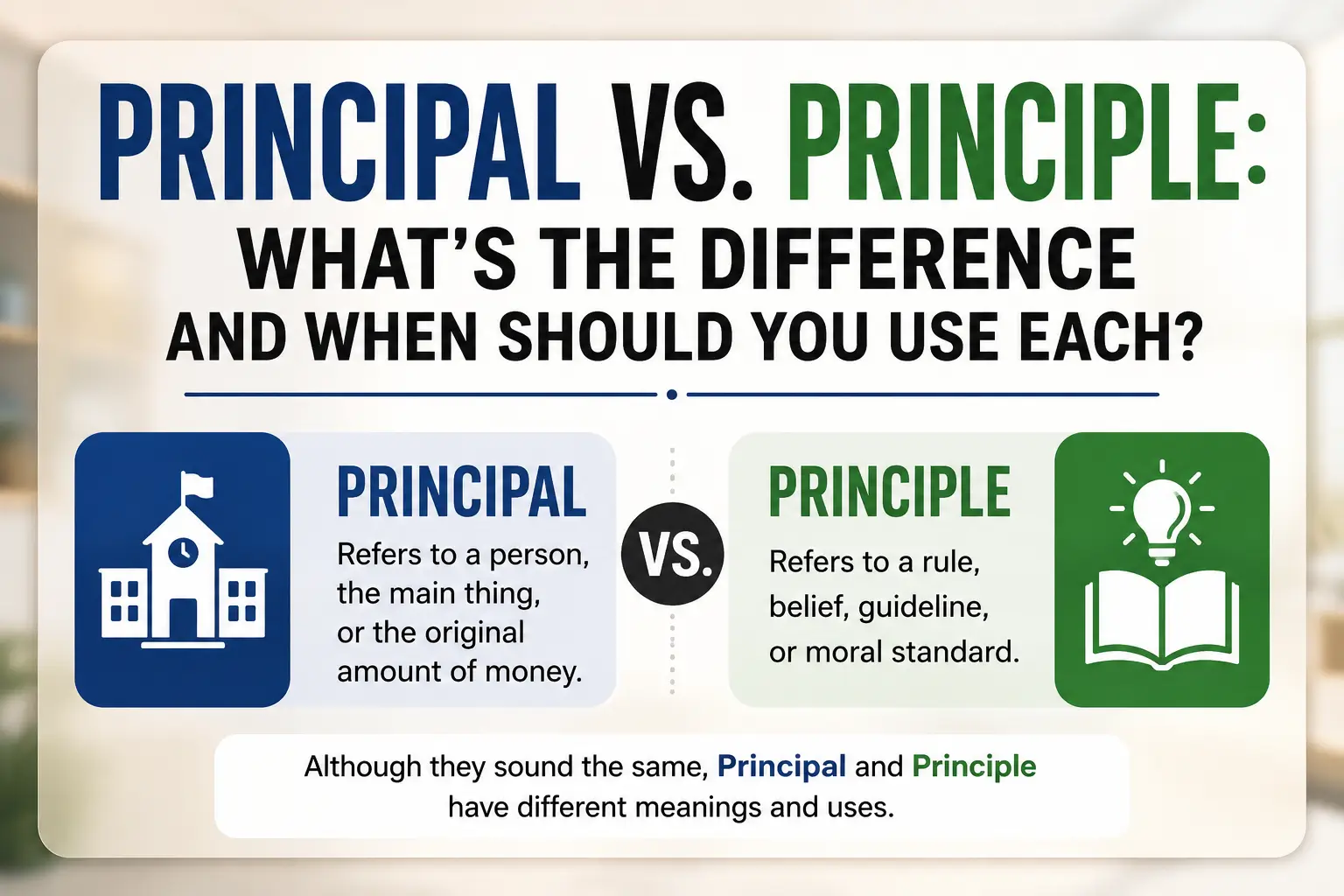
Principal vs principle comparison explaining the difference with meanings, examples, and grammar rules

Principal vs. principle is one of the most searched commonly confused words in English grammar because both words sound the same but have very different meanings. If you’ve ever wondered which spelling is correct, you’re in the right place. This guide explains the difference between principal and principle, when to use each word, and how … Read more

Quantify vs Qualify: Meaning, Difference, and Correct Usage

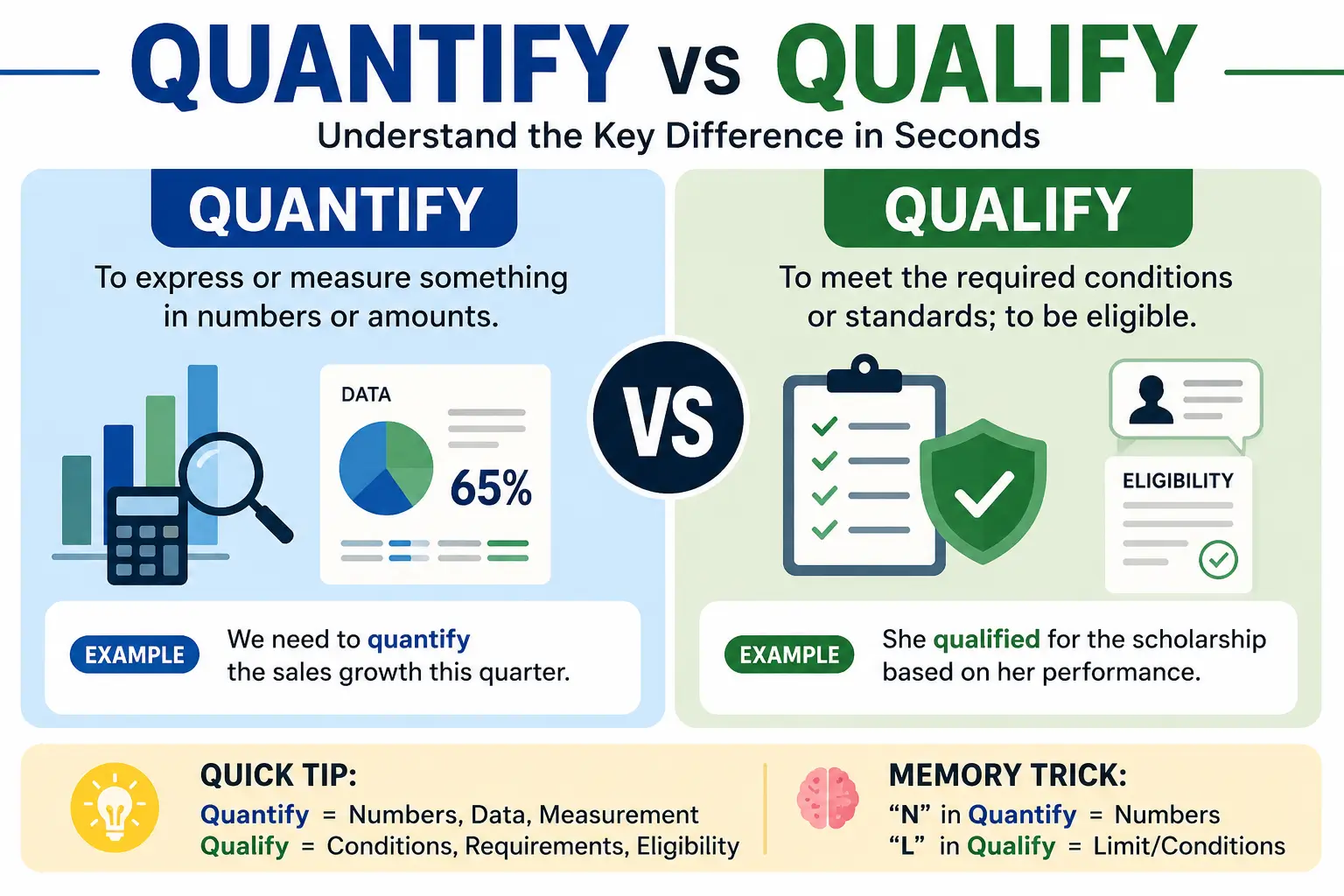
Quantify vs qualify meaning and difference explained with examples

The words quantify and qualify look and sound similar, so it’s easy to mix them up. However, they do very different jobs in English. One word is about numbers, amounts, data, and measurement. The other is about requirements, limits, conditions, and added detail. The difference matters in school essays, business emails, reports, resumes, research papers, … Read more