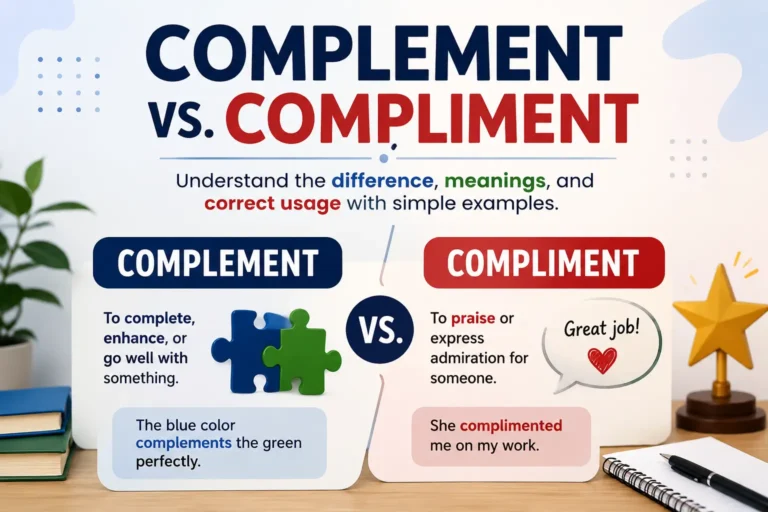
Complement vs Compliment: What’s the Difference? Meaning, Examples, and Easy Rules

Complement vs compliment meaning, difference, and examples

Complement vs compliment can be confusing because these two words sound alike but have different meanings. Complement means to complete, improve, or work well with something, while compliment means to praise someone or something. Knowing this simple difference helps you choose the correct spelling in everyday writing, emails, schoolwork, and professional communication. For example, “The … Read more

In Route vs En Route: Meaning, Correct Usage, and Examples

In route vs en route meaning and correct usage with a bus on the road

The in route vs en route difference is simple: use en route for “on the way,” while in-route may appear only in technical labels or route systems. En-route is the standard expression for movement toward a destination. It fits travel language, formal writing, professional English, and everyday English. For example, write, “The driver is en … Read more

Eventhough vs Even Though: Correct Spelling, Meaning, Grammar Rules, and Examples

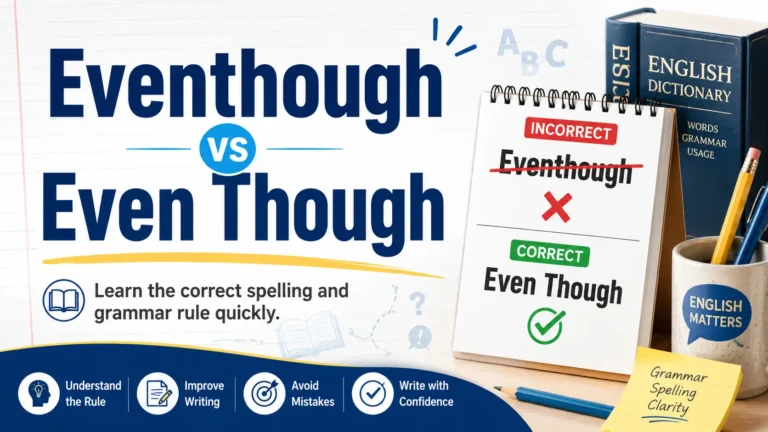
Eventhough vs Even Though comparison showing the incorrect and correct spelling with a simple English grammar guide.

Many English learners and native speakers confuse eventhough vs even though because both forms look similar while typing fast or writing in everyday usage. However, the correct spelling is always even though, which is a proper English phrase and a standard form in English. Eventhough is an incorrect spelling and a common spelling mistake that … Read more

Vicious vs Viscous Word Choice: How Viscous and Vicious Differences

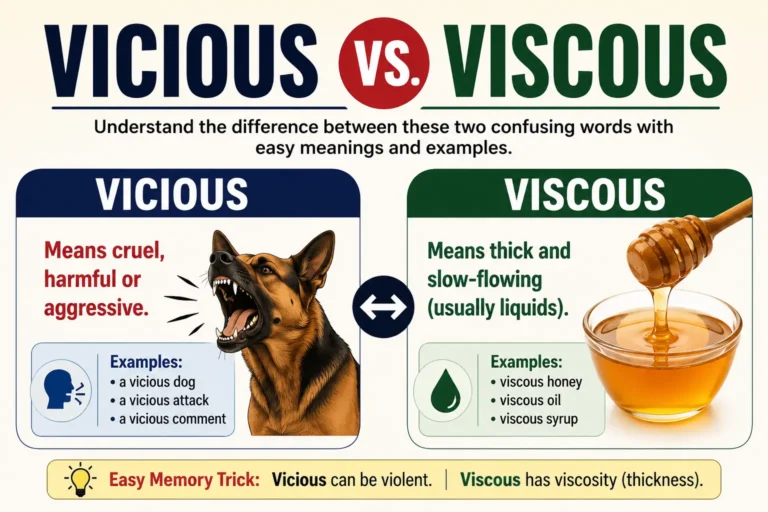
Vicious vs. Viscous infographic showing the difference between cruel behavior and thick slow-flowing liquids with simple examples.

Vicious vs. Viscous becomes clear when you remember that vicious describes cruel behavior, while viscous describes a thick liquid that flows slowly. Both words are adjectives, but their close spelling hides very different meanings. Vicious can describe an evil, malicious, aggressive, violent, or severe person, action, remark, storm, or attack. Viscous refers to thickness and … Read more

Would vs Could: Difference, Grammar Rules, Uses, and Examples

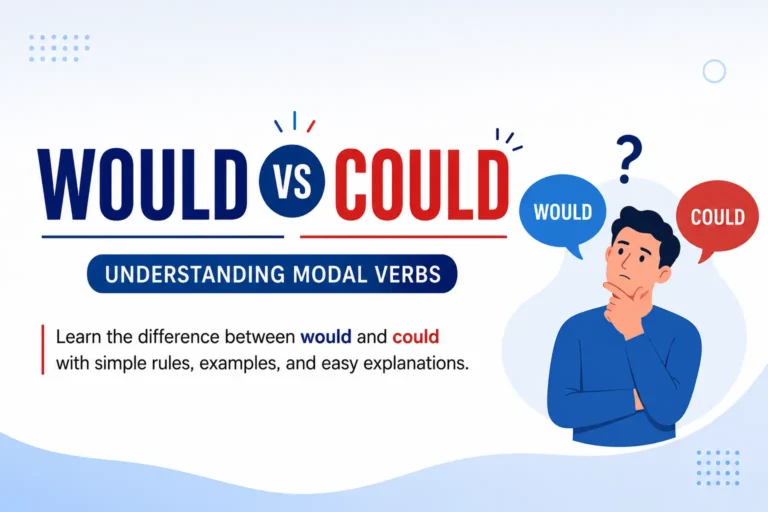
Would vs Could grammar rules, differences, and examples explained

Understanding would vs could helps English learners choose the right word when making polite requests or asking questions. These modal verbs may look similar, but their meaning changes depending on the situation. For example, “Could you bring me a cup of coffee?” asks about ability, while “Would you bring me a cup of tea?” focuses … Read more

Will vs Shall: Difference, Grammar Rules, Uses, and Examples

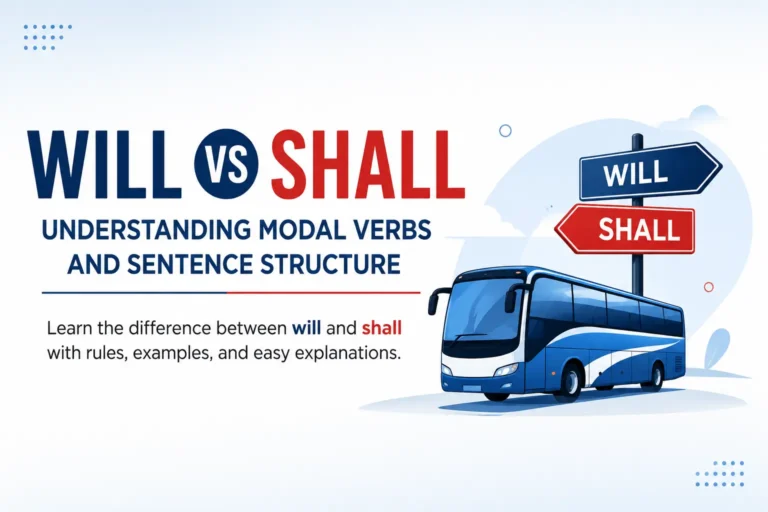
Will vs Shall grammar rules, differences, and examples explained

Learning will vs shall becomes easier when you know how these modal verbs work in English. Both are helping verbs used to express future time, but they can also show possibility, permission, or obligation. Will is more common in daily English, while shall is often used in formal situations or special expressions. Unlike regular verbs, … Read more

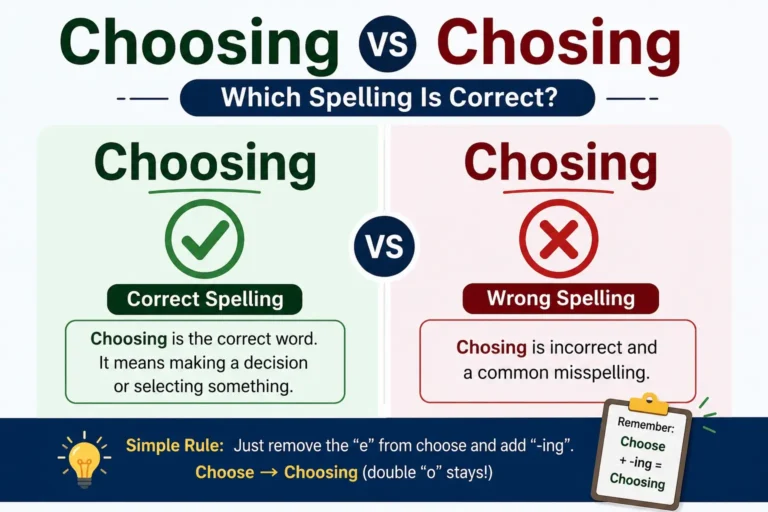
Choosing vs. Chosing: Which Spelling Is Correct?

Choosing vs chosing infographic showing choosing as the correct spelling and chosing as the wrong spelling

Choosing vs chosing is a common spelling question, and the purpose of this guide is to show which form is correct and how to use it without mistakes. Choosing is the correct spelling in standard English, while chosing is a common misspelling. Knowing this difference helps you write clear emails, assignments, messages, and professional documents. … Read more