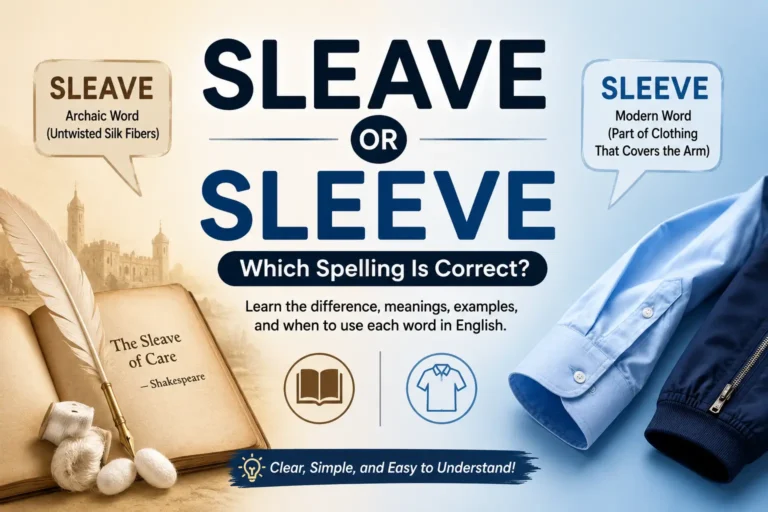
Sleave or Sleeve: Which Spelling Is Correct?

Sleave or sleeve spelling comparison showing the correct word for clothing and the historical meaning of sleave

Sleave or sleeve can be confusing because both are real English words, but they don’t have the same meaning. If you’re talking about the part of a shirt, jacket, or dress that covers the arm, the correct spelling is sleeve. Sleave is a rare historical textile term linked to silk fibers and older English. For … Read more

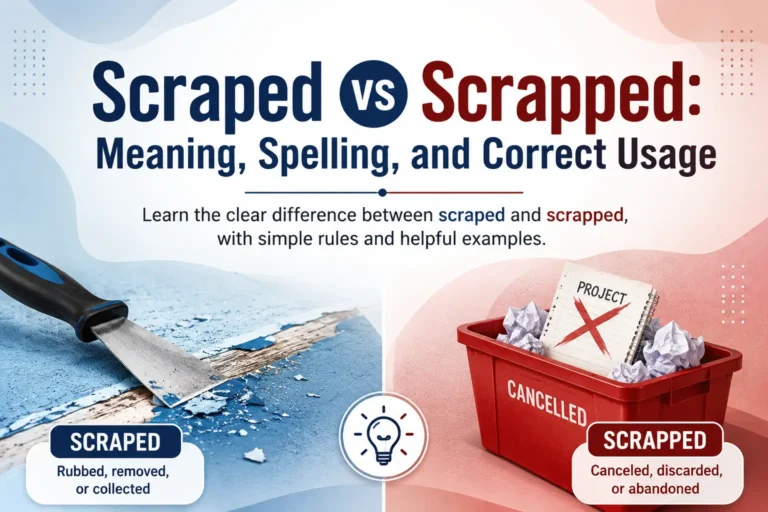
Scraped vs Scrapped: Meaning, Spelling, and Correct Usage

Scraped vs Scrapped: meaning, spelling, and correct usage

The scraped vs scrapped difference is simple: scraped means rubbed, removed, or collected, while scrapped means canceled or discarded. Use scraped for a physical action, removal, collection, or data collection. You may scrape paint, ice, or online information. Use scrapped for a project, plan, canceled project, or canceled plan involving cancellation, abandonment, or rejection. For … Read more

In Route vs En Route: Meaning, Correct Usage, and Examples

In route vs en route meaning and correct usage with a bus on the road

The in route vs en route difference is simple: use en route for “on the way,” while in-route may appear only in technical labels or route systems. En-route is the standard expression for movement toward a destination. It fits travel language, formal writing, professional English, and everyday English. For example, write, “The driver is en … Read more

Whichever vs Whatever: Meaning, Differences, and Correct Usage

Whichever vs whatever meaning and difference with examples

The whichever vs whatever difference depends on whether your choice comes from a known group or from an open range without clear limits. The meaning of whichever points to one item from specific options, known options, or other limited options. Both words express choice, but they describe a different kind of choice. For example, “Choose … Read more

He Is Risen vs He Has Risen: Meaning, Grammar Difference, and Correct Usage Explained

He Is Risen vs He Has Risen meaning and grammar difference

He Is Risen vs He Has Risen is a common grammar and meaning question connected with faith, tradition, and language. Both expressions refer to Jesus Christ’s resurrection, but they emphasize different ideas. He has risen focuses on the completed action of rising from the dead, while He is risen highlights the continuing state of being … Read more

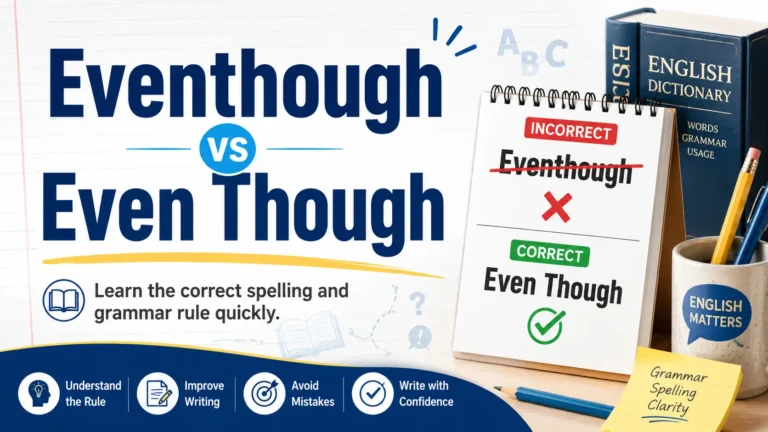
Eventhough vs Even Though: Correct Spelling, Meaning, Grammar Rules, and Examples

Eventhough vs Even Though comparison showing the incorrect and correct spelling with a simple English grammar guide.

Many English learners and native speakers confuse eventhough vs even though because both forms look similar while typing fast or writing in everyday usage. However, the correct spelling is always even though, which is a proper English phrase and a standard form in English. Eventhough is an incorrect spelling and a common spelling mistake that … Read more

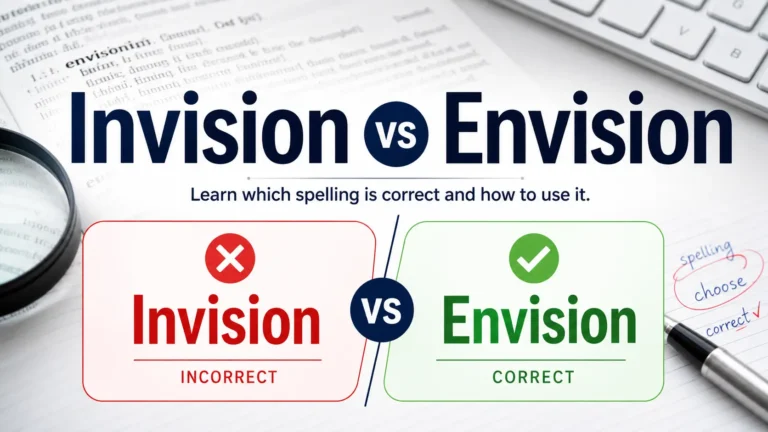
Invision vs Envision: Which Word Is Correct? Meaning, Differences, and Usage Guide

Invision vs Envision correct spelling and usage explained

When people compare invision vs envision, the confusion usually comes from the similar spelling, sound, and connection to the word vision. The correct English word is envision, which means to imagine, picture, or create a mental image of a future possibility. Many writers, editors, and students accidentally use invision because it looks logical, but standard … Read more

Canvas vs Canvass: What Is the Difference and How Do You Use Them Correctly?

Canvas vs Canvass comparison showing the difference in meaning and correct English usage

Canvas vs Canvass is a common spelling and vocabulary confusion because both words look similar and sound similar, yet their meanings and uses are completely different. Canvas usually refers to a strong fabric or material used for paintings, bags, shoes, and other products. For example, an artist may paint on a canvas, while a company … Read more

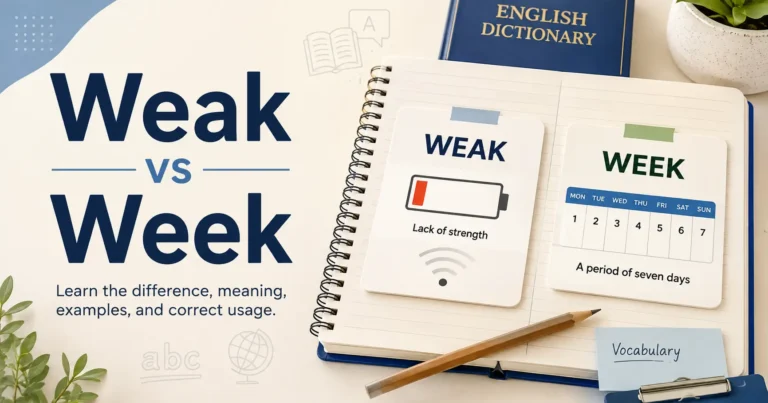
Weak vs Week: Difference, Meaning, Examples, and How to Use Them Correctly

Weak vs week comparison showing the difference between lack of strength and a seven-day period with simple English examples

Confused about weak vs week? Learn the simple difference between these words, their meanings, and how to use them correctly in daily English. Many English learners struggle with weak vs week because both words sound the same, but they have different meanings. Weak describes a lack of strength, power, or ability, while week refers to … Read more

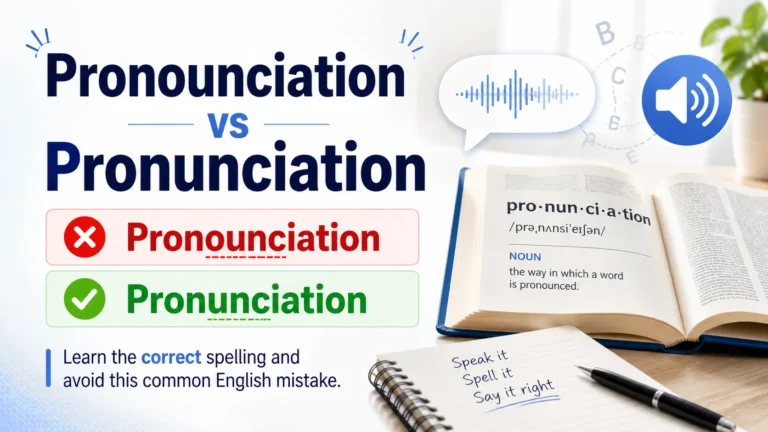
Pronounciation vs Pronunciation: Correct Spelling, Meaning, Difference, and Common Mistakes

Pronounciation vs pronunciation showing the correct spelling, meaning, and common English spelling mistake

Pronounciation vs pronunciation is a common spelling confusion in English. The correct word is pronunciation, while pronounciation is a misspelling. The mistake happens because the verb pronounce contains “ou,” but the noun pronunciation does not. This small spelling change often confuses students, writers, professionals, and even native English speakers. The correct spelling is pronunciation. Pronounciation … Read more