Bvostfus Python Guide: Installation, Issues, Safety Checks, Updates, and Complete Usage Explained

Bvostfus Python guide showing software installation, troubleshooting, updates, and Python package safety

When exploring Bvostfus Python, the first step is to separate verified information from speculation. Since there is limited publicly verified documentation available, users should carefully check whether it is a legitimate Python package, a new software project, an internet keyword, or simply a reference to unknown software. A proper guide should focus on real facts … Read more

Gray vs. Grey: What’s the Difference and Which Spelling Is Correct?

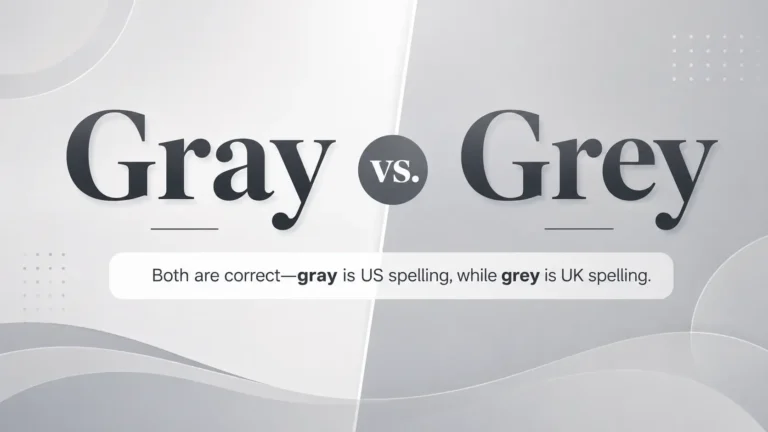
Gray vs grey comparison showing gray as US spelling and grey as UK spelling

Gray vs. Grey is a common spelling question, but the answer is simple. Both words describe the same color between black and white. However, gray is the preferred spelling in American English, while grey is more common in British English, Canada, and several other English-speaking regions. Neither form is wrong, but the best choice depends … Read more

Layed vs. Laid: Which Spelling Is Correct?

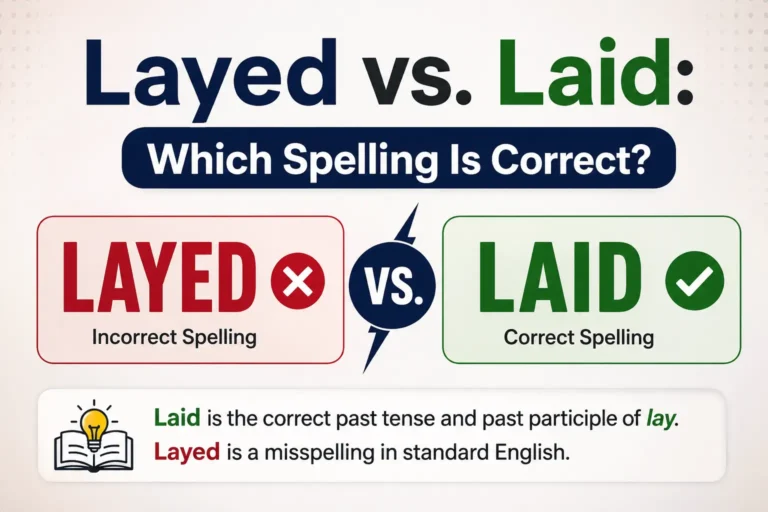
Layed vs laid comparison showing laid as correct and layed as incorrect

Layed vs. Laid is a common spelling question, but the rule is simple. Laid is the correct past tense and past participle of lay, while layed is a misspelling in standard English. You should write, “She laid the book on the table,” not “She layed the book on the table.” The word lay means to … Read more

My vs. Mine: The Basic Difference and Shared Ownership

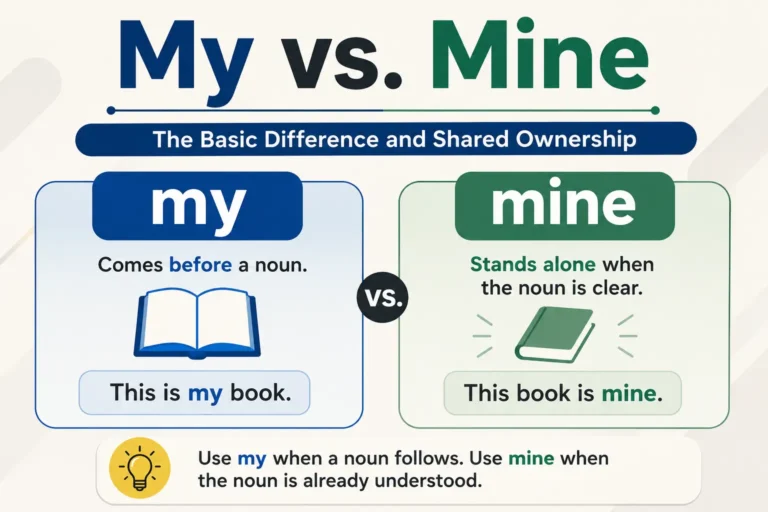
My vs. Mine difference explained with simple grammar rules and examples

My vs. Mine becomes easy once you see that my comes before a noun, while mine stands alone when the noun is already clear from the full context. My is a possessive determiner, while mine is a possessive pronoun. Use my in “This is my book” because book follows it. Use mine in “This book … Read more

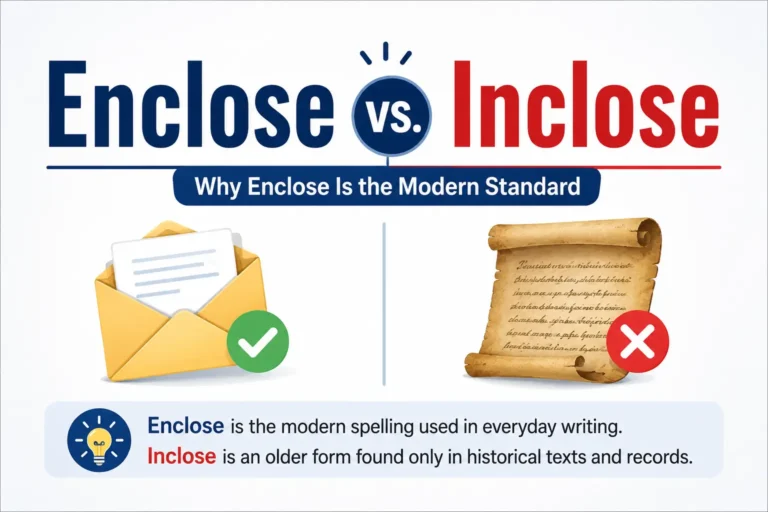
Enclose vs. Inclose: Why Enclose Is the Modern Standard

Enclose vs Inclose explained with the correct spelling, grammar rules, historical usage, and simple examples.

The enclose vs. inclose choice is simple: enclose is the modern spelling, while inclose survives mainly in older historical records and texts. Both words once meant to surround, shut in, or place something inside a container, boundary, or envelope. Today, enclose is the accepted verb in modern English. Its related forms are enclosed, enclosing, and … Read more

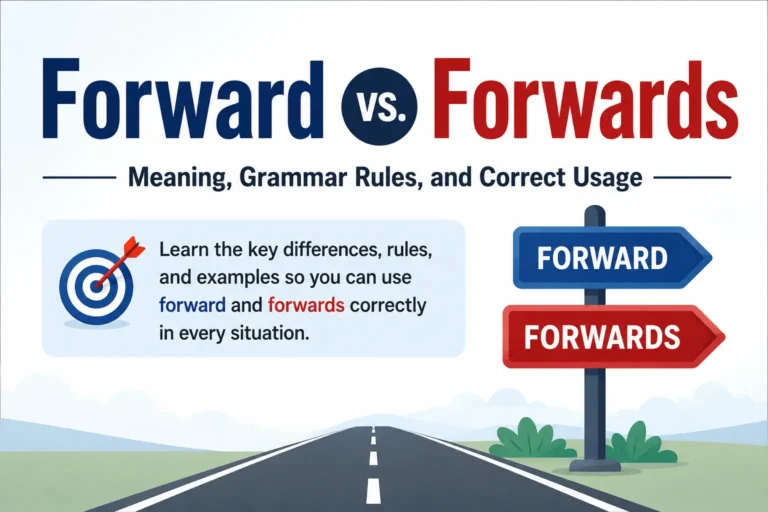
Forward vs. Forwards: Meaning, Grammar Rules, and Correct Usage

Forward vs Forwards explained with grammar rules, American vs British English differences, and simple examples.

The difference between forward vs. forwards can seem confusing because both words may describe movement toward the front. However, they are not always interchangeable. Forward has several grammatical roles, while forwards has fewer uses. In American English, writers usually prefer forward as the directional adverb. Meanwhile, British English accepts both forward and forwards, especially when … Read more

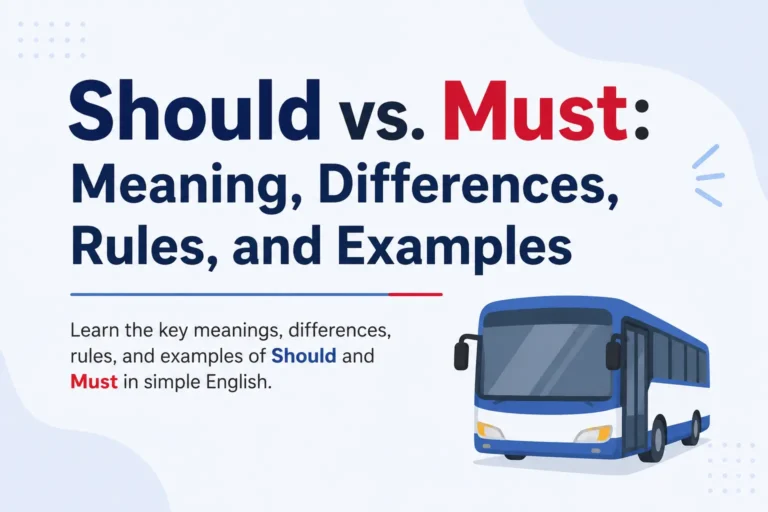
Should vs. Must: Meaning, Differences, Rules, and Examples

Should vs. must meaning, key differences, grammar rules, and simple English examples

Should vs. Must shows the difference between helpful advice and a firm rule, so choosing the right modal verb keeps every sentence clear and precise. Should expresses a recommendation or expectation. Must expresses necessity, a requirement, or strong obligation. For example, “You should arrive early” suggests a useful action, but the choice remains yours. “You … Read more

What Is the Difference Between Climactic vs Climatic?

Climactic vs Climatic Climactic vs Climatic – Difference, Meaning, Examples

The key difference in climactic vs climatic is simple: climactic refers to a climax, while climatic clearly describes climate and climate patterns. Each is an adjective, and dictionaries may mark it as adj. These two adjectives sound similar and are easy to confuse, yet their meaning is completely different. Use climactic for a final, decisive, … Read more