
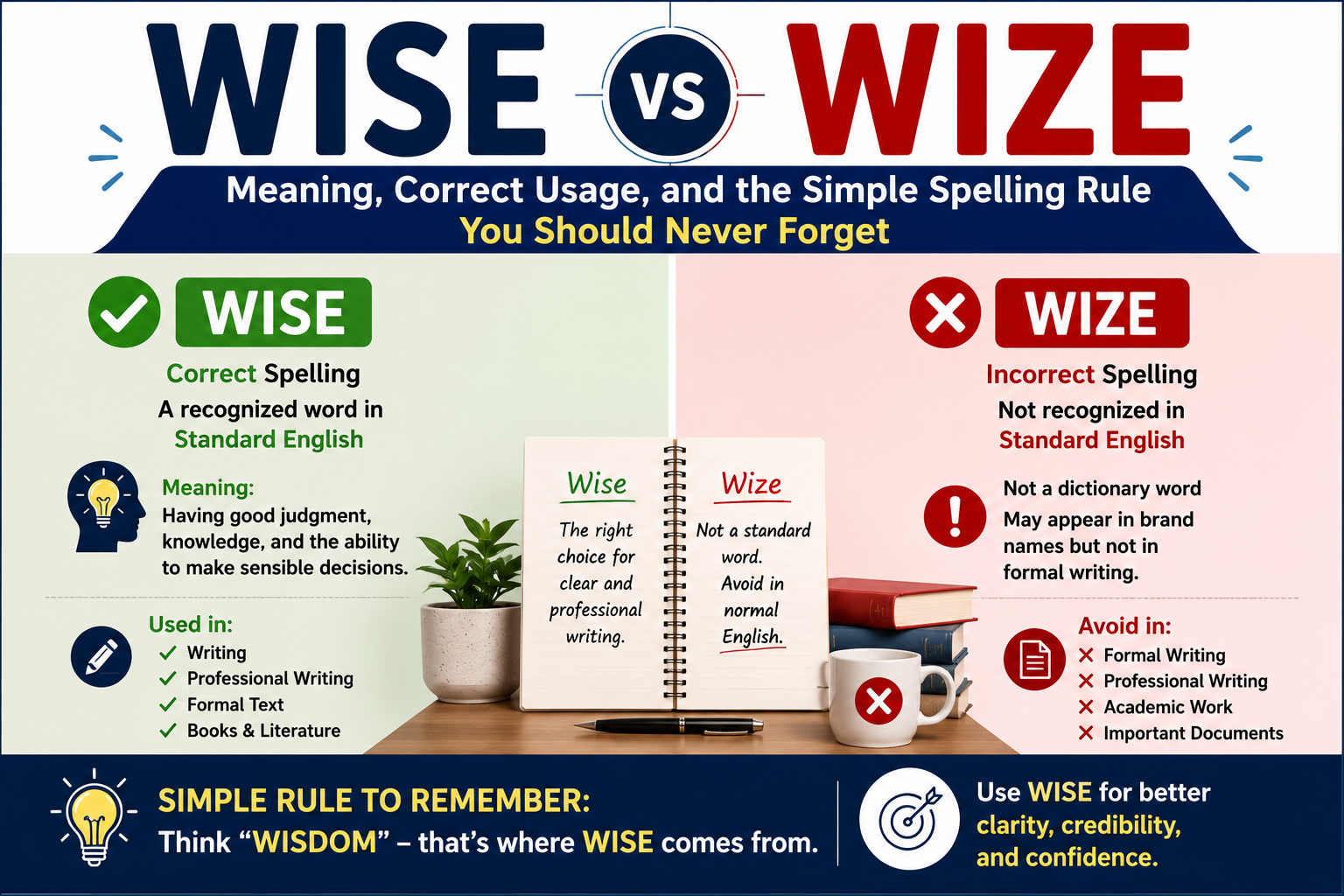
Wise vs Wize is simple: wise is the correct spelling in English, while wize is not a standard or accepted word.
Wise is the proper spelling, recognized spelling, and proper word in standard English and standard written English. Wize is not recognized spelling and does not follow standard English rules. The confusion happens because both words sound the same when spoken aloud, and the s sound can feel like a z sound.
The main difference is spelling, not meaning. Trusted dictionaries list wise, not wize. In writing, professional writing, formal text, and Books & Literature discussions, use wise for better clarity, credibility, and confidence. As an editor, I would always change wize to wise.
What “Wise” Really Means in English
The word wise carries more depth than just “smart.” It reflects experience, judgment, and calm thinking.
Core meaning of wise:
A person who makes good decisions based on knowledge and experience.
Real-life use cases:
- Advice from elders
- Careful decision-making
- Emotional intelligence
- Long-term thinking
Simple examples:
- He made a wise choice by saving money early
- That was a wise response in a stressful situation
Interesting fact:
In English literature dating back to the 14th century, “wise” was already used to describe leaders, scholars, and advisors. That shows how long this word has stayed relevant in human communication.
Everyday feeling:
When someone calls you “wise,” it’s not about speed. It’s about depth.
Why “Wize” Exists but Is Not Correct
Now here’s where things get interesting.
If “wize” is wrong, why do people still write it?
The answer is simple psychology.
Main reasons people write “wize”:
- It looks modern
- It feels like internet-style spelling
- People copy brand names
- Fast typing leads to phonetic spelling
However, English grammar does not accept it.
Think of it like this:
“Wize is a costume. Wise is the real identity.”
Read this also: Yours Sincerely vs Sincerely Yours: Meaning, Difference, and Correct Use
Real-world confusion example:
A startup might name itself “WizeTech” for branding. That does not make “wize” correct in grammar. It only works as a name, not a word.
Key fact:
No major English dictionary recognizes “wize” as a valid spelling.
So in Wise vs Wize, grammar always chooses wise.
Wise vs Wize — Key Differences Explained
Let’s compare them clearly.
| Feature | Wise | Wize |
| Correct spelling | Yes | No |
| Dictionary word | Yes | No |
| Formal writing use | Yes | No |
| Common usage | Very high | Rare (branding only) |
| Meaning | Intelligent judgment | None |
What this means for you:
If you use wise, your writing stays professional.
If you use wize, your writing loses credibility instantly.
I’ve seen this happen in emails where everything looks perfect except one word. That small mistake changes how people judge the message.
How to Use “Wise” Correctly in Sentences
Using wise is simple once you see real patterns.
Everyday usage:
- That was a wise decision
- She gave a wise suggestion
- He is a wise leader
Advice-related usage:
- It is wise to save money early
- It is wise to think before reacting
Emotional tone:
“Wise” often feels calm, not loud. It carries quiet confidence.
Simple habit:
If your sentence involves decision, advice, or judgment, “wise” is usually the right fit.
Where “Wize” Appears in Real Life (But Shouldn’t in Writing)
Even though wize is not correct English, you might still see it.
Common places:
- Brand names (like tech startups)
- Social media usernames
- Mobile apps or games
- Creative marketing labels
Why brands use it:
They want:
- Unique identity
- Modern feel
- Easy domain names
- Stylish spelling
But here’s the catch:
Branding rules are not grammar rules.
So while “Wize App” might exist, you should still write “wise” in normal English.
Read this also: Creator vs Creater: Correct Spelling, Meaning, and Usage
Common Mistakes People Make with Wise vs Wize
Let’s talk real-life errors.
Mistake 1: Phonetic spelling
People write what they hear:
- ❌ wize
- ✔ wise
Mistake 2: Overconfidence in informal typing
Text messages often ignore spelling rules.
Mistake 3: Mixing branding with grammar
Just because you see “wize” online doesn’t make it correct.
Mistake 4: Not proofreading
Most mistakes happen before pressing send.
Quick reality check:
A recruiter once shared that spelling errors like this reduce perceived professionalism by up to 30% in written applications.
That’s a big impact from one word.
Easy Tricks to Remember the Correct Spelling
Here are simple memory hacks that actually work.
Trick 1: Think “wisdom”
- wise comes from wisdom
- both share the same root idea
Trick 2: Break it down
- W + I + S + E
No fancy twist. Just clean letters.
Trick 3: “Z does not belong here”
If you see a Z, remove it immediately.
Trick 4: Use association
Think:
A wise person does not complicate spelling.
Practice Section — Test Your Understanding
Try these:
Fill in the blanks:
- A ___ person thinks before acting
- It is ___ to stay calm under pressure
Correct answers:
- wise
- wise
Spot the mistake:
- He gave a wize answer ❌
- He gave a wise answer ✔
Once you get these right, you’ve mastered the rule.
FAQs
Q1. Is wise or wize correct?
Wise is correct. Wize is not a recognized spelling in standard English.
Q2. What does wise mean?
Wise means having good judgment, knowledge, and the ability to make sensible decisions.
Q3. Is wize a real word?
Wize is not a standard English word. It may appear as a name or brand, but not as the correct spelling of wise.
Q4. Why do people write wize?
People write wize because wise sounds like it has a “z” sound when spoken aloud.
Q5. Should I use wise in formal writing?
Yes, always use wise in formal writing, school work, professional writing, and everyday English.
Conclusion
The correct spelling is wise, not wize. Wise is the standard English word used to describe someone sensible, careful, and able to make good decisions. Wize is not accepted in normal English writing, so using wise keeps your writing clear, correct, and professional.