
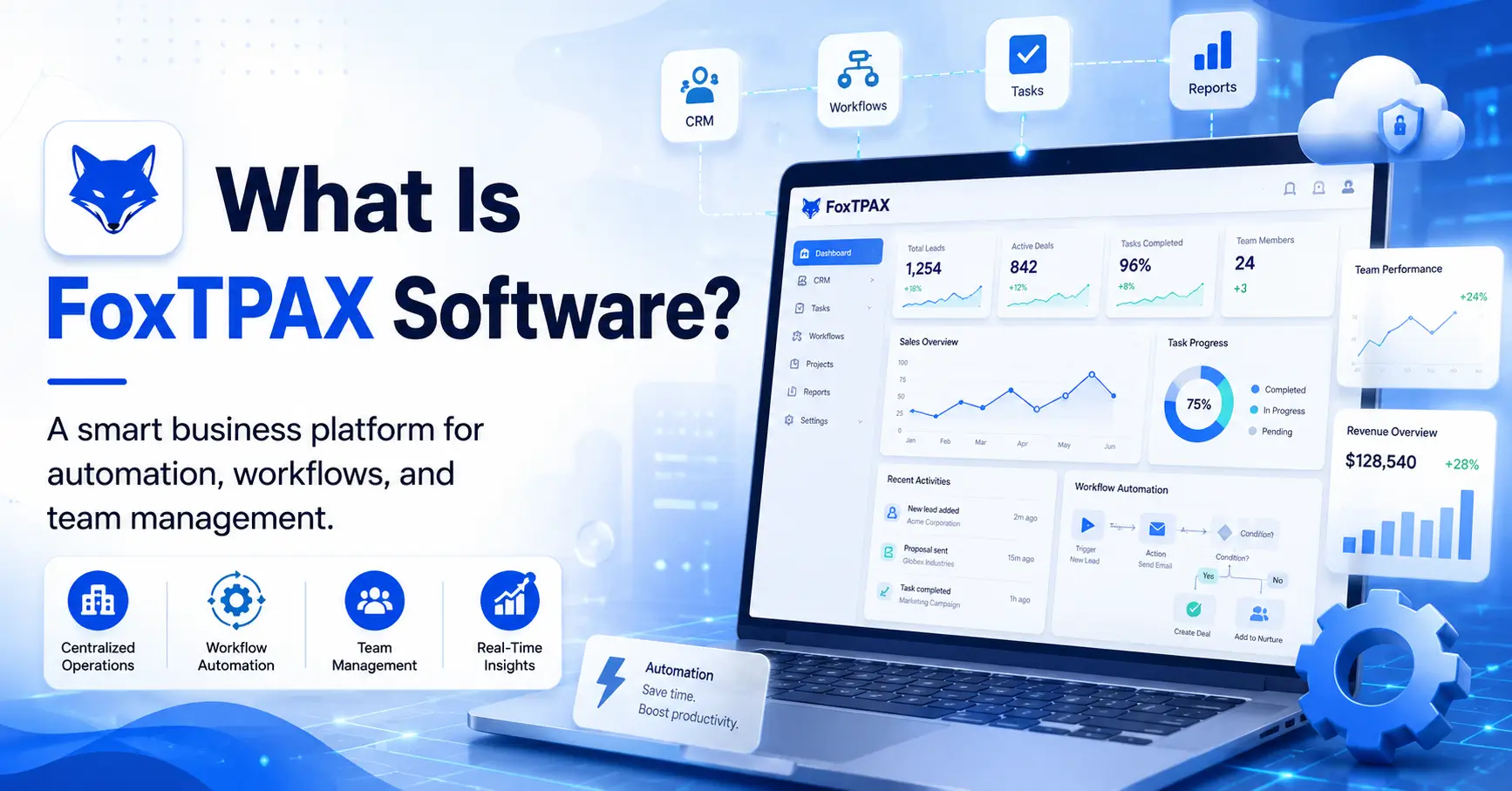
In a modern business environment, many companies struggle with disconnected systems, repeated tasks, and too many multiple tools. FoxTPAX Software works as a business management software platform that helps organizations streamline workflows through workflow automation and automation. Instead of using five different apps to track a project, send an invoice, or chat with team members, businesses can create a simpler way to manage daily activities. The main goal is to help teams improve collaboration, boost productivity, and improve productivity by bringing important processes into one strong platform.
When evaluating new software, every business owner, IT manager, operations director, and project lead needs careful evaluation before adopting new software. A comprehensive guide to FoxTPAX Software should focus on real value, practical use, and the overall purpose of the software rather than relying on attractive buzzwords or marketing claims. By reviewing the strengths, potential strengths, and limitations, decision-makers can gain a clear understanding of how the system works, how it can support daily work, and whether it can serve their needs.
A closer look at FoxTPAX Software shows how a next-generation business management suite can help real organizations organize business activities, improve teamwork, and create smoother operations. Through scheduling, billing, reporting, messaging, and data management, the platform aims to optimize business operations, centralize fragmented systems, and replace multiple standalone apps. With smart triggers, a customizable platform, and a secure platform, users can review their workflow needs, compare the needed tools, and confidently choose a solution that matches their requirements across various sectors.
What Is FoxTPAX Software?
FoxTPAX Software Explained in Simple Terms
FoxTPAX Software is a business-focused software platform designed to help organizations manage different operational activities through a centralized system.
The main idea behind this type of software is simple:
Connect business processes, organize information, and reduce unnecessary manual work.
Businesses often use multiple tools to manage daily activities. While individual tools can solve specific problems, managing many separate systems can become difficult as a company grows.
A connected platform helps create a smoother workflow by bringing important operations together.
For example, instead of managing customer details, tasks, reports, and internal communication separately, businesses can organize these activities through a more unified system.
A typical disconnected workflow may look like this:
| Business Activity | Separate Tool |
| Customer information | CRM or spreadsheets |
| Project tracking | Task management software |
| Financial records | Accounting platform |
| Reporting | Manual documents |
| Team communication | Messaging tools |
This approach often creates duplicate work.
A centralized business management platform aims to reduce these gaps.
What Business Problems Does FoxTPAX Solve?
Growing companies usually do not struggle because they lack enough tools.
They struggle because those tools do not work together.
FoxTPAX Software focuses on solving common operational challenges that businesses face when their processes become more complex.
Reducing Information Silos
When different departments store information separately, communication becomes slower.
For example:
A customer contacts the sales team about a previous order. The support department has the details, but the sales team cannot access them quickly.
This creates delays and can affect customer satisfaction.
A connected system helps teams access relevant information without repeatedly asking other departments.
Improving Workflow Efficiency
Many business tasks follow predictable patterns.
For example:
Customer request → Review → Approval → Assignment → Completion
Without automation, employees manually move each step forward.
This consumes time and increases the possibility of mistakes.
Workflow management software helps businesses create organized processes that keep work moving.
Creating Better Business Visibility
Managers need accurate information to make decisions.
They need to understand:
- Which projects are progressing?
- Which tasks are delayed?
- Which customers need attention?
- Where are operational problems happening?
A centralized system makes important information easier to monitor.
Who Can Benefit From FoxTPAX Software?
The usefulness of business software depends on the organization’s needs.
Companies that manage multiple processes, teams, or customer interactions may find value in workflow management platforms.
Potential users may include:
| Business Type | Possible Benefits |
| Small businesses | Better organization of daily operations |
| Growing companies | Managing increased workflow complexity |
| Service providers | Tracking clients and projects |
| Financial businesses | Organizing structured processes |
| Enterprise teams | Improving department collaboration |
A small company may use software to replace manual spreadsheets.
A larger organization may use it to improve coordination between multiple departments.
How Does FoxTPAX Software Work?
Centralized Business Operations
One of the biggest advantages of integrated software is bringing important information into a single environment.
Instead of searching through different platforms, employees can access relevant information more efficiently.
Centralized operations can help businesses manage:
- Customer information
- Internal tasks
- Reports
- Documents
- Workflow updates
For example, when a customer contacts a business, employees can quickly understand previous interactions instead of starting from zero.
This creates a more consistent customer experience.
Workflow Automation and Process Management
Automation is one of the most important features businesses look for in modern software.
The goal is not to replace employees.
The goal is to remove repetitive work.
Common examples of workflow automation include:
- Automatic task assignments
- Reminder notifications
- Approval workflows
- Status updates
- Report generation
Consider a simple approval process.
Without Automation
- Employee submits a request.
- Manager receives an email.
- Manager reviews the request.
- Employee follows up.
- Status gets updated manually.
With Workflow Automation
- Employee submits a request.
- The system routes it automatically.
- The manager receives a notification.
- Approval status updates instantly.
The difference may seem small, but these improvements save significant time when repeated hundreds of times.
Data Management and User Access Control
Businesses handle different types of information.
Not every employee should access everything.
A good business management system needs proper permission controls.
Example:
| User Type | Access Level |
| Administrator | Full system management |
| Department Manager | Team reports and workflows |
| Employee | Assigned tasks and information |
| Support Staff | Customer-related records |
Access controls help protect sensitive information while allowing teams to work effectively.
FoxTPAX Software Features Explained
Workflow Automation
Workflow automation helps businesses create repeatable processes.
Instead of depending on employees to remember every step, businesses can build structured workflows.
Examples include:
- Automatically assigning new tasks
- Creating reminders for deadlines
- Updating project status
- Triggering approval requests
This helps teams maintain consistency.
A company handling hundreds of customer requests each month can benefit because employees spend less time managing repetitive actions.
Dashboard and Business Insights
A dashboard provides a quick overview of important business activities.
A useful dashboard helps managers understand what needs attention.
Common dashboard information may include:
- Current projects
- Sales activities
- Customer updates
- Team performance
- Operational reports
The real value of a dashboard is not displaying more information.
It is displaying the right information.
A manager does not need hundreds of numbers. They need clear insights that help them decide what action to take next.
CRM and Customer Management
Customer relationships directly affect business growth.
A CRM system helps businesses organize customer information and improve communication.
Important CRM functions may include:
- Contact management
- Lead tracking
- Customer history
- Follow-up reminders
- Sales pipeline management
Contact Management
Customer information often becomes difficult to manage as a business grows.
A CRM system creates organized customer profiles.
These profiles may contain:
- Customer details
- Previous conversations
- Purchase information
- Assigned team members
- Notes and updates
This allows employees to provide more personalized service.
Sales Pipeline Tracking
Sales teams manage multiple opportunities at different stages.
A pipeline provides a visual overview of potential deals.
| Stage | Description |
| New Lead | New customer opportunity |
| Qualified Lead | Customer interest confirmed |
| Proposal | Offer shared with customer |
| Negotiation | Final discussions |
| Completed Sale | Deal finalized |
Sales tracking helps teams prioritize opportunities and improve follow-up.
Financial Management Features in FoxTPAX Software
Managing money is one of the most important parts of running a successful business.
A company can have strong sales and still face problems if it does not have proper control over invoices, expenses, and financial reporting.
Business management platforms like FoxTPAX Software focus on helping organizations keep financial activities more organized by connecting financial information with daily operations.
Instead of tracking financial details across different spreadsheets and disconnected systems, businesses can create a clearer view of their financial workflow.
Invoice and Payment Tracking
Late payments and unclear billing processes can create cash flow problems.
A structured invoice management system helps businesses monitor:
- Created invoices
- Pending payments
- Completed transactions
- Customer billing history
For example, a consulting company managing multiple clients may need to know:
- Which invoices have been paid?
- Which payments are overdue?
- Which customers require follow-up?
A centralized system makes this information easier to find.
Example Invoice Workflow
| Step | Process |
| 1 | Service or product delivered |
| 2 | Invoice created |
| 3 | Customer receives invoice |
| 4 | Payment status tracked |
| 5 | Records updated automatically |
This reduces manual tracking and helps businesses maintain better financial visibility.
Expense Management
Small expenses can quickly become difficult to manage when companies grow.
Without proper tracking, businesses may struggle to understand where money is being spent.
Expense management helps organizations monitor:
- Operational costs
- Department spending
- Vendor payments
- Recurring expenses
For example, a company may discover that unnecessary software subscriptions are increasing monthly costs.
With better expense visibility, managers can identify areas where they can improve efficiency.
Financial Reporting
Financial reports turn business data into useful insights.
Instead of looking at individual transactions, companies can analyze overall patterns.
Financial reporting can help businesses understand:
| Report Type | Purpose |
| Revenue Report | Tracks income performance |
| Expense Report | Shows spending patterns |
| Payment Report | Monitors customer payments |
| Budget Report | Compares planned and actual spending |
Clear reporting helps leaders make better decisions.
Project and Task Management in FoxTPAX Software
Projects become harder to manage as teams grow.
A simple task list may work for a small team, but larger operations require better organization.
Project management features help businesses plan work, assign responsibilities, and track progress.
Project Planning
Successful projects usually start with clear planning.
A structured project workflow may include:
- Defining project goals
- Creating tasks
- Assigning responsibilities
- Setting deadlines
- Tracking completion
Without planning, teams often experience:
- Missed deadlines
- Confused responsibilities
- Repeated work
- Communication problems
Task Assignment and Progress Tracking
Every successful project depends on knowing who is responsible for what.
Task management helps teams monitor:
- Assigned employees
- Deadlines
- Current status
- Completion progress
Example:
| Task | Responsible Team | Status |
| Customer research | Marketing | Completed |
| Proposal creation | Sales | In Progress |
| Final approval | Management | Pending |
This simple structure improves accountability.
Team Collaboration
Modern businesses often have employees working from different locations.
Collaboration tools help teams stay connected by allowing them to:
- Share updates
- View progress
- Communicate around tasks
- Access important information
Better collaboration reduces delays because everyone understands the current situation.
Reporting and Analytics Capabilities
Data becomes valuable when businesses can understand it.
Many companies collect large amounts of information but struggle to use it effectively.
Analytics tools help transform business activity into meaningful insights.
Understanding Business Performance
Reporting can help answer important questions:
- Are projects being completed on time?
- Which areas are performing well?
- Where are delays happening?
- Which processes need improvement?
For example:
A company notices that customer onboarding takes twice as long as expected.
After reviewing workflow data, managers discover that approval delays are causing the problem.
Instead of guessing, they can solve the actual issue.
Improving Decision Making With Data
Business decisions become stronger when they rely on accurate information.
Without proper reporting, managers often make decisions based on assumptions.
Analytics provides a clearer picture of:
- Business performance
- Customer activity
- Team productivity
- Operational trends
The goal is not collecting more data.
The goal is understanding what that data means.
Mobile Accessibility in FoxTPAX Software
Business operations no longer happen only inside offices.
Employees often work remotely, travel for meetings, or manage customers outside traditional workplaces.
Mobile accessibility allows users to stay connected with important business information.
Benefits of Mobile Business Access
Mobile access can help teams:
- Check updates quickly
- Review tasks
- Respond to requests
- Monitor progress remotely
For example:
A manager attending a client meeting can review project updates without returning to the office.
This improves flexibility and keeps business activities moving.
FoxTPAX Software Use Cases Across Different Industries
Different industries have different challenges.
A useful business platform should adapt to different workflows instead of forcing every organization into the same structure.
Financial Services and FX Operations
Financial organizations often manage complex processes that require accuracy, organization, and strong operational control.
Software solutions in this area may support activities such as:
- Transaction workflow management
- Data organization
- Reporting processes
- Operational tracking
Some competitor discussions associate FoxTPAX Software with foreign exchange-related operations. However, businesses should verify specific financial trading capabilities directly before depending on the platform for specialized financial activities.
Why Financial Businesses Need Connected Systems
Financial operations often involve multiple steps.
A simplified workflow may look like:
Customer Request → Verification → Processing → Approval → Reporting
Without proper organization, errors and delays can increase.
Connected systems help create better process visibility.
Retail and E-Commerce Applications
Retail businesses manage many moving parts every day.
These include:
- Customer orders
- Inventory information
- Sales records
- Customer support requests
A business management platform can help retailers organize operations more effectively.
Example Retail Workflow
| Activity | Business Need |
| Customer order received | Accurate tracking |
| Payment processed | Financial visibility |
| Product delivered | Order completion |
| Customer feedback collected | Better service |
As businesses grow, organized workflows become increasingly important.
Professional Services Applications
Service companies often manage projects rather than physical products.
Examples include:
- Consulting firms
- Marketing agencies
- Technology companies
- Business advisors
These businesses need strong control over:
- Client communication
- Project deadlines
- Employee tasks
- Deliverables
A centralized system helps teams manage multiple clients without losing important details.
Healthcare Administration Applications
Healthcare organizations manage sensitive information and complex administrative processes.
Technology solutions may support areas such as:
- Internal coordination
- Administrative workflows
- Information management
However, healthcare businesses must carefully evaluate privacy requirements and compliance obligations before selecting any software.
FoxTPAX Software Integrations and API Support
Businesses rarely operate with a single software system.
Most companies already use different tools for accounting, communication, customer management, and operations.
This makes integration an important consideration.
Connecting Existing Business Tools
Software integration allows different platforms to share information.
For example:
A customer enters information through one system.
That information can then move automatically into another connected platform.
This reduces:
- Manual data entry
- Duplicate records
- Workflow delays
Why API Support Matters
An API allows software systems to communicate with each other.
Think of it as a bridge between two applications.
One system sends information.
Another system receives and uses that information.
Benefits include:
- Better automation
- Faster data exchange
- Improved workflow connections
- Greater flexibility
Businesses with complex operations should always review integration options before choosing software.
FoxTPAX Software Security and Data Protection
Security is one of the most important factors when businesses select software.
Modern companies manage valuable information, including:
- Customer records
- Financial information
- Internal documents
- Employee data
Protecting this information requires proper security practices.
Access Control and User Permissions
Not every employee needs access to every piece of information.
Permission systems help businesses control:
- Who can view data
- Who can edit information
- Who can manage settings
This reduces unnecessary access and improves internal security.
Backup and Recovery Planning
Unexpected technical problems can happen.
Data backup and recovery planning helps businesses prepare for situations such as:
- Accidental deletion
- System failures
- Data loss events
A reliable recovery process helps organizations restore important information and reduce disruption.
FoxTPAX Software Deployment Options
Choosing the right deployment model is an important step when implementing business software.
Different companies have different priorities. Some businesses want quick access and flexibility, while others need greater control over their infrastructure and data.
Before adopting FoxTPAX Software, organizations should evaluate factors such as:
- Security requirements
- Number of users
- Technical resources
- Budget limitations
- Long-term growth plans
A deployment model should support the way a business actually operates.
Cloud-Based Deployment
Cloud-based software allows businesses to access their systems through internet-connected devices.
This approach has become popular because companies do not need to manage large amounts of internal hardware.
Benefits of Cloud Deployment
| Benefit | Why It Matters |
| Remote access | Teams can work from different locations |
| Faster updates | Software improvements can be delivered more easily |
| Lower infrastructure needs | Less dependency on internal servers |
| Scalability | Businesses can expand as they grow |
For example, a company with employees working across different cities can access business information without requiring everyone to be physically present in the office.
However, businesses should still review:
- Data storage policies
- Security controls
- System reliability
- Access management
Private or On-Premise Deployment
Some organizations prefer keeping software systems within their own infrastructure.
This approach provides greater control over:
- Data management
- Internal security policies
- System configuration
Businesses that manage sensitive information may prefer this type of deployment.
For example, financial organizations may need stricter control over how information is stored and accessed.
How to Choose the Right Deployment Option
There is no single deployment method that works for every company.
The right choice depends on business requirements.
| Consideration | Important Question |
| Security | How sensitive is the business information? |
| Team structure | Do employees work remotely? |
| Budget | What infrastructure costs are realistic? |
| Growth | Can the system support future expansion? |
| Maintenance | Who will manage technical operations? |
A company should choose the option that matches its workflow instead of selecting software based only on popularity.
FoxTPAX Software Implementation Process
Implementing business software requires more than simply installing a platform.
The biggest challenge is making sure the system fits existing business processes.
A successful implementation usually includes planning, testing, and employee training.
Step 1: Identify Business Requirements
Before implementation begins, businesses should clearly define their goals.
Important questions include:
- What problems need to be solved?
- Which departments will use the software?
- What processes need improvement?
- What results does the company expect?
For example, a company struggling with customer follow-ups may focus on CRM workflows, while another company may prioritize project management.
Clear goals create better results.
Step 2: Plan Data Migration
Many businesses already have years of stored information.
This may include:
- Customer records
- Financial details
- Project information
- Internal documents
Moving this information requires careful preparation.
Poor migration planning can create problems such as:
- Duplicate records
- Missing information
- Incorrect data
A proper migration strategy helps maintain accuracy.
Step 3: Test the System Before Full Launch
A pilot deployment allows businesses to test the software with a smaller group before expanding it across the organization.
Testing helps identify:
- Workflow problems
- User difficulties
- Technical issues
- Required adjustments
For example, a company may introduce the system to the sales department first before rolling it out to other teams.
Step 4: Train Employees and Encourage Adoption
Employee adoption determines whether software succeeds.
Even the most advanced platform provides little value if employees do not understand how to use it.
Training should help teams understand:
- Daily workflows
- Important features
- Reporting methods
- Best practices
The goal is to make the new system easier than the old process.
Benefits of FoxTPAX Software for Businesses
Companies adopt business software because they want practical improvements.
The value usually comes from better organization, faster workflows, and improved decision-making.
Improved Productivity
Manual processes consume valuable employee time.
Workers often spend hours on tasks such as:
- Copying information
- Updating records
- Sending reminders
- Creating repeated reports
Automation reduces these repetitive activities.
Instead of spending time managing processes, employees can focus on customer service, strategy, and growth.
Better Operational Visibility
One major challenge for growing businesses is understanding what is happening across departments.
A centralized system provides better visibility into:
- Active projects
- Customer activities
- Team performance
- Business reports
Managers can identify problems earlier and respond faster.
Reduced Manual Work
Small manual tasks may seem harmless.
However, when repeated hundreds of times, they become expensive.
For example:
A team that manually updates 500 customer records every month spends significant time on administrative work.
Automation helps reduce unnecessary effort.
Stronger Team Collaboration
Teams work better when everyone has access to accurate information.
A connected platform improves collaboration by helping employees:
- Share updates
- Track responsibilities
- Follow project progress
- Access important records
This reduces communication gaps.
Faster Business Decision Making
Good decisions require reliable information.
When managers can quickly access accurate reports, they can respond faster to business changes.
For example:
If sales performance decreases, managers can review customer activity, workflow issues, and operational data to understand possible causes.
Things to Consider Before Choosing FoxTPAX Software
Every software platform has strengths and limitations.
Businesses should evaluate whether a solution matches their actual needs before making a decision.
Feature Requirements
More features do not always mean better results.
A business should focus on the features it actually needs.
Important questions include:
- Does the software solve current problems?
- Are required tools available?
- Will employees use the system regularly?
A simple solution that fits the workflow is often better than a complicated platform with unnecessary features.
Integration Needs
Most companies already use different software tools.
Before adoption, businesses should review:
- Available integrations
- Data transfer options
- Compatibility with current systems
A platform that cannot connect with important tools may create additional work.
Implementation Costs
Software costs include more than subscription fees.
Businesses should consider:
| Cost Area | Example |
| Setup | Initial configuration |
| Training | Employee learning |
| Migration | Moving existing data |
| Support | Technical assistance |
Planning these costs helps avoid unexpected expenses.
Long-Term Scalability
A business should think beyond current needs.
The right software should support future growth.
Companies should evaluate:
- Additional users
- More departments
- Increased data
- Expanded workflows
A system should grow with the organization.
FoxTPAX Software vs Traditional ERP Systems
Businesses often compare modern workflow platforms with traditional ERP solutions.
Both aim to improve operations, but their approaches may differ.
| Area | FoxTPAX Software Approach | Traditional ERP Systems |
| Main focus | Workflow organization and connected operations | Enterprise resource planning |
| Flexibility | Depends on available customization | Often highly structured |
| Implementation | May vary by requirements | Usually requires detailed planning |
| Best suited for | Businesses seeking operational improvement | Large organizations with complex processes |
The right choice depends on business size, industry, and operational complexity.
A company should choose based on its workflow needs rather than simply choosing the larger system.
FoxTPAX Software Pricing Factors
Exact pricing details should always be confirmed with the provider because software pricing can change based on features, users, and customization requirements.
Instead of looking only at the monthly cost, businesses should evaluate the overall value.
Factors that may influence pricing include:
| Factor | Impact |
| Number of users | More users may increase cost |
| Features required | Advanced tools may affect pricing |
| Customization | Additional setup may require resources |
| Integrations | Connecting external systems may add complexity |
| Support requirements | Additional assistance may affect investment |
The best software choice is not always the cheapest option.
A platform that saves time and improves efficiency may provide greater long-term value.
Future of FoxTPAX Software and Business Automation
Business software continues to evolve as companies look for faster and smarter ways to operate.
Future trends are moving toward:
- Greater automation
- More intelligent reporting
- Better system connections
- Improved decision support
AI and Smarter Business Workflows
Artificial intelligence is becoming a major part of business technology.
AI-powered systems may help organizations with:
- Data analysis
- Pattern recognition
- Workflow recommendations
- Predictive insights
However, businesses should focus on practical benefits rather than adopting technology simply because it is new.
More Connected Digital Operations
Companies are moving toward connected ecosystems where different tools communicate effectively.
Future business platforms will likely focus more on:
- Seamless integrations
- Automated processes
- Real-time information
- Better user experiences
The goal is simple:
Help businesses spend less time managing systems and more time creating value.
Frequently Asked Questions About FoxTPAX Software
What is FoxTPAX Software used for?
FoxTPAX Software is designed around improving business workflow management, organizing information, and helping companies manage operations more efficiently through connected processes.
Who can benefit from FoxTPAX Software?
Businesses that need better workflow organization, improved reporting, and centralized operational management may find value in this type of platform.
Does FoxTPAX Software support automation?
Modern business management platforms commonly focus on automation to reduce repetitive tasks and improve workflow efficiency.
Businesses should evaluate available automation features based on their specific requirements.
Can FoxTPAX Software integrate with other tools?
Integration depends on available system connections and technical capabilities.
Companies should review integration options before implementation.
Is FoxTPAX Software suitable for small businesses?
Small businesses may benefit from improved organization if the platform matches their workflow needs.
Before adoption, companies should consider cost, complexity, and required features.
What should businesses check before choosing FoxTPAX Software?
Businesses should evaluate:
- Required features
- Security needs
- Integration options
- Implementation effort
- Long-term scalability
The best software choice is the one that solves real operational problems.
Final Thoughts: Is FoxTPAX Software Right for Your Business?
FoxTPAX Software should be evaluated based on more than just its features because businesses need solutions that match their actual workflow requirements, operational challenges, and long-term objectives. FoxTPAX Software represents a business management solution that can help companies improve organization, create smoother workflows, enhance collaboration, and manage operations more effectively. Before adopting any platform, decision-makers should carefully review its capabilities, limitations, integrations, and practical value to determine whether it fits their specific business needs.
In today’s competitive digital environment, FoxTPAX Software can help organizations move away from disconnected tools and adopt more structured business processes. By focusing on workflow management, data organization, automation, and team coordination, FoxTPAX Software provides an approach for improving daily operations. However, every business has unique requirements, so companies should evaluate their goals, available resources, and expected outcomes before choosing whether this platform is the right fit.
Ultimately, the value of FoxTPAX Software depends on how effectively it supports an organization’s daily activities and workflow needs. FoxTPAX Software can contribute to better productivity, improved processes, and stronger collaboration when implemented with the right strategy. By focusing on practical benefits, scalability, and usability, businesses can determine whether FoxTPAX Software can support long-term operational efficiency and sustainable growth.